NORWAY / TRAVEL NOTES
Svalbard
Four days at 78° north, between a snowstorm, a blue hour and the return of the sun.
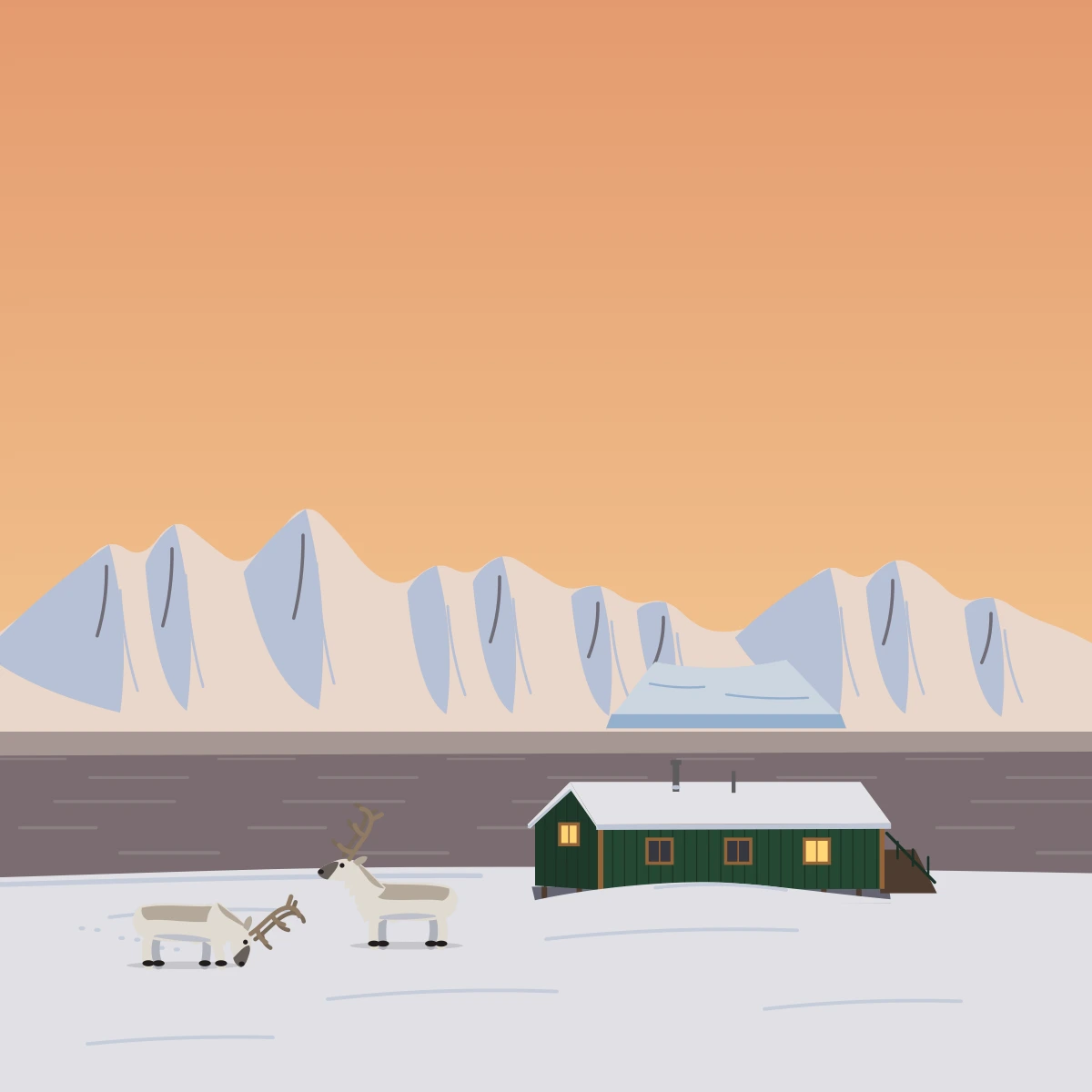
Svalbard in Hourline shows the same artwork as the app, bringing its landmarks together in a composed scene.
01
Arrival at 78° north
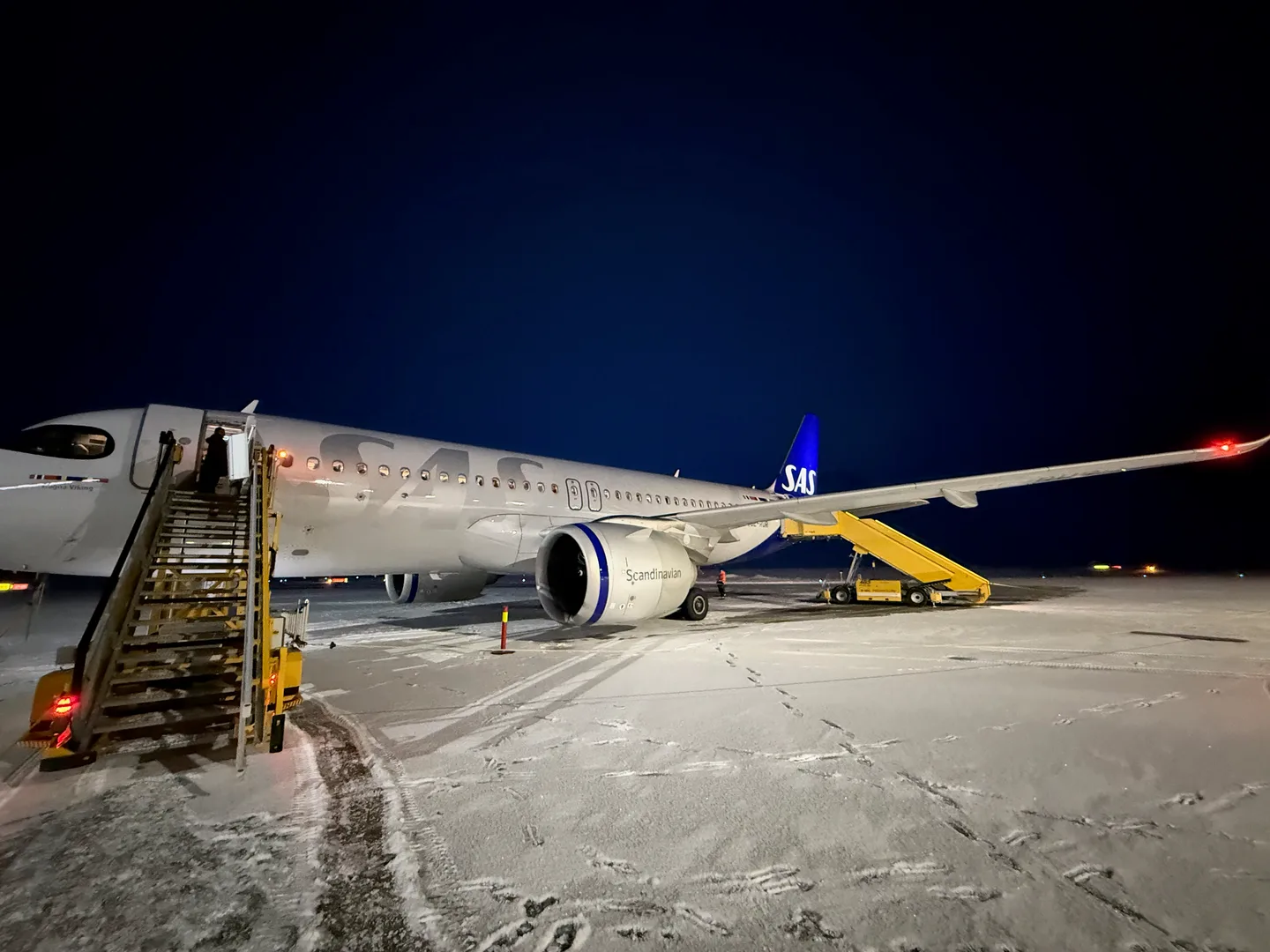
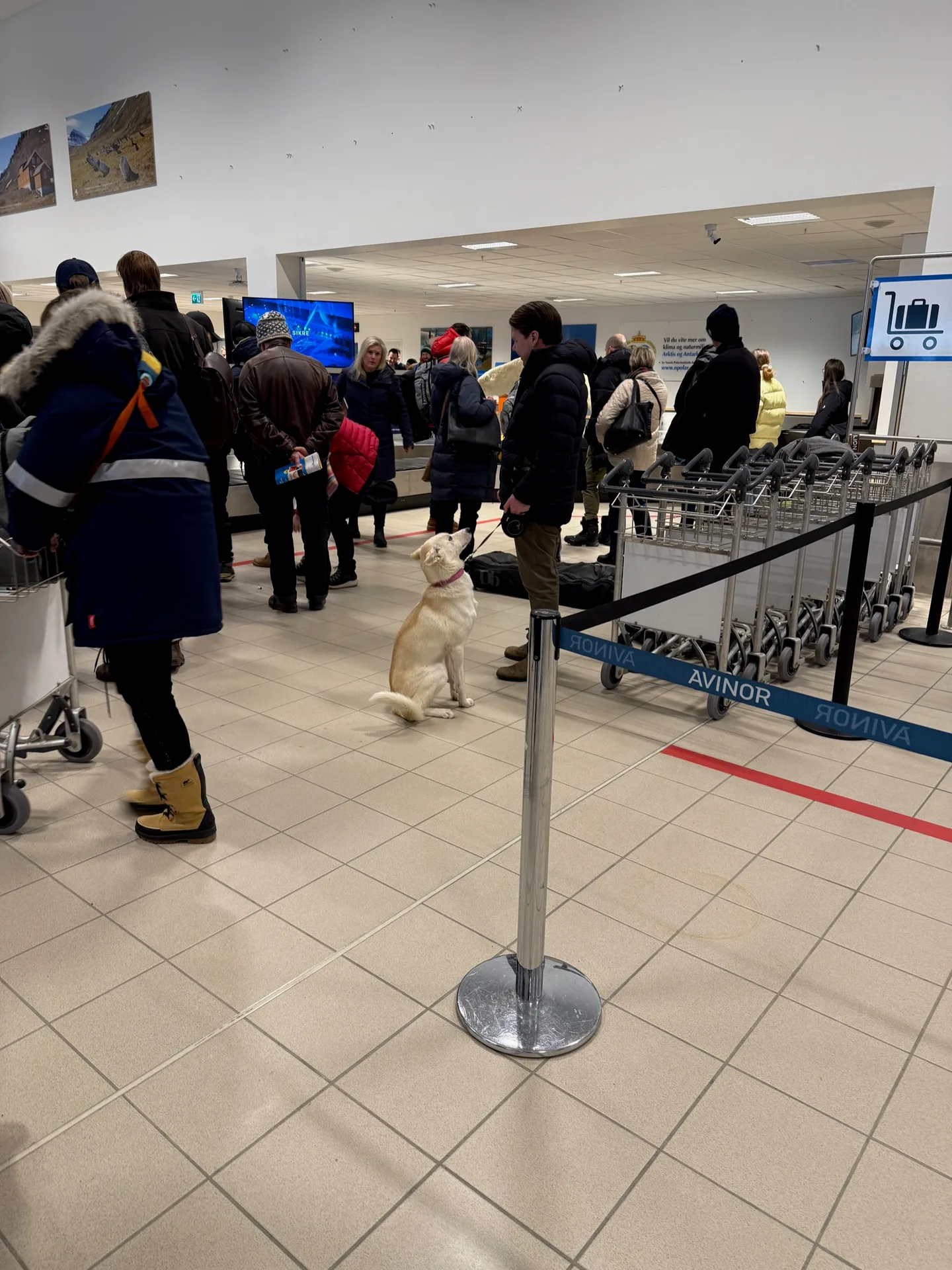
In my last year of eligibility for SAS youth fares, I travelled with friends to Svalbard for our first Arctic hiking trip. The plane landed at Longyearbyen, with a snow-covered mountain beyond the runway and a single baggage carousel inside the terminal. A dog waited patiently beside it.
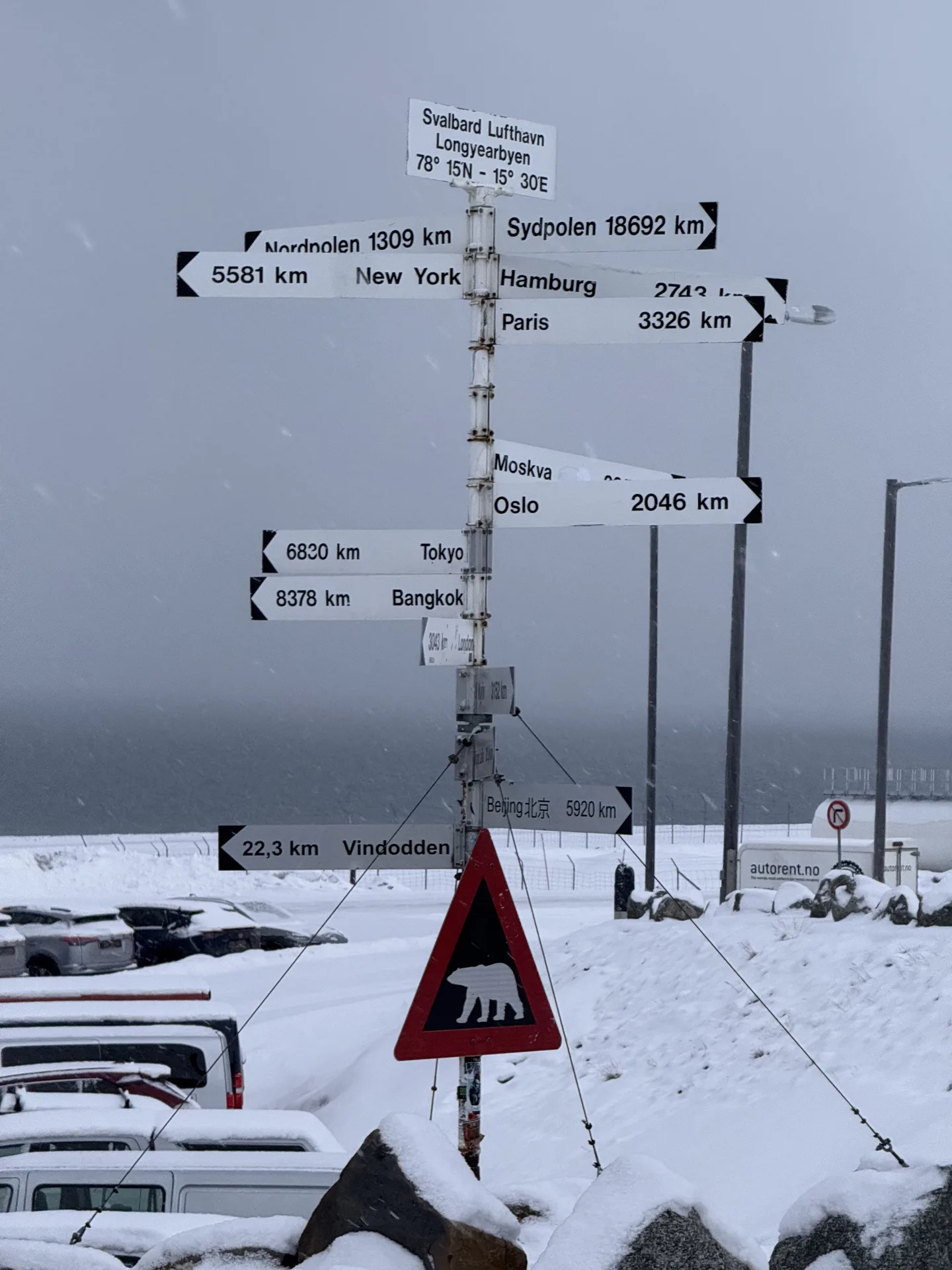
Outside, a signpost pointed towards distant cities. The North Pole was closer than most of the places written on the arrows. A polar-bear warning sign made the distance feel more real. This was not a landscape to wander into casually; our trips beyond town would be with guides equipped for the conditions.
Longyearbyen is a small international community at an extraordinary latitude. At Svalbardbutikken, neat shelves of oranges, grapes and blueberries seemed almost implausible against the world outside. Everything had been brought north. Near the entrance, everyday shopping met equipment for an environment that was anything but ordinary.

02
Light across the fjord
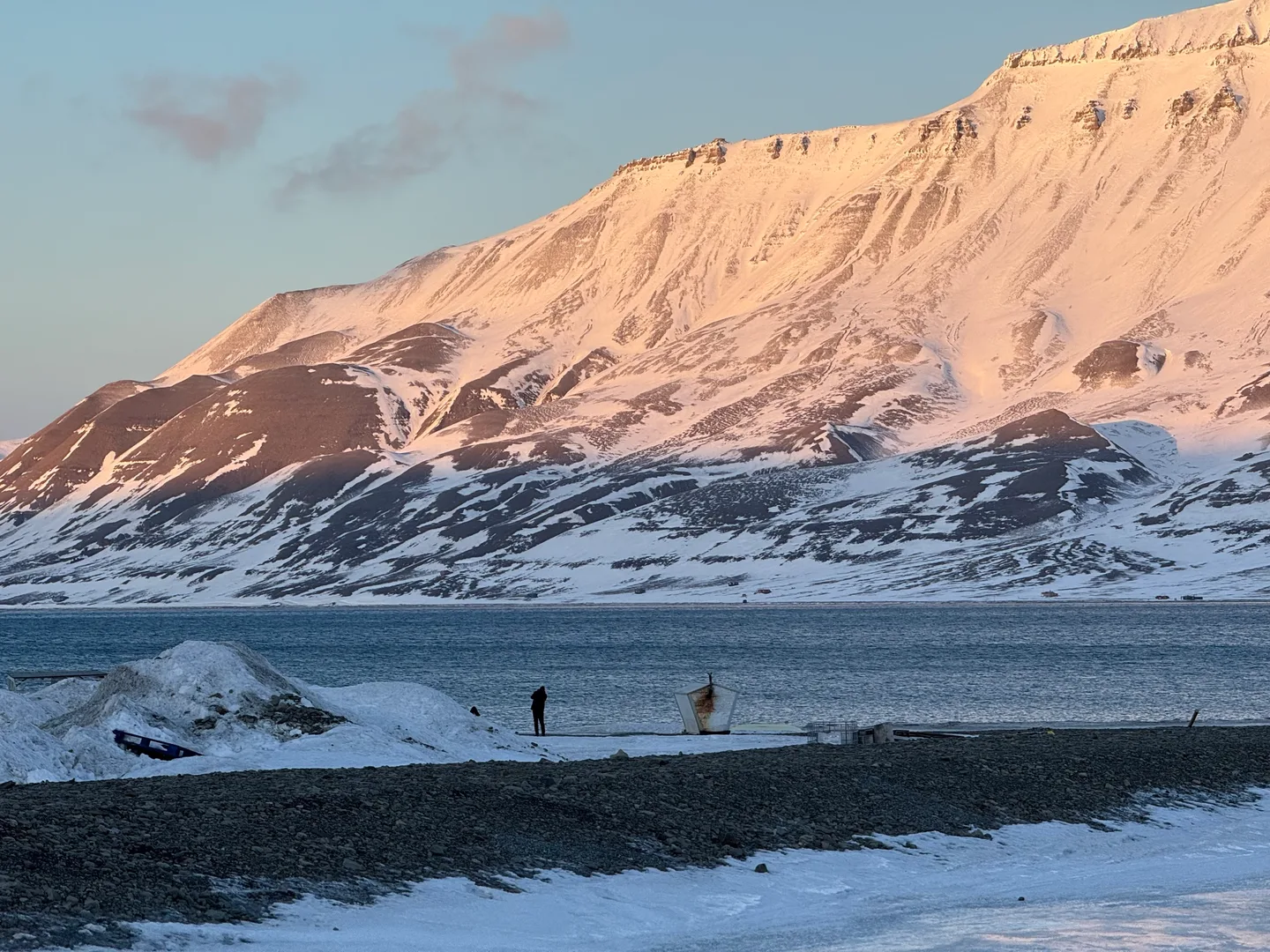
We arrived in early March, as the long winter darkness was giving way to returning sunlight. Low light caught the mountains across the fjord and turned the snow a colour somewhere between honey and amber.
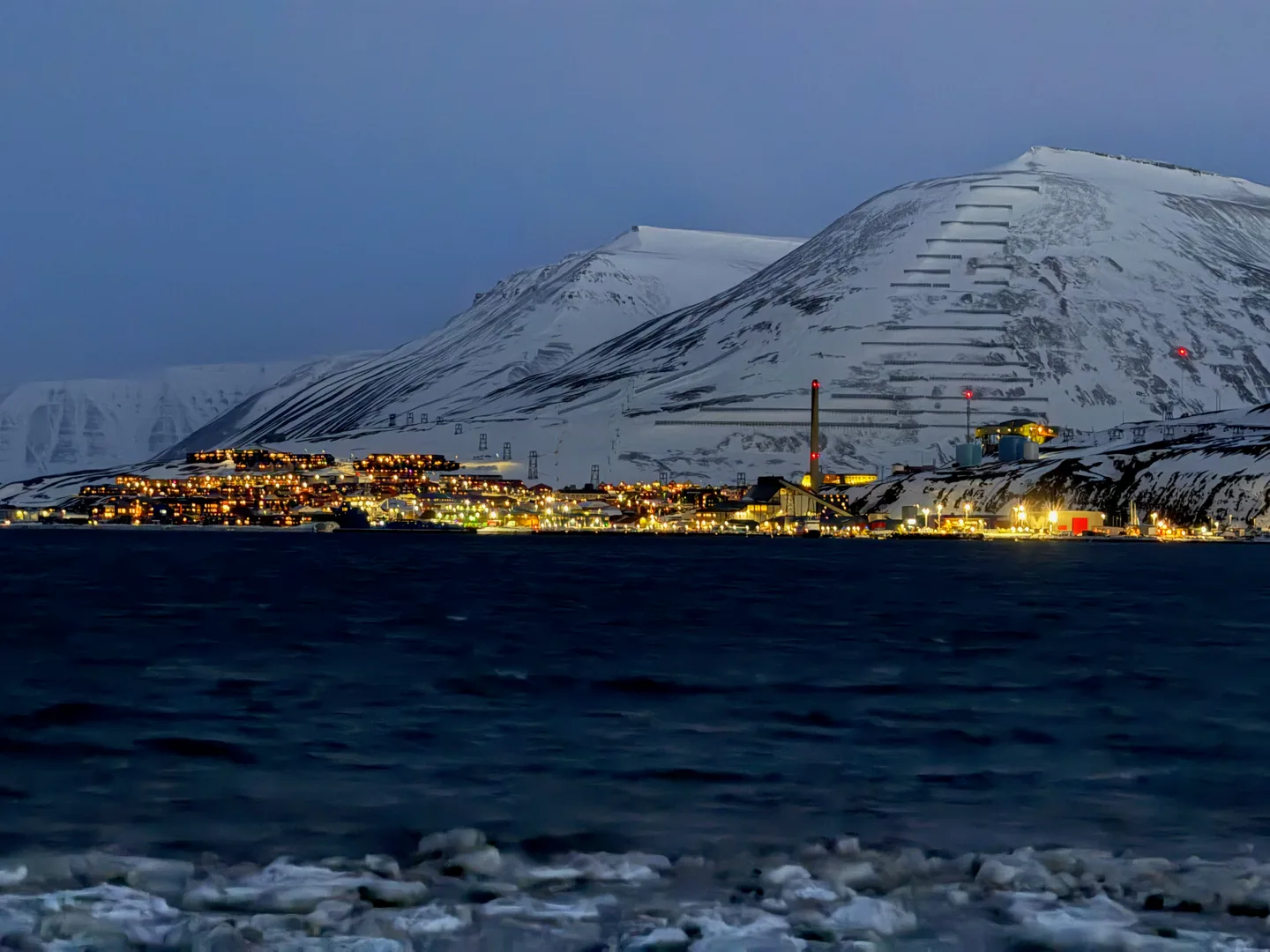
The town sits beside Adventfjorden. Across the water, flat-topped mountains rise in great cut surfaces, as if a glacier had sliced through a layered cake. I kept looking at the distance between the dark water and the illuminated snow.
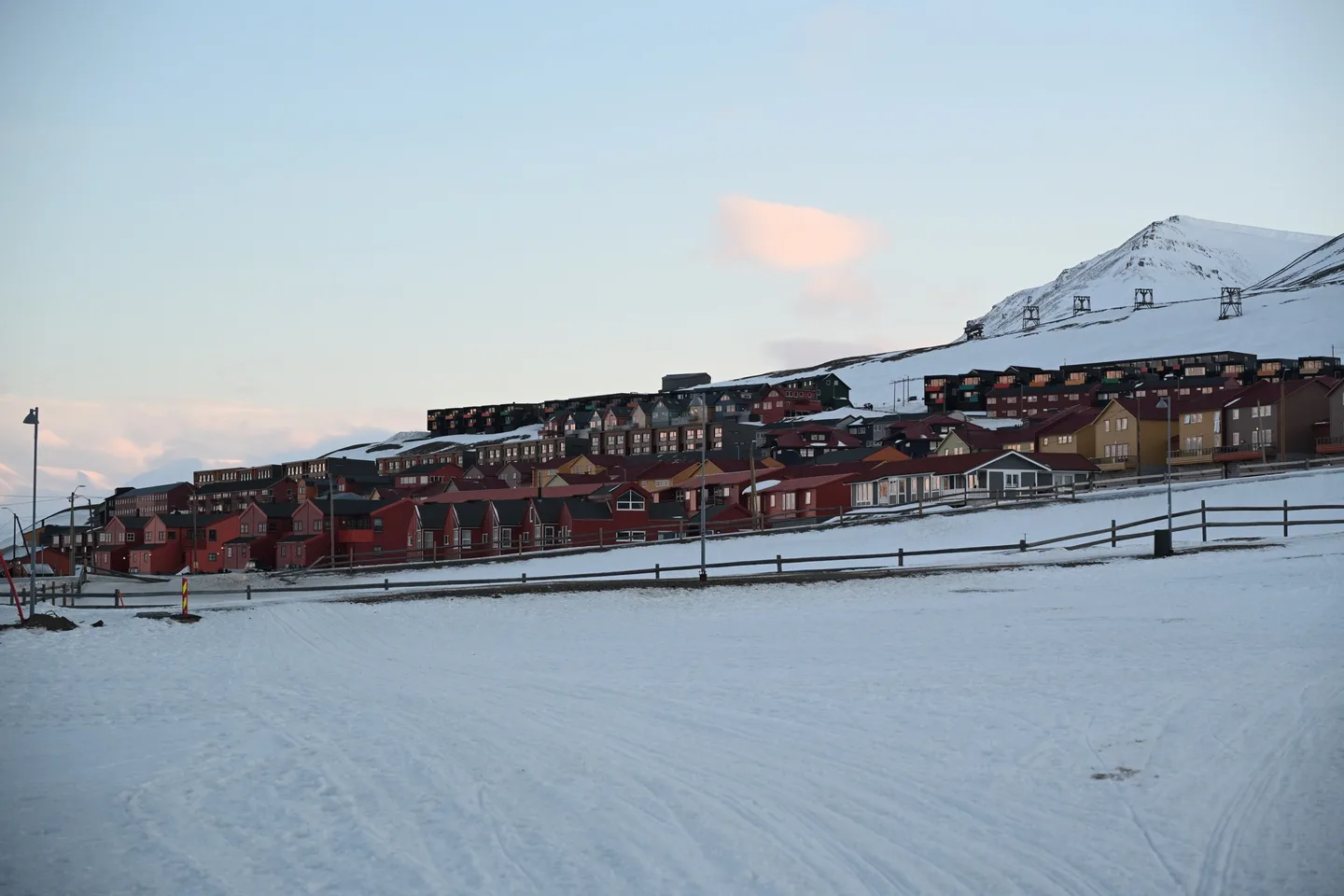
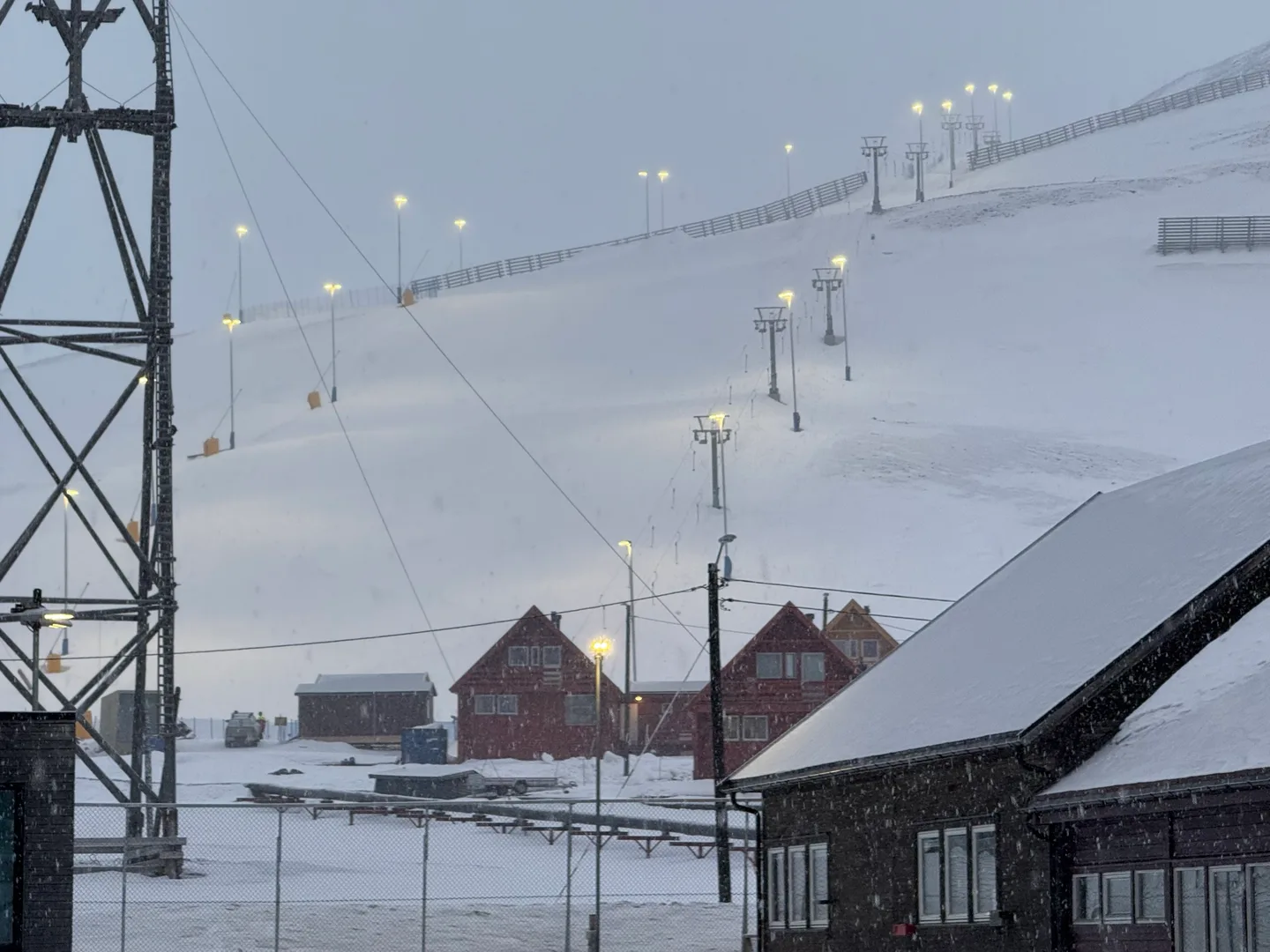
Back in town, red, ochre and mustard-coloured wooden houses lined the slopes. Buildings and services have to accommodate the frozen ground; raised pipes connected parts of the settlement like passages between space capsules. Abandoned mining structures remained above it all, reminders of the coal town from which today's tourism and research community grew.
03
The storm
On the second day, snow travelled horizontally. Visibility contracted; streetlights continued their small, stubborn work. The wind lifted dry grains from the ground and drove them against our faces. Walking felt somewhere between entering a washing machine and being slapped by the weather.
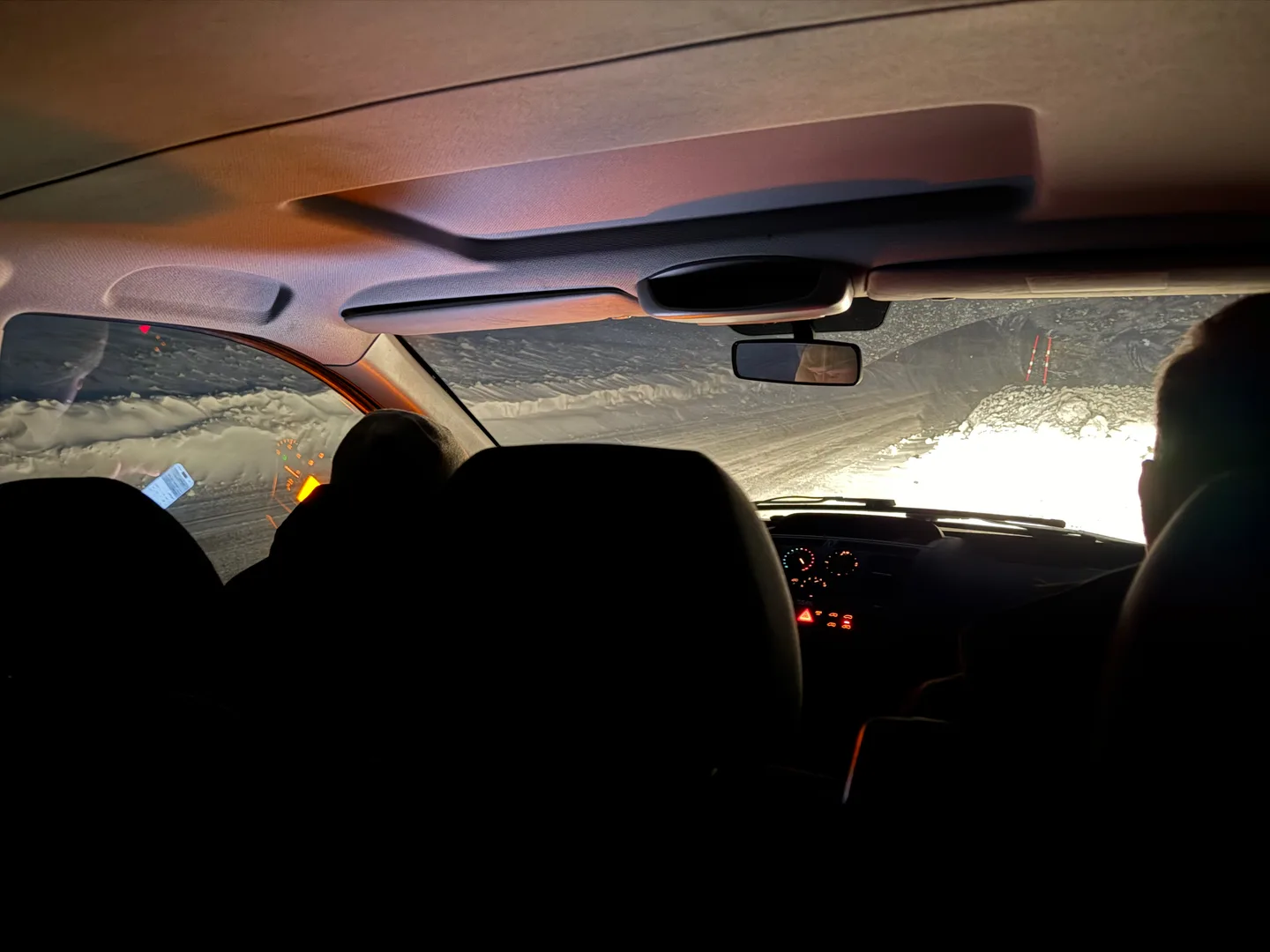
Our planned northern-lights outing changed with the conditions. Along the fjord, mountains appeared and disappeared beyond the vehicle windows. Our Canadian guide was studying and working here, following a long-standing wish to live in the Arctic. When she missed busier life, she could fly south, spend time on the mainland, then return. Listening to her made “the end of the world” sound less like an ending than a chosen address.
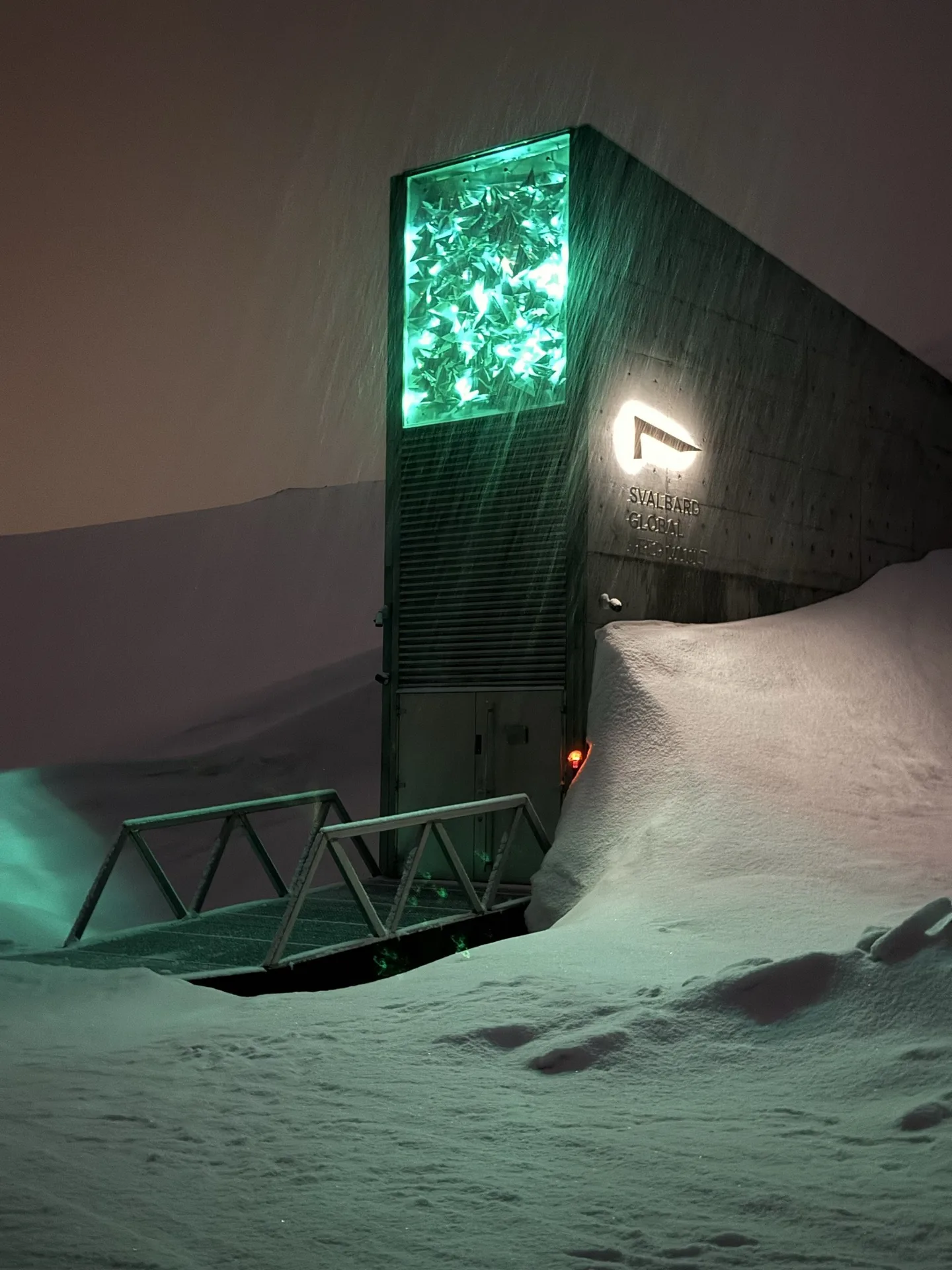
When conditions eased, we saw the entrance to the Svalbard Global Seed Vault. Most of it is hidden inside the mountain. The illuminated artwork on the concrete entrance offered a small, concentrated glow against the snow: a very modest visible doorway to a much larger idea.
04
Walking and watching
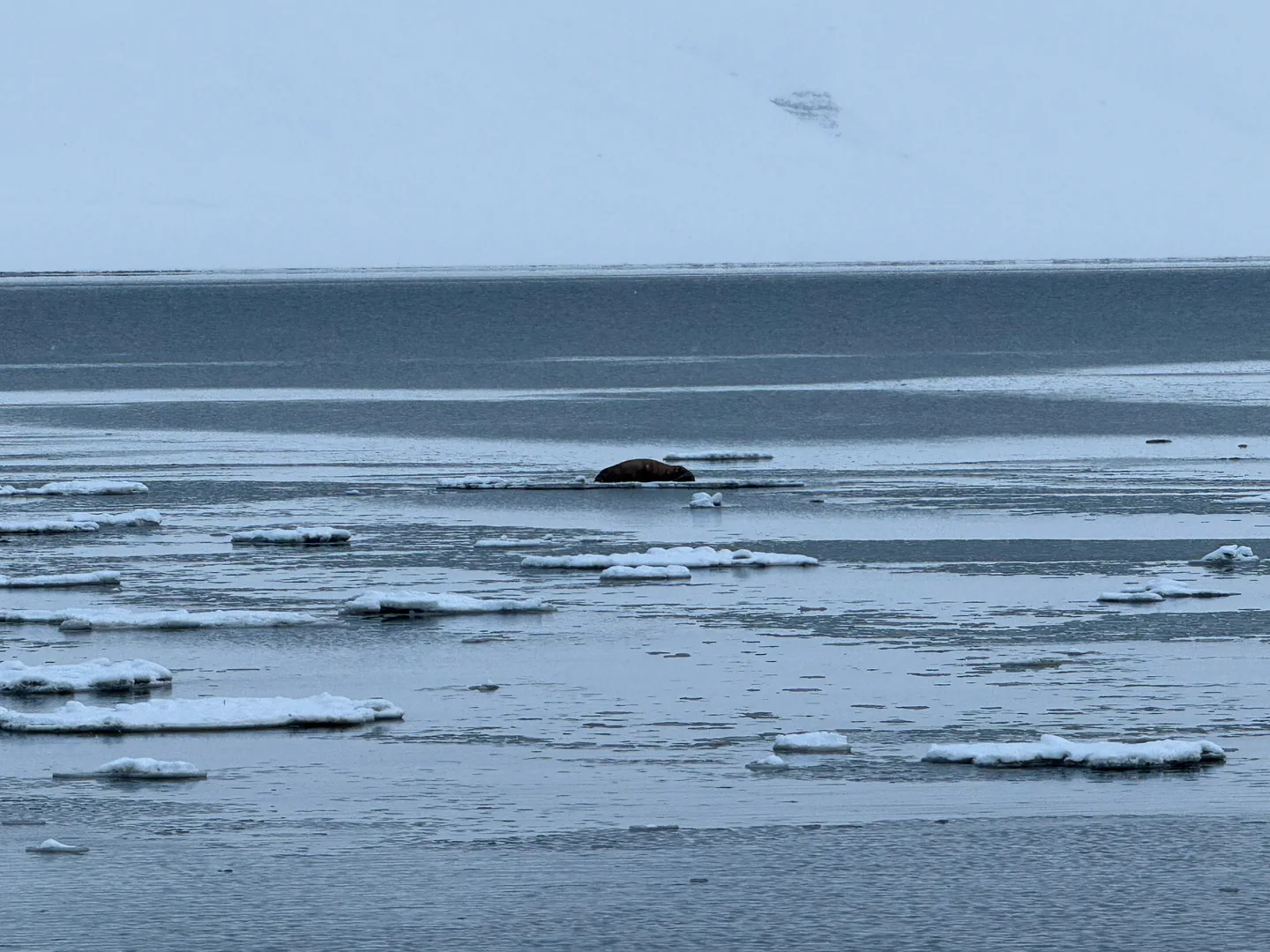
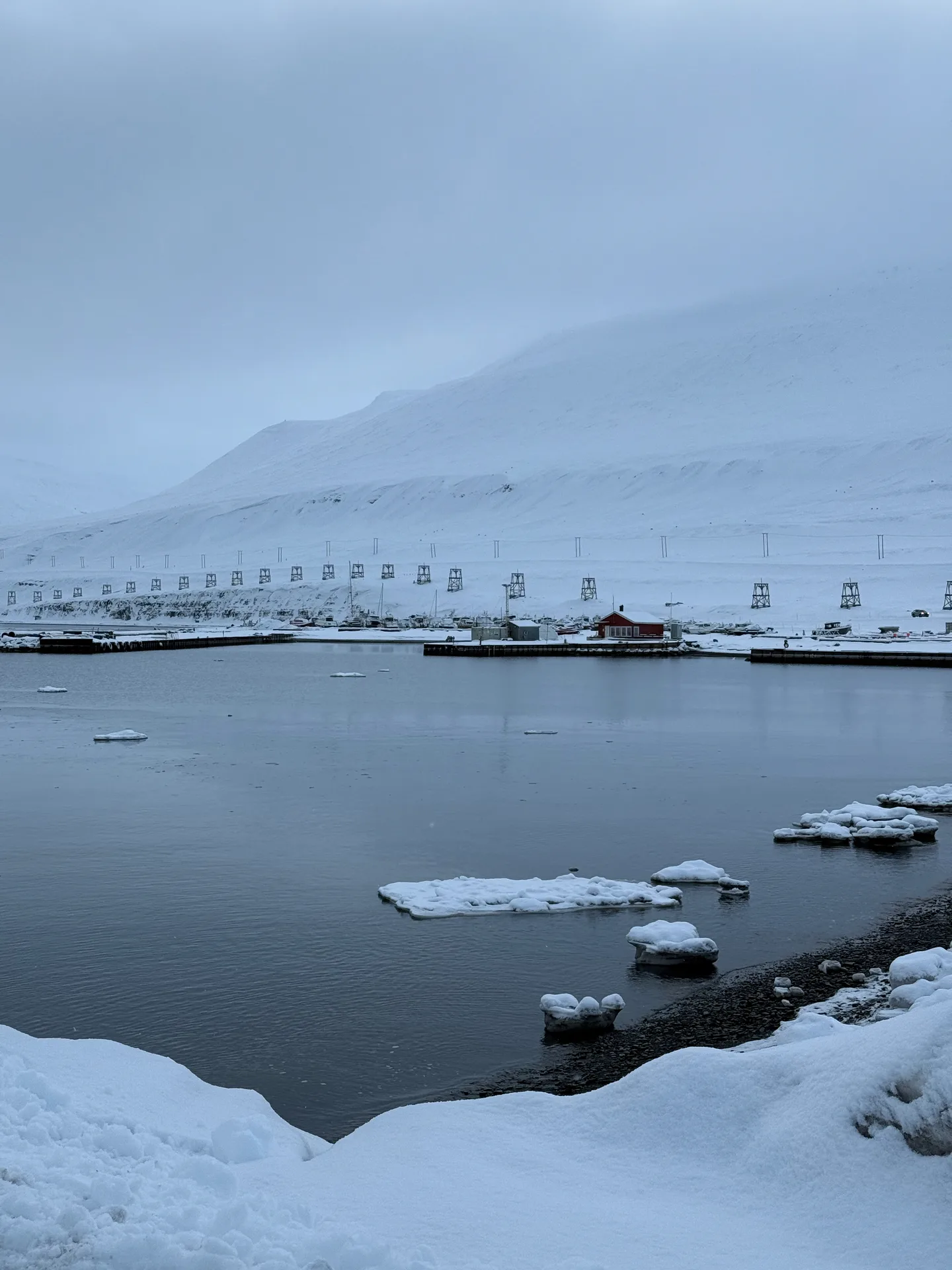
On our wildlife walk, the guide carried safety equipment as we followed the fjord. Broken ice floated near the harbour after the storm. A seal rested in the distance, so round and still it looked like a toy placed on the ice.
Higher on the slope, our guide lowered her voice. An Arctic fox was moving between snow and stone. Its white coat made it difficult to separate from the hillside. We stood quietly and listened to its thin calls reach us through the wind. The guide explained them as a search for a mate.
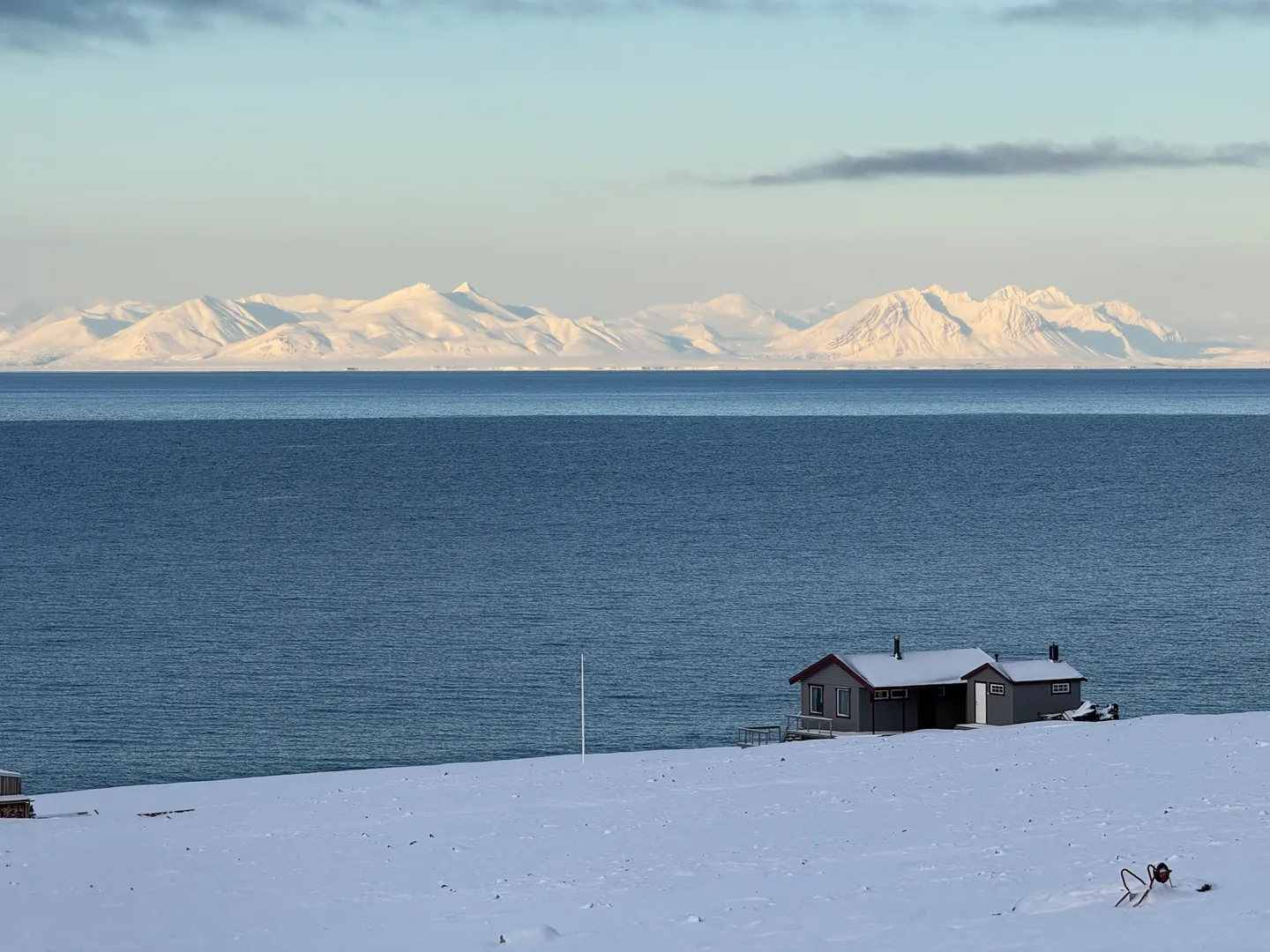
Across the fjord, sunlight edged the snowy mountains. A small wooden cabin faced the water. The Norwegian word hytte seemed to hold an entire wish: a quiet place to return to, a door that opens onto a landscape like this.
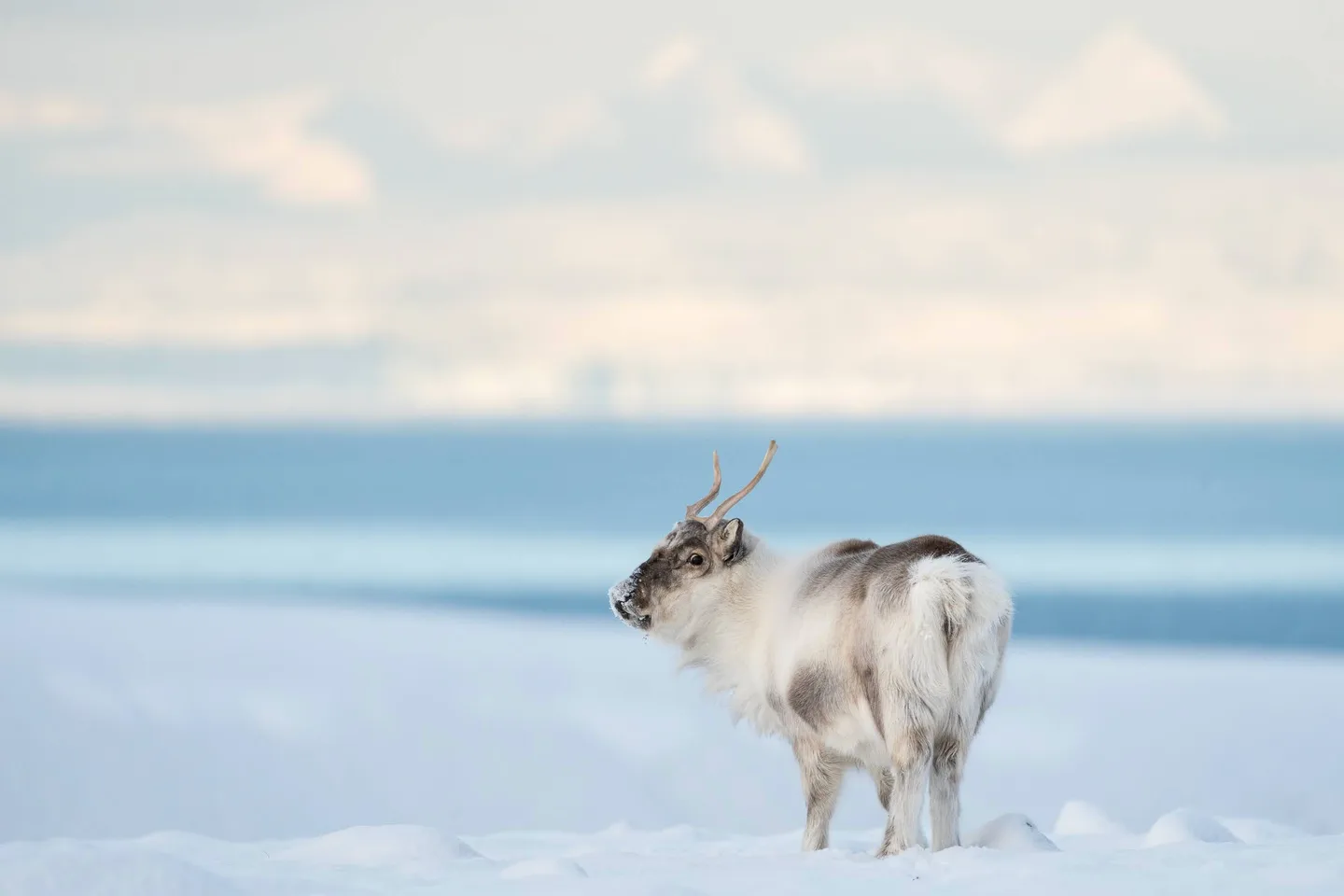
On the way back, a Svalbard reindeer raised its head from the snow. Short legs, a thick neck and a wonderfully oversized winter coat gave it the appearance of wearing a down jacket several sizes too large. It looked at us briefly, then returned to its own business.
05
Somewhere warm
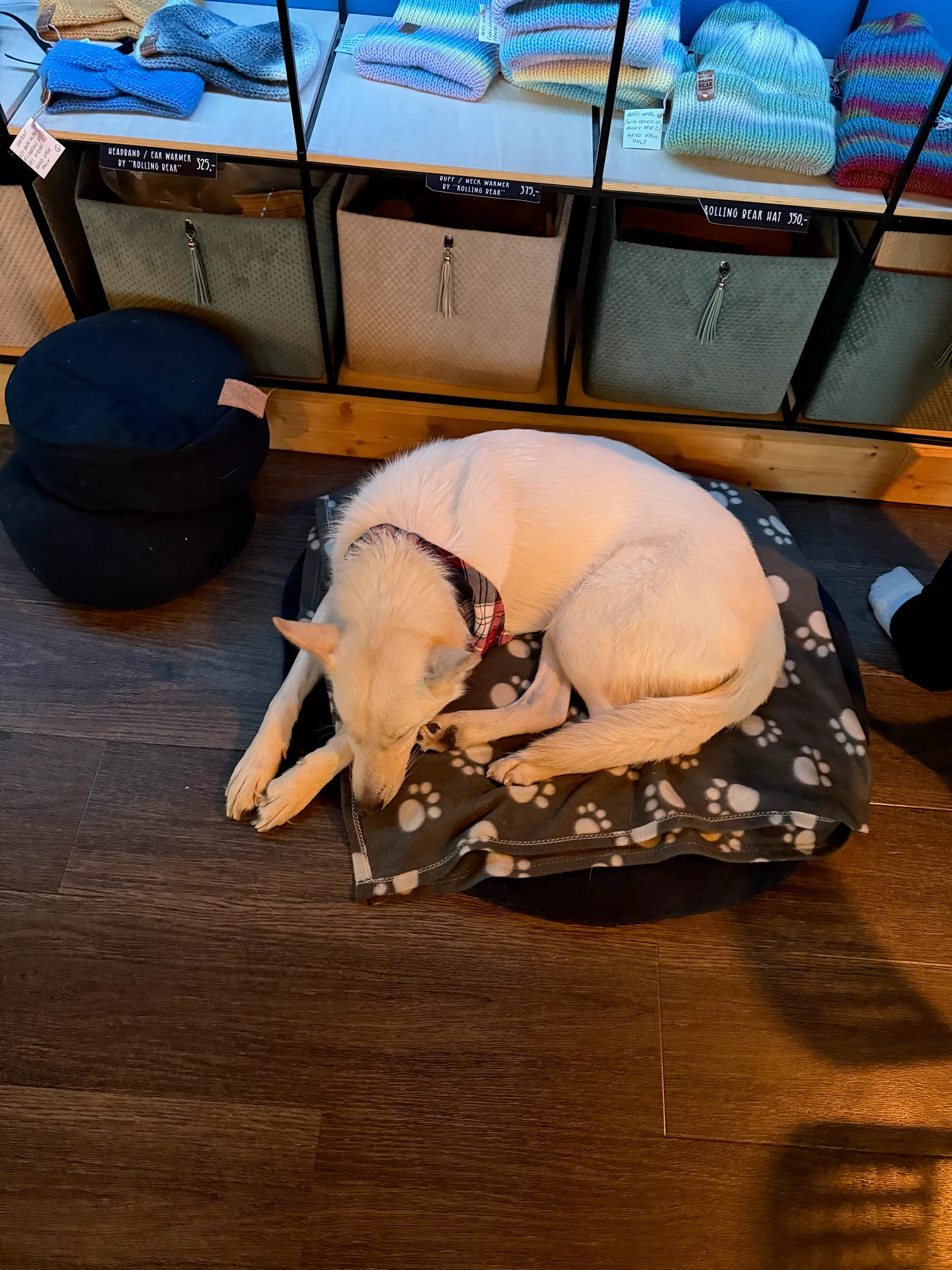
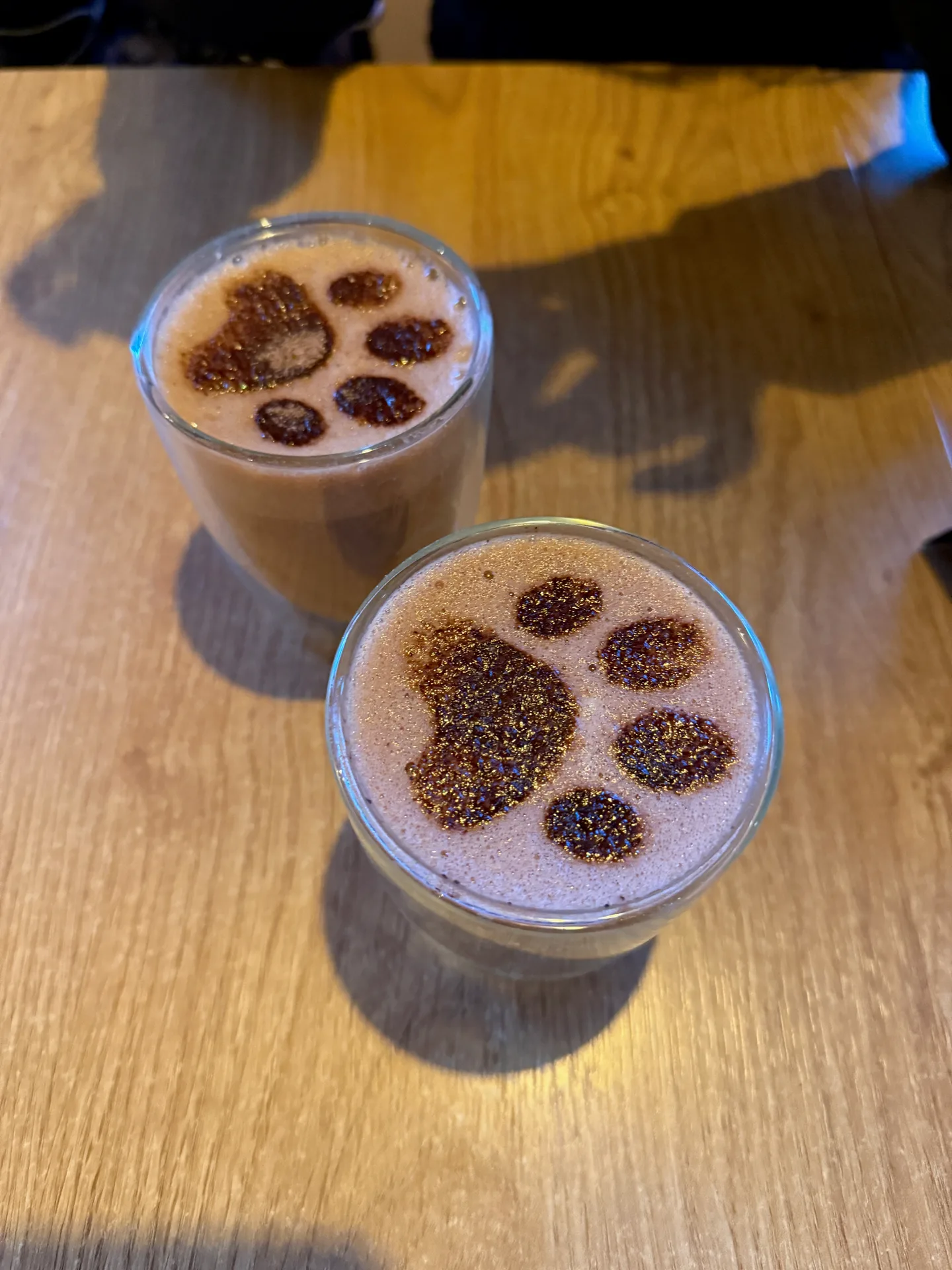
Before leaving, we escaped the wind indoors. Warmth, a window and a hot drink acquired a value difficult to explain farther south. A white dog called Luna slept in the souvenir shop; a cup of hot chocolate arrived with a paw-shaped pattern on top.
The contrast between those small comforts and the weather outside was part of the trip. The Arctic did not make ordinary things disappear. It made me notice them more.
06
The blue hour
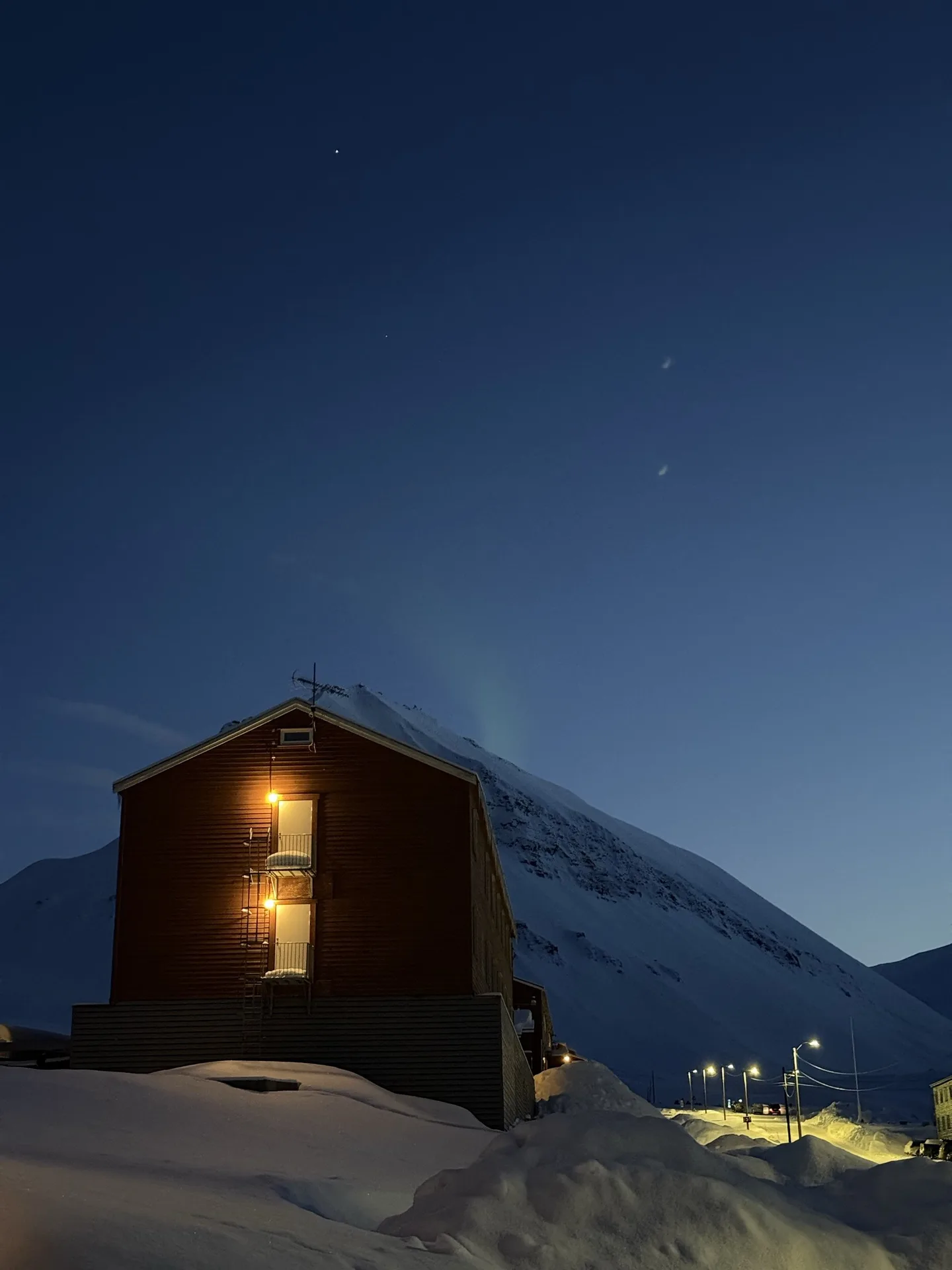
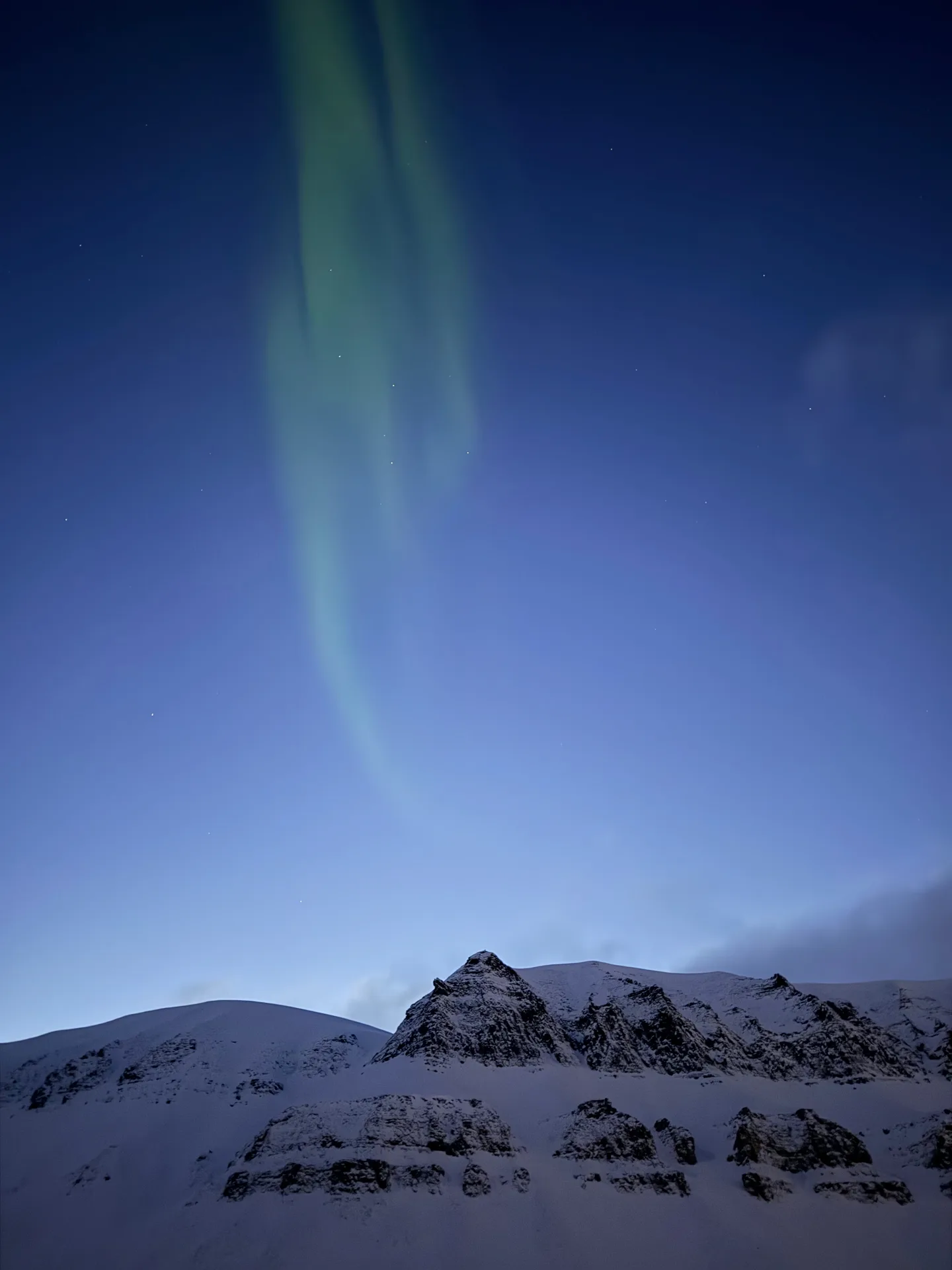
After the storm, the sky became a deep, saturated blue. At this latitude, the transition could linger long enough to feel like a separate part of the day.
Then a faint green aurora appeared in a short opening in the clouds. It was not especially bright to the eye. After two days of white weather, though, the small band of green felt like a handwritten note.
A cabin window glowed yellow on the slope. Here, a lit window seemed to mean more than decoration. It meant someone had chosen to stay, and that there was warmth behind the glass.
07
The sun returns
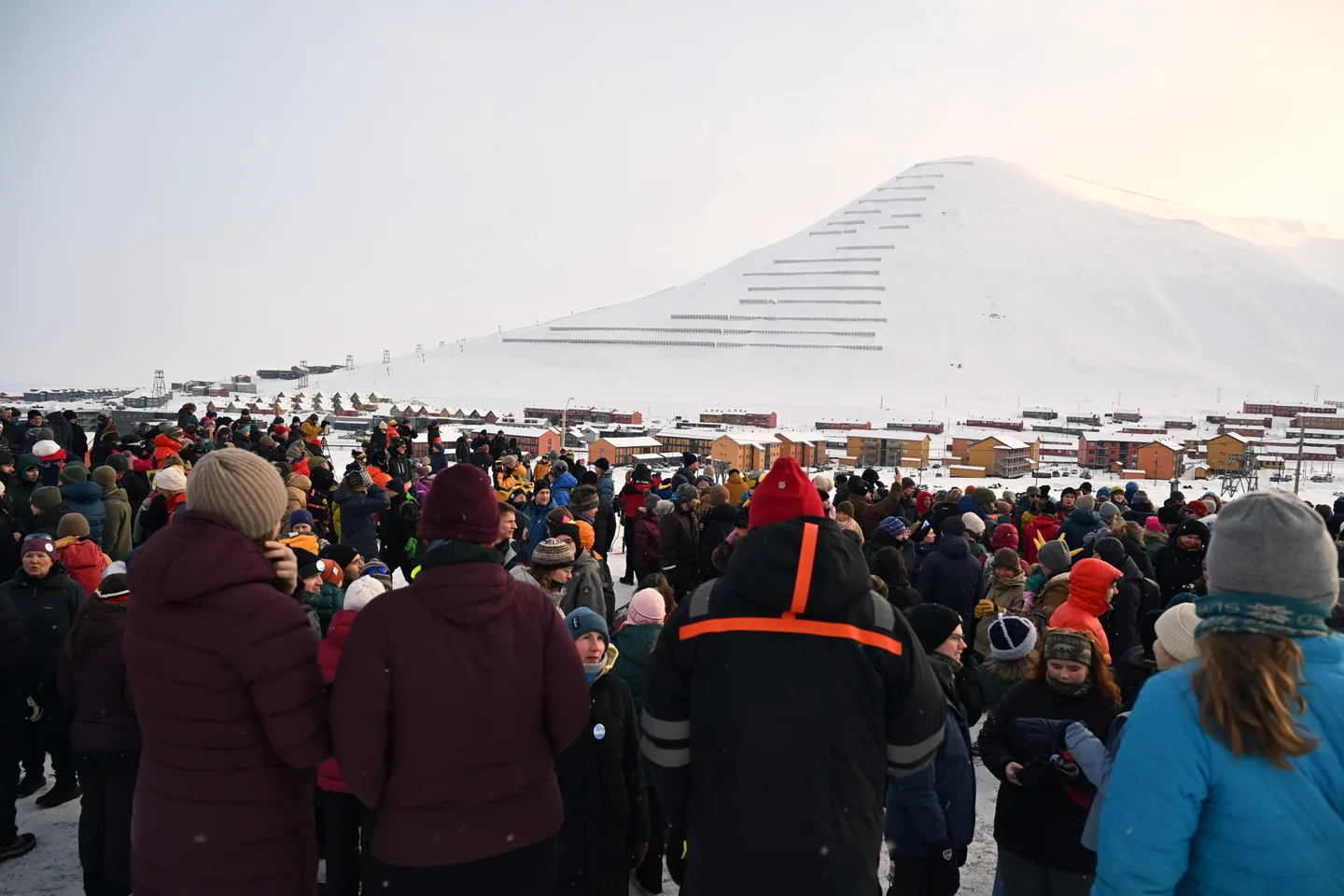
Our last day cleared just in time for the sun celebrations. Families gathered in heavy coats beneath the newly lit mountains. The return of direct sunlight to the town was not an abstract seasonal change. People had waited for it together.
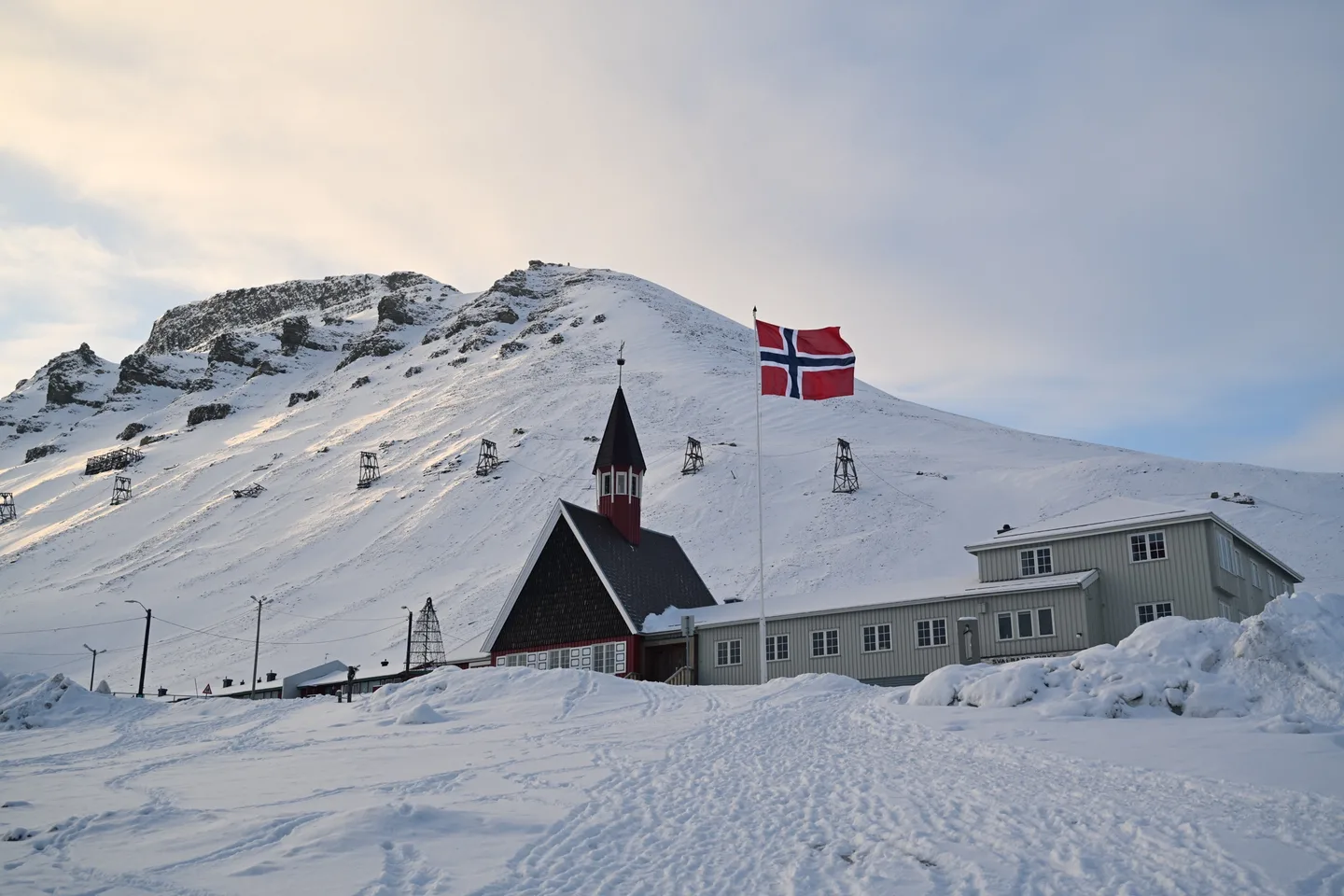
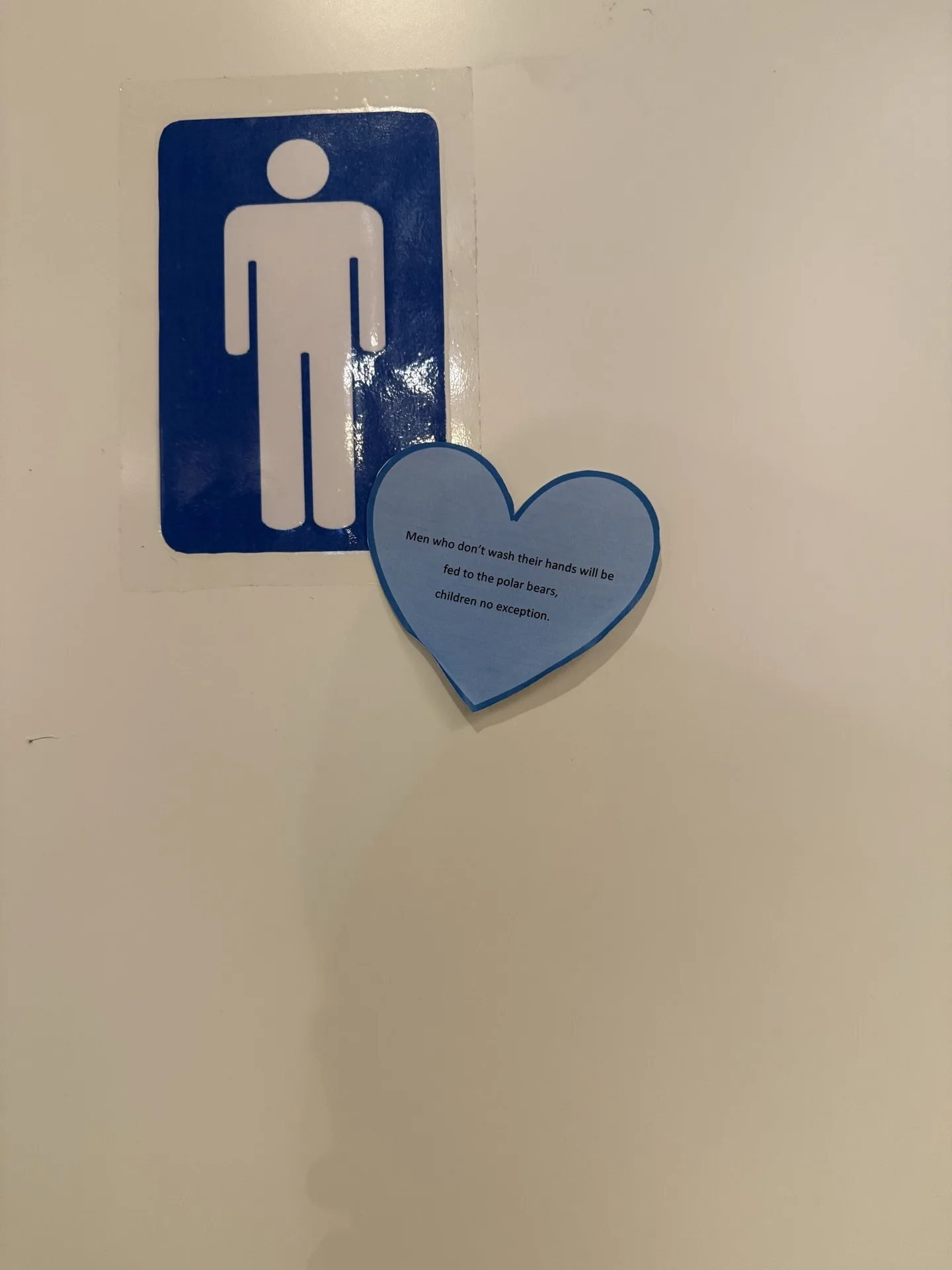
Nearby stood the wooden church, red-brown against snow, with the Norwegian flag extended by the wind. The town's stories mix practical restrictions, polar conditions and a very particular sense of humour. A restaurant sign threatened to feed men who failed to wash their hands to the polar bears. Even public hygiene had an Arctic punchline.
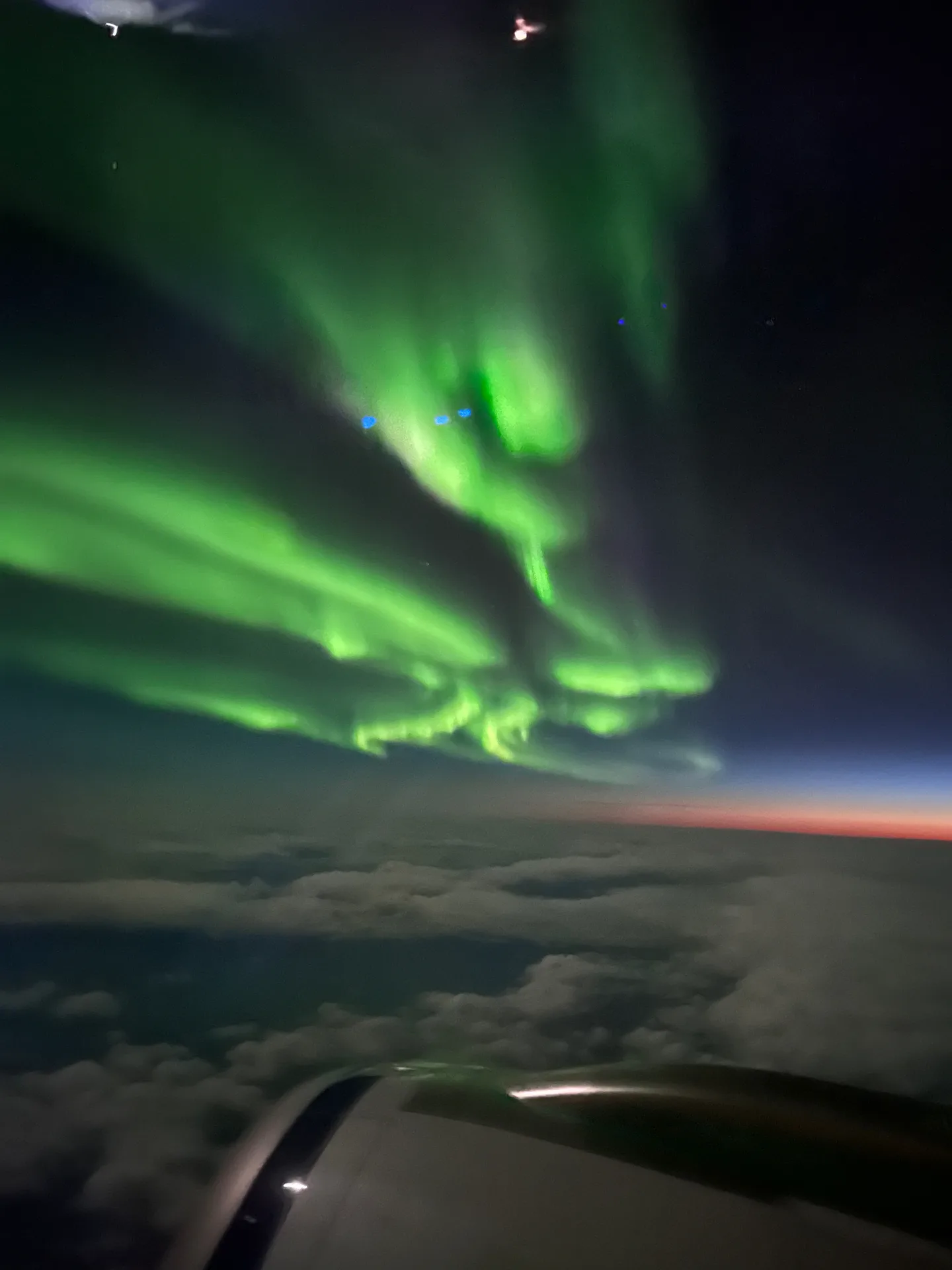
On the flight south, the captain asked passengers to look out on the right. A much stronger aurora was moving across the sky: green bands folding, breaking and gathering again. The journey ended with the landscape offering something we could not have scheduled.