NETHERLANDS / TRAVEL NOTES
Scheveningen
A seaside clock: the Kurhaus, the pier and the light slipping into the North Sea.
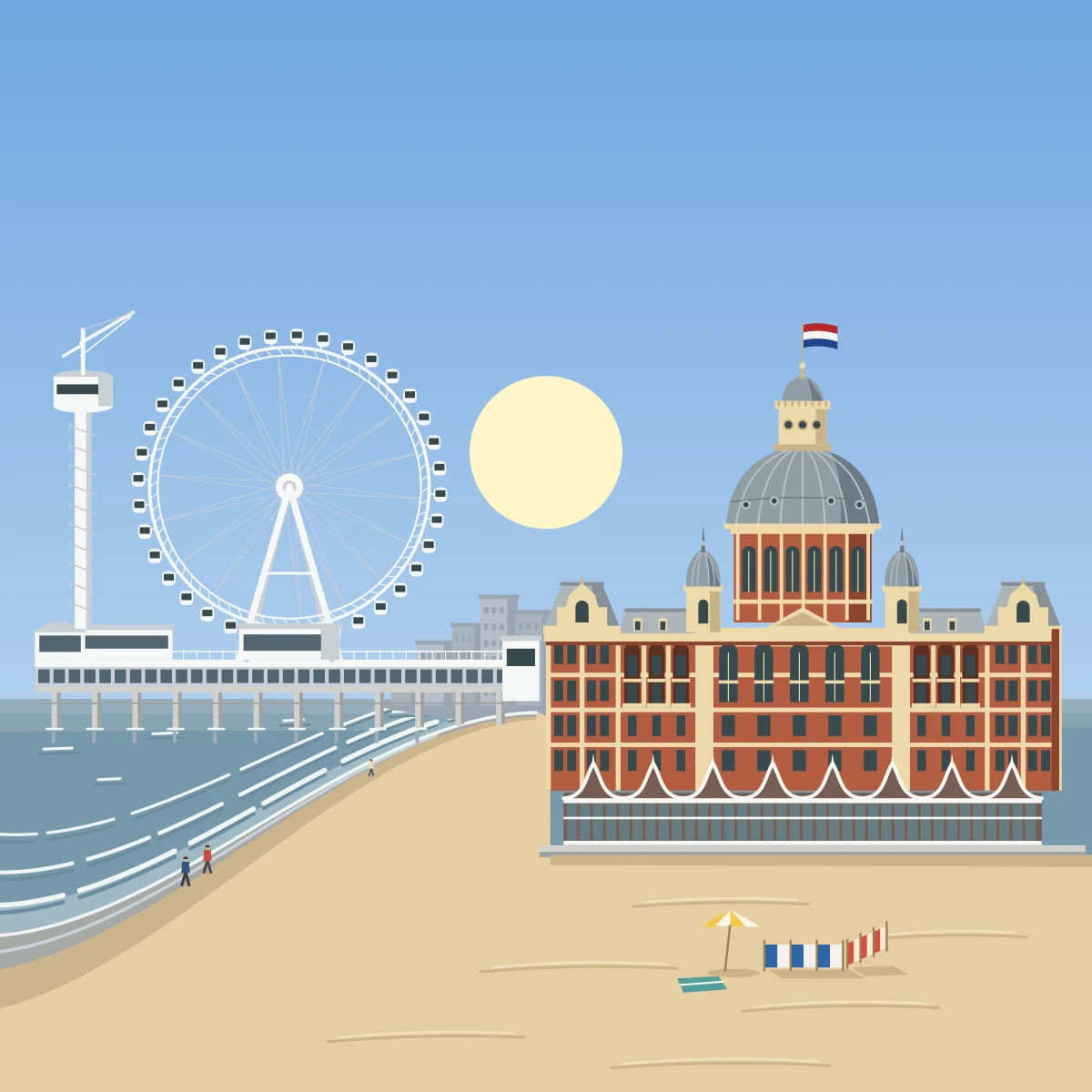
Scheveningen in Hourline shows the same artwork as the app, bringing its landmarks together in a composed scene.
01
The beach
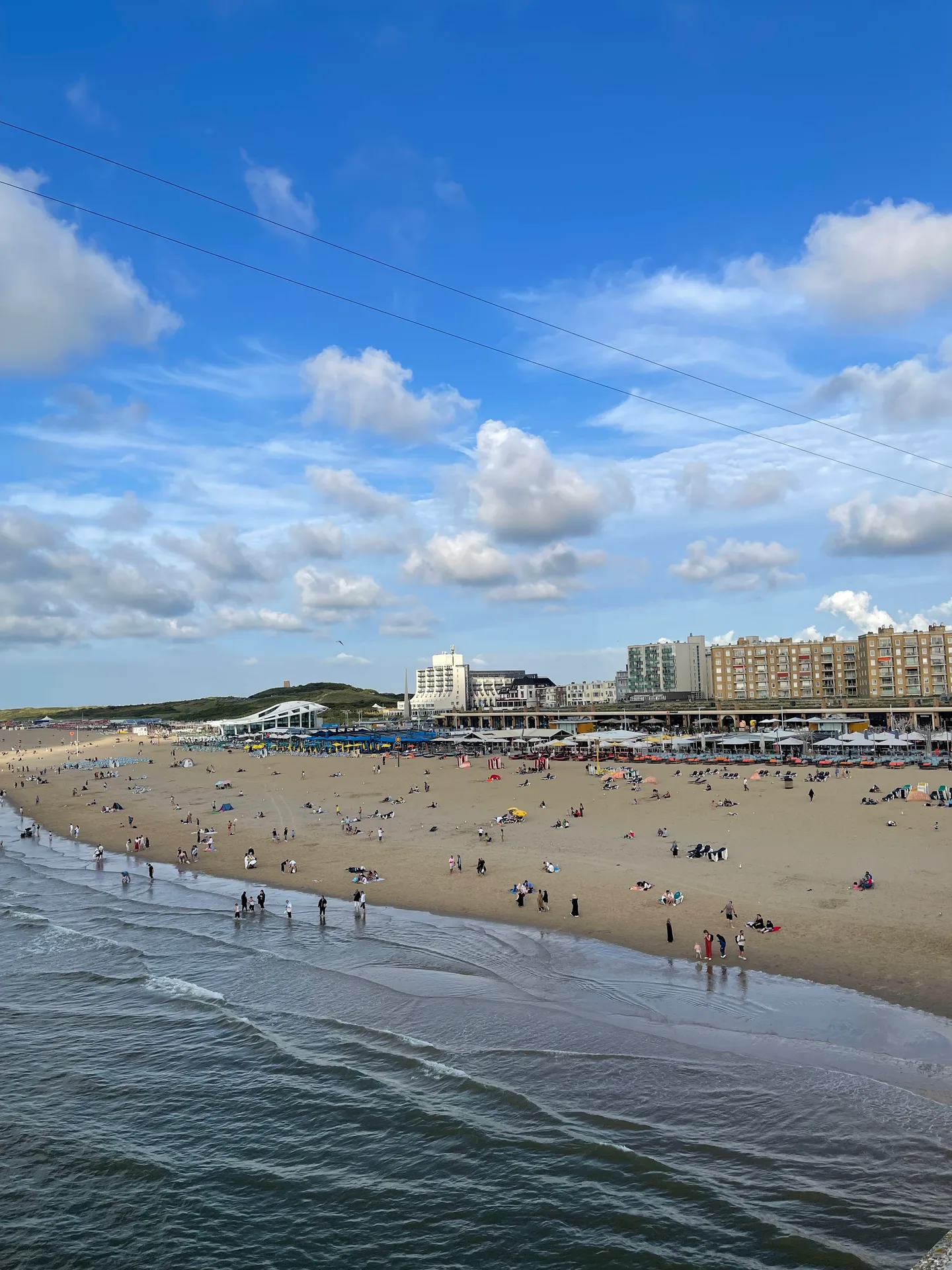
The Hague keeps its city centre inland, but its expression belongs to Scheveningen. A tram ride from the centre, then two blocks on foot, and the houses suddenly fall away. Ahead is a beach so broad it seems to have no end, with the grey-green North Sea beyond it.
On a July afternoon the sand was full of deckchairs, umbrellas, kites, children kicking footballs and friends drinking beer. The Dutch approach sunshine with the urgency of people who have been waiting for it for months. The water was another matter. Swimmers emerged shivering and wrapped themselves tightly in towels. I was happy to stand beside it and watch the steady waves push their pale foam up the sand.
02
The Kurhaus
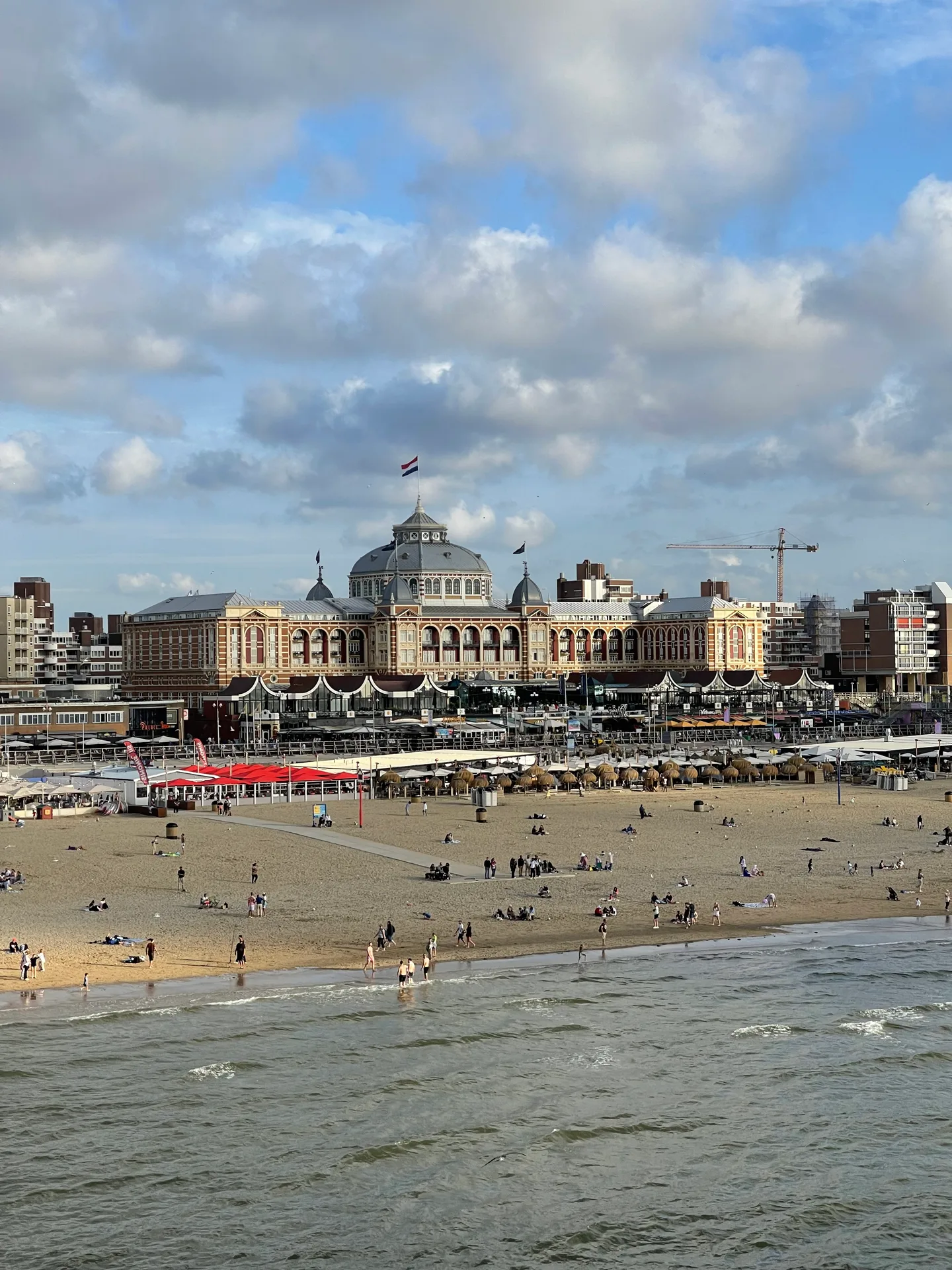
In the middle of the seafront stands the Kurhaus, the grand hotel that has watched over this coast since the nineteenth century. Its domes, elaborate façade and concert hall belong to the age when a holiday by the sea could be described as a cure. Even the name means something like “spa house”.
Scheveningen began as a herring village before becoming a resort. The Kurhaus gave that transformation a monumental address. A fire, a reconstruction, visiting aristocrats and a famously short Rolling Stones concert all belong to the building's history. Standing on the sand, I liked the thought that the same façade could outlast such different ideas of entertainment.
03
The pier
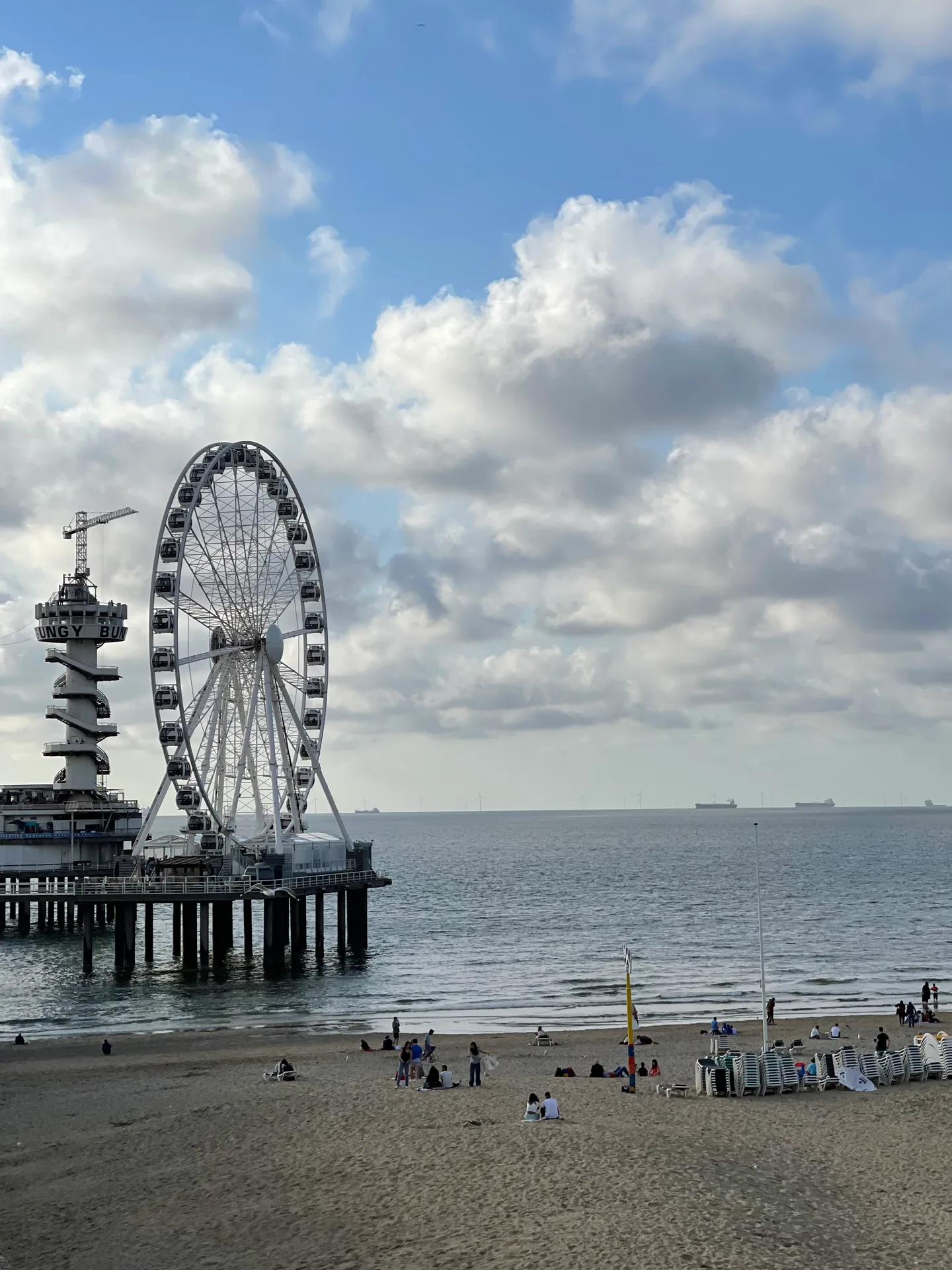
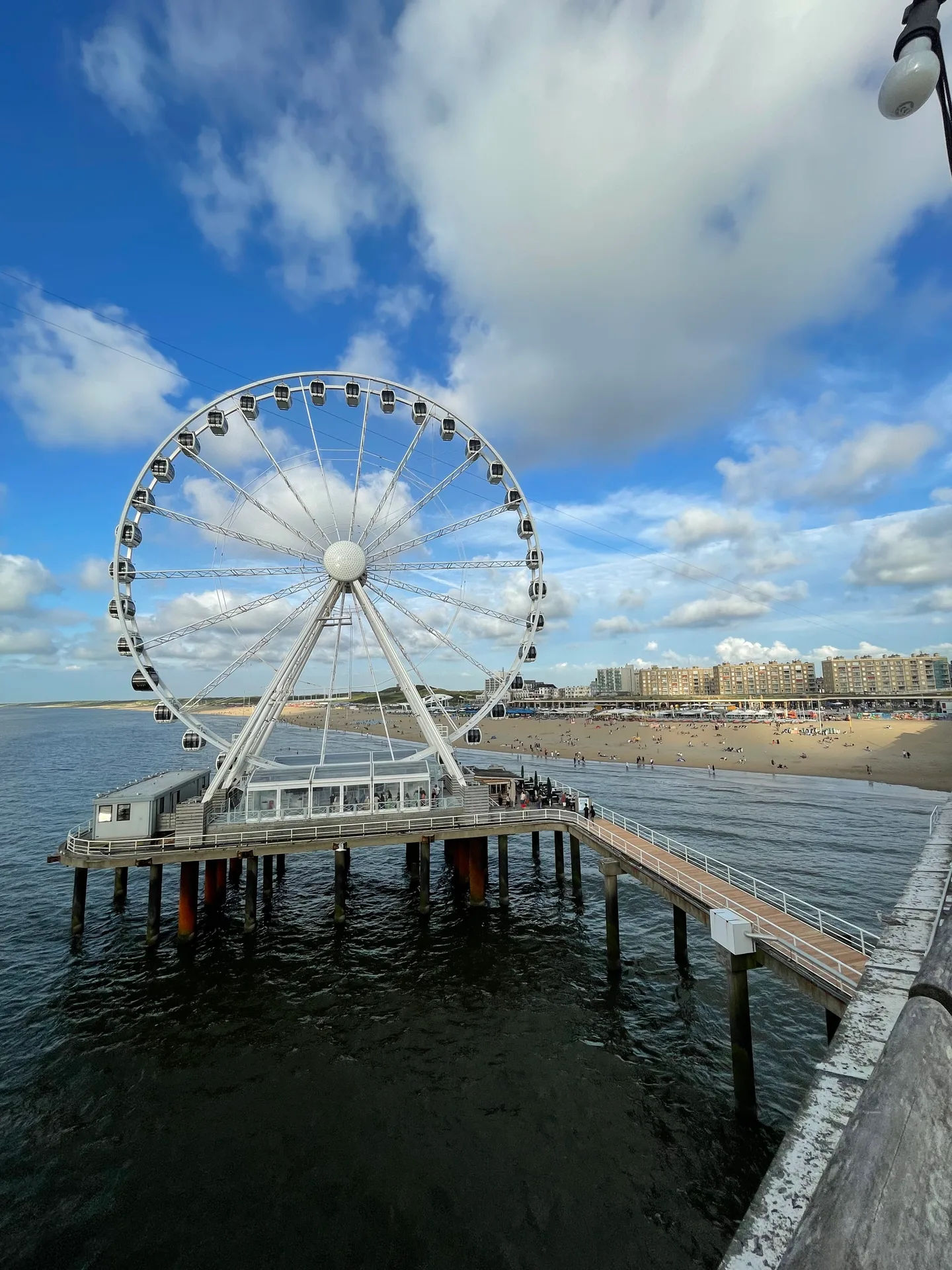
A short walk north brings you to De Pier. The modern structure reaches into the sea on concrete supports; its predecessor belonged to another age and did not survive the war. At the far end, SkyView turns slowly above the water. A spiral tower and a bungee platform give the horizon its slightly improbable outline.
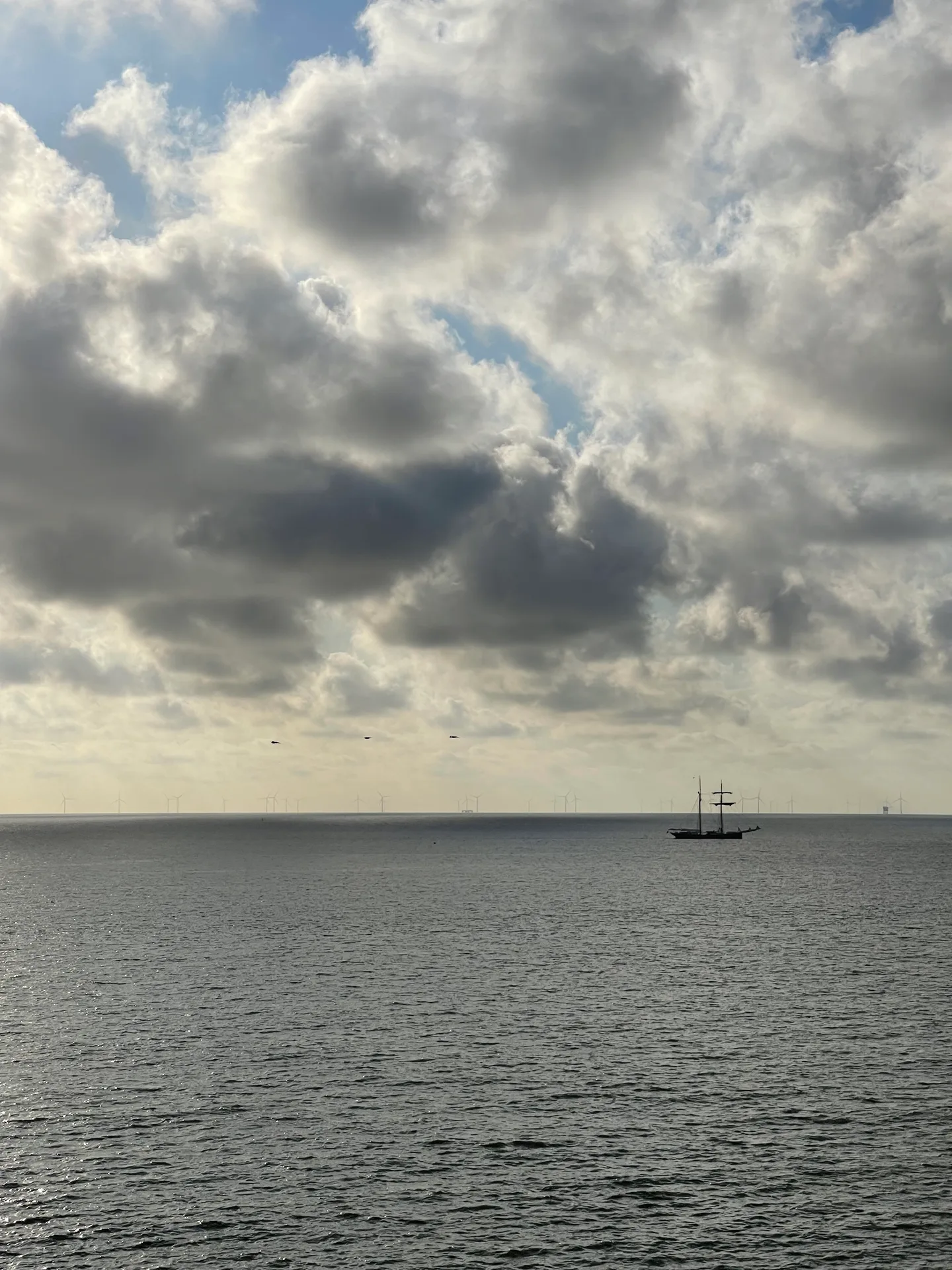
From the end of the pier, the coast opens out in both directions. The Kurhaus and the long line of apartments sit beneath enormous Dutch clouds: grey, white, soft-edged and always rearranging themselves. They are the same clouds that fill so many old paintings. The foreground changes; the sky keeps doing its work.
04
Traces of war
The cheerful seafront has a darker history. During the occupation, the coast became part of the Atlantic Wall. Residents were displaced and buildings demolished to make room for defences. Concrete bunkers still survive in the dunes, half hidden by sand and grass.
Even the name Scheveningen carries a wartime story. Its difficult Dutch opening sound became a shibboleth, a word associated with distinguishing a local speaker from an outsider. It is strange to stand among beach cafés and realise that a place name once served such a different purpose.
05
Returning at dusk
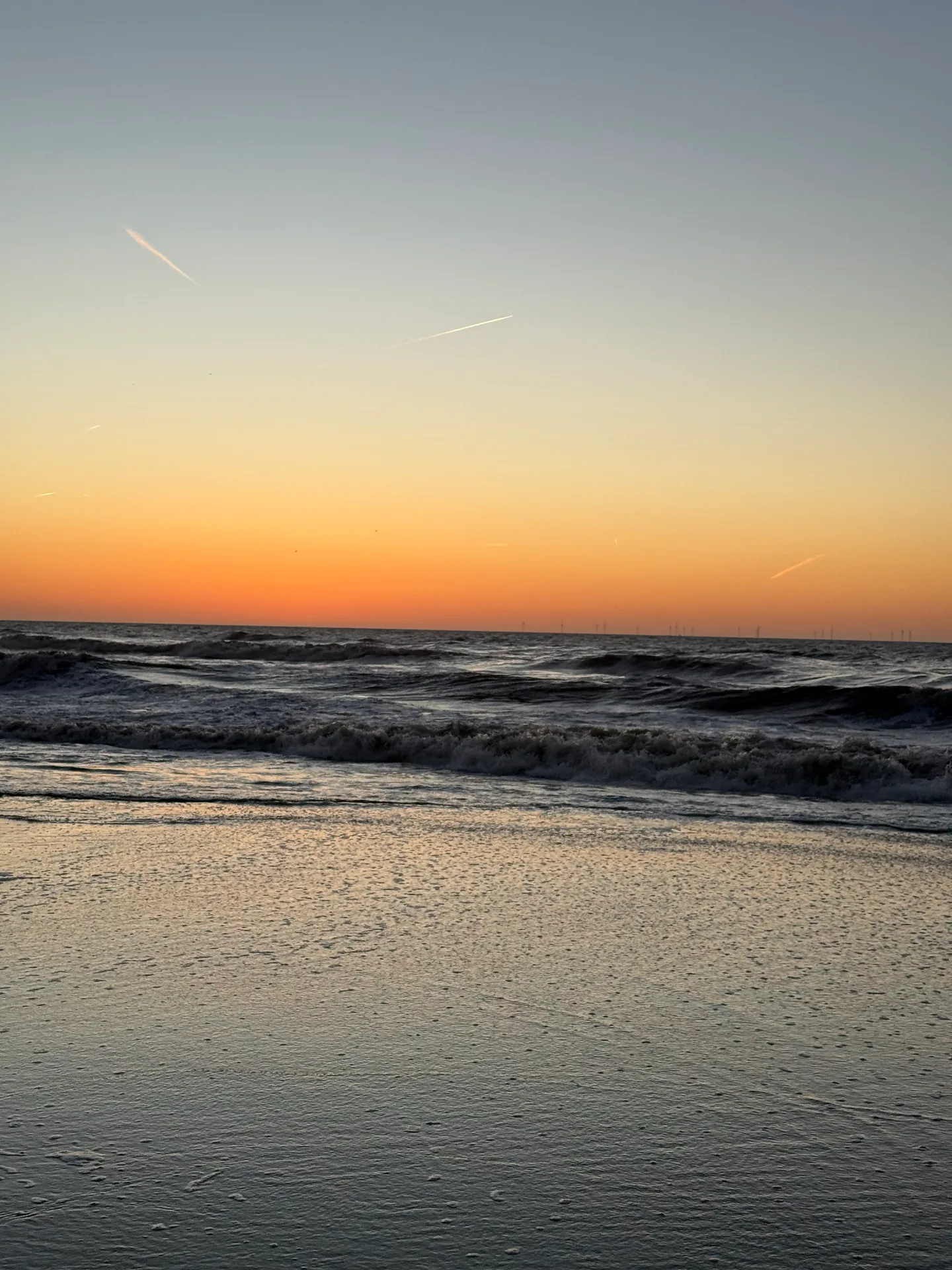
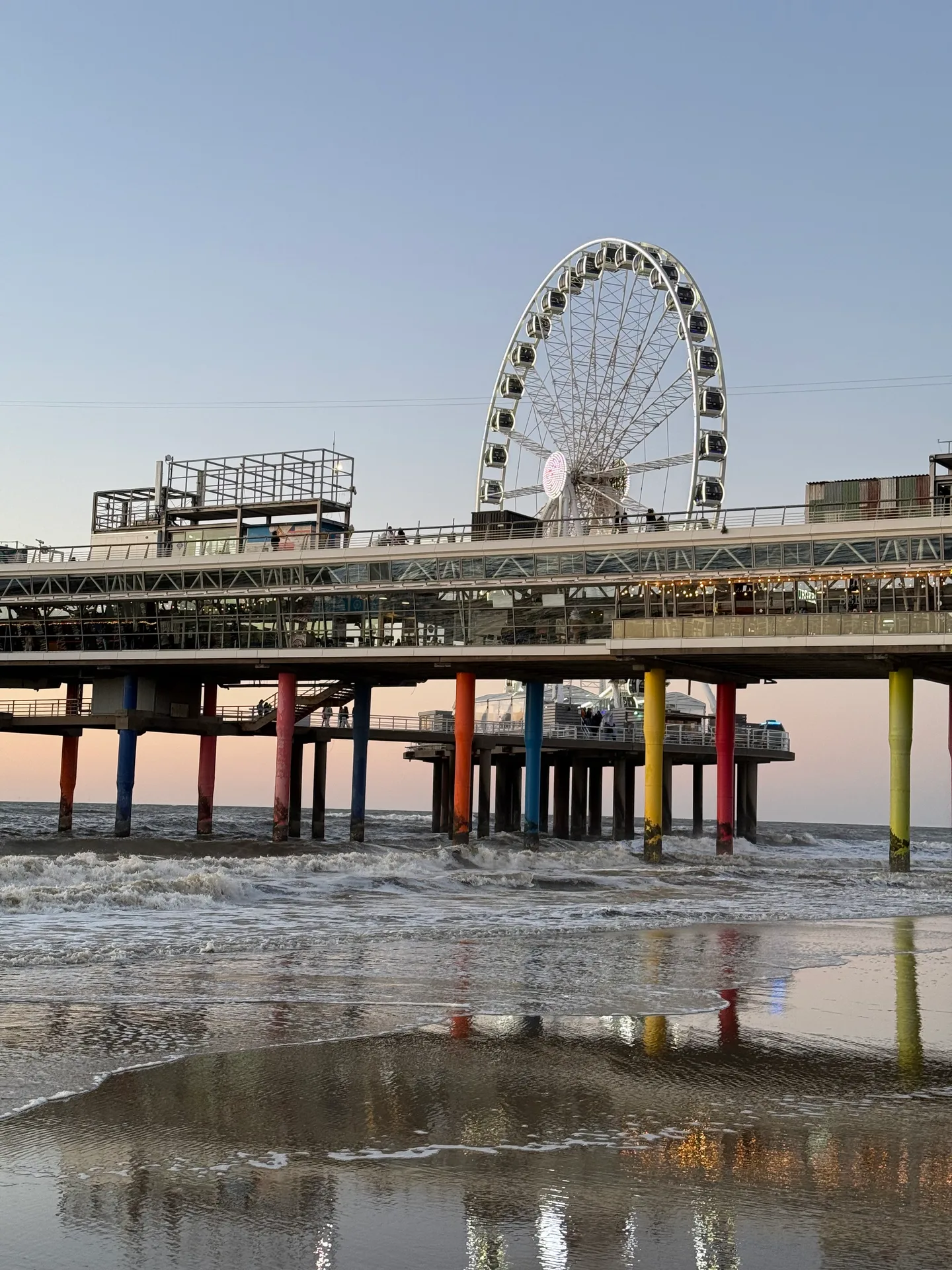
I came back in April to find another coast entirely. The beach was almost empty and the wind had a hard edge. Wet sand turned the orange-red sky upside down, stretching its reflection all the way to the water.
This was the best moment to see the wheel. The white framework caught the last light and turned gold. Almost empty cabins moved at the pace of a forgotten clock, while the coloured pier supports broke apart and reassembled in the waves.
06
Above the North Sea
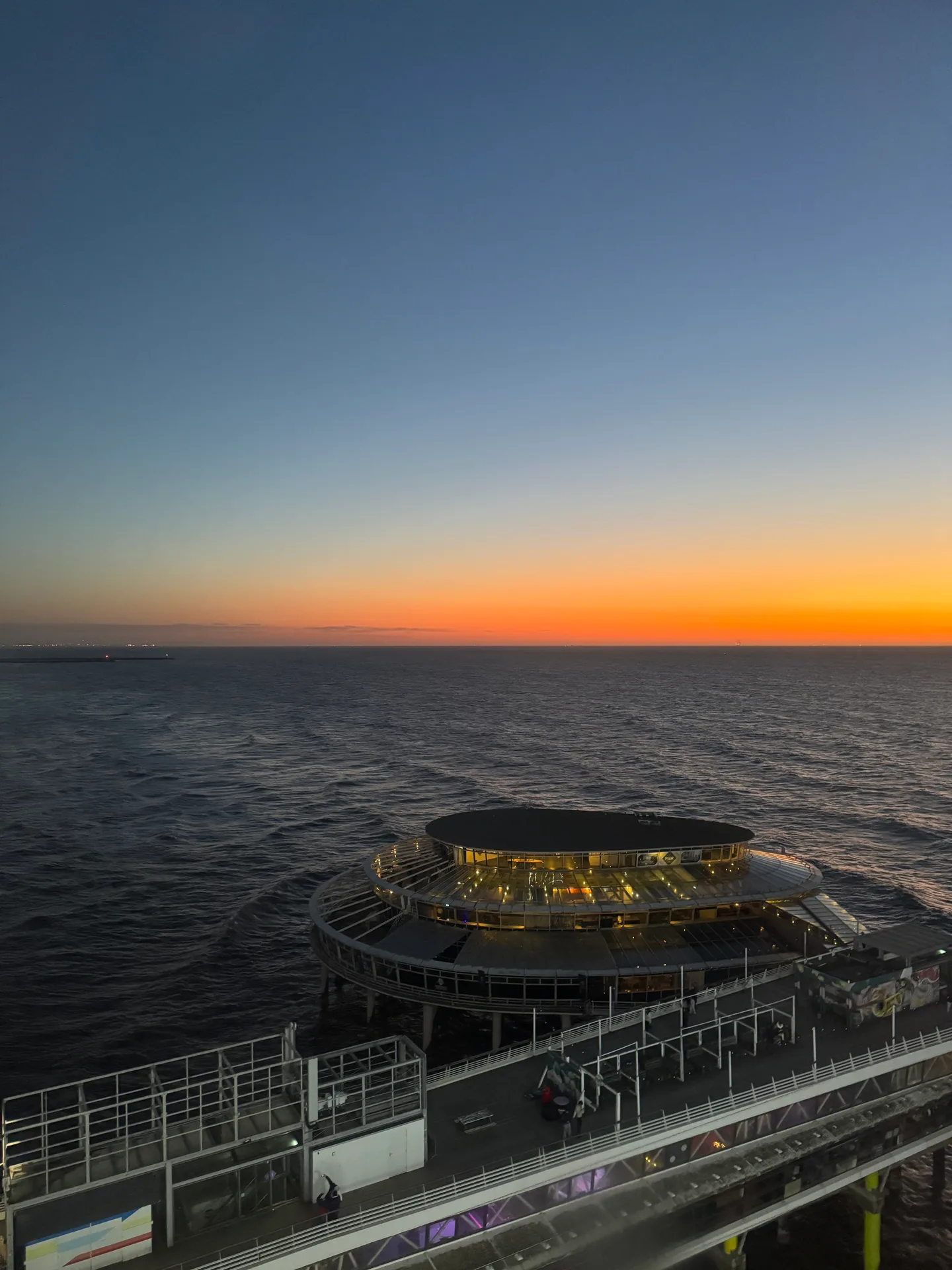
I bought a ticket before sunset. The cabin had glass on three sides, a little sea air finding its way in, and a gentle sway at the top. Halfway up, the sun was resting on the horizon. A strip of light ran across the otherwise dark sea, straight towards the pier. Below, warm lights around the bungee platform looked like a golden ring.
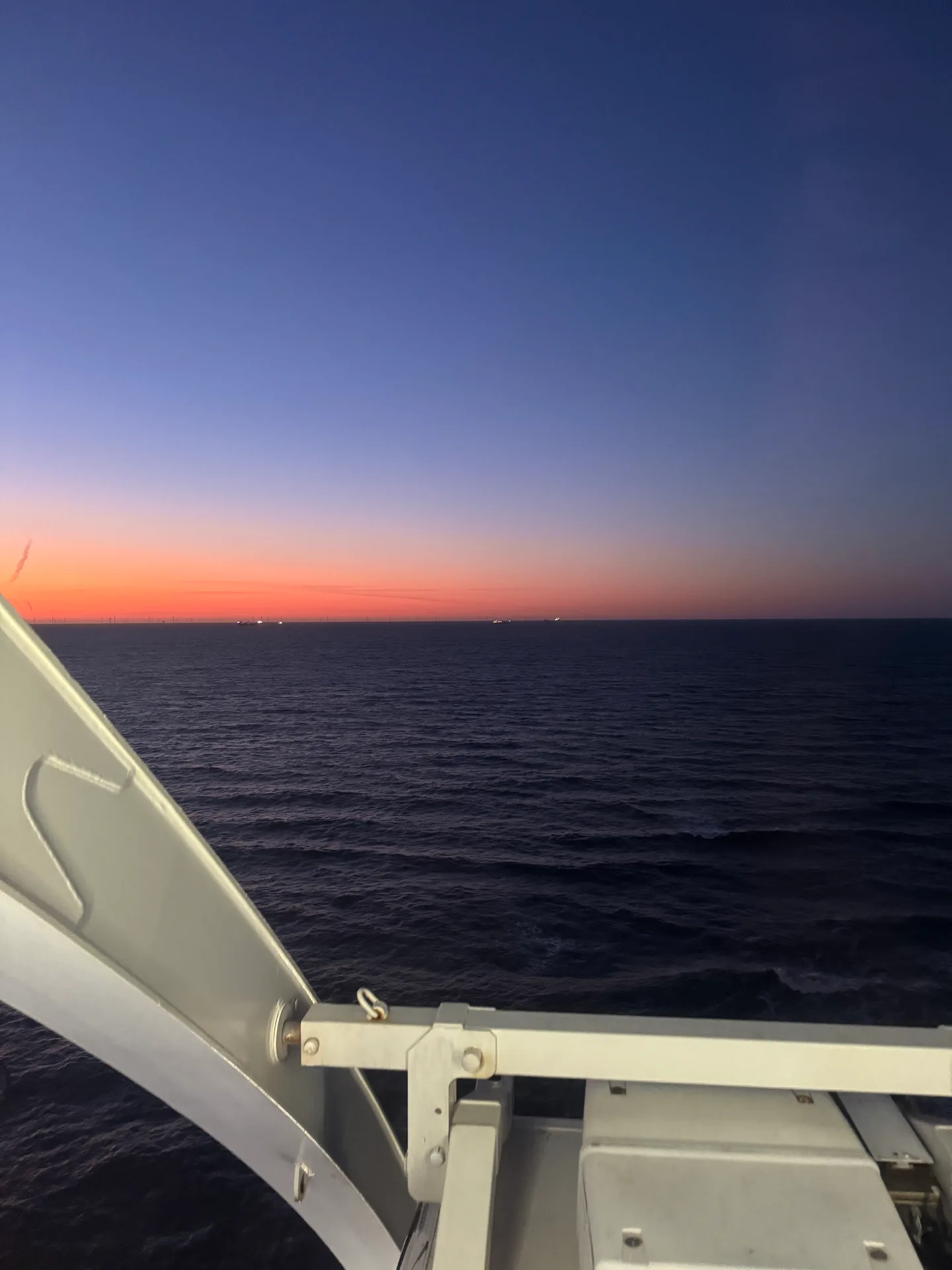
By the time we reached the highest point, the sun had gone. One narrow orange seam remained above the water, fading through violet into deep blue. The cabin's metal frame reflected a cooler light. For a few minutes, the whole coast seemed to be between two times of day.
07
The lights come on
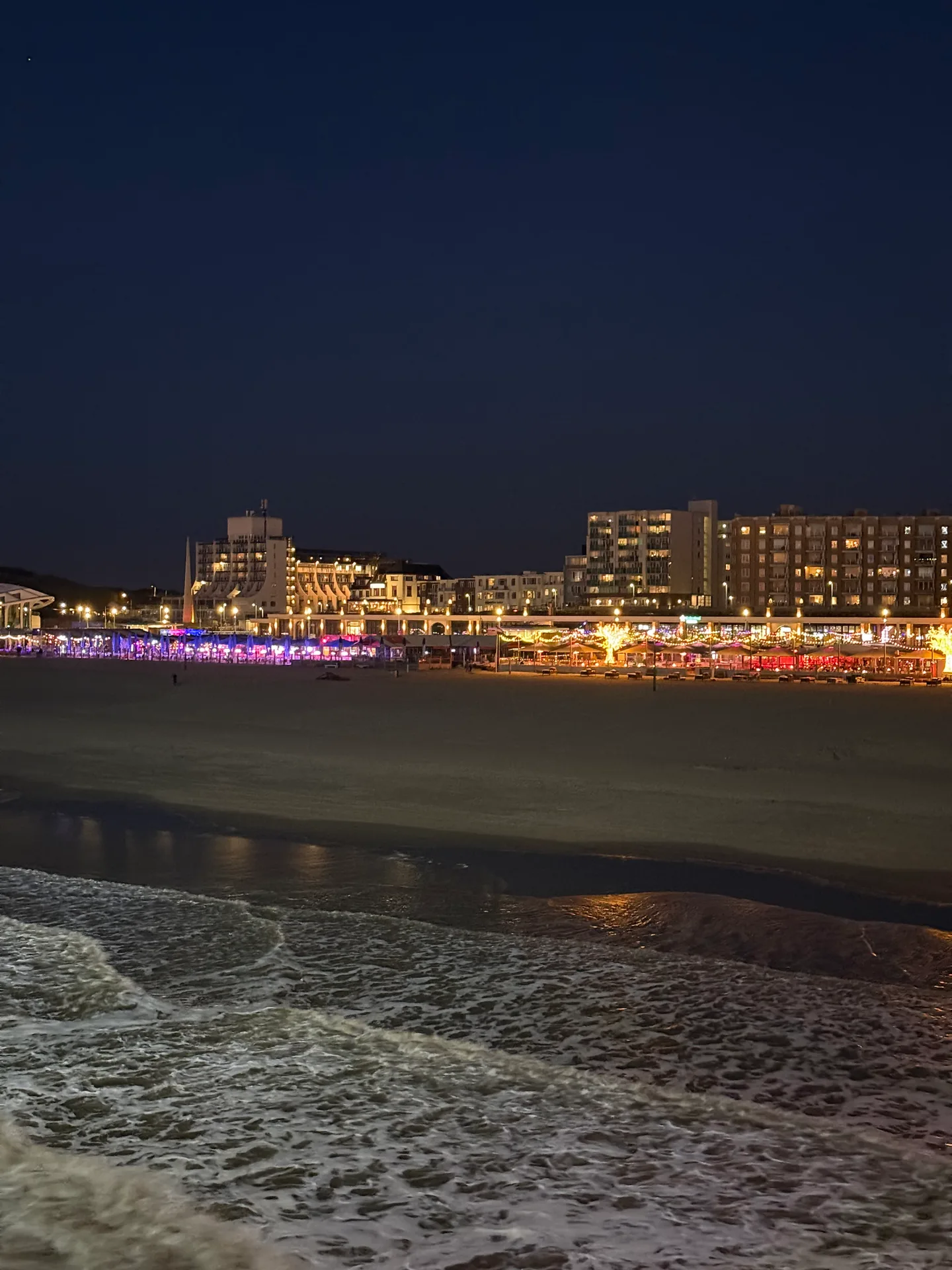
Before the second circuit ended, lights began appearing along the boulevard. The Kurhaus glowed warm yellow. Restaurants and bars made a ribbon of colour beside the beach. The sand had disappeared into darkness, and the sound of the waves seemed farther away.
The Dutch relationship with the sea is full of contradictions. It is something to hold back with dunes, pumps and dykes, and something to enjoy with a swim, a herring sandwich or coffee on a hotel terrace. At Scheveningen, both relationships occupy the same stretch of shore.