FRANCE / TRAVEL NOTES
Paris
An April evening, a tower turning gold, and a city that lets the new grow old.
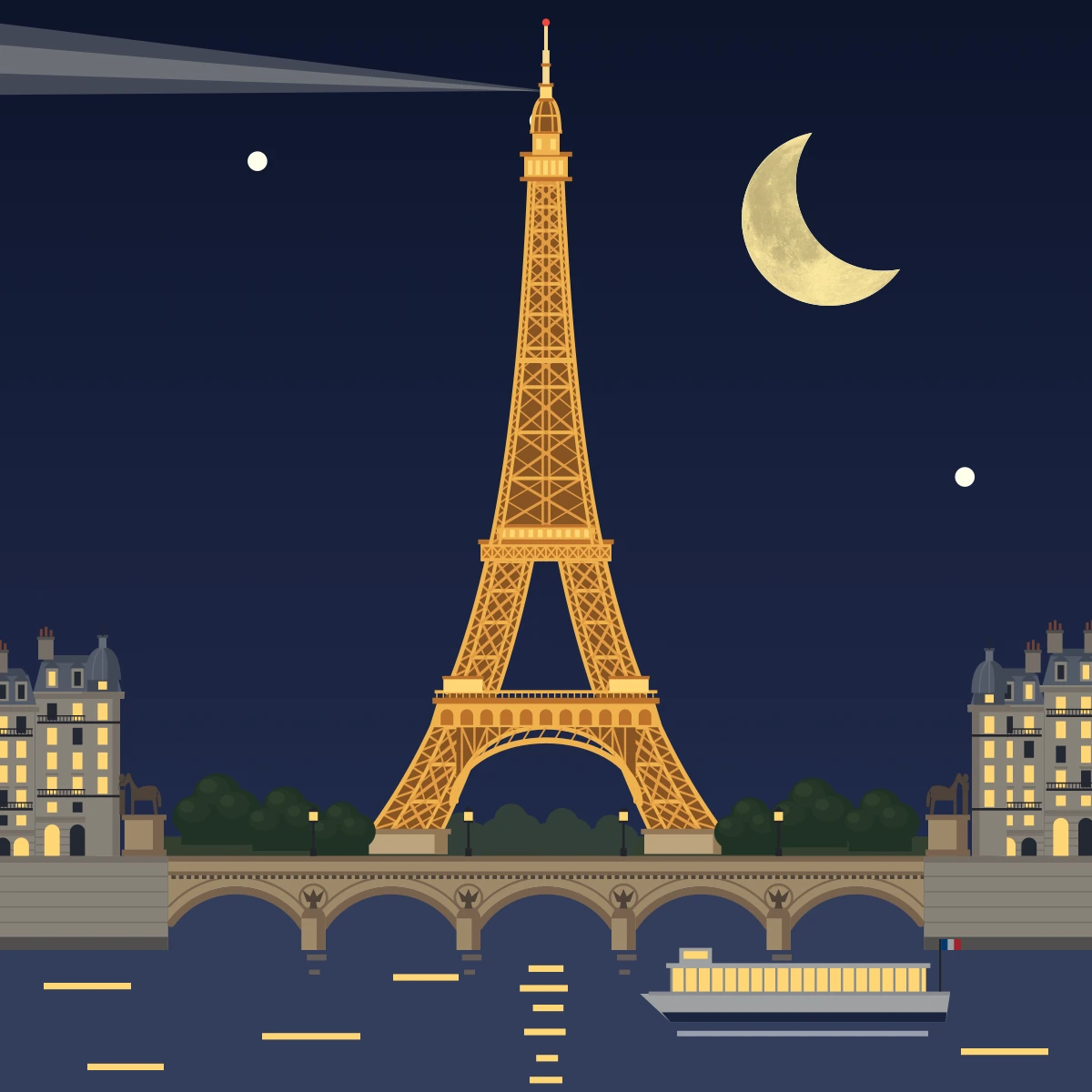
Paris in Hourline shows the same artwork as the app, bringing its landmarks together in a composed scene.
01
When the tower lights up
Paris takes its time getting dark in April. The RER B carried me in from Charles de Gaulle through the concrete suburbs. As the train approached the centre, buildings became lower, older and more beautiful, as though an urbanisation documentary were running backwards. Later, on Métro Line 6, the Eiffel Tower suddenly appeared beside the elevated track. The carriage fell quiet for a moment. Then everyone raised a phone.
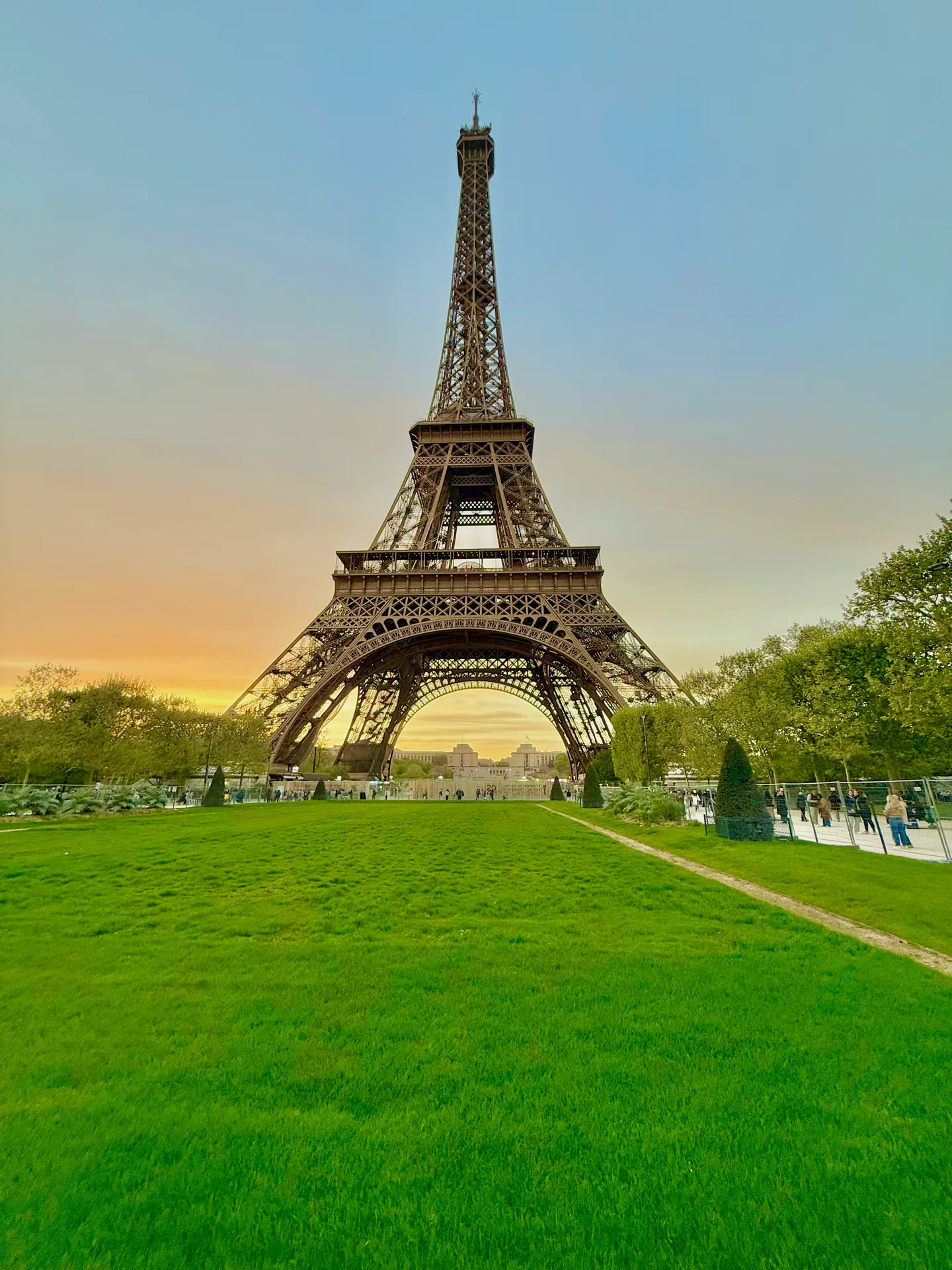
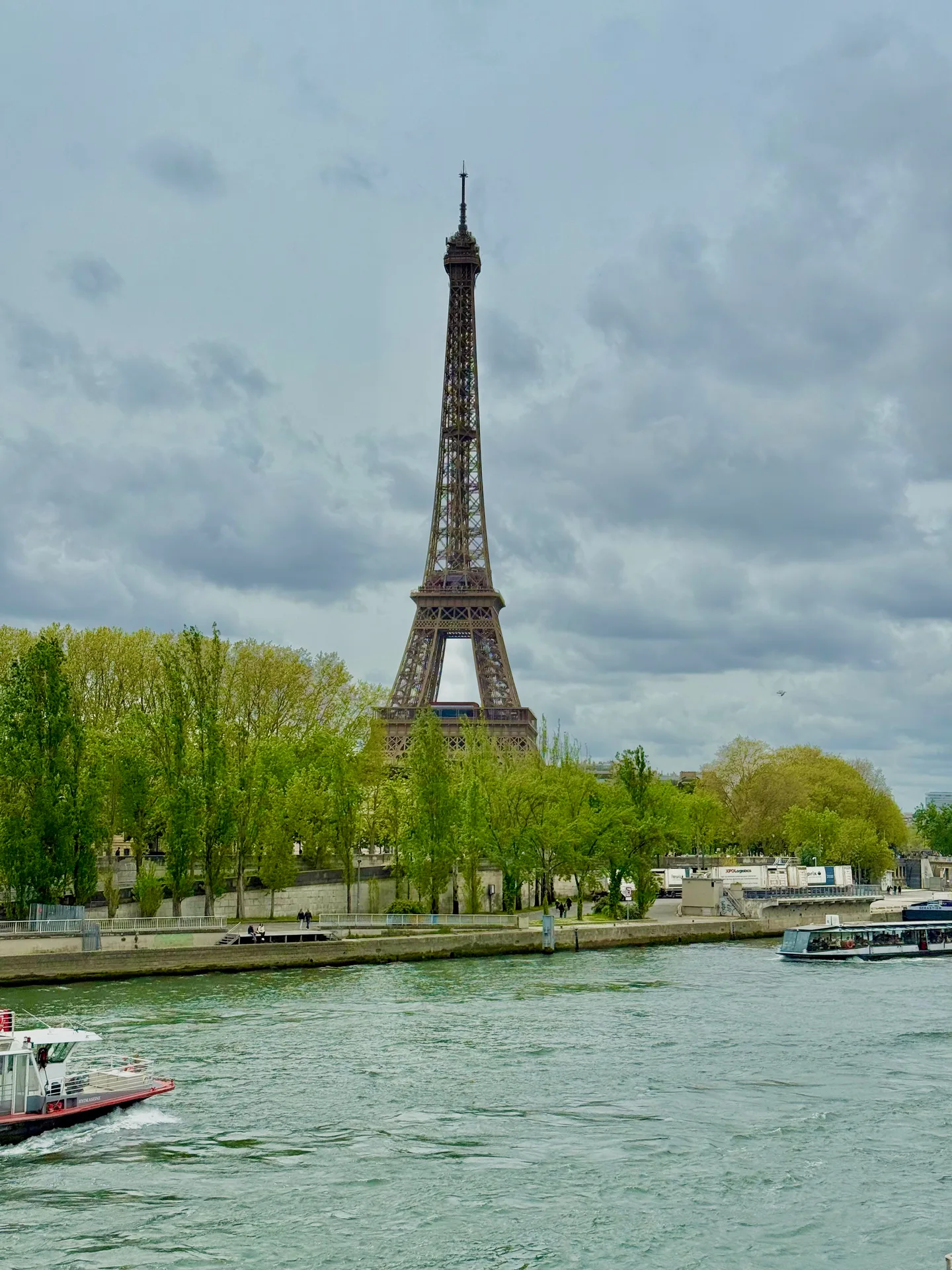
From the Champ de Mars, the tower was a dark silhouette against the evening sky. Its exposed metalwork is still startling: no façade to conceal the structure, just the structure itself. The writers who once objected to it have become part of its story. The tower stayed; their complaints became an anecdote.
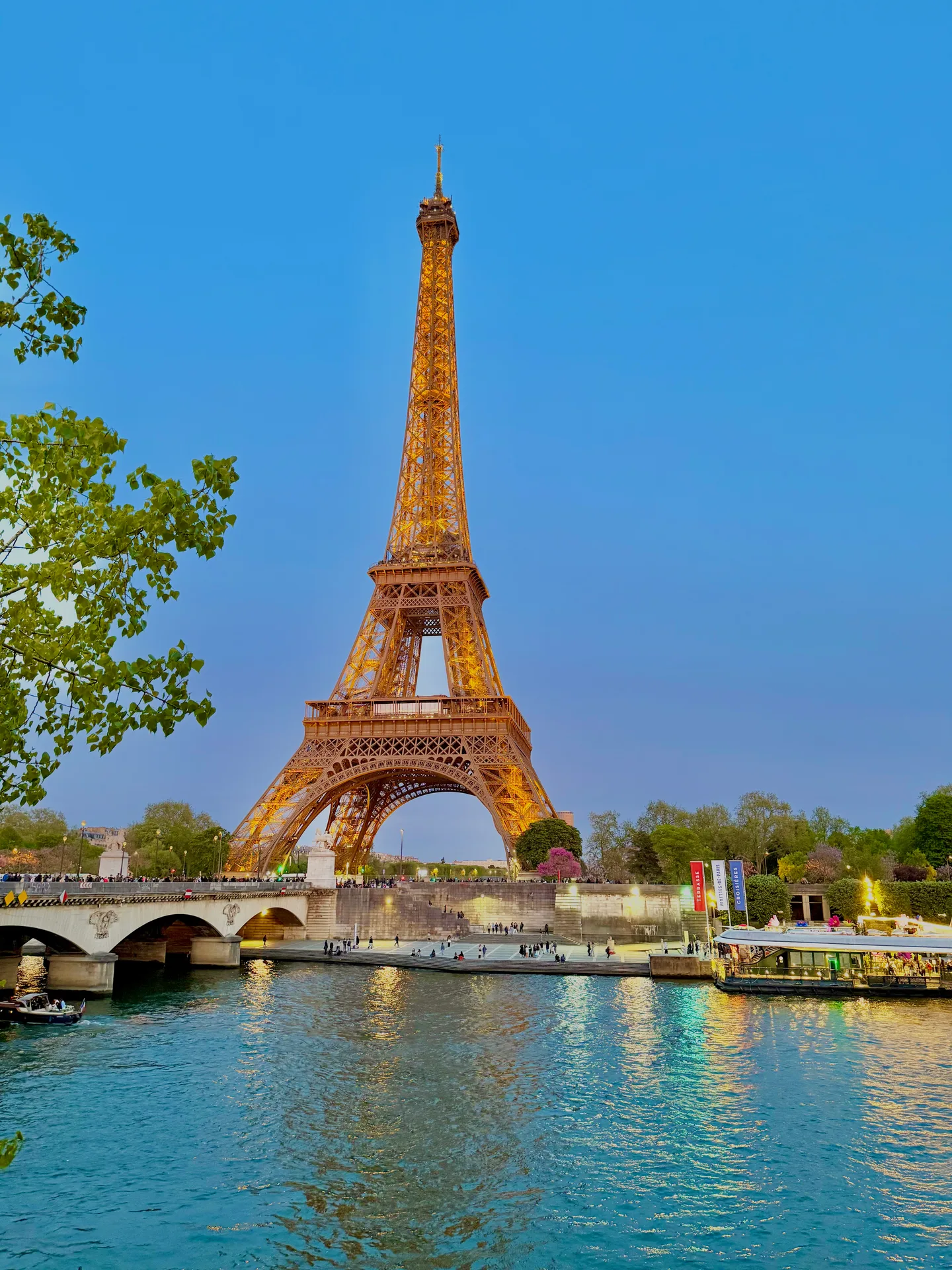
I walked down to the Seine as blue-grey turned violet. When the tower glowed gold, its reflection joined the lights of the boats along the bank. The dark curve of the Pont d'Iéna held tower and reflection together. A spectacle seen in countless photographs still managed to feel like an event.
02
Haussmann's city
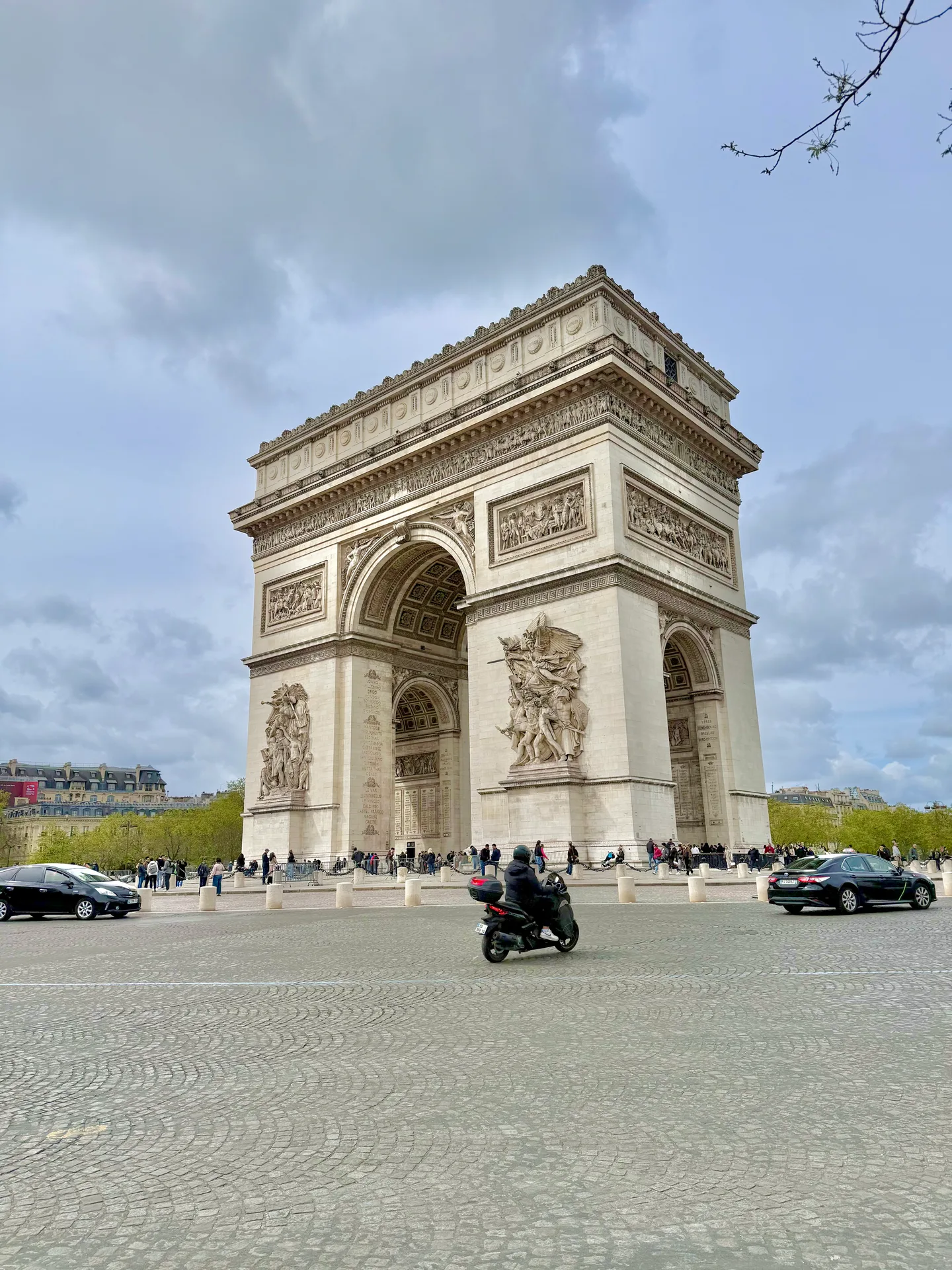
The next morning began at the Arc de Triomphe. Traffic swept around it while twelve avenues radiated into the city. Napoleon commissioned the arch after Austerlitz, but it was finished long after his death. The monument makes triumph look permanent; its history makes it look more complicated.
I walked east along the Champs-Élysées beneath the first new leaves. Much of the Paris visitors recognise comes from the immense nineteenth-century rebuilding associated with Haussmann: straight boulevards, consistent rooflines, pale stone façades and balconies placed in a shared rhythm. That order came at a human cost, with old neighbourhoods demolished and residents displaced. Its beauty and its violence occupy the same map.
By afternoon the sky had closed over. The Seine reflected a lead-grey light, making the young leaves look brighter. A boat's wake struck the stone embankment and rebounded. Paris in cloud has a quieter beauty, like an engraving whose colours have softened with age.
03
Napoleon at Les Invalides
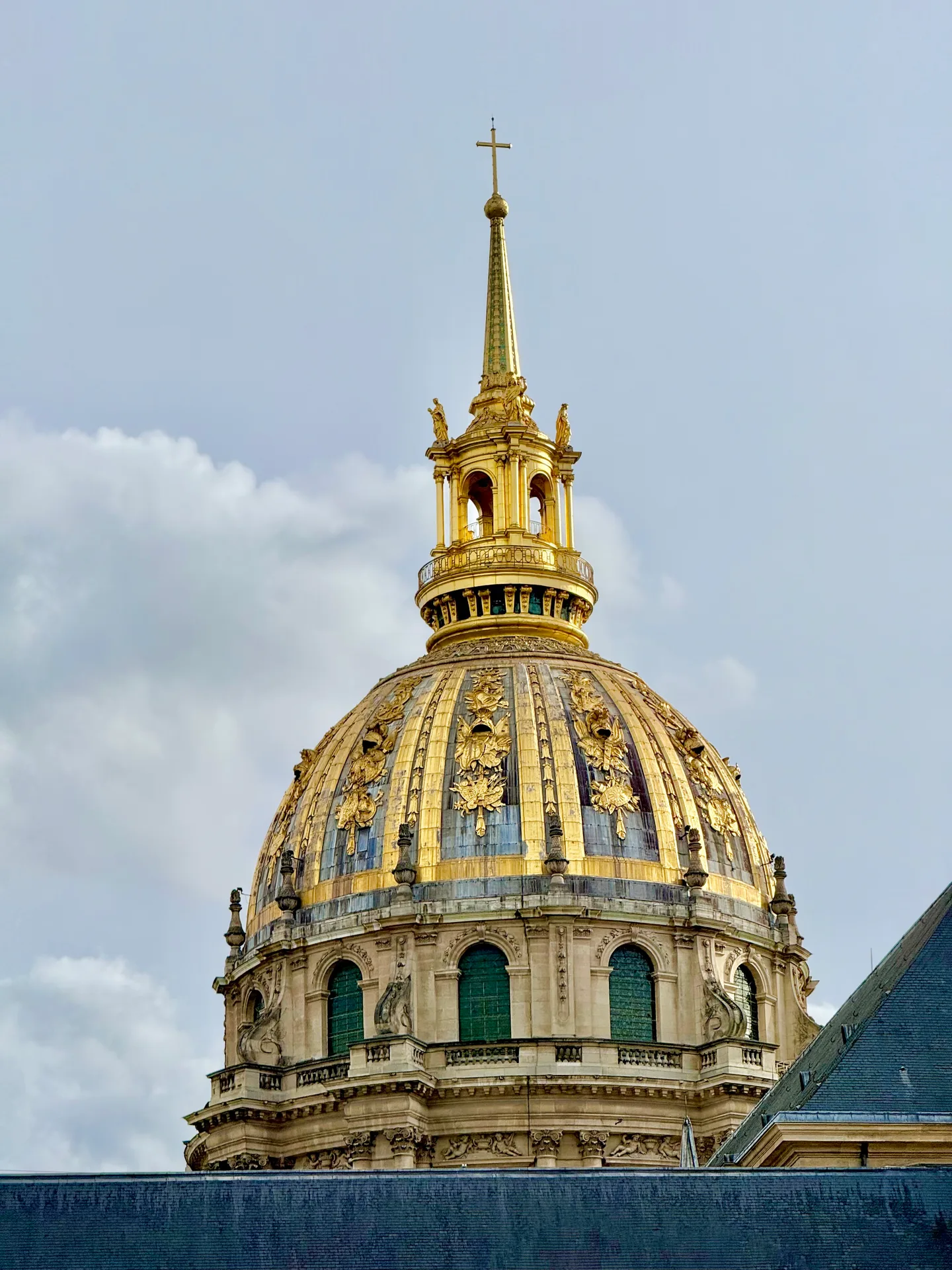
South of the Pont Alexandre III, the dome of Les Invalides burned gold against the grey sky. The complex began as a home for veterans. Today, many visitors arrive looking for one man's tomb.
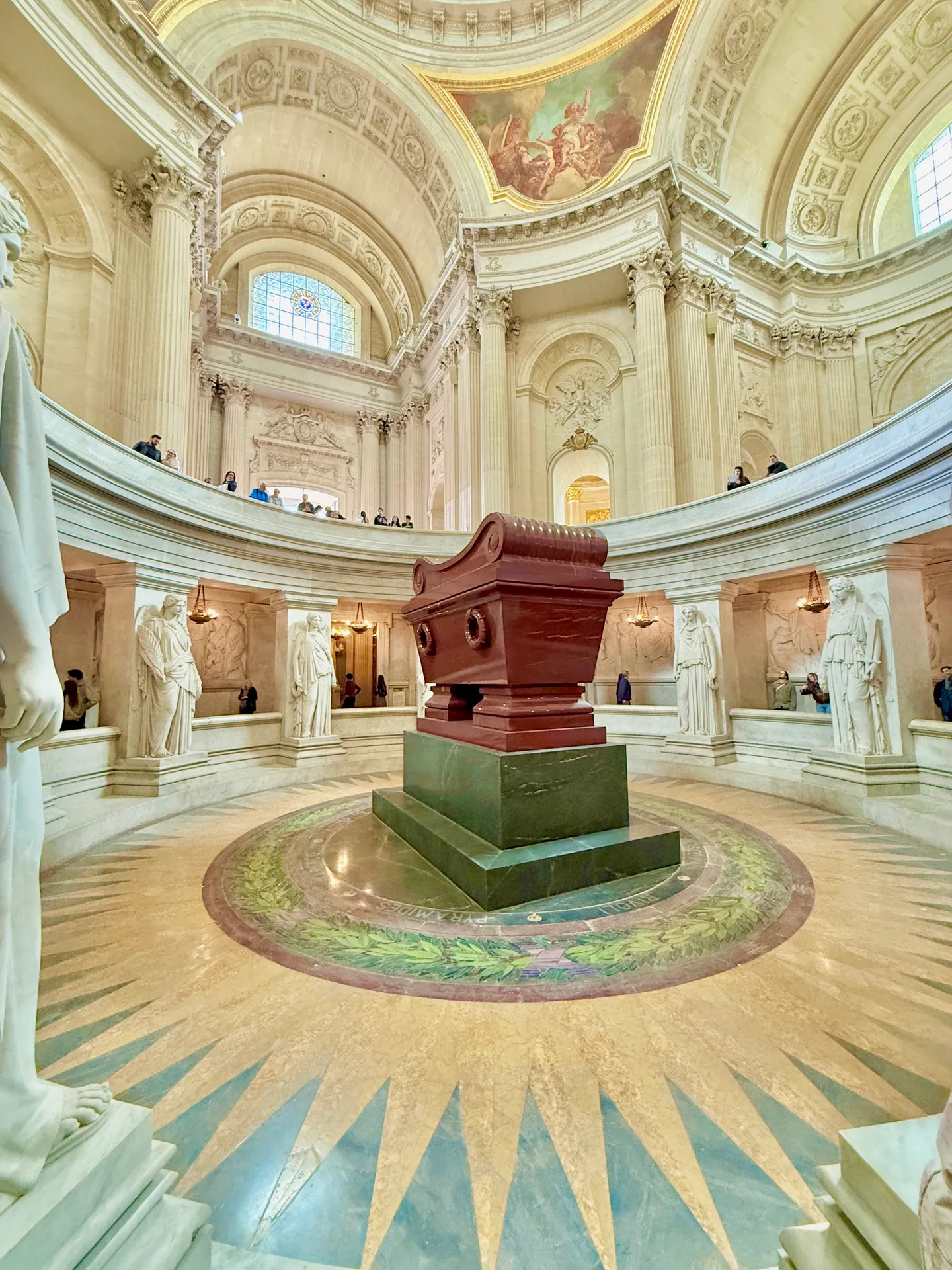
Napoleon's great red sarcophagus sits below a circular gallery. Looking down at it, visitors cannot help bowing their heads. Everything is arranged to make a body seem larger than a life: the layers of coffins, the marble, the names of campaigns and the monumental space around them.
Outside again, I looked up at the dome. The effect of gold against cloud is almost physical. Centuries later, the architecture still knows exactly how to make a person feel small.
04
Above the rooftops
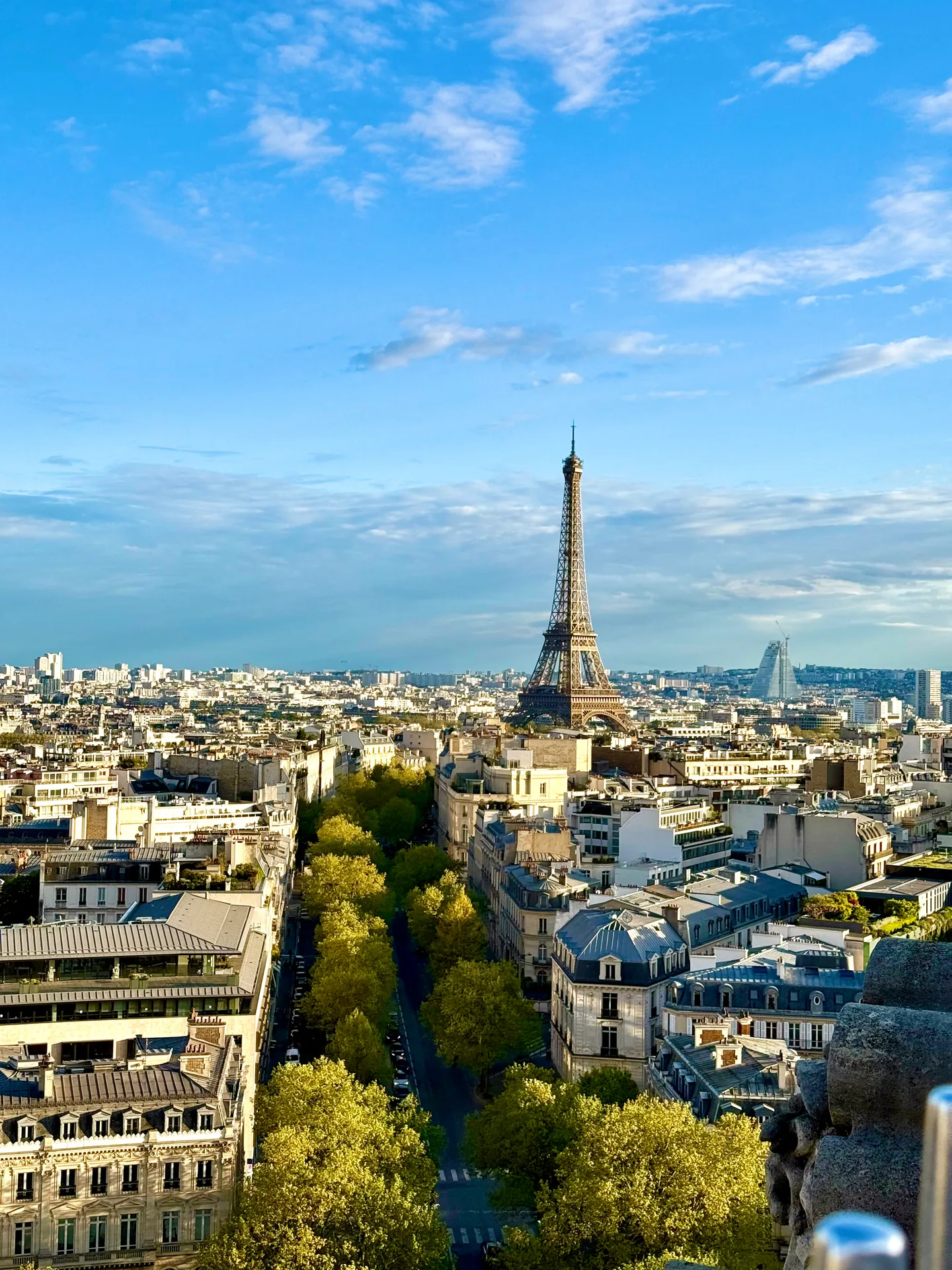
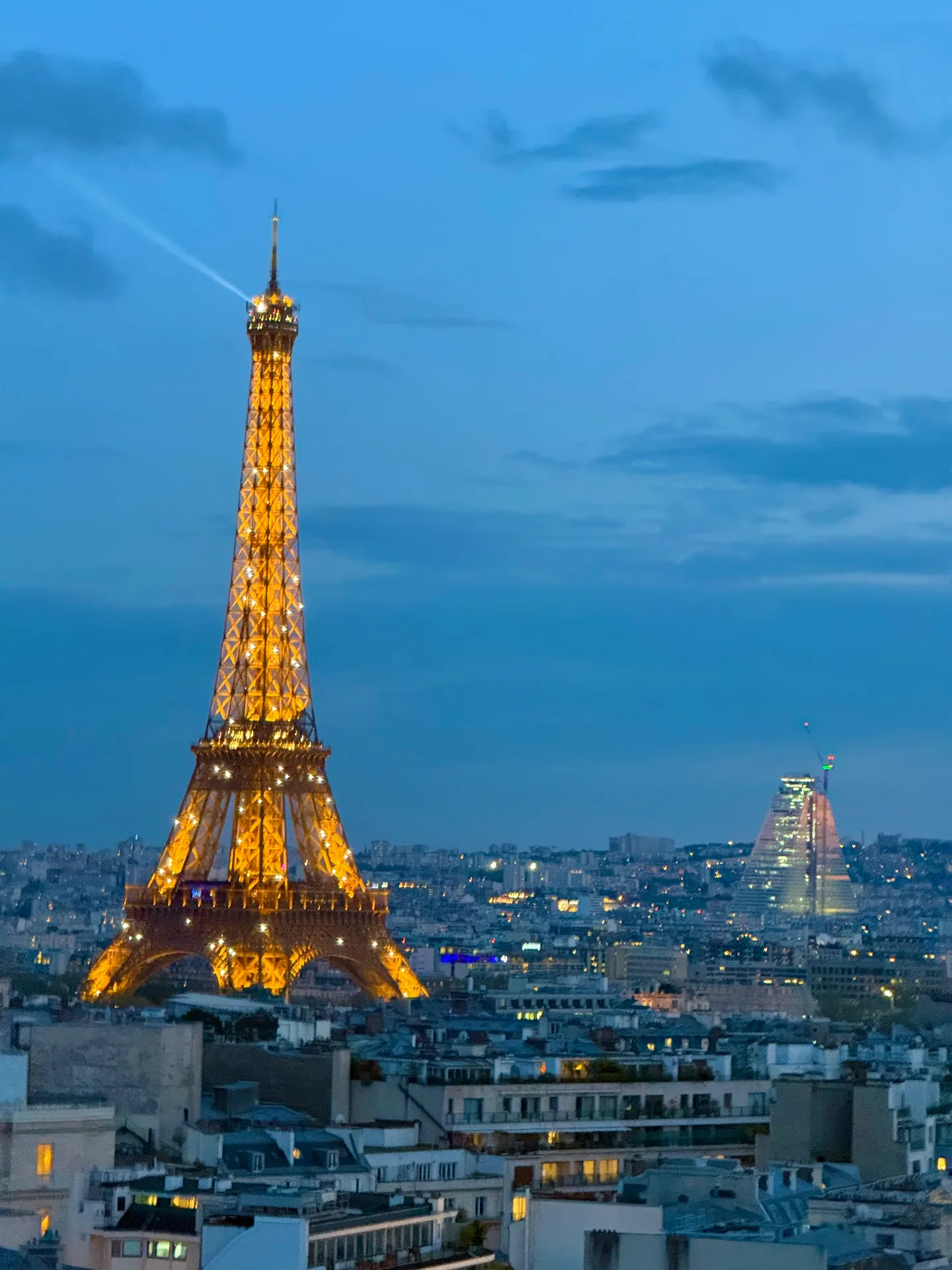
On the third evening I climbed the spiral staircase to the top of the Arc de Triomphe. Wind hit me at the exit, and the city opened below.
Grey-blue zinc roofs made an uneven sea, crossed by straight avenues and fresh green trees. The Eiffel Tower stood beyond them. From above, the logic of the city is clear: repeated heights, long sightlines, carefully composed intersections. The new Paris of Haussmann's century has itself become the old Paris people come to see.
I stayed until dark. The rooftops lost their colour and the windows acquired it. Headlights streamed along the avenues. The tower became a gold beacon. Beneath the arch, the flame at the Tomb of the Unknown Soldier belonged to another kind of time: daily remembrance, repeated through the city's changes.
05
A square that has had time
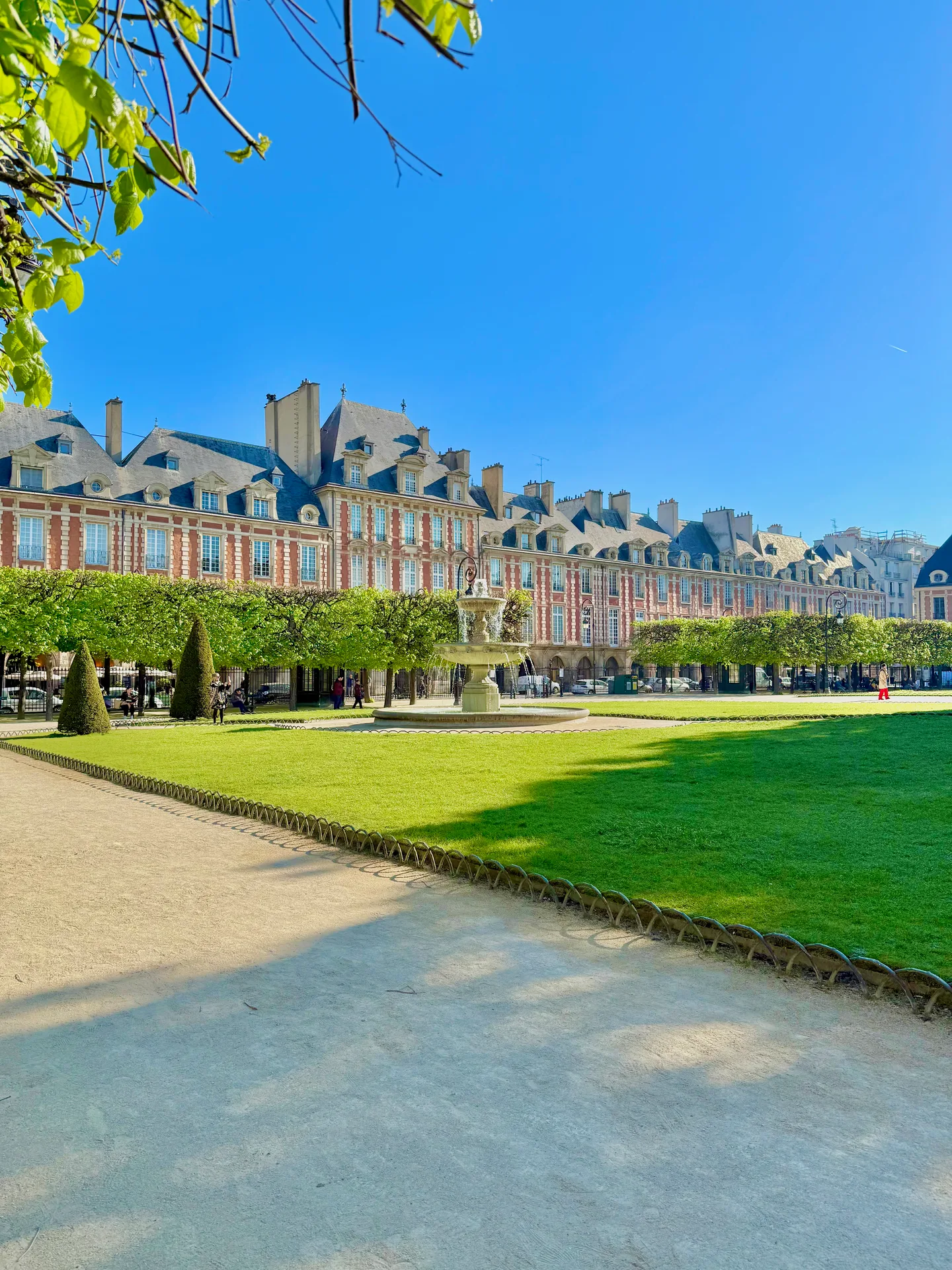
My last morning was in the Marais. Place des Vosges was almost implausibly quiet. Red brick, pale stone, steep slate roofs and continuous arcades enclosed lawns and gravel paths. A few people read on benches beneath the trees; the galleries and cafés were still closed.
The square's carefully repeated façades predate Haussmann by centuries. Victor Hugo once lived at No. 6. Yet none of that history announced itself loudly. The place seemed content to have been beautiful for a very long time.
Walking west through the narrow streets, I found the irregular older city that escaped the great boulevards. Paris makes room for different ages without always explaining the joins. Perhaps that is its particular talent: letting the new grow old, then convincing you that old was what you wanted all along.