GERMANY / TRAVEL NOTES
Hamburg
Red-brick canals, a glass wave and a whole miniature world inside a warehouse.
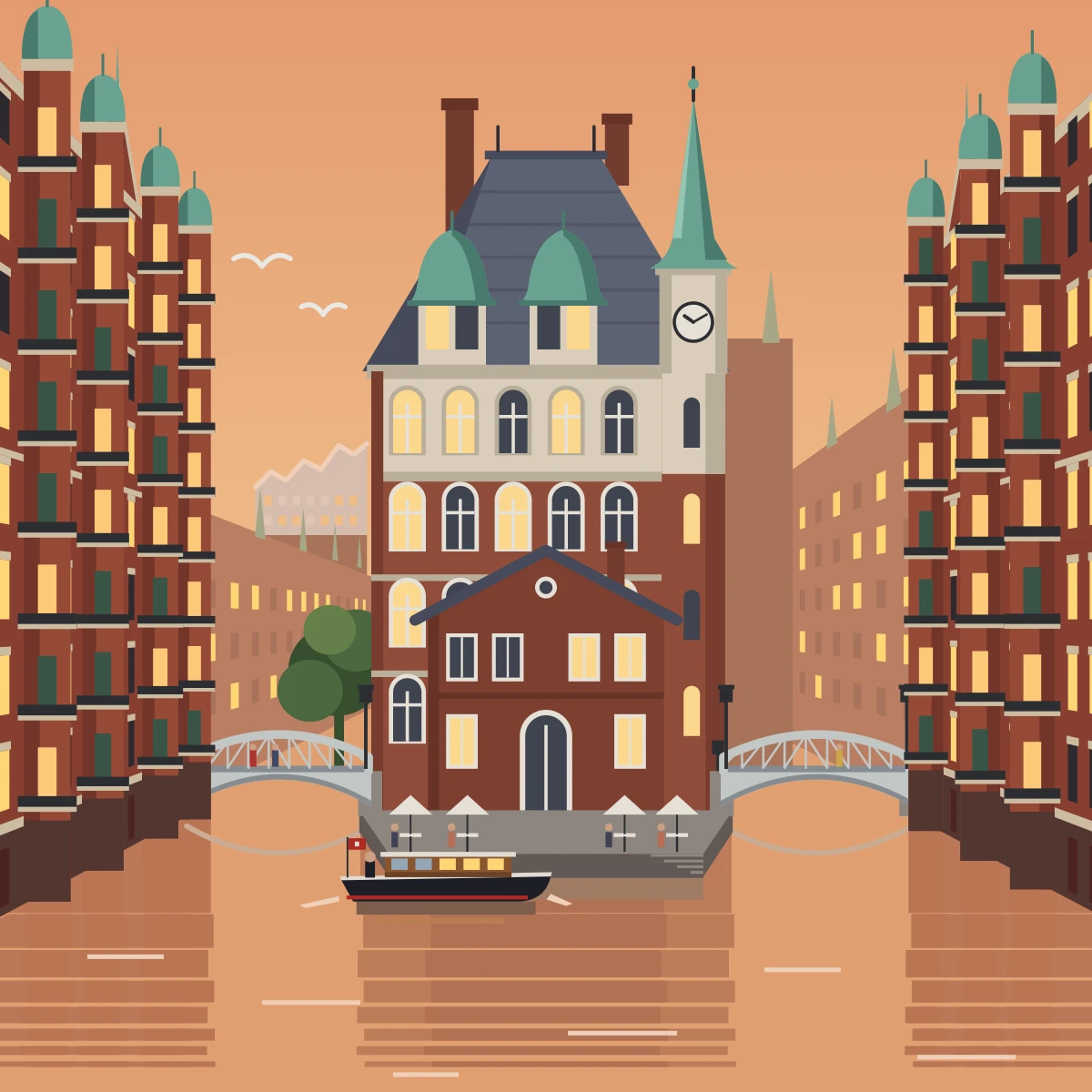
Hamburg in Hourline shows the same artwork as the app, bringing its landmarks together in a composed scene.
01
The town hall after dark
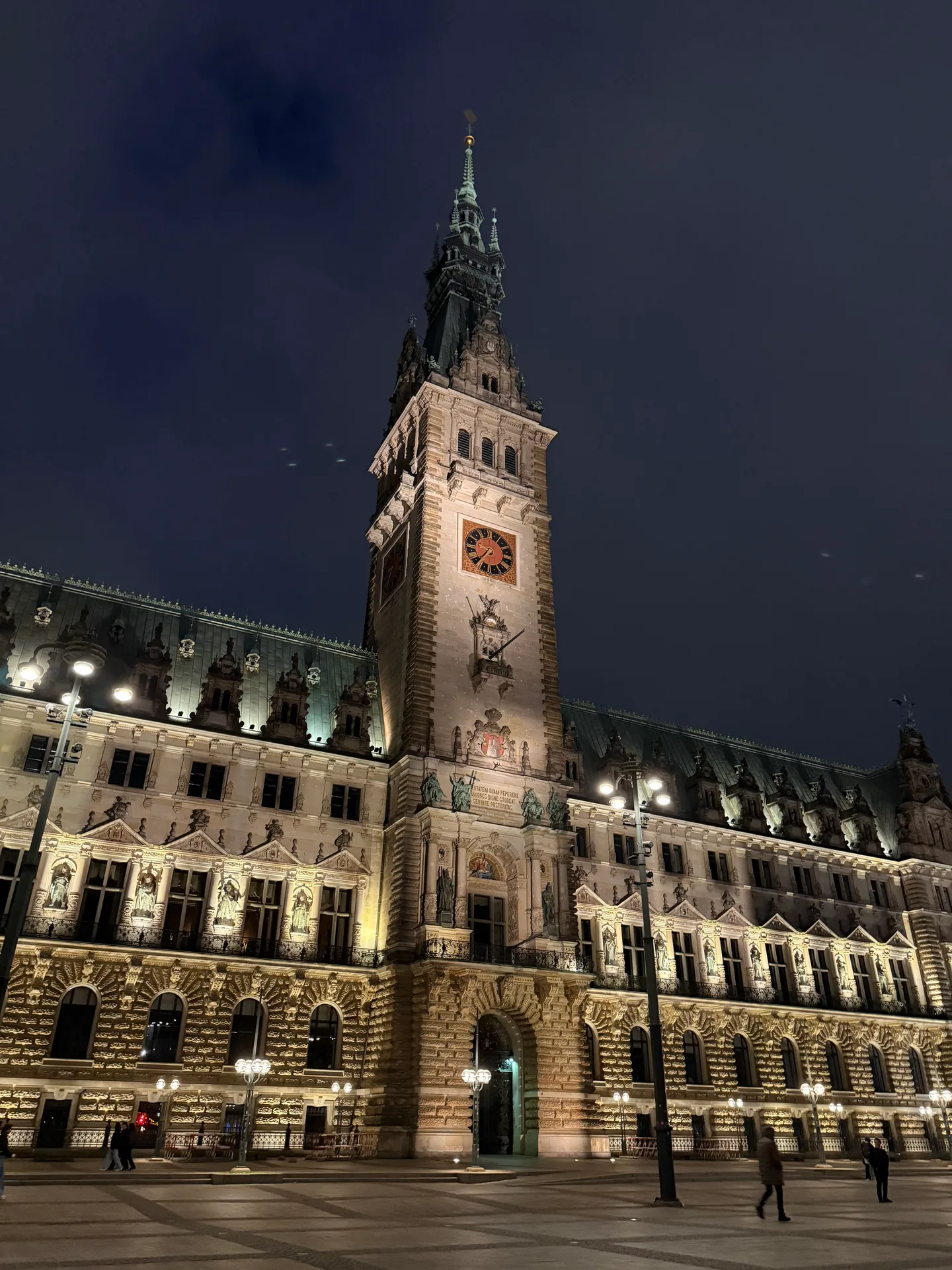
I reached Hamburg on Friday evening and walked from the station along Mönckebergstraße. By the time I reached the Rathaus, it was dark. Floodlights warmed the sandstone façade; the clock shone high above the square.
The building is an assertion of civic confidence. Hamburg's identity as a Free and Hanseatic City is not simply a historic phrase. Trade, autonomy and pride in its own institutions are built into this monumental town hall. At night it looked almost like an intricately carved block of sugar.
02
St Nikolai
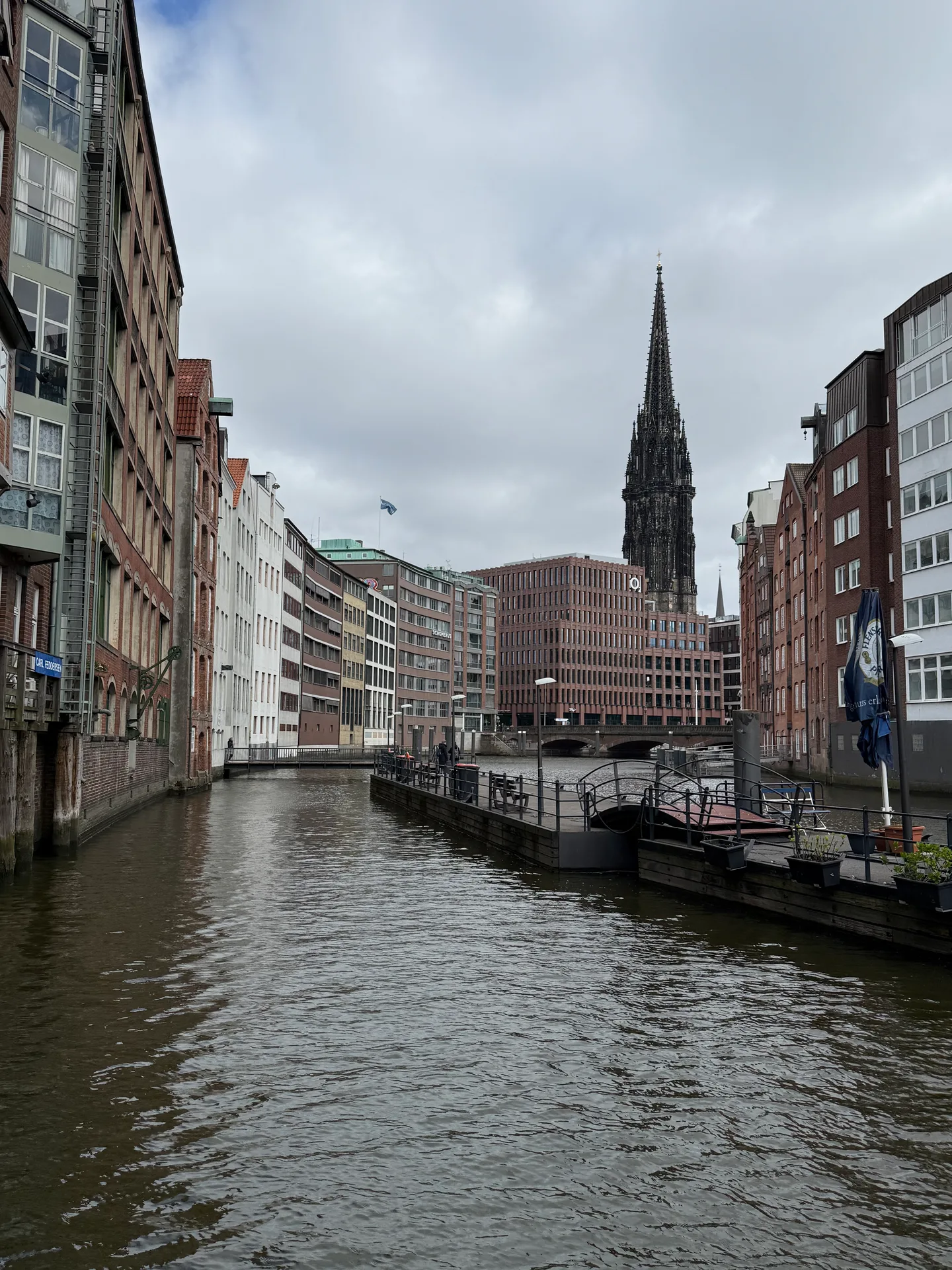
The following day, a dark spire appeared above the streets south of the Rathaus. St Nikolai survives as a ruin and a memorial. Much of the church was destroyed in the bombing of Hamburg; the tower remains above the missing body of the building.
Up close, the stone carries weather, soot and damage. The absence around it is part of the monument. Instead of completing the silhouette, the city has left a visible break in it. Passing through, you are asked to do some of the thinking yourself.
03
The warehouse city
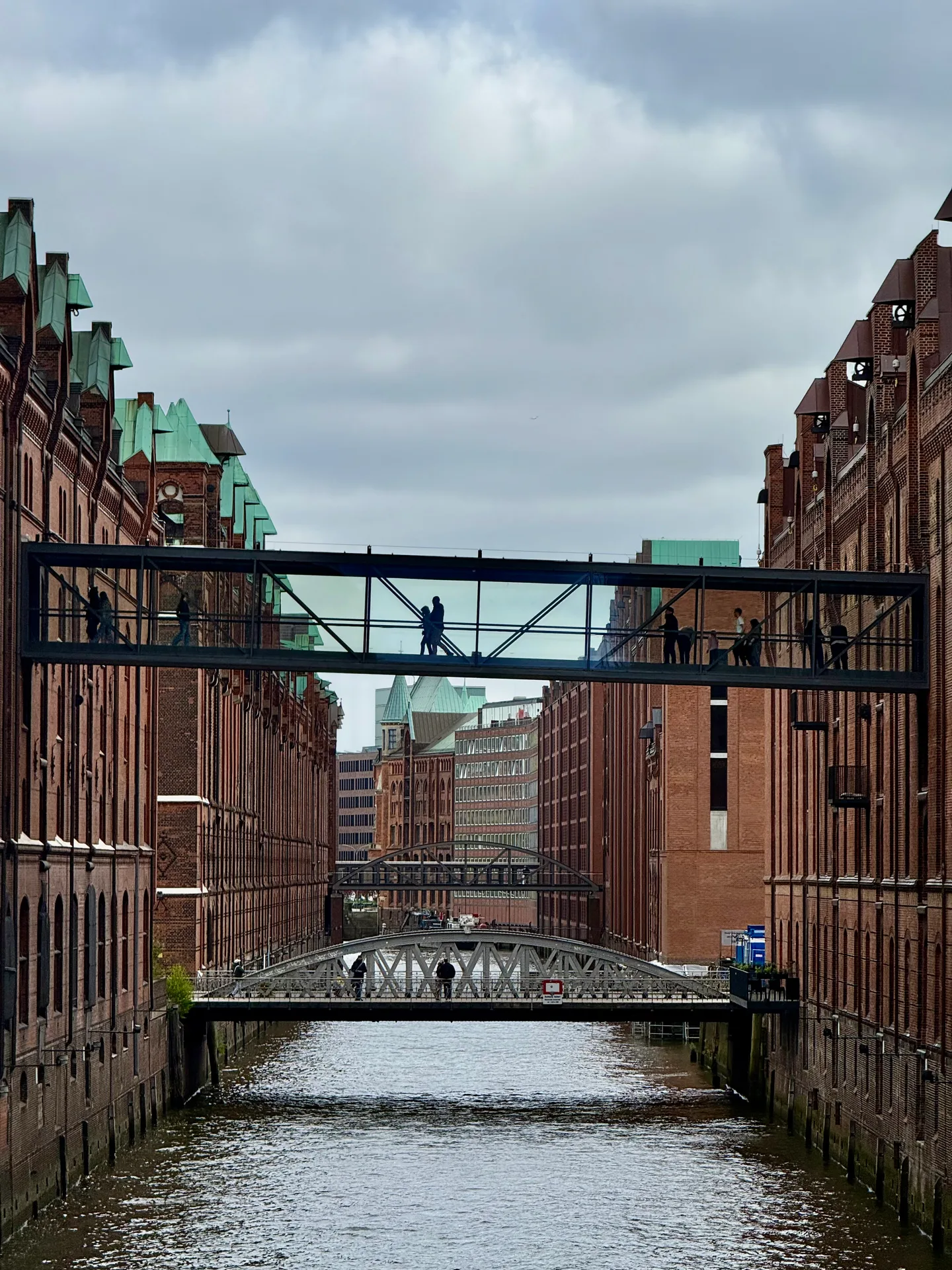
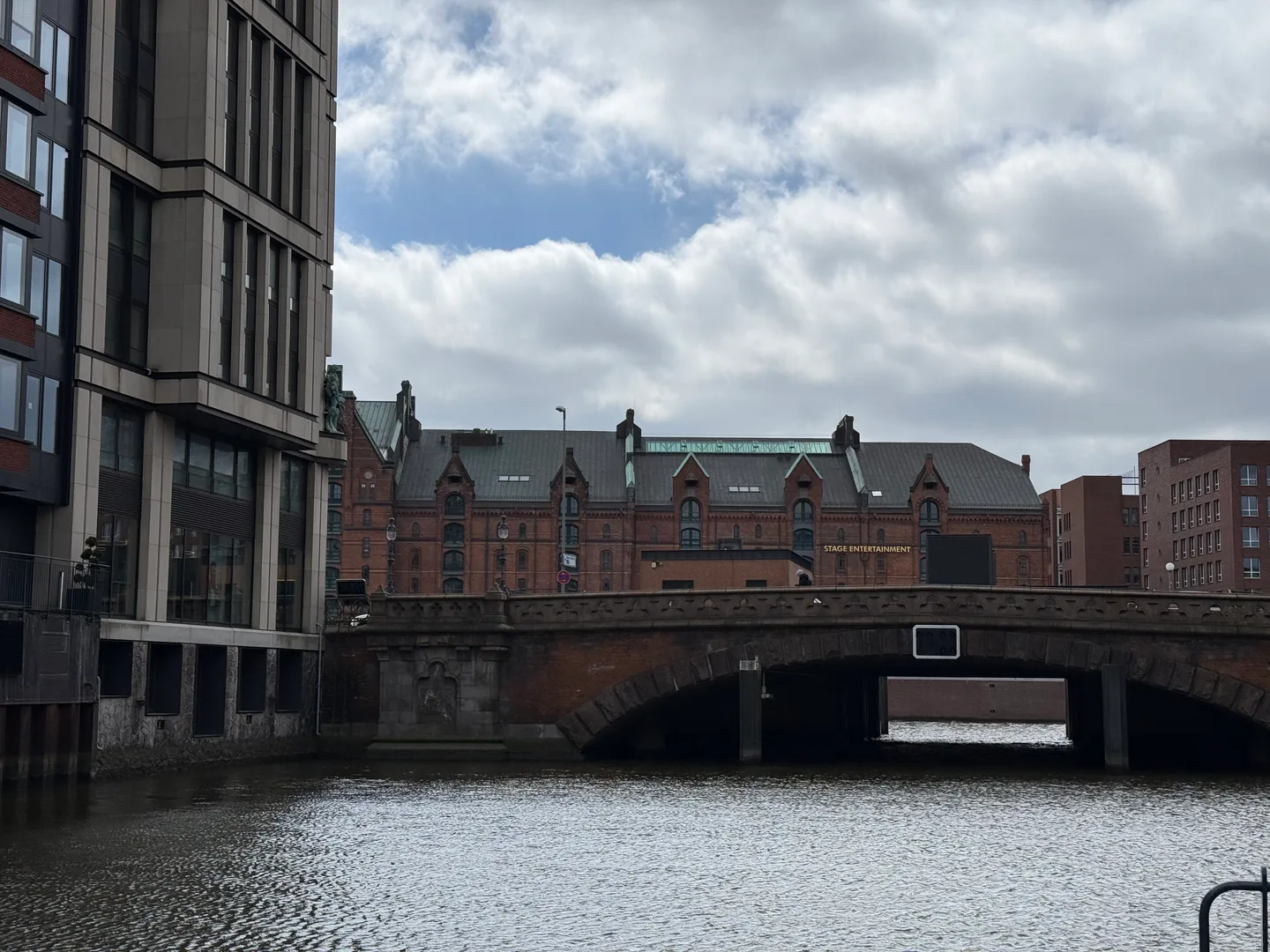
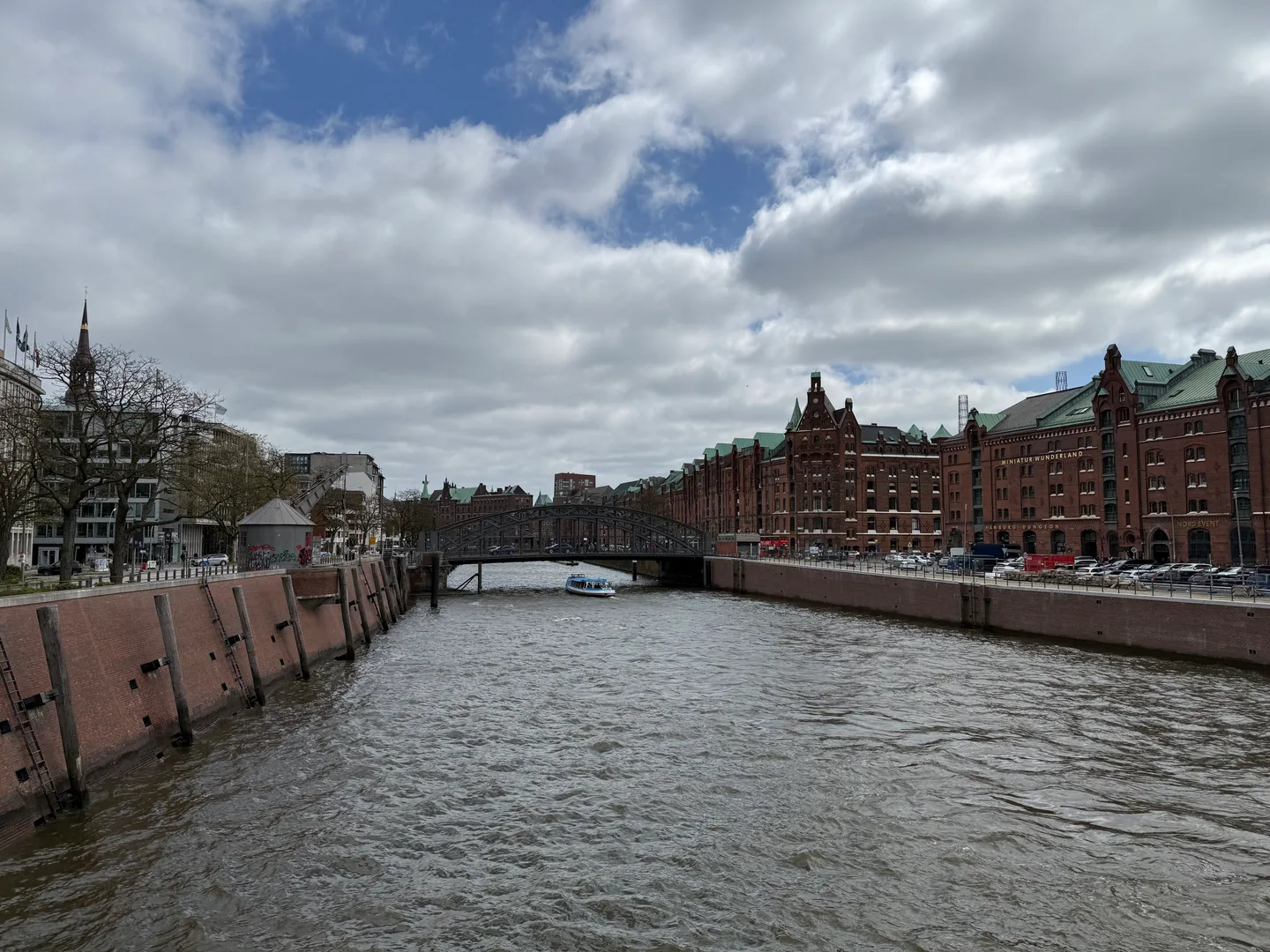
Across the Zollkanal begins Speicherstadt. Red-brick warehouses meet narrow waterways, bridges, green copper roofs and old loading arms. Each building was organised around the transfer of goods between boat and street. Even the architecture seems to understand logistics.
The district's handsome appearance sits on a more complicated history: displaced neighbourhoods, the free port and global trade in coffee, spices, rubber, tobacco and carpets. Its beauty does not cancel those origins.
At Wandrahmsfleet, two rows of warehouses enclosed the canal. One bridge framed another, and the water repeated the whole arrangement upside down. It is a familiar postcard view because the composition is almost impossibly complete.
04
A glass wave over the harbour
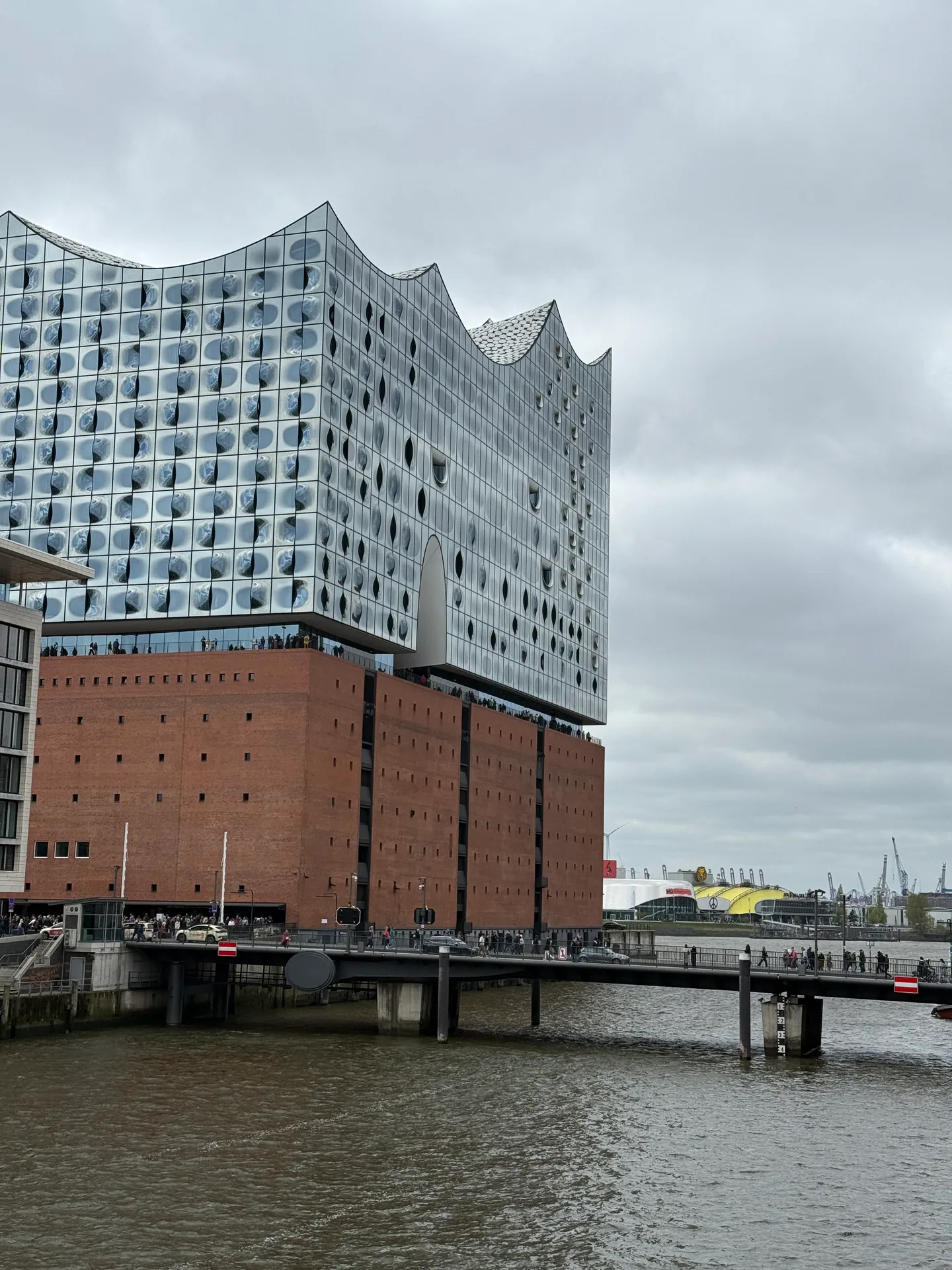
West of the warehouses, HafenCity opens into newer streets. The Elbphilharmonie rises above an old brick warehouse, a glass wave balanced on a heavy base. From a distance it resembles both a ship and a crown caught by the wind.
The long construction and expanding budget became part of its public story. Standing at the junction of the old and new sections, however, I was mostly interested in the view: cranes, ships, water and the working harbour. Hamburg can feel far from the sea, yet the port keeps reminding you of the world beyond it.
05
Returning in the evening
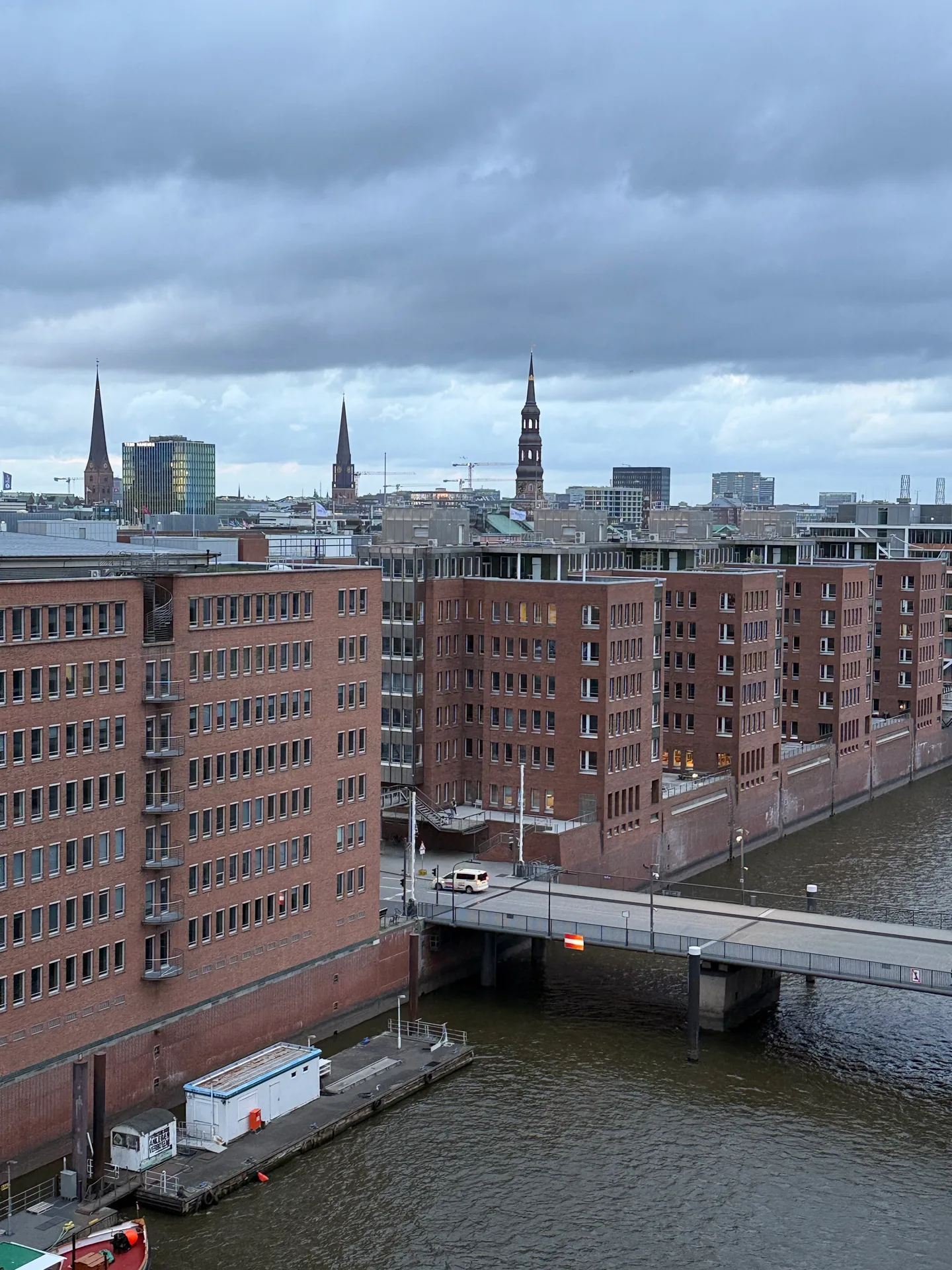
I returned to Speicherstadt after eight. The light had changed everything. Brick became brown, the canals turned blue and church towers formed dark marks on the skyline. Lamps came on one by one, giving the façades a warmer, older atmosphere.
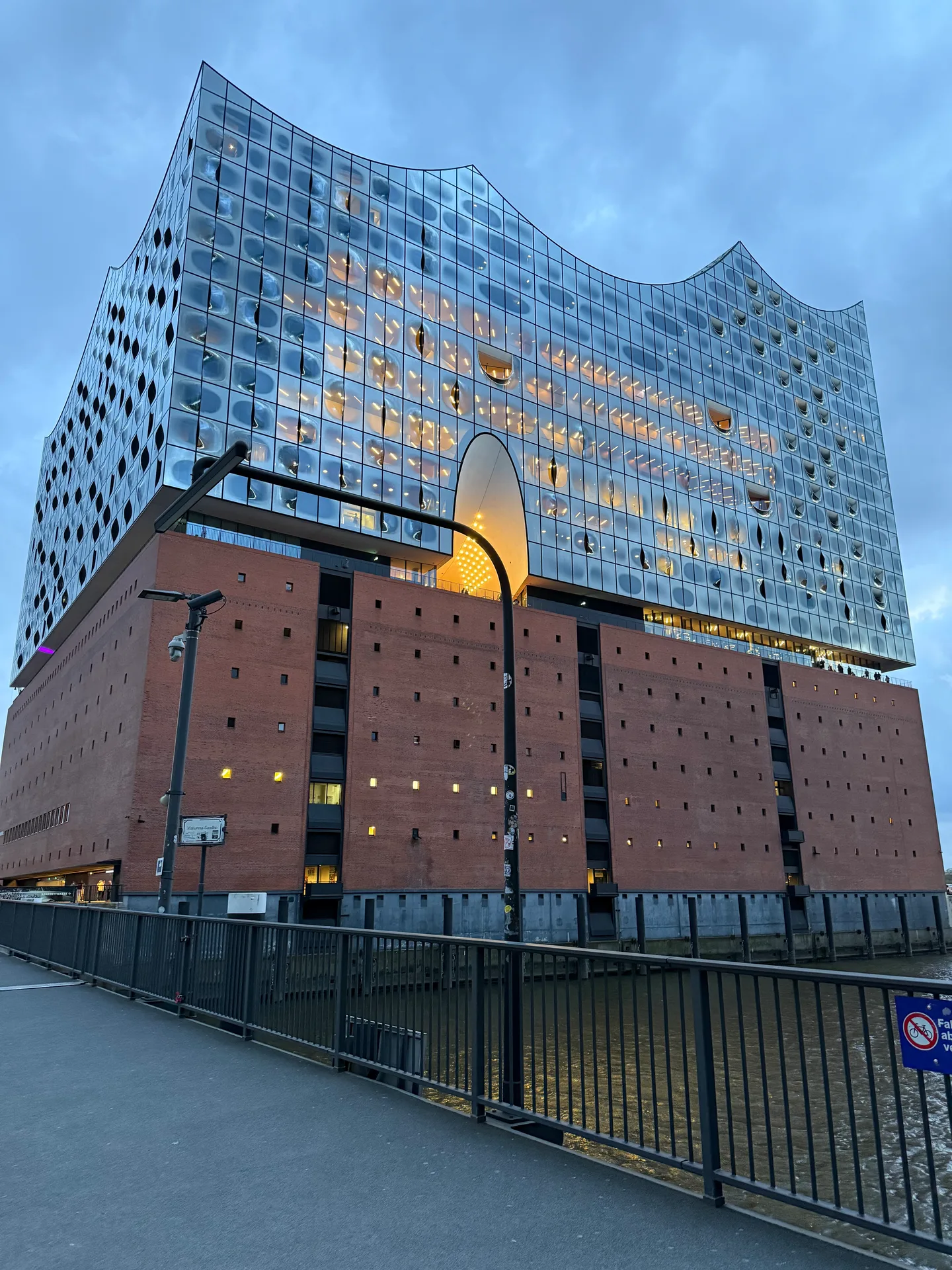
Near nine, the Elbphilharmonie caught the sunset. Pieces of its glass surface lit gold as if small candles had been placed behind them. The warehouse below remained dark red. For a moment, the upper building looked light enough to float.
06
A world inside a warehouse
That night I went to Miniatur Wunderland. After a day among full-size buildings, entering a warehouse full of small ones felt like changing the scale of my eyesight.
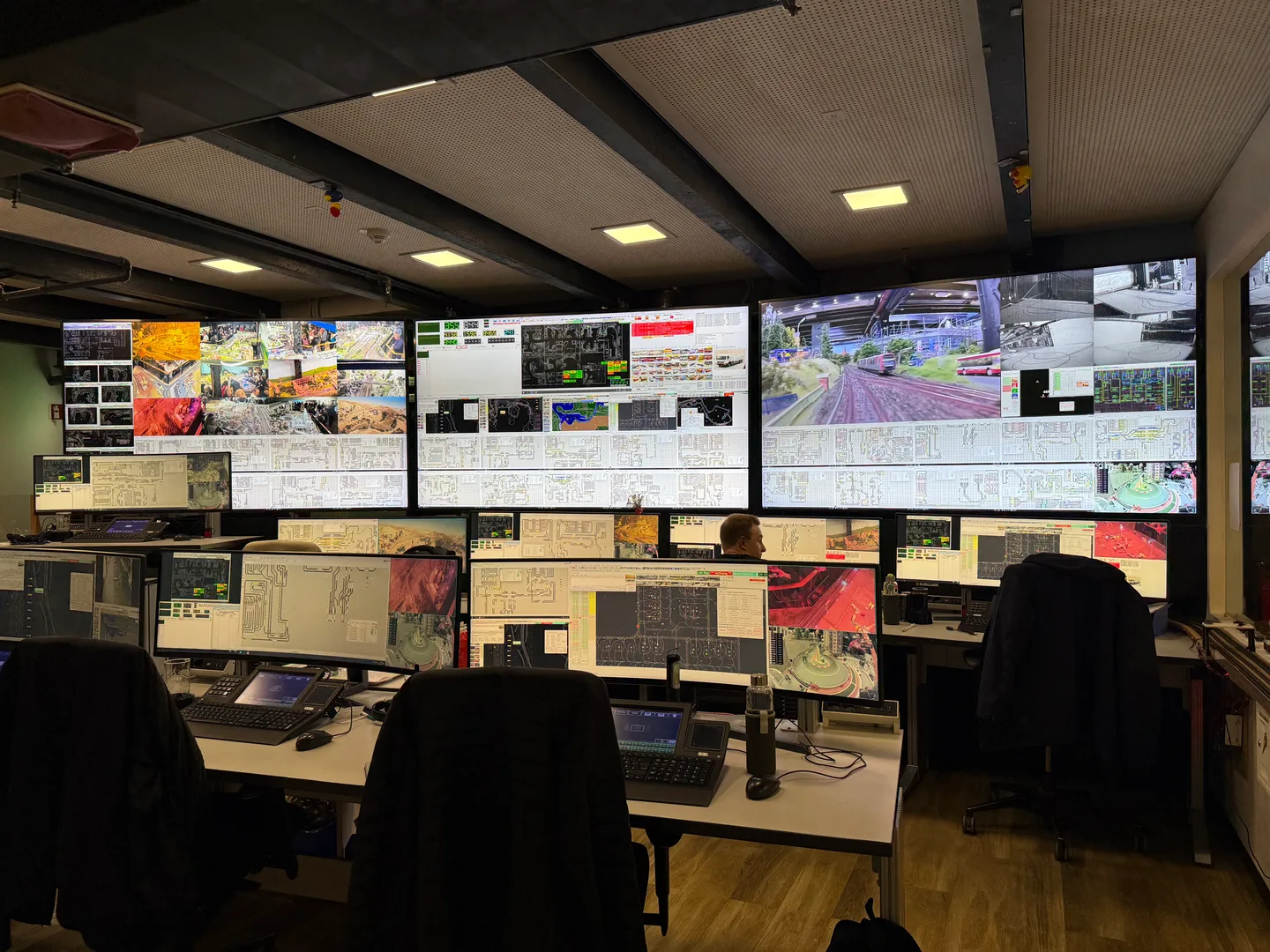
Trains moved through carefully made countries. A control room monitored the railway, vehicles and aircraft. Day turned to night, lights appeared, then the miniature landscape began another morning. The repeated cycle made time itself part of the model.
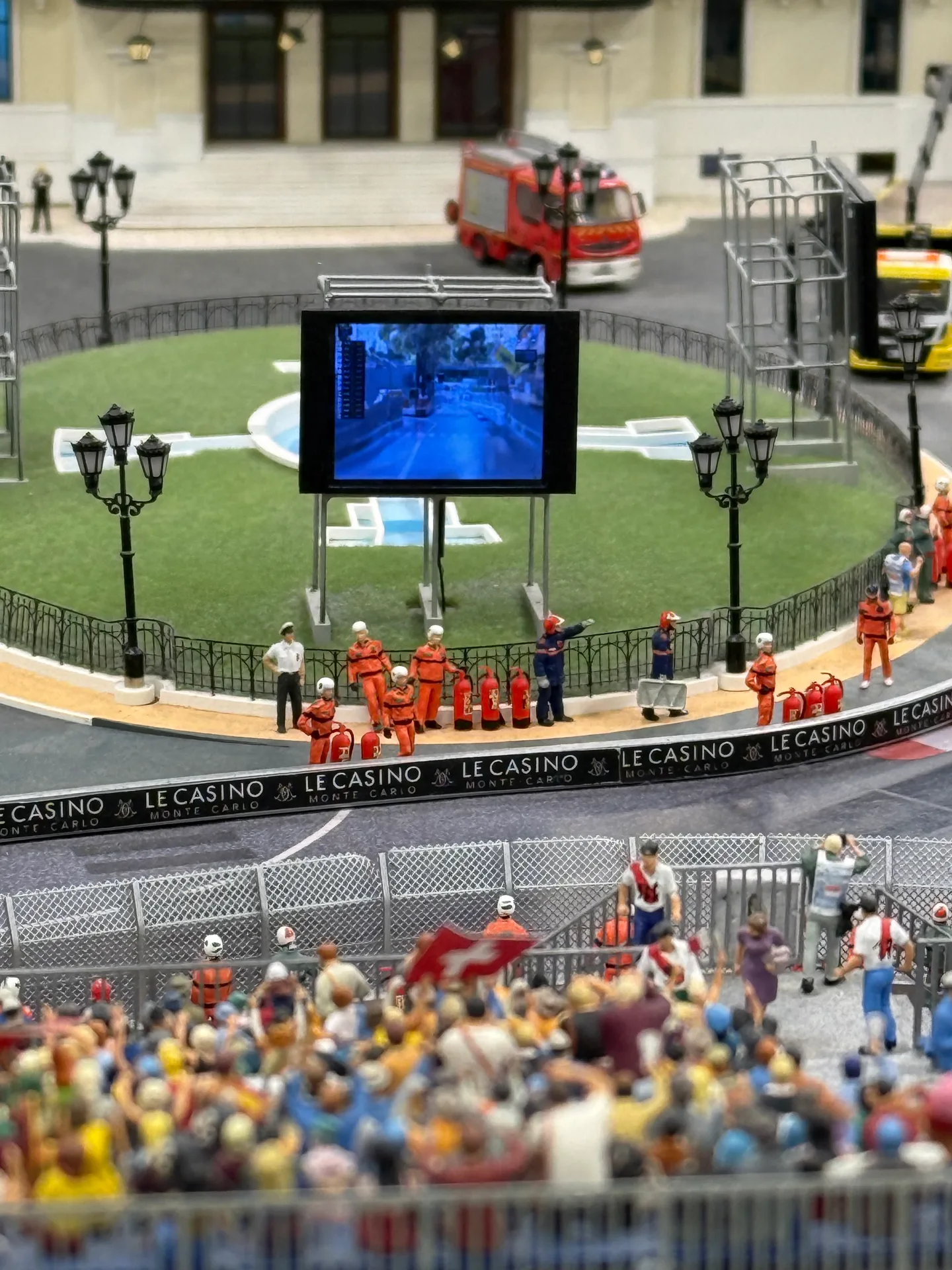
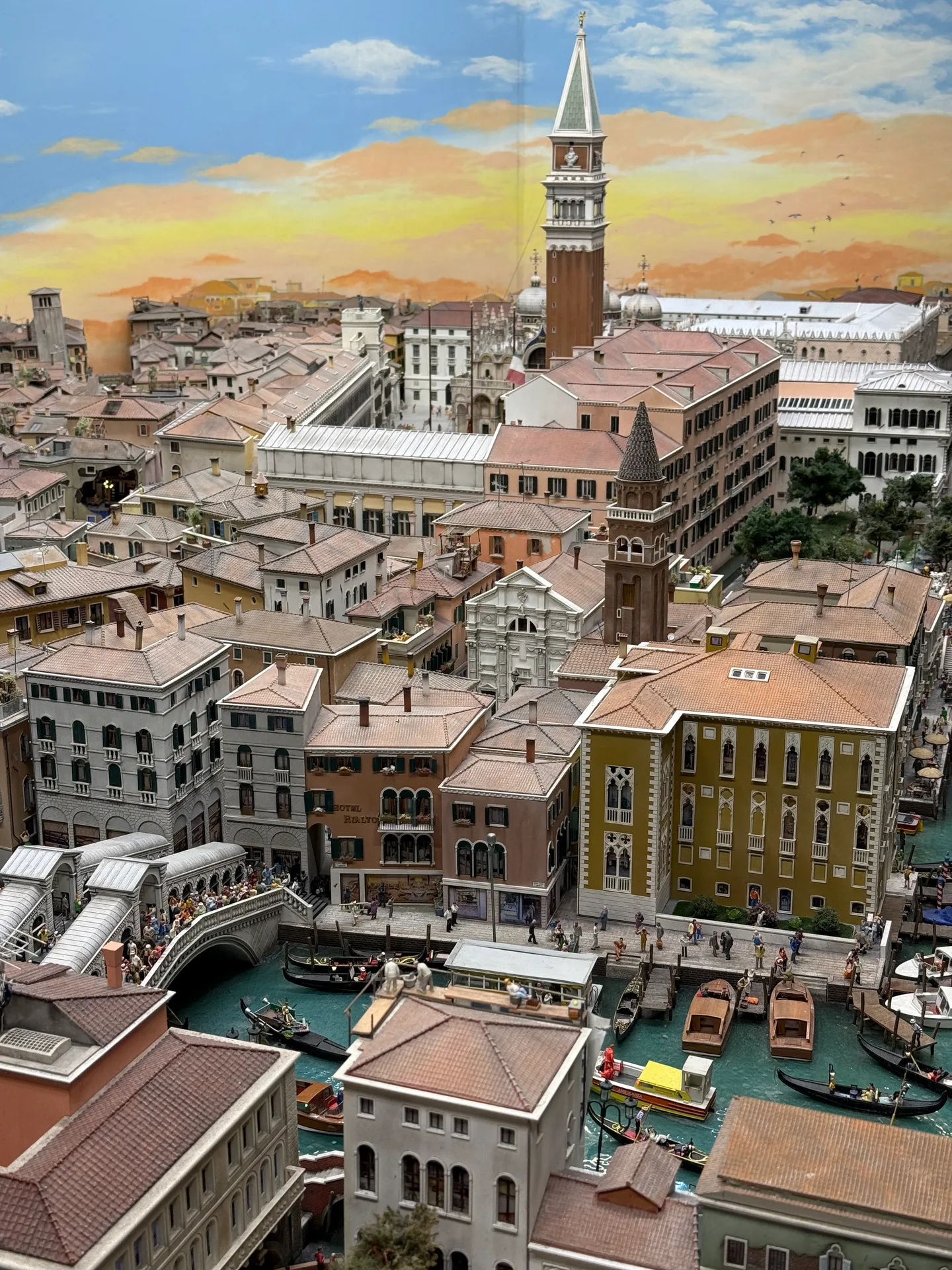
In Monaco, marshals and spectators crowded a tiny Grand Prix circuit. A small screen showed racing footage at exactly the right scale. Venice offered canals, familiar buildings and an evening sky. The pleasure lay in noticing a detail, then discovering another smaller one beside it.
A trading city had brought the world into its warehouses once again, this time as something to look at. Hamburg felt different from Cologne: a city whose strongest impressions, for me, came from commerce, surviving absences and the ambition to build something new above an old foundation.