ITALY / TRAVEL NOTES
Milan
Courtyards, football shirts and a stone forest that is never quite finished.
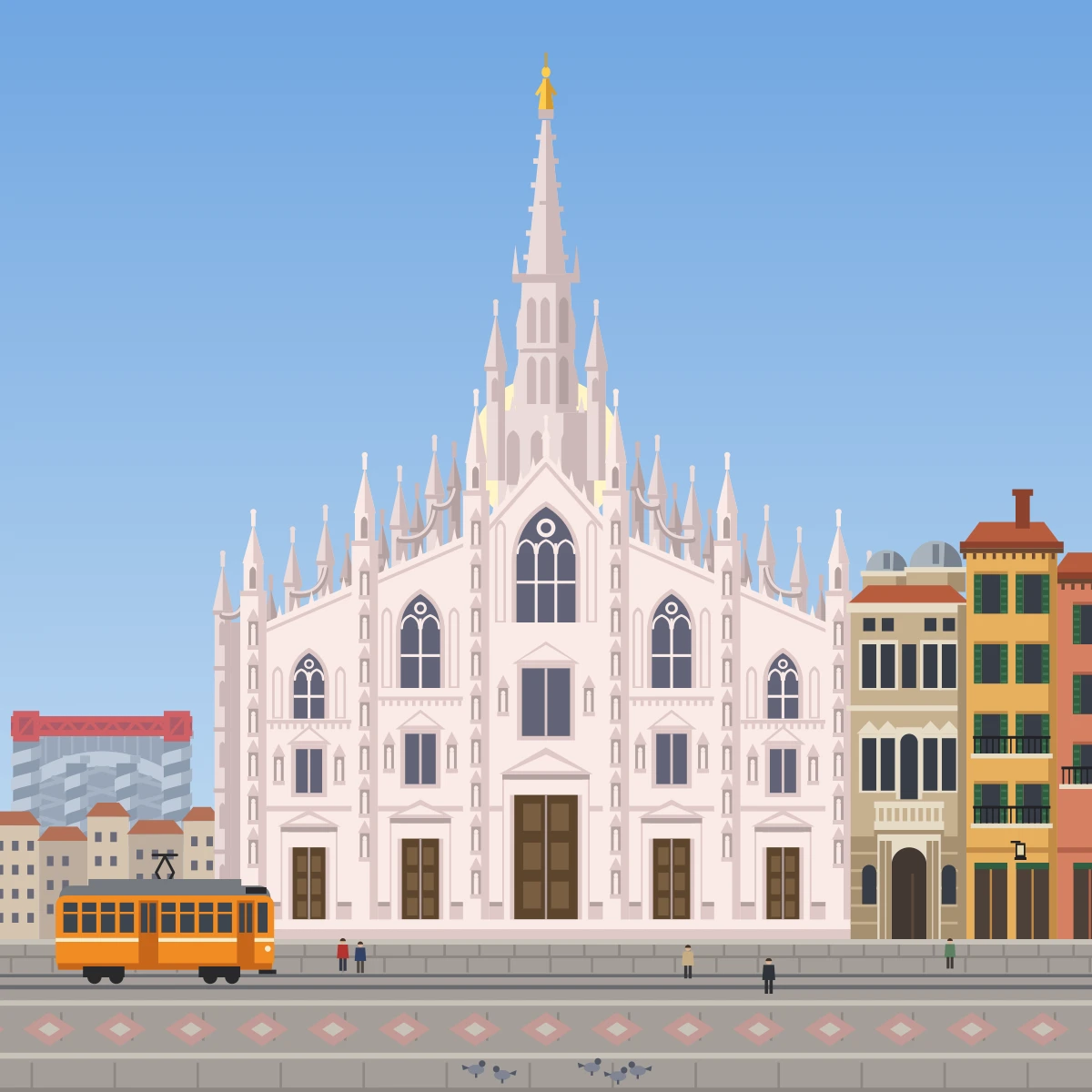
Milan in Hourline shows the same artwork as the app, bringing its landmarks together in a composed scene.
01
Brera
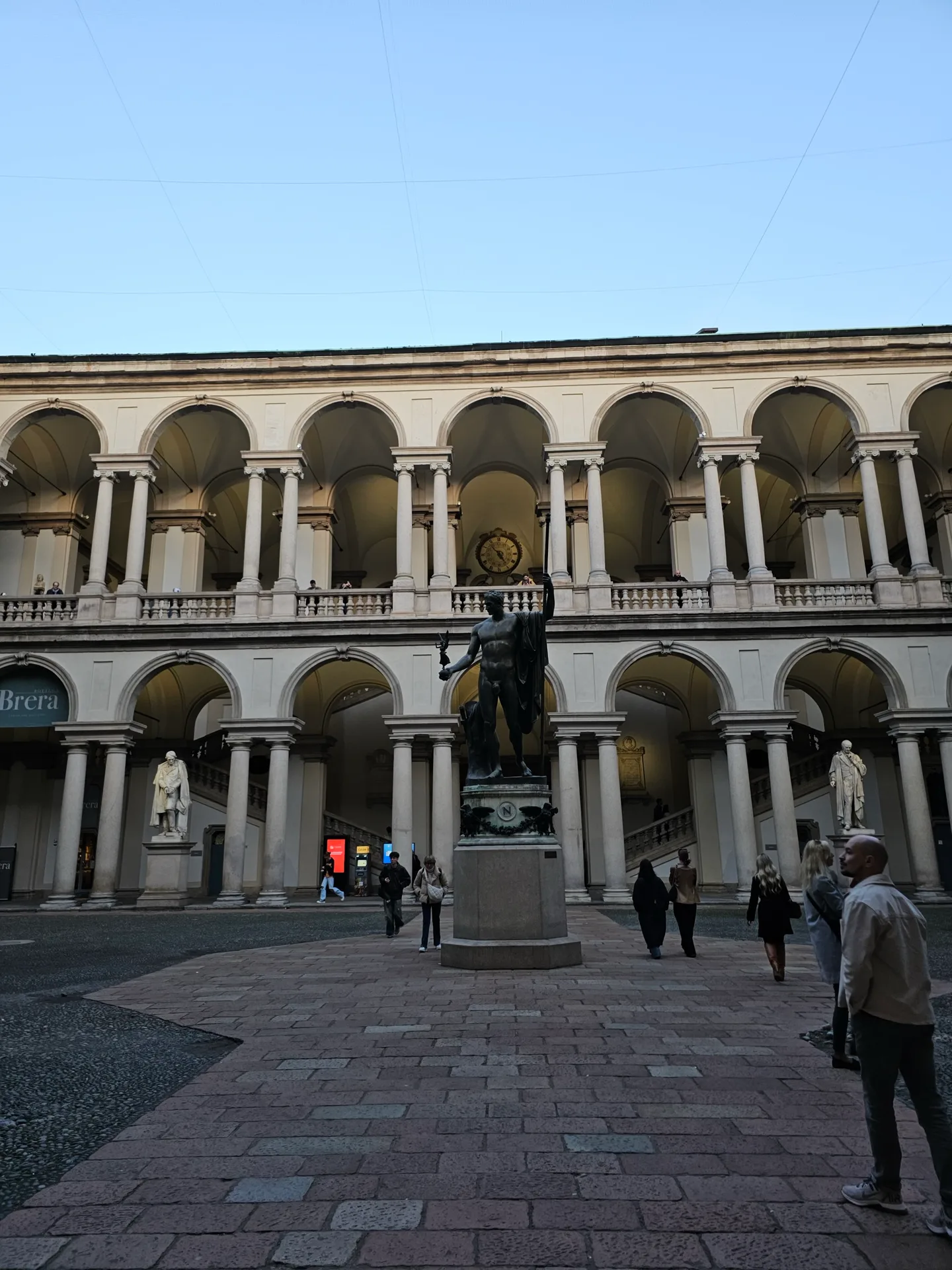
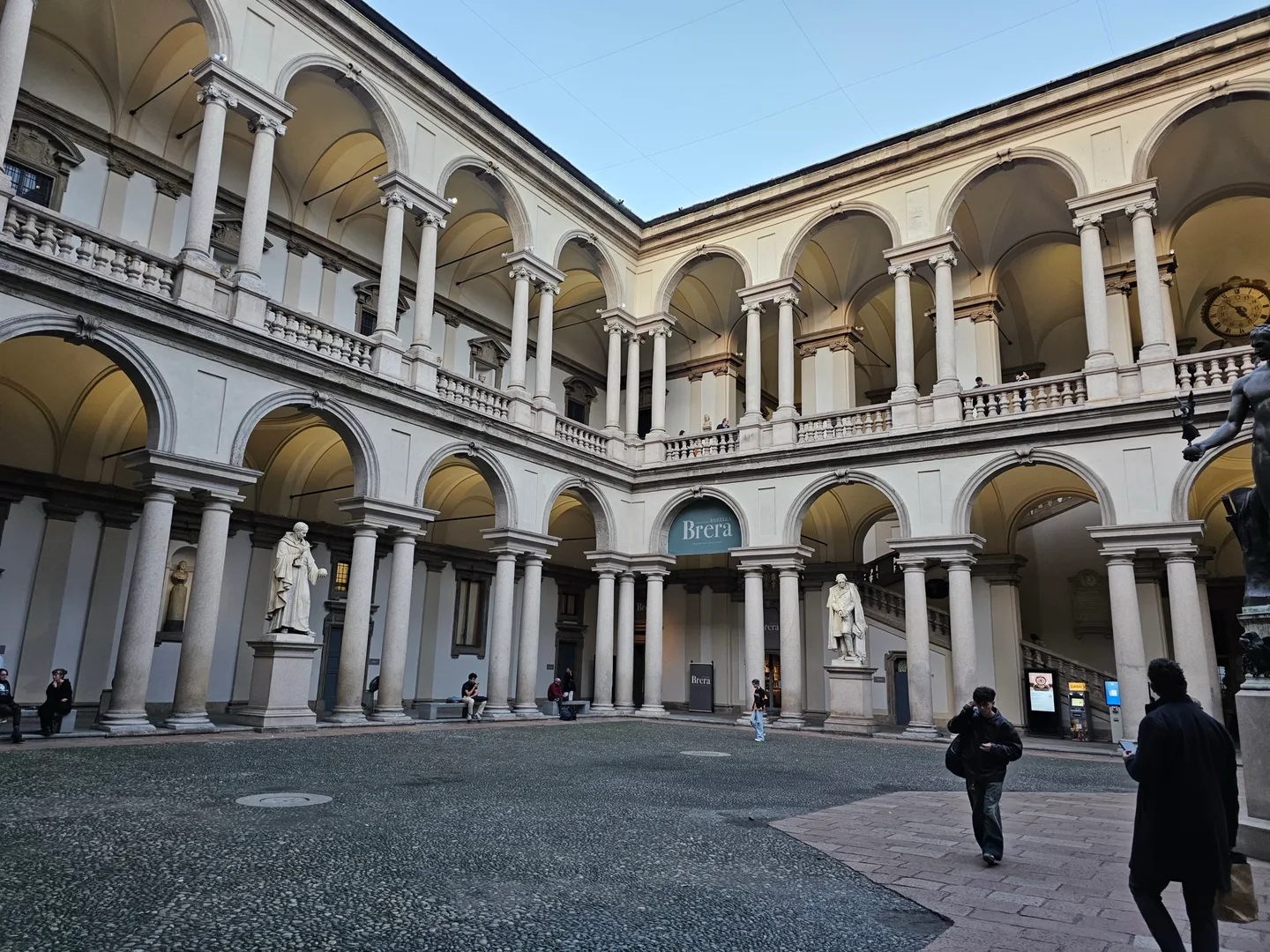
By late afternoon in early November, Milan was already losing the light. I walked from Brera's narrow streets into the Palazzo di Brera, where a square courtyard suddenly opened between two storeys of arches. Napoleon stood in bronze at its centre, presented in the idealised language of classical sculpture.
The building holds more than a gallery: art education, a library and an observatory share its long institutional life. Students pass through the same courtyard visitors stop to photograph. That density of history and ordinary use felt particularly Italian.
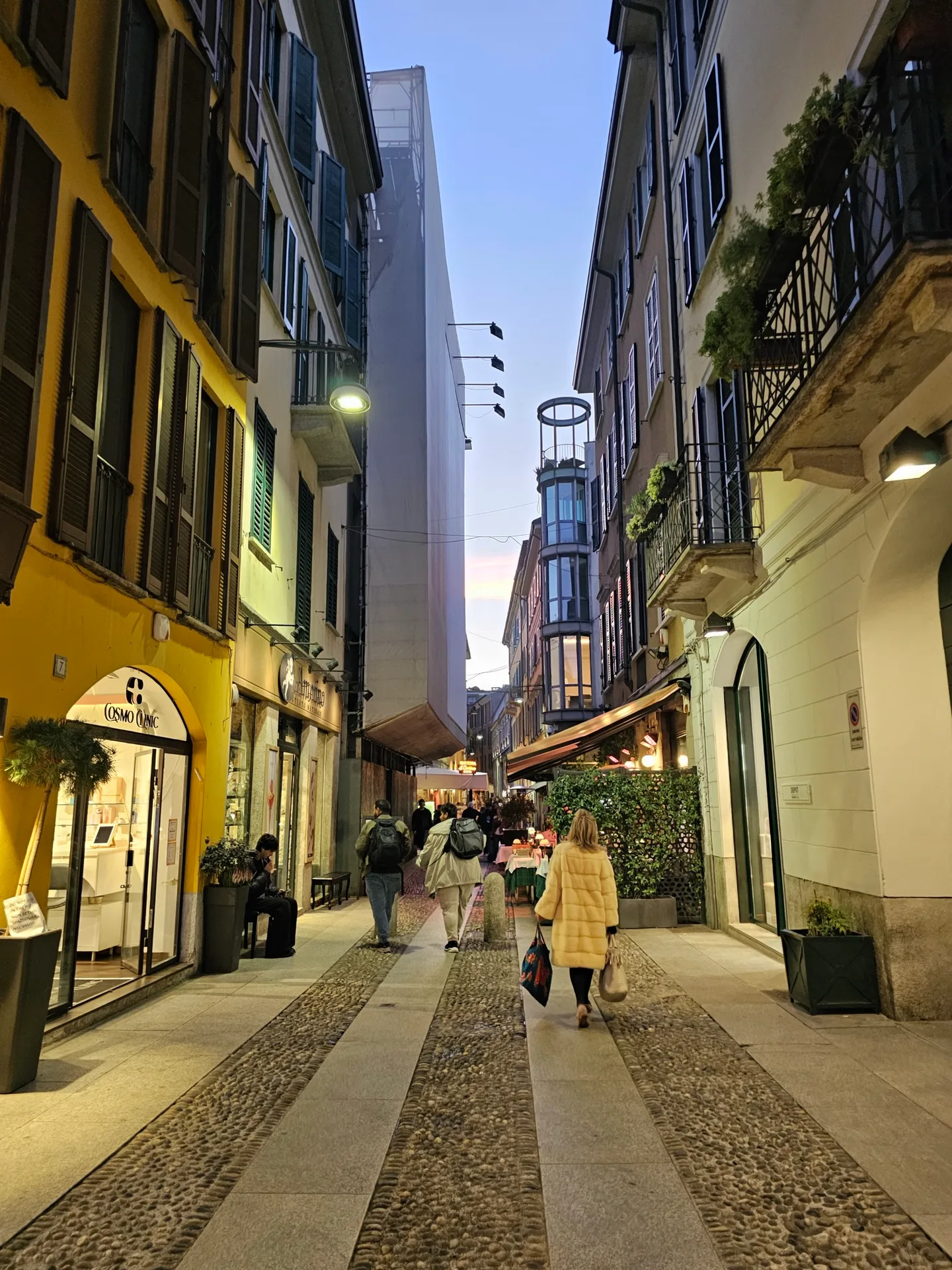
Outside, the streets had begun to glow. Brera's former bohemian reputation now sits beside design shops and cafés, but the narrow lanes and ochre walls still give the evening a softer, older character.
02
Two shirts, one city
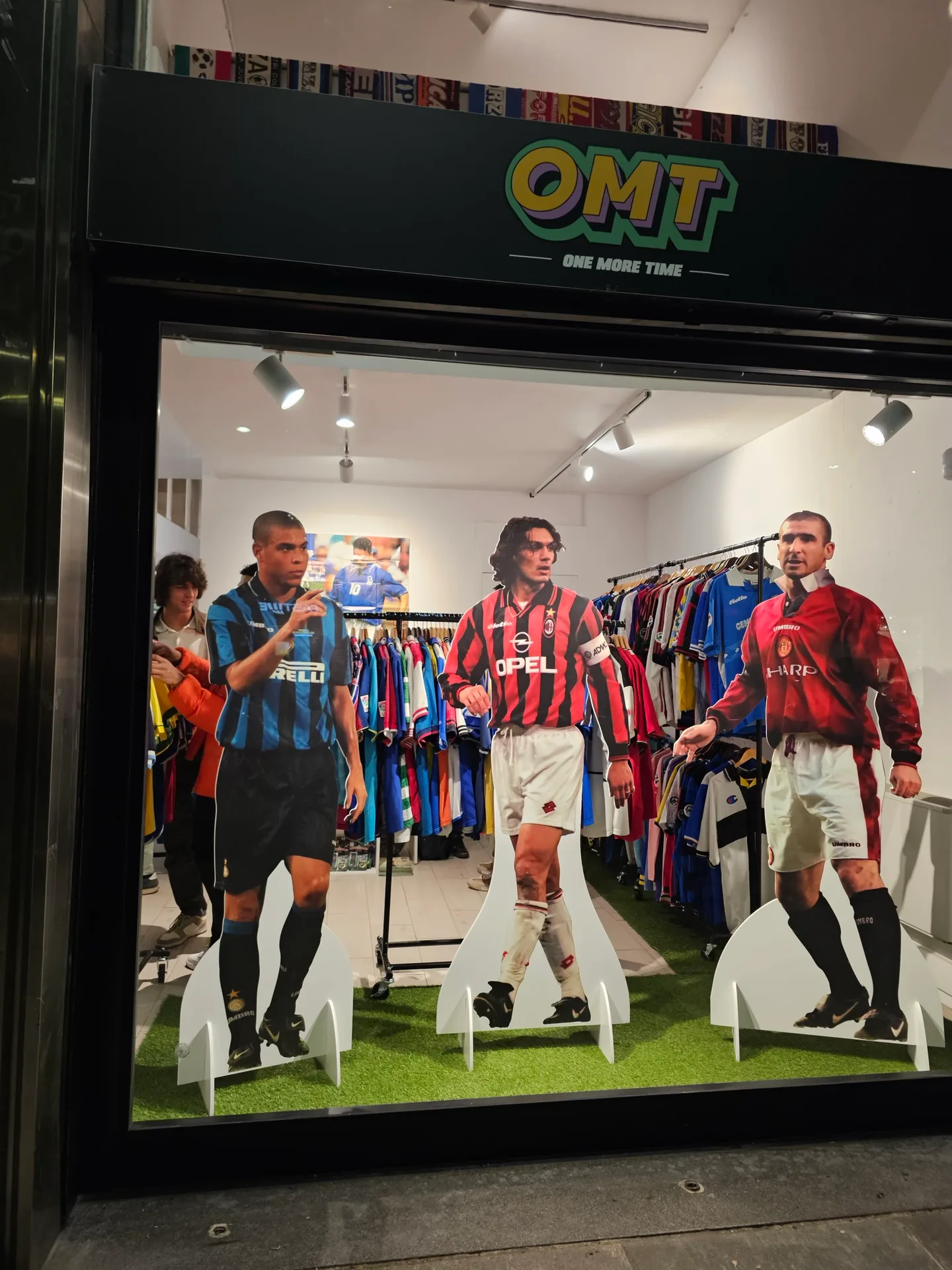
A vintage football shop displayed life-size figures of Ronaldo in Inter colours, Maldini in Milan colours and Cantona in Manchester United red. Behind them, shirts from different decades filled the rails.
Football divides and joins Milan. The red-and-black and blue-and-black identities share San Siro, while their derby takes its name from the Madonnina above the cathedral. Sport, architecture and the city's religious landmark become part of the same vocabulary. In a shop window, that whole relationship could be reduced to two sets of stripes.
03
A gate at night
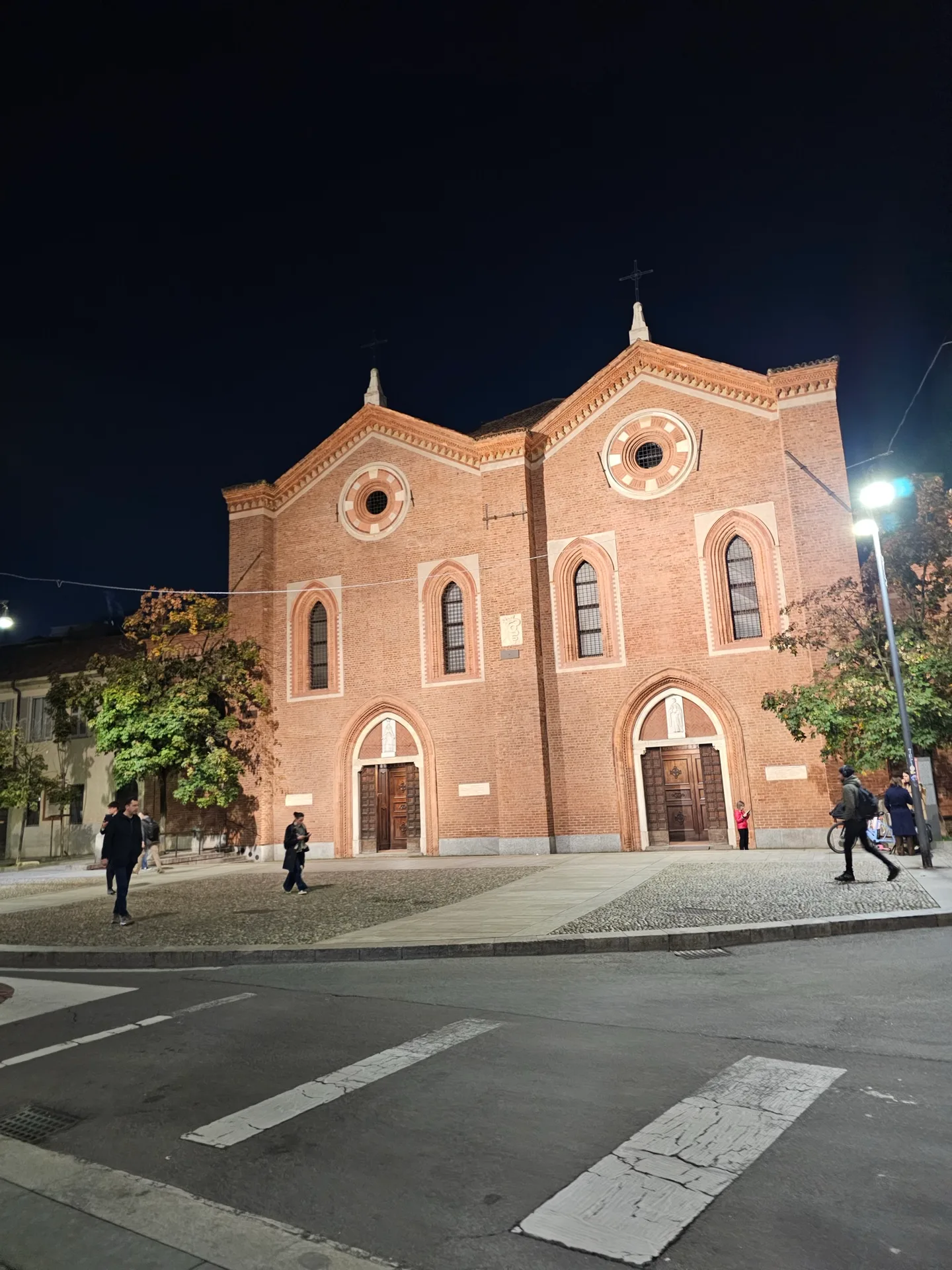
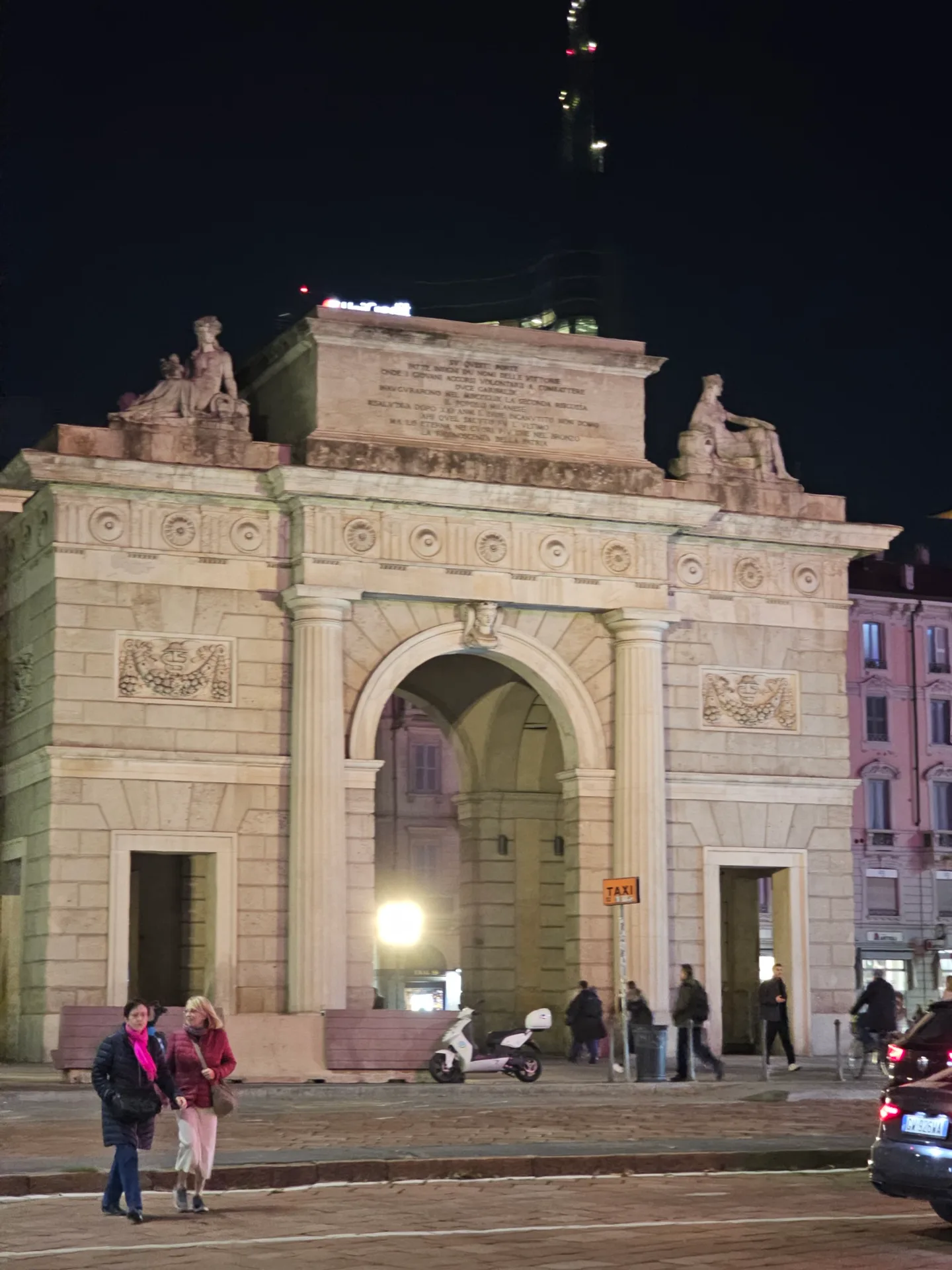
After dark I walked north along Corso Garibaldi. Santa Maria Incoronata's paired brick façades looked like a church reflected in a mirror. A little farther on, the illuminated Porta Garibaldi framed a different meeting of eras.
Behind the stone gate rose the distant tip of the UniCredit tower. Looking one way meant looking into an older street; looking the other meant glass towers and redevelopment. Two centuries appeared to face each other through the arch.
04
Rails and renewal
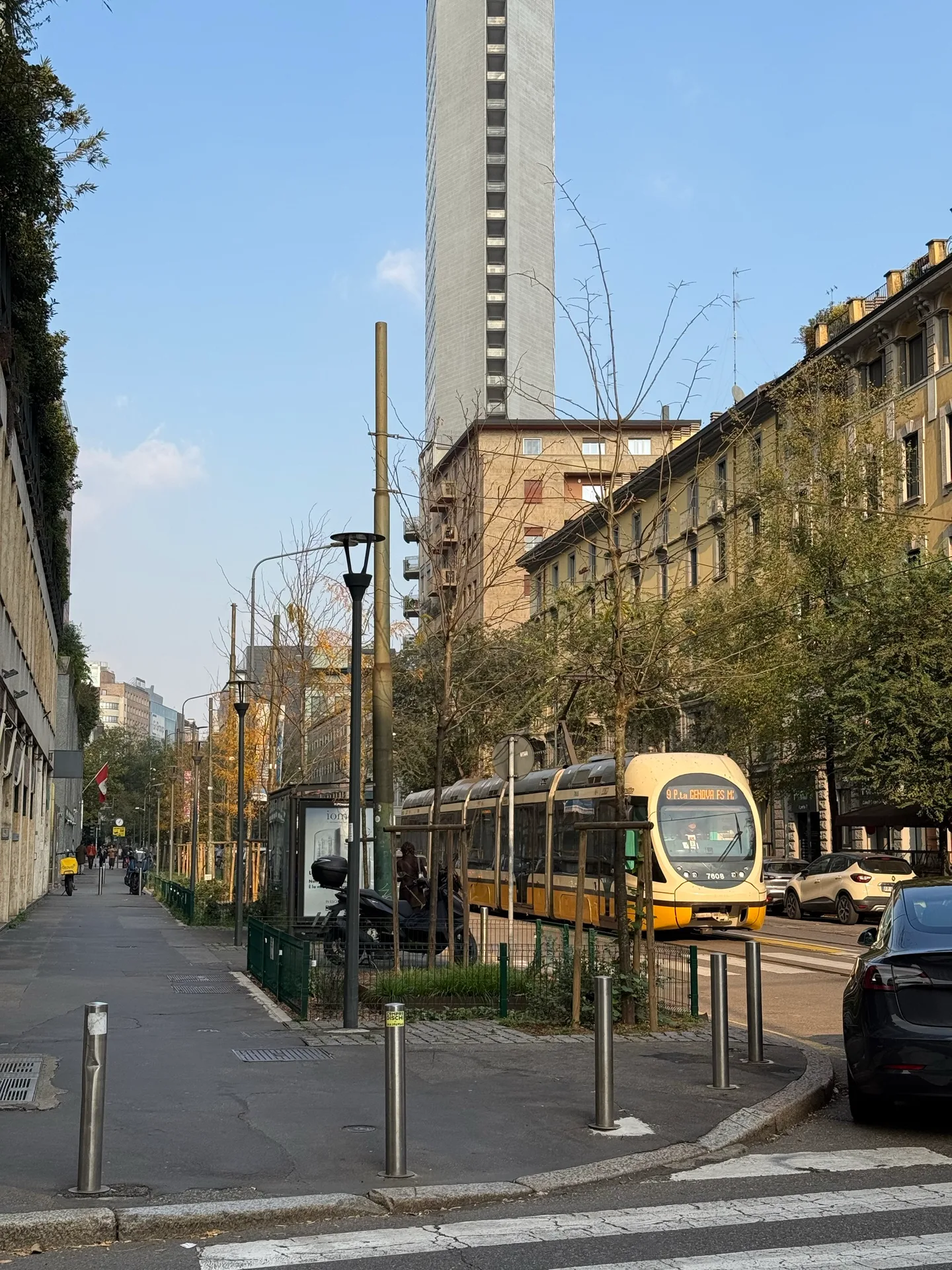
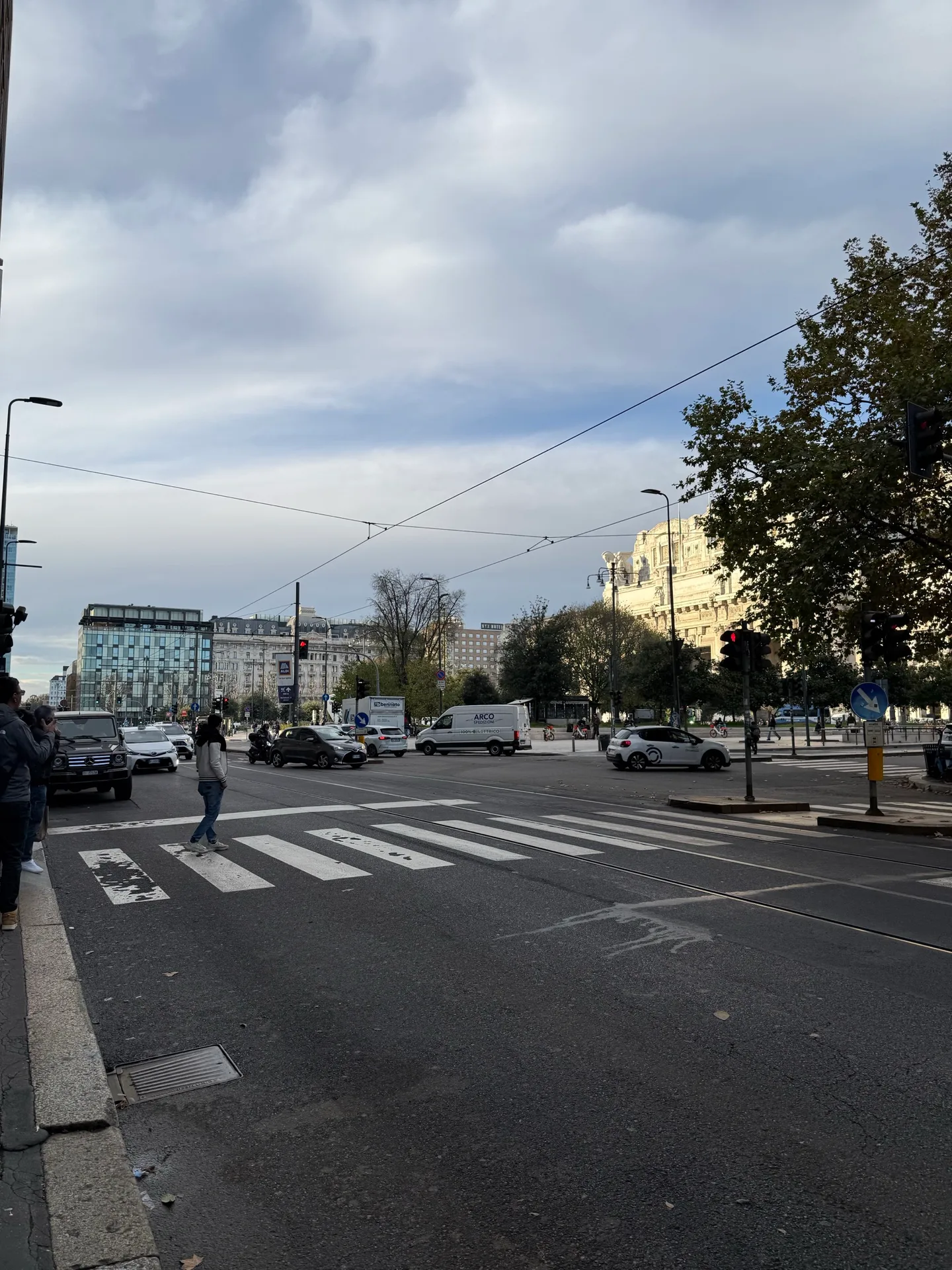
After a few days, I began noticing the Milan beyond fashion, design and the Duomo. There were construction sites, tram tracks and former industrial buildings finding new uses.
The city carries its industrial past into the present. Redevelopment has produced new neighbourhoods and towers, but the process is still visible at street level: barriers, cranes, workshops, apartment blocks and old façades sharing unfinished edges. Milan is not simply a finished design object. It is a place that keeps being worked on.
05
A forest of stone
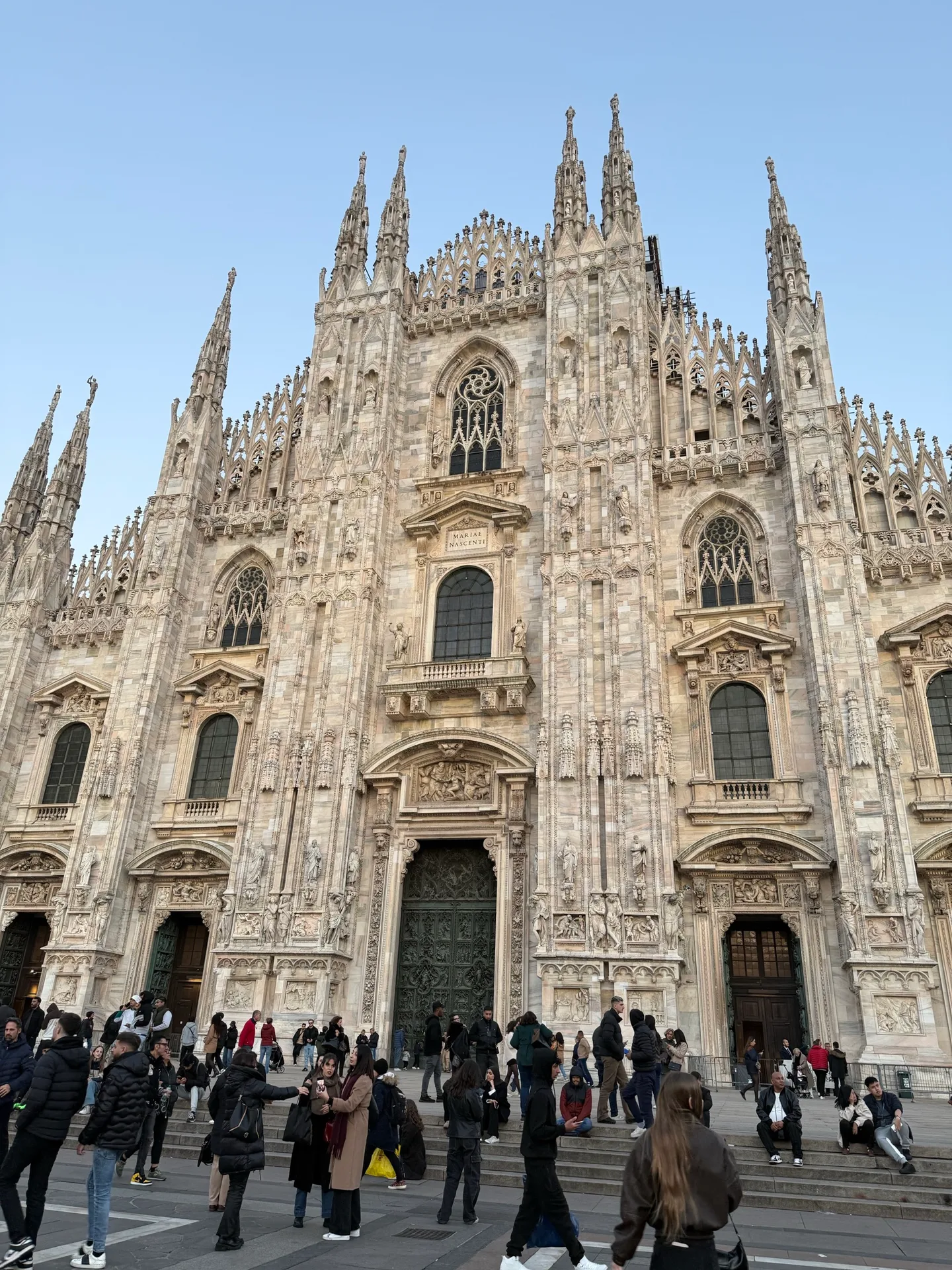
Seen from the front, the Duomo resembles a stone forest. Pinnacles, figures and carved surfaces rise in layers, the pale marble taking on a faint pinkness in the light. Construction stretched across centuries, and care of the building continues.
The phrase fabbrica del Duomo describes more than a metaphor. A dedicated organisation has long maintained the cathedral, replacing worn stone and repairing its sculpture. I liked the idea that a famous completed monument is actually an ongoing task. Some things survive because people accept that the work will never be finished.
06
Evening on the canal
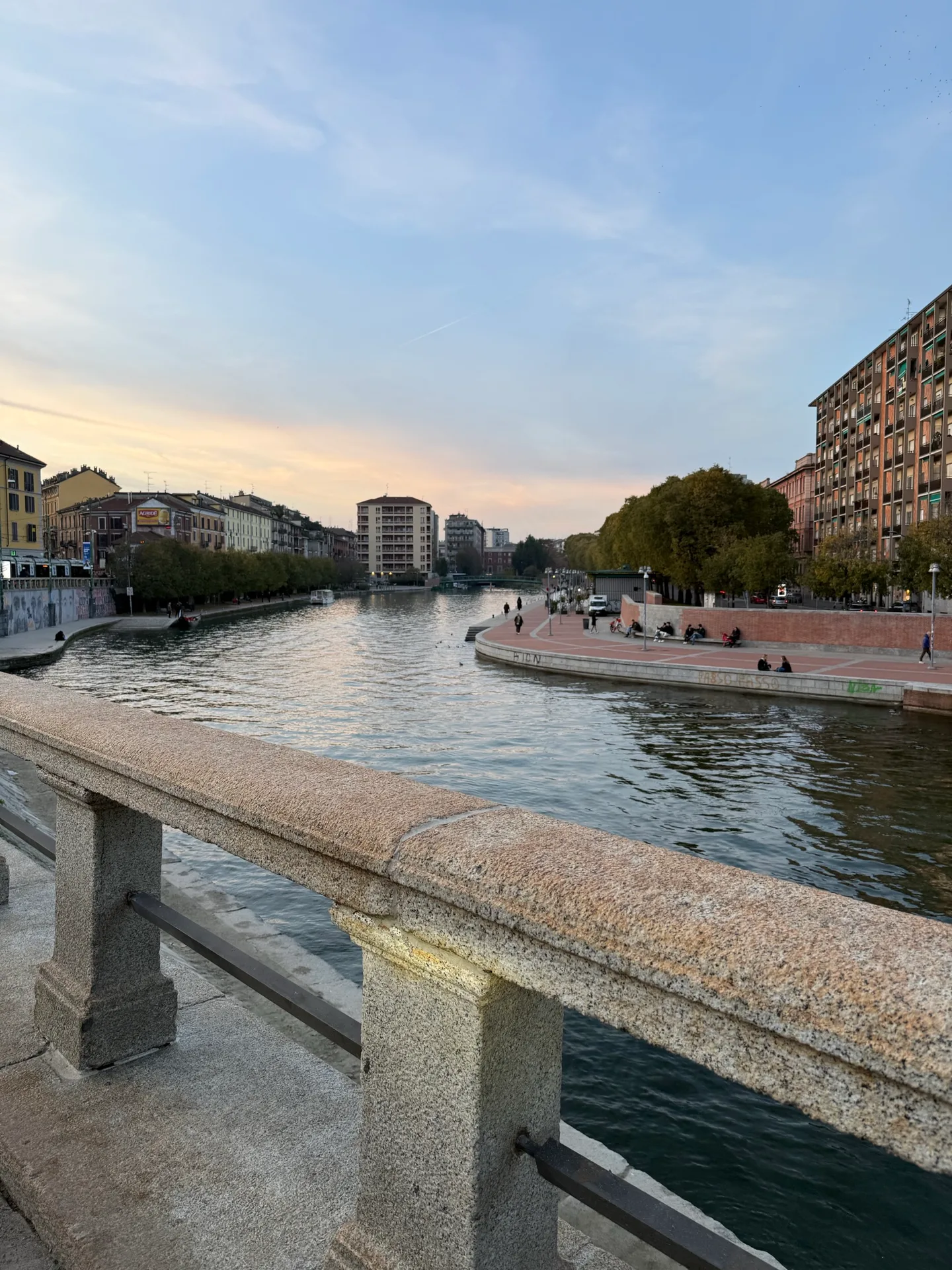
On 11 November I took a tram south to the Navigli. The Naviglio Grande once belonged to Milan's transport and working landscape, including the movement of materials for the cathedral. Now people gathered along it for the evening.
The canal was not perfectly clear, nor were the buildings perfectly restored. It did not matter. The last light turned the water gold, along with the windows, bicycles and floating leaves. After the Duomo's extraordinary detail and the city's new towers, this modest stretch of canal supplied the gentlest ending.