BELGIUM / TRAVEL NOTES
Antwerp
A giant's hand, a railway cathedral and a port that keeps making room for new stories.
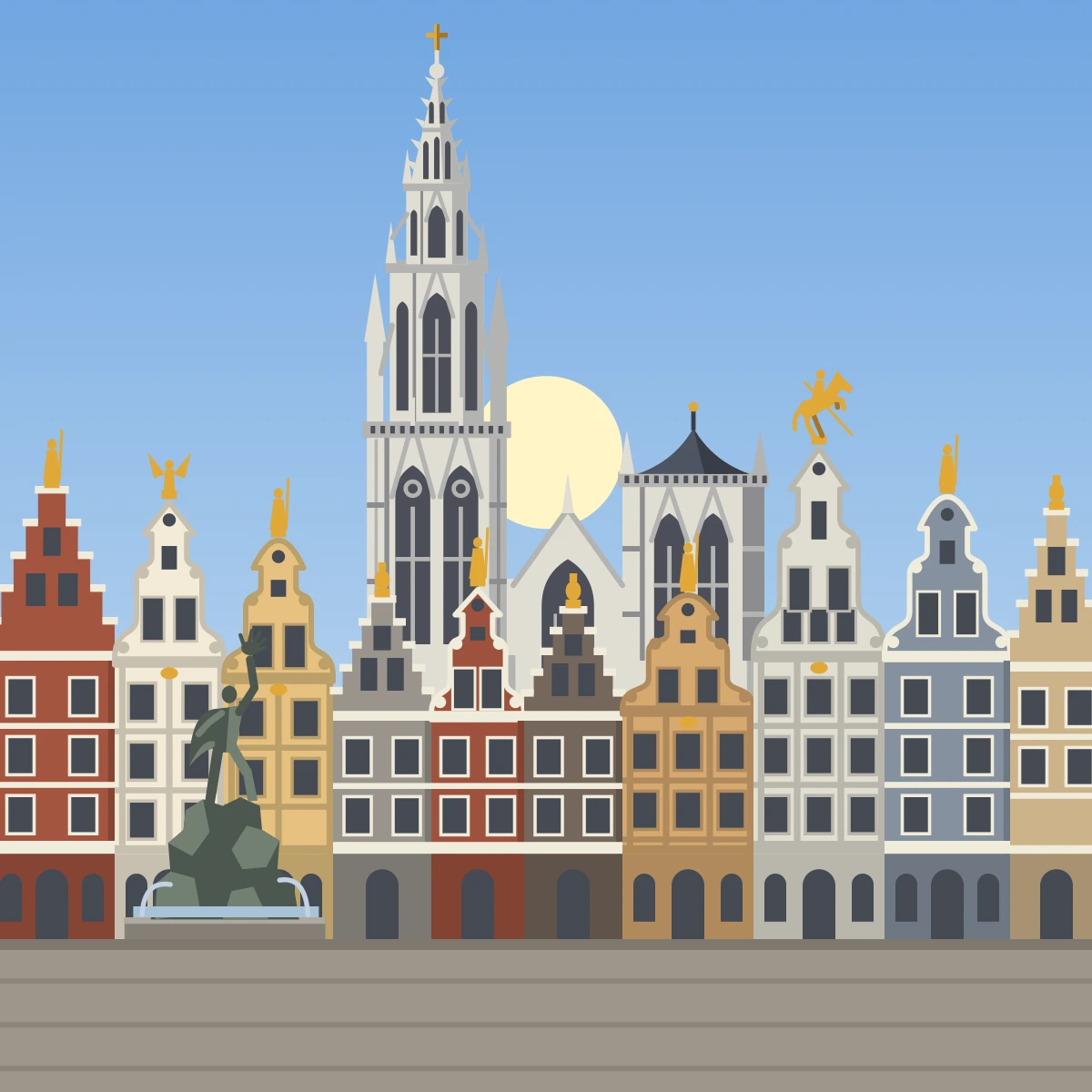
Antwerp in Hourline shows the same artwork as the app, bringing its landmarks together in a composed scene.
01
A giant's hand
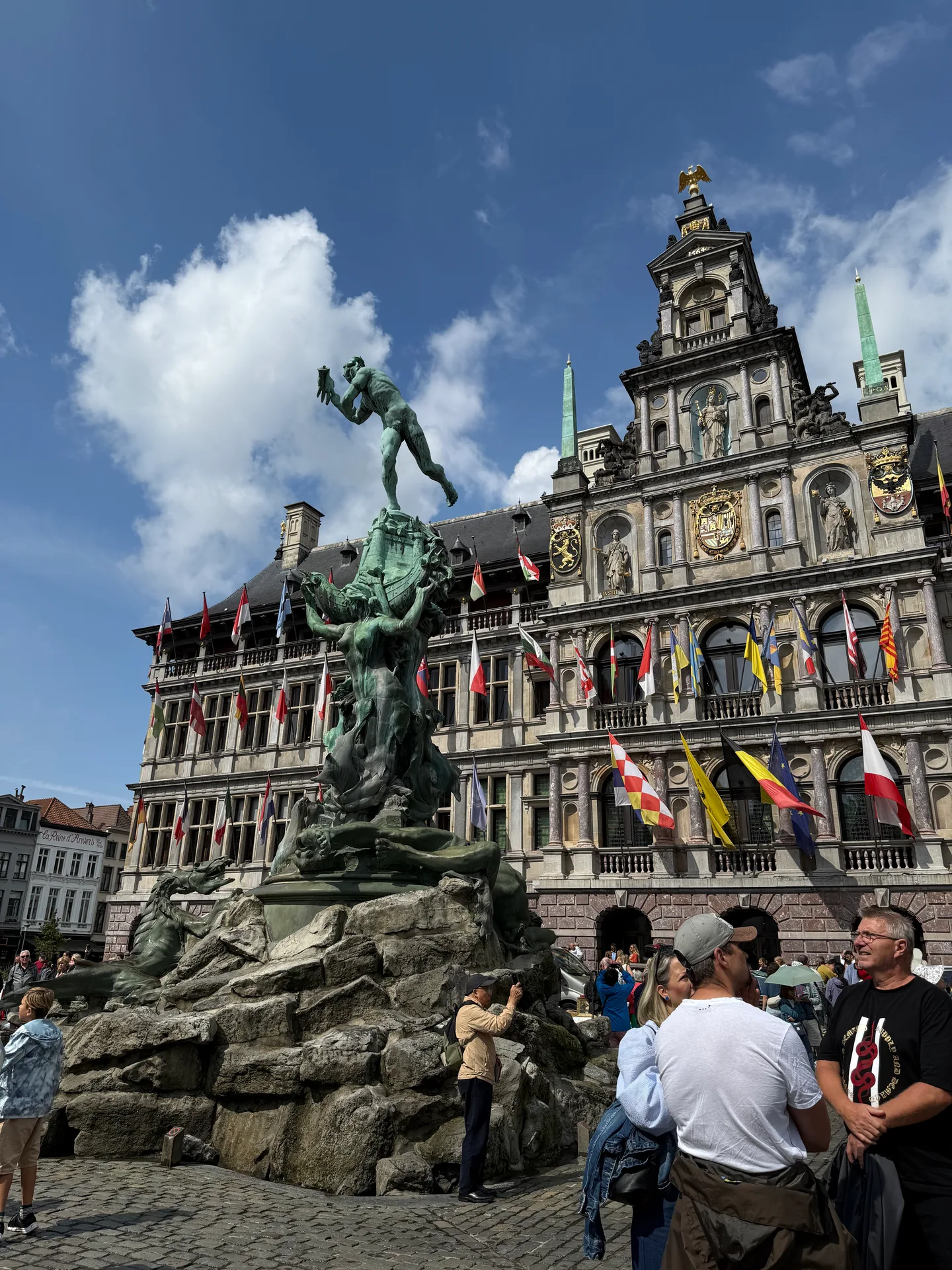
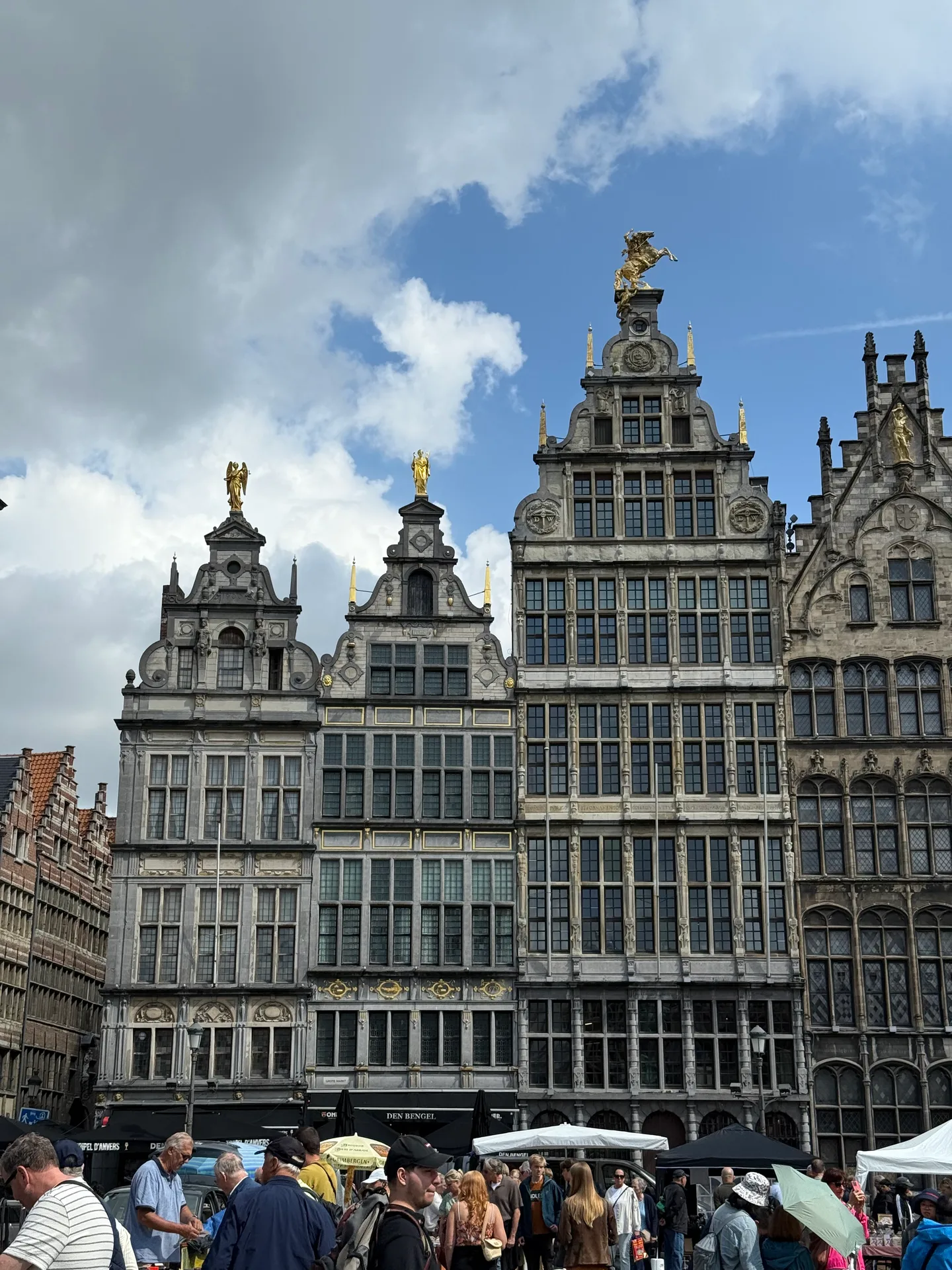
Antwerp tells a story about its own name. A giant demanded payment from boats on the Scheldt and cut off the hands of those who refused. Brabo defeated him and threw the giant's hand into the river. It is a legend, but the city has made it visible: hands in its symbols, hand-shaped chocolates and Brabo poised above the fountain in the Grote Markt.
At noon in late July, the square was crowded. Flags moved across the Renaissance façade of the town hall. Its scale recalls the sixteenth-century city, when merchants, money and goods from across Europe met here. In the strong sunlight, the gilded details were almost too bright to look at.
02
The river and the castle
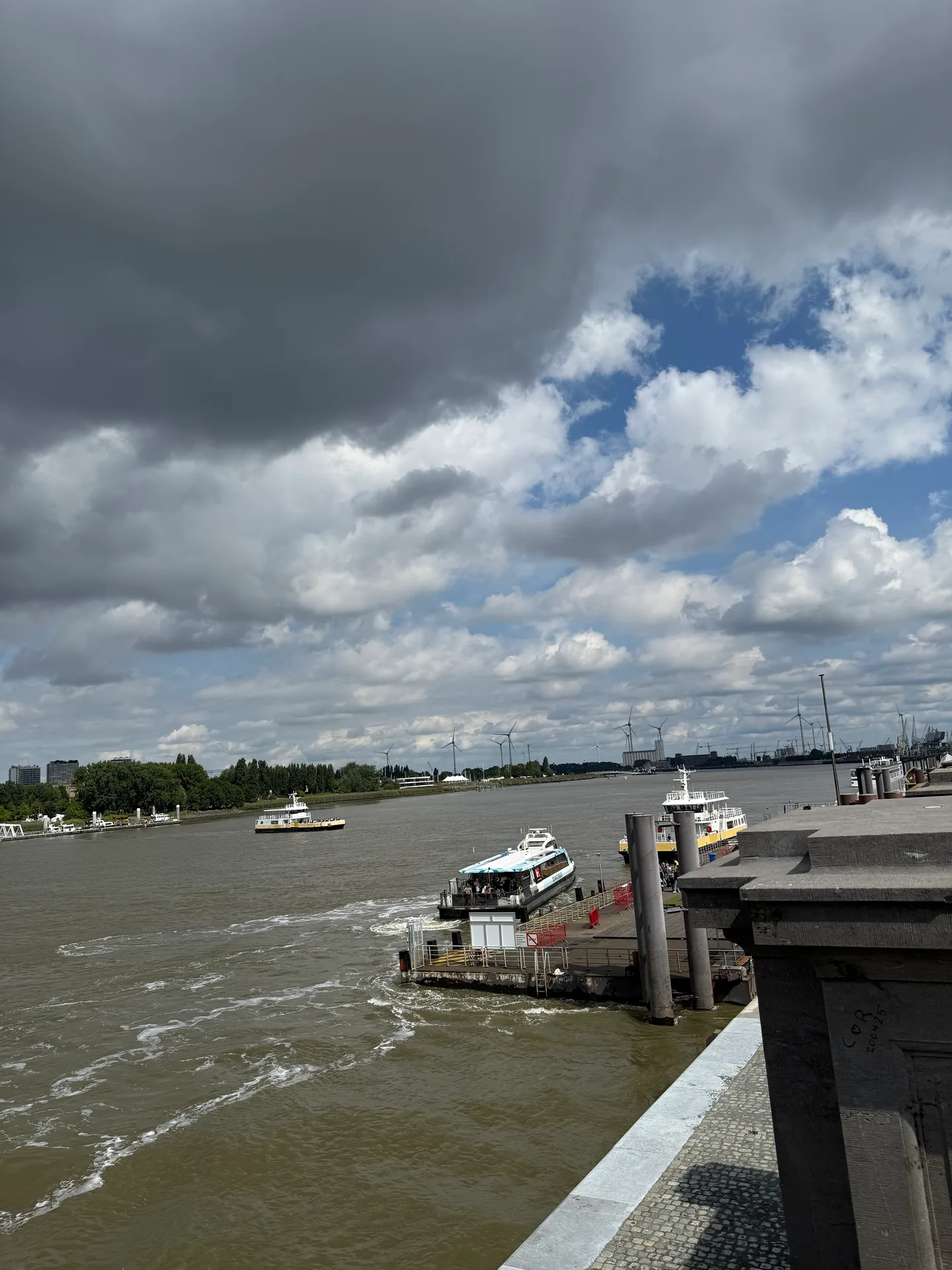
A few minutes west, the Scheldt opened like a grey lake. Barges moved beneath the shadows of clouds. The river made Antwerp rich, and restrictions on access to it helped bring that prosperity to an end. Religious conflict, war and the departure of merchants and skilled workers reshaped the city's place in European trade.
Those large historical changes are difficult to imagine beside such steadily moving water. Antwerp lost its earlier dominance, but the port endured and grew again.
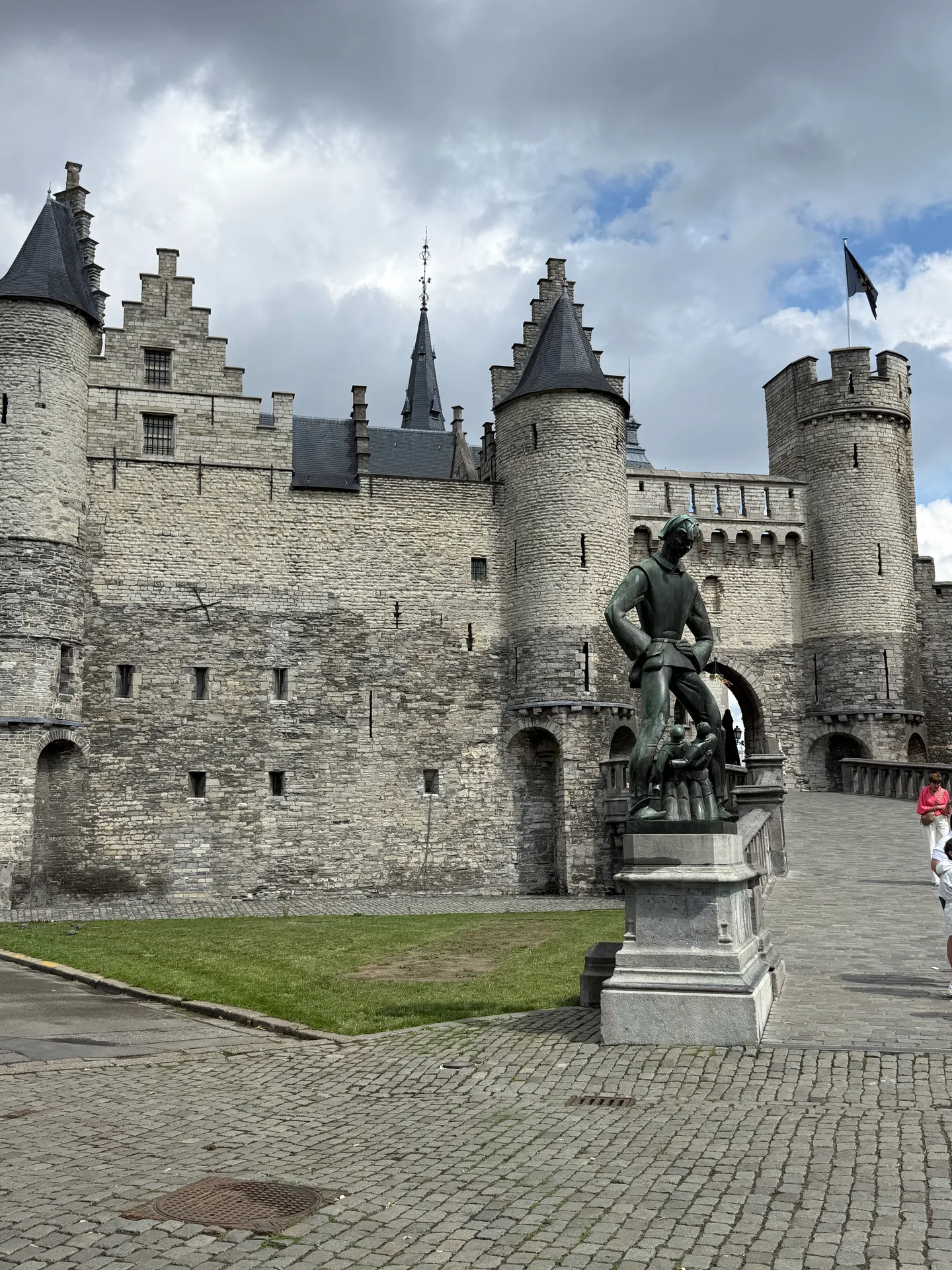
Het Steen stands near the river, a compact reminder of a much older defensive city. Fortification, prison, threatened relic, visitor landmark: the building has survived by changing its job. Children climbed on the sculpture outside. A place can carry heavy history and still become somewhere to play.
03
Rubens and the cathedral
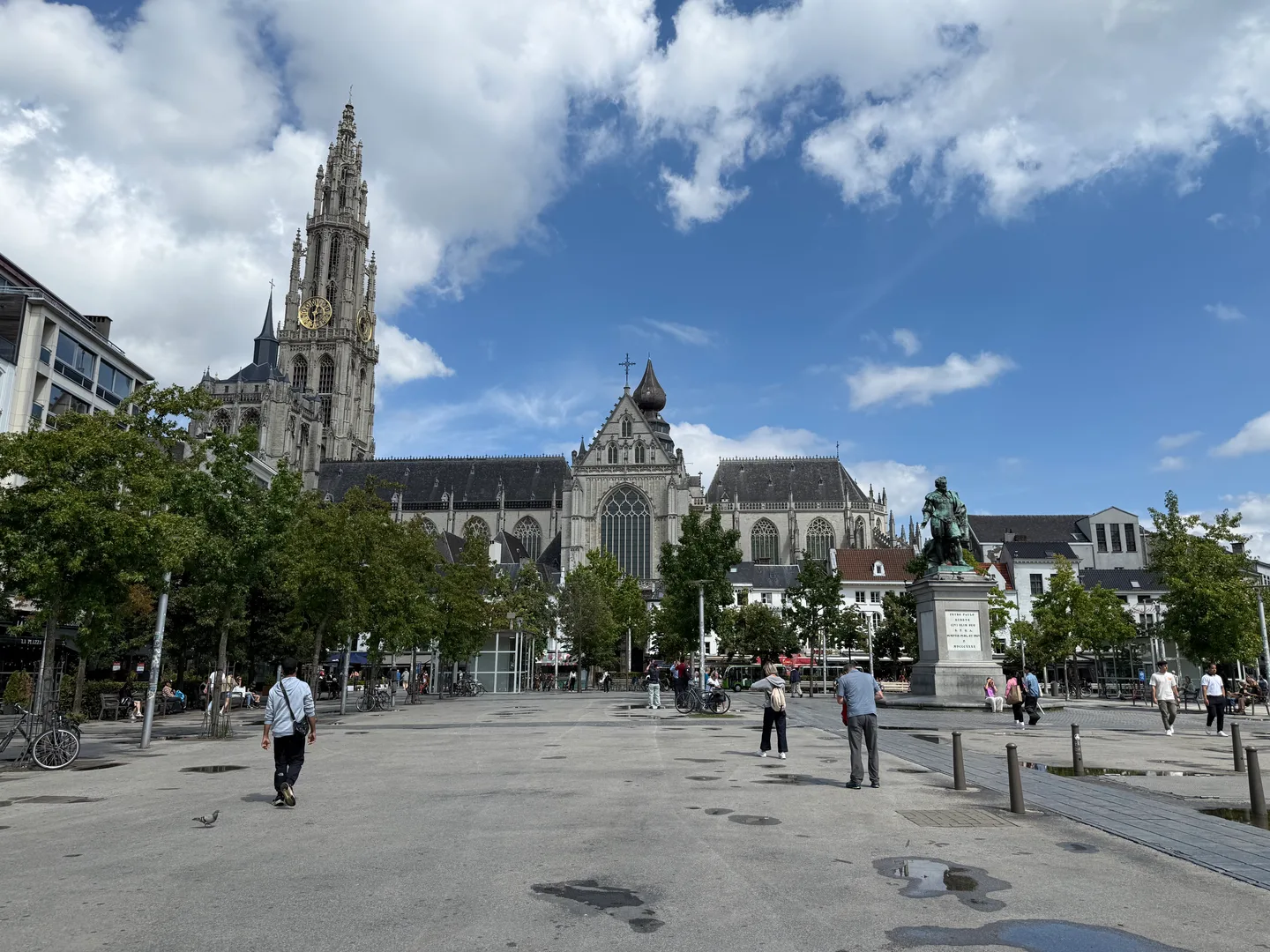
Back through the narrow streets, I reached Groenplaats. The cathedral tower rose behind the trees, unmistakable against the sky. Its unequal towers make it more memorable than perfect symmetry might have done.
Rubens stands in bronze in the square, connecting the city's commercial history with its artistic one. Antwerp's fortunes had already changed during his lifetime, yet his paintings gave it another lasting claim on the world. Looking from the statue to the cathedral, that relationship felt unusually direct.
04
The museum by the river
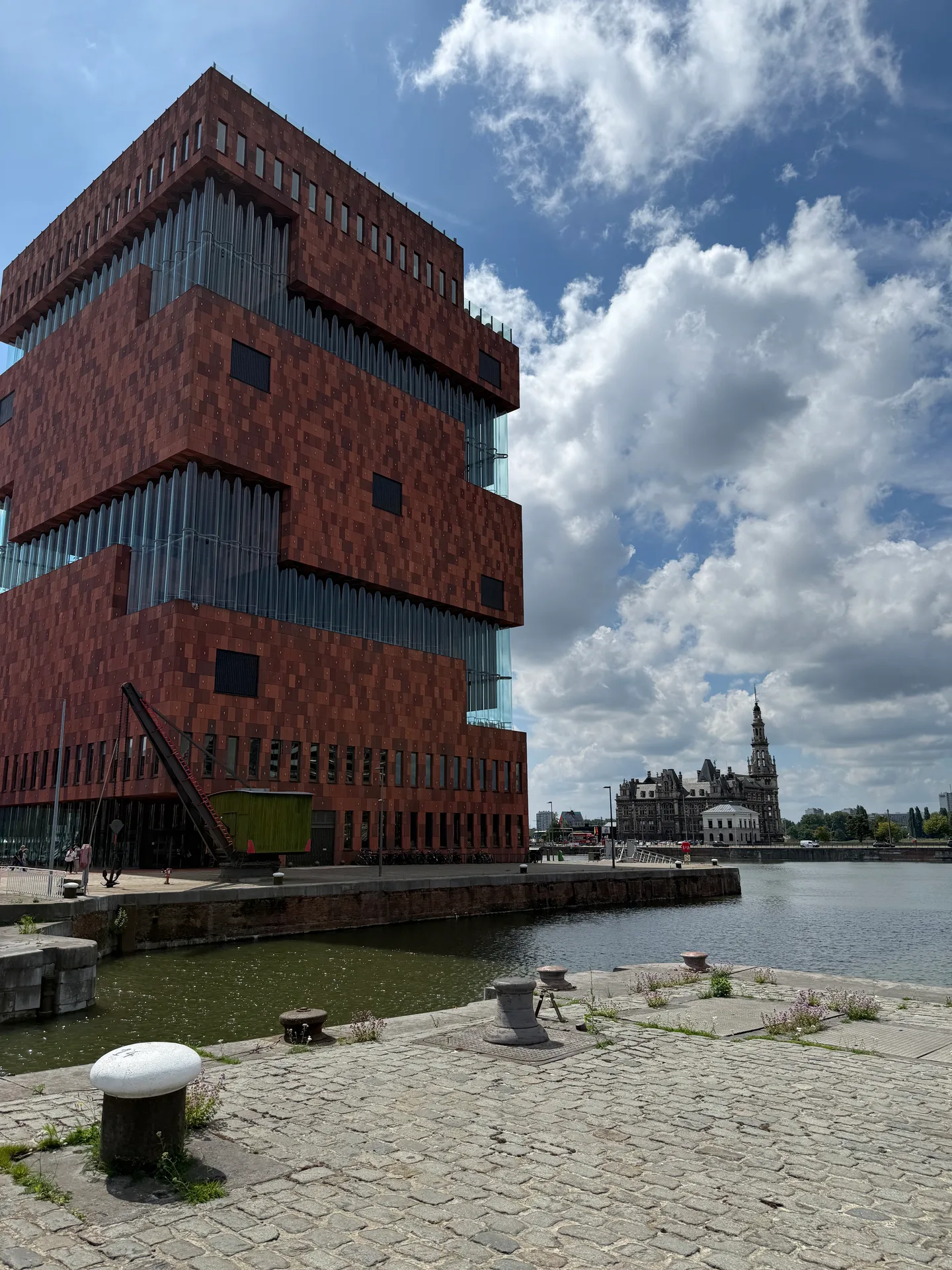
Farther north, the MAS looked like a stack of shifted red-stone blocks separated by rippling glass. Its contemporary shape still recalls warehouses and containers. Even a museum here seems to begin with the port.
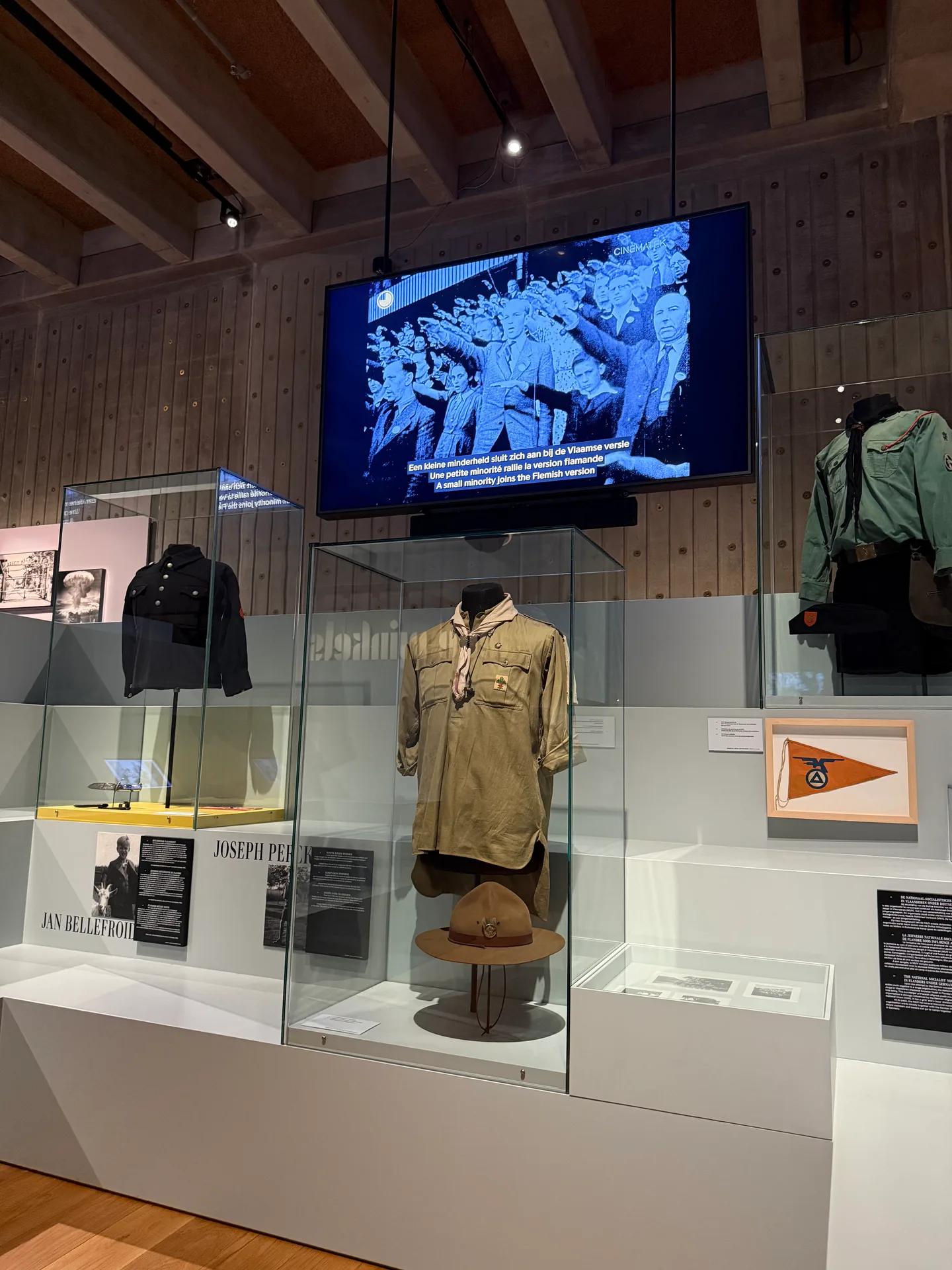
Inside, historical displays brought war into the quiet of glass cases. Clothing, documents and images occupied one kind of room; river views filled another. The contrast needed very little explanation.
05
Lanes and the exchange
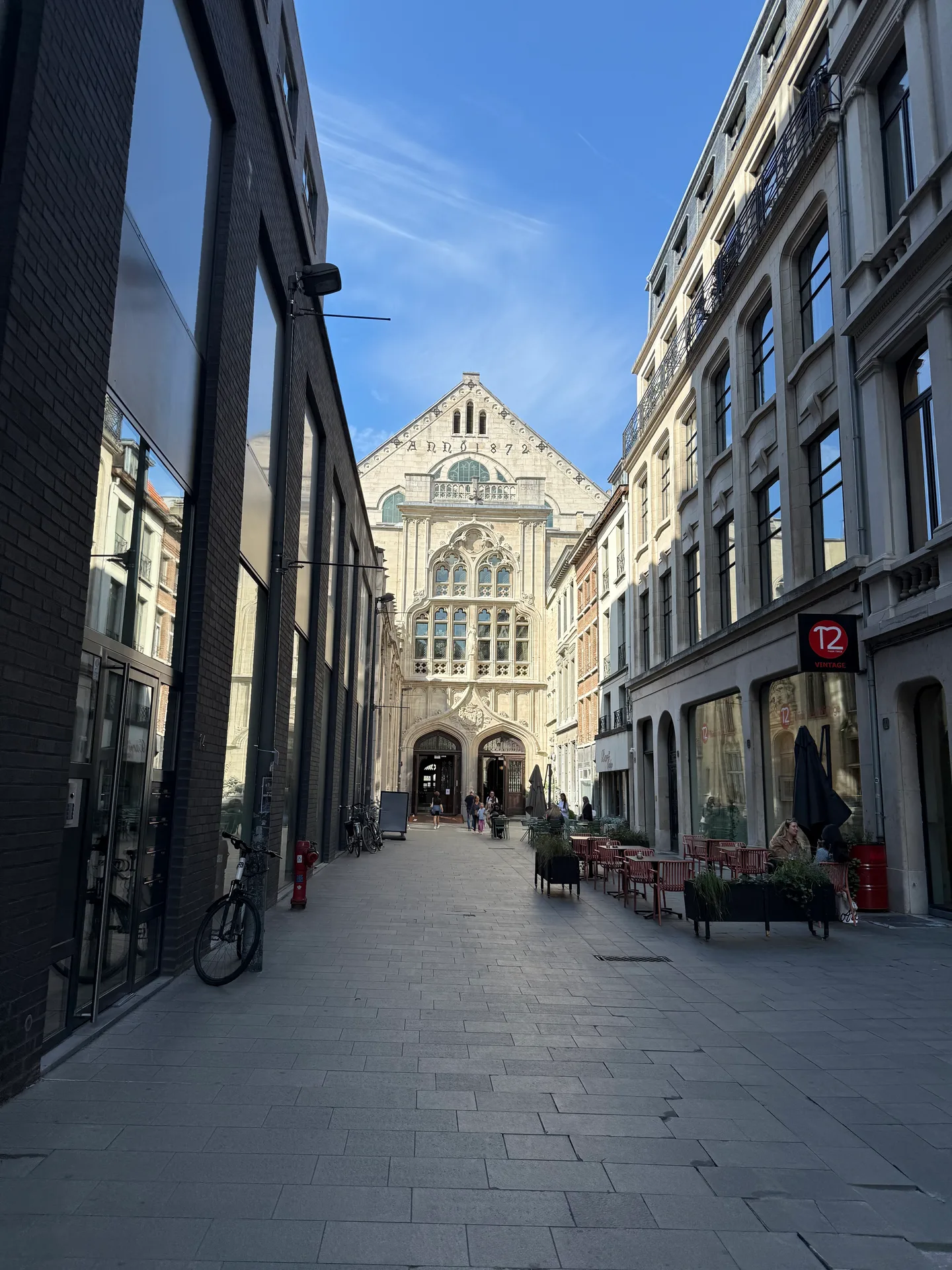
Returning to the old town, I looked up from a narrow street and found the cathedral's tower fitted exactly between the façades. Antwerp's lanes can make the city feel like a book opened to a narrow column.
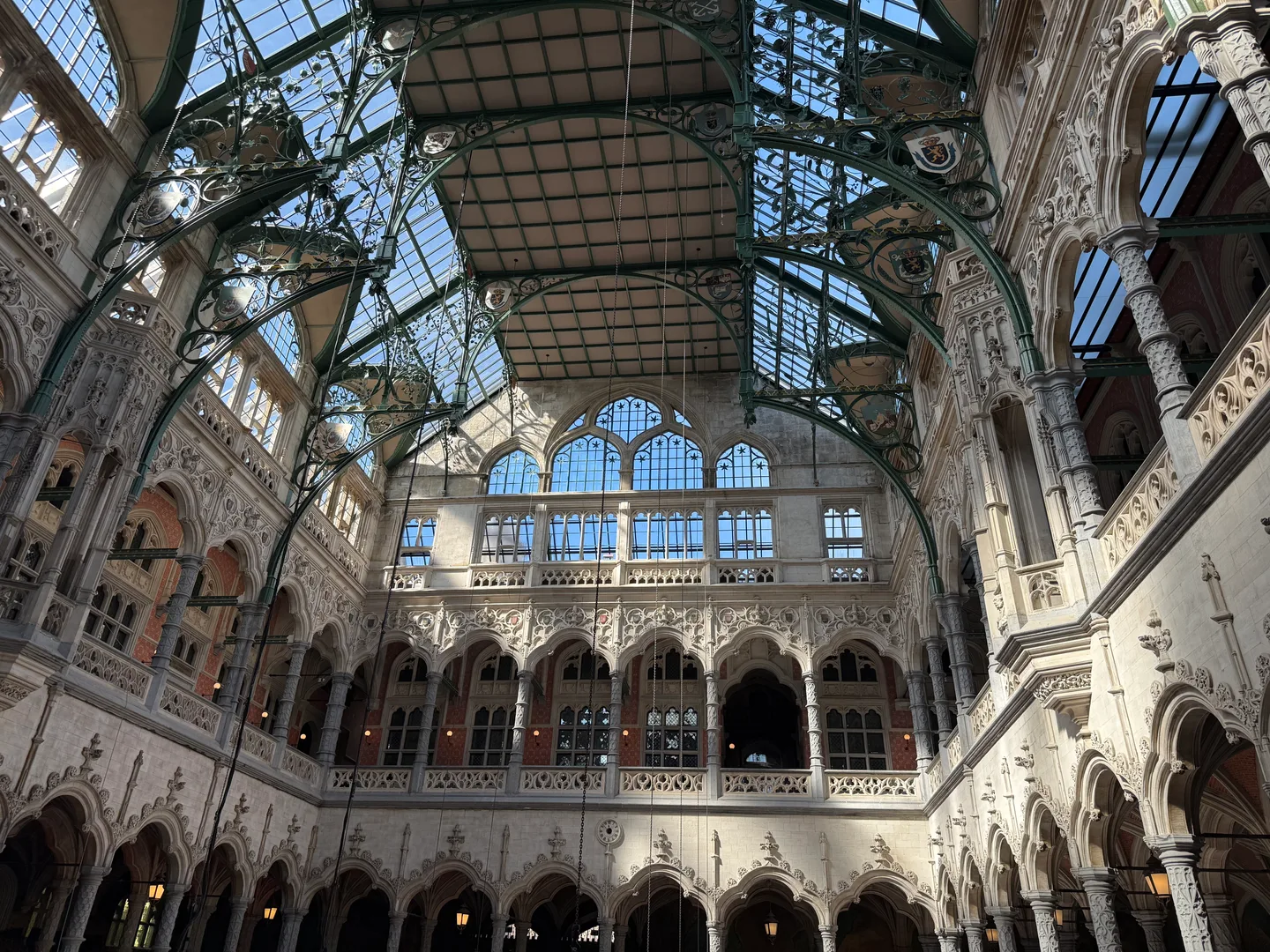
Behind an unassuming entrance, the Handelsbeurs opened into a hall of stone, iron and glass. The site belongs to the early history of purpose-built exchanges; the present building is a later reconstruction. Sunlight fell through its roof onto the open floor. A place associated with commerce and noise was, for the moment, occupied mostly by light.
06
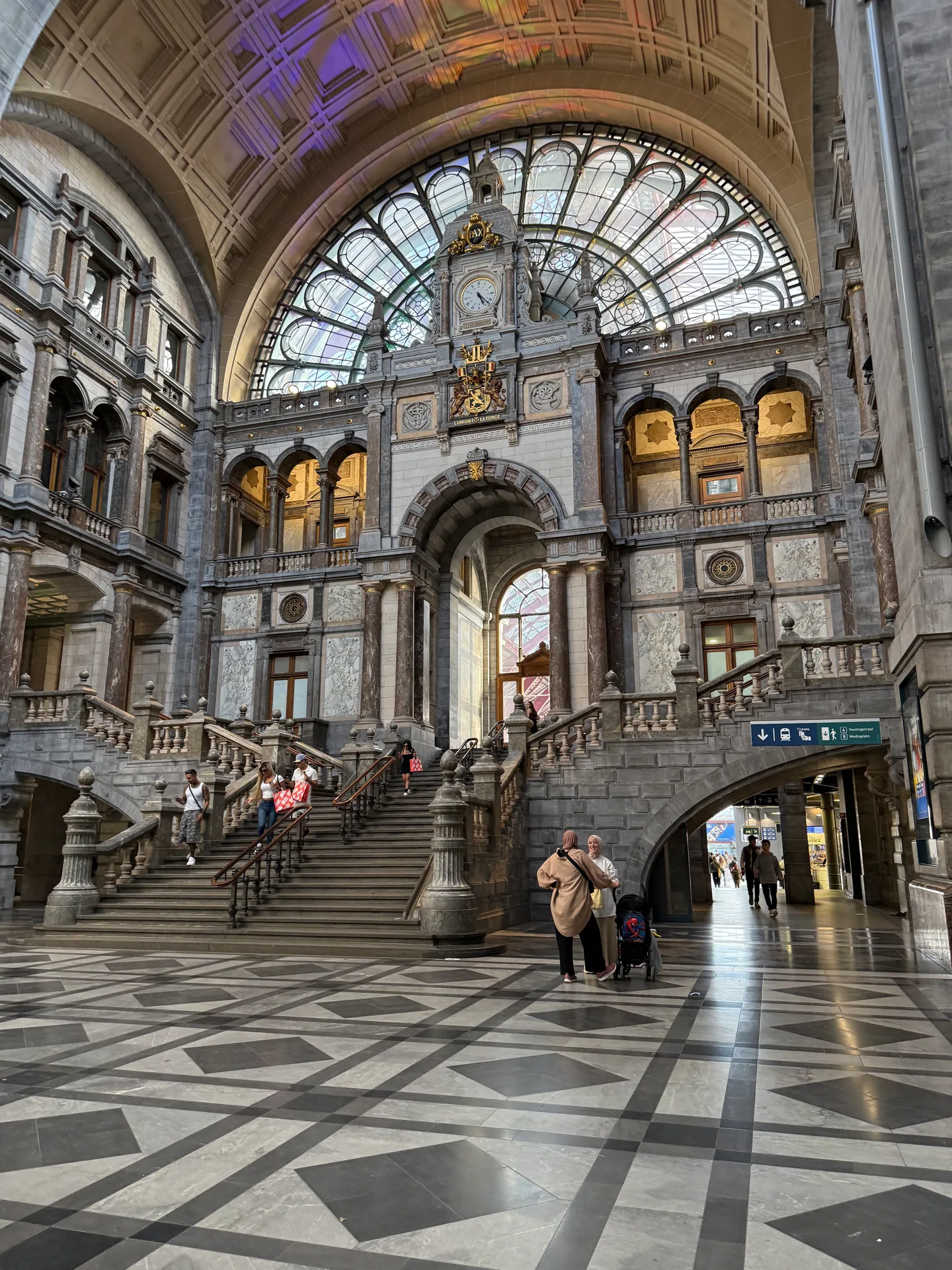
The railway cathedral
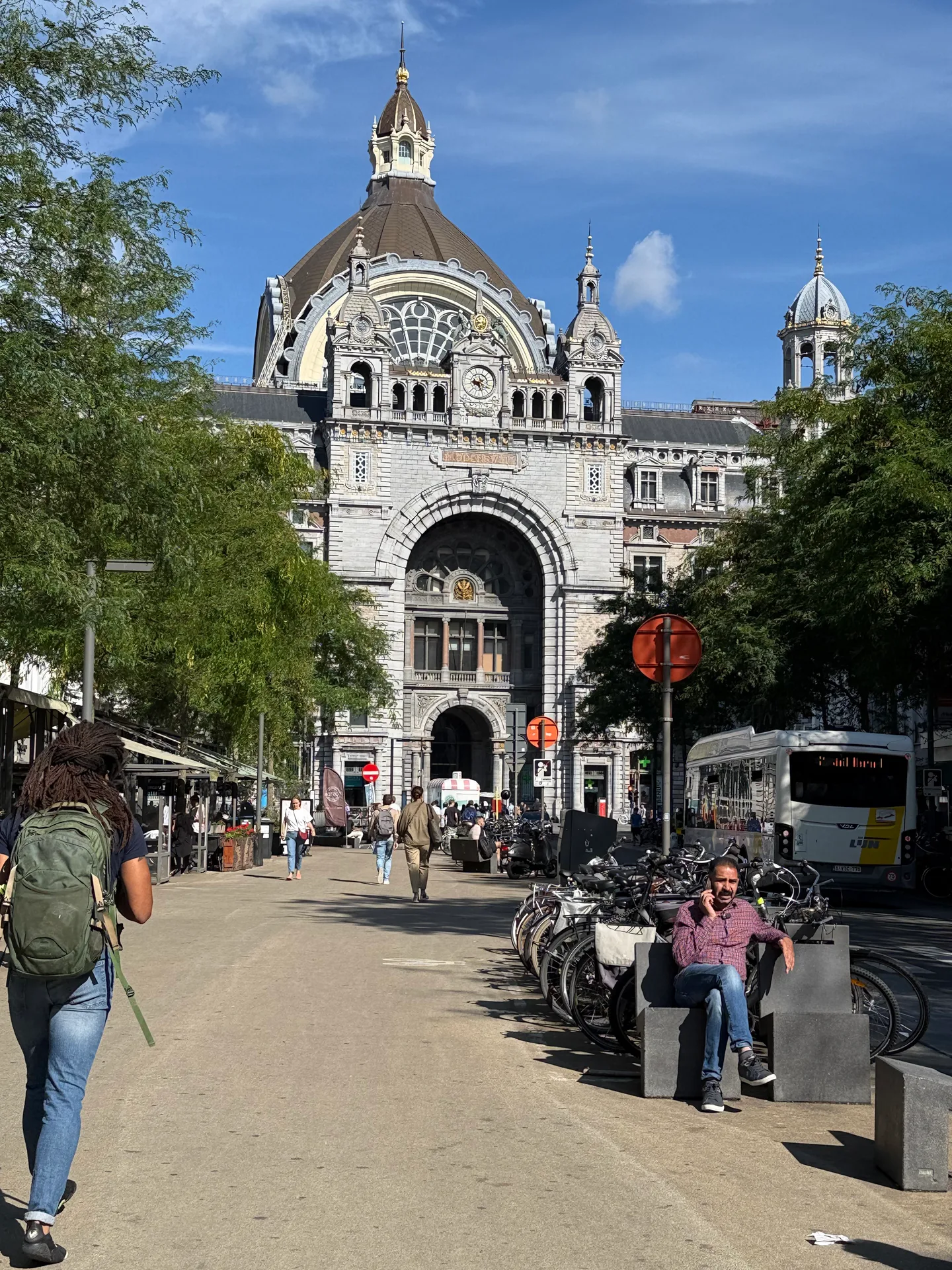
Towards evening I walked to Antwerpen-Centraal. Its great dome appeared before the entrance. Inside were marble, columns, arches and high windows: less a conventional waiting room than a public palace.
The station's transport infrastructure has been extensively adapted, but the historic hall still offers its own pace. Travellers looked at phones and hurried towards trains. Occasionally someone stopped and looked up. The building seemed to be waiting patiently for those moments.
07
A gate beside the station
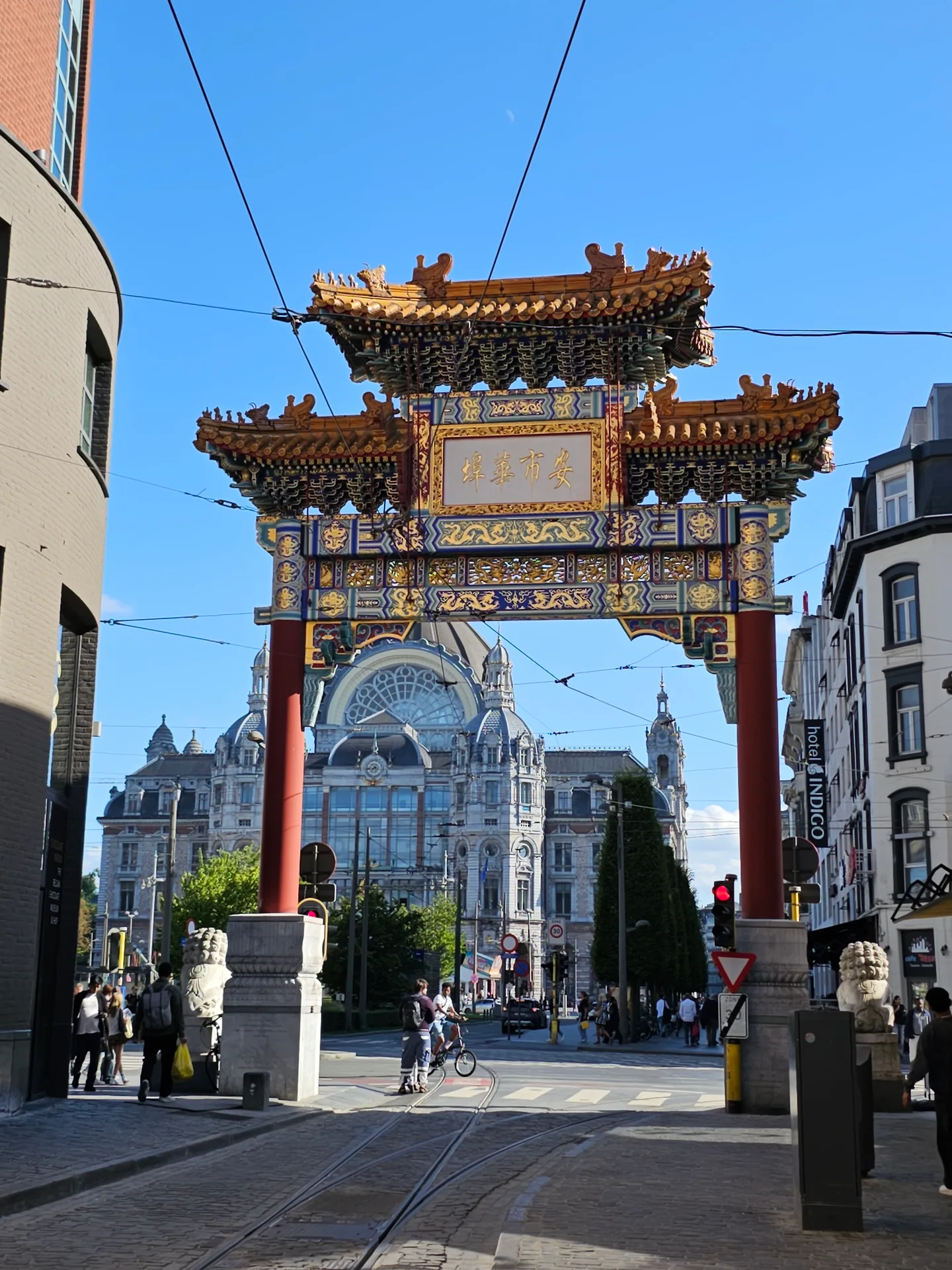
Outside, a Chinese arch appeared near the station: coloured brackets, red columns and a tiled roof, with the railway dome behind it. Different architectural worlds stood close enough to share a photograph.
Perhaps that is a port city's particular disposition. It receives things, makes room, and adds another story to the ones already there. Once the cargo was spices and silver. Here, at the end of the walk, it was a Chinese gate beside a railway cathedral.