GERMANY / TRAVEL NOTES
Leipzig
A railway palace, a city written into music, and the weight of remembering.
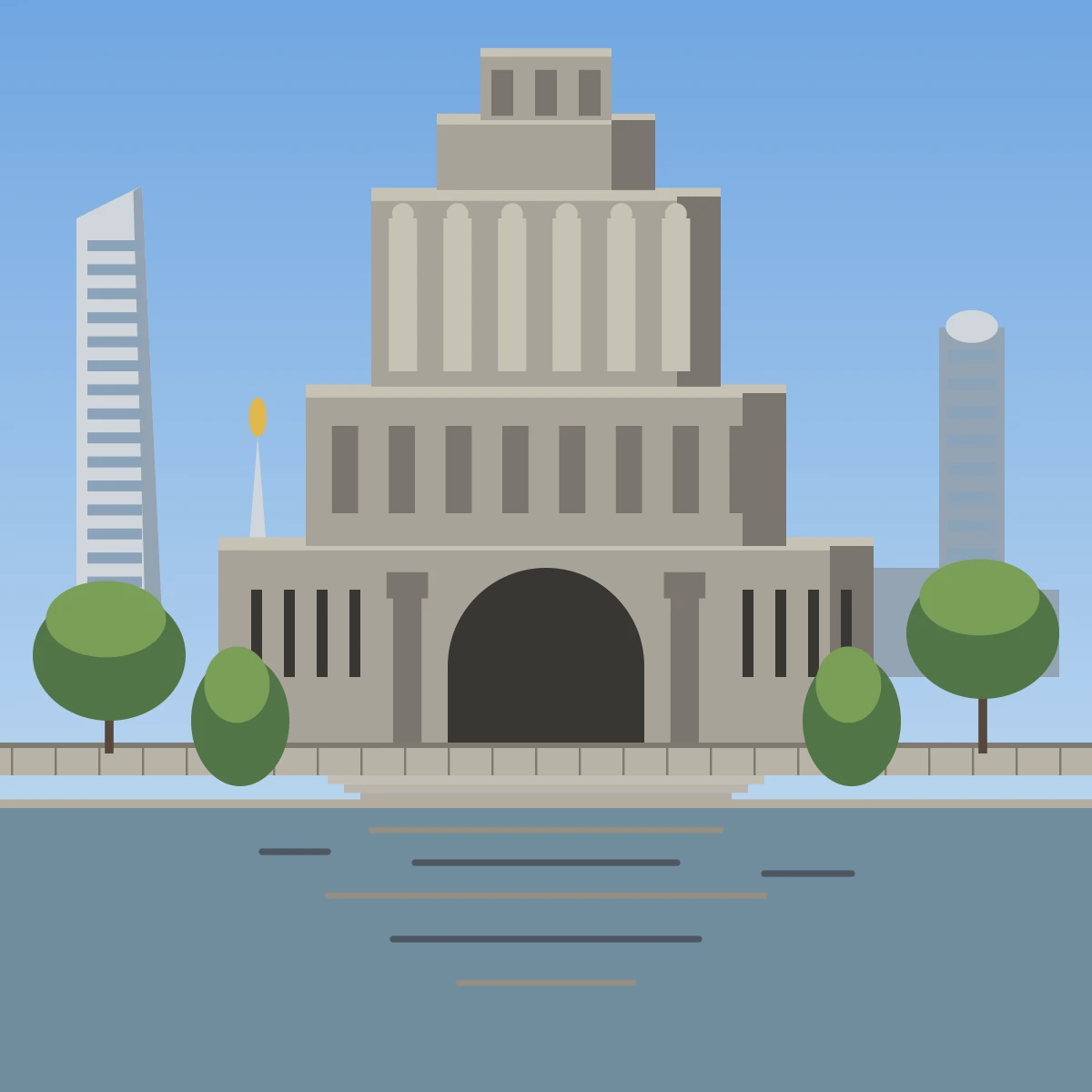
Leipzig in Hourline shows the same artwork as the app, bringing its landmarks together in a composed scene.
01
A railway palace
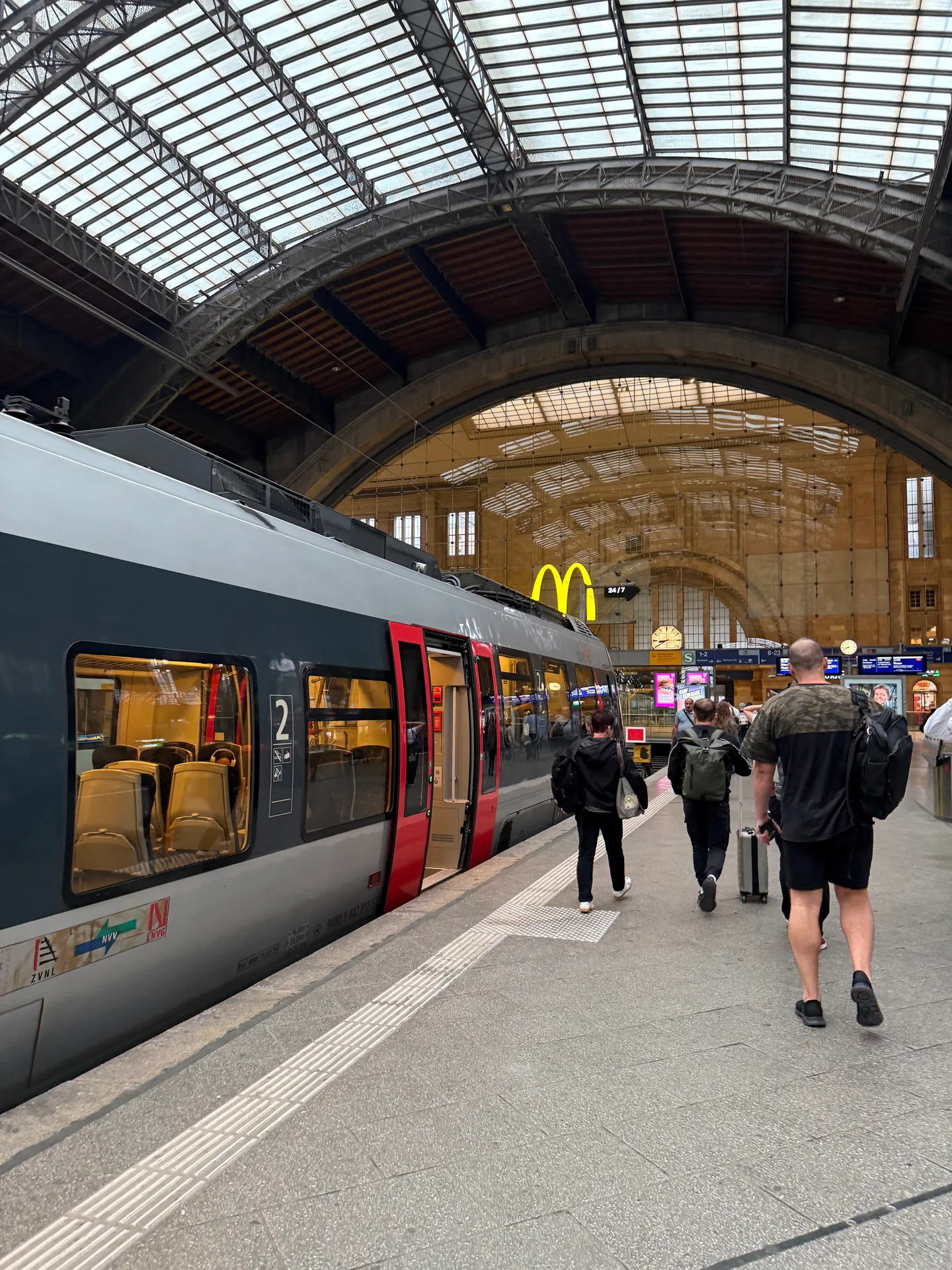
On the evening of 8 July, my train entered Leipzig Hauptbahnhof beneath a vast roof of glass and steel. The platforms seemed extraordinarily wide. The station's original symmetry reflected two railway systems, Prussian and Saxon, each with its own half of the building. One station contained two parallel worlds.
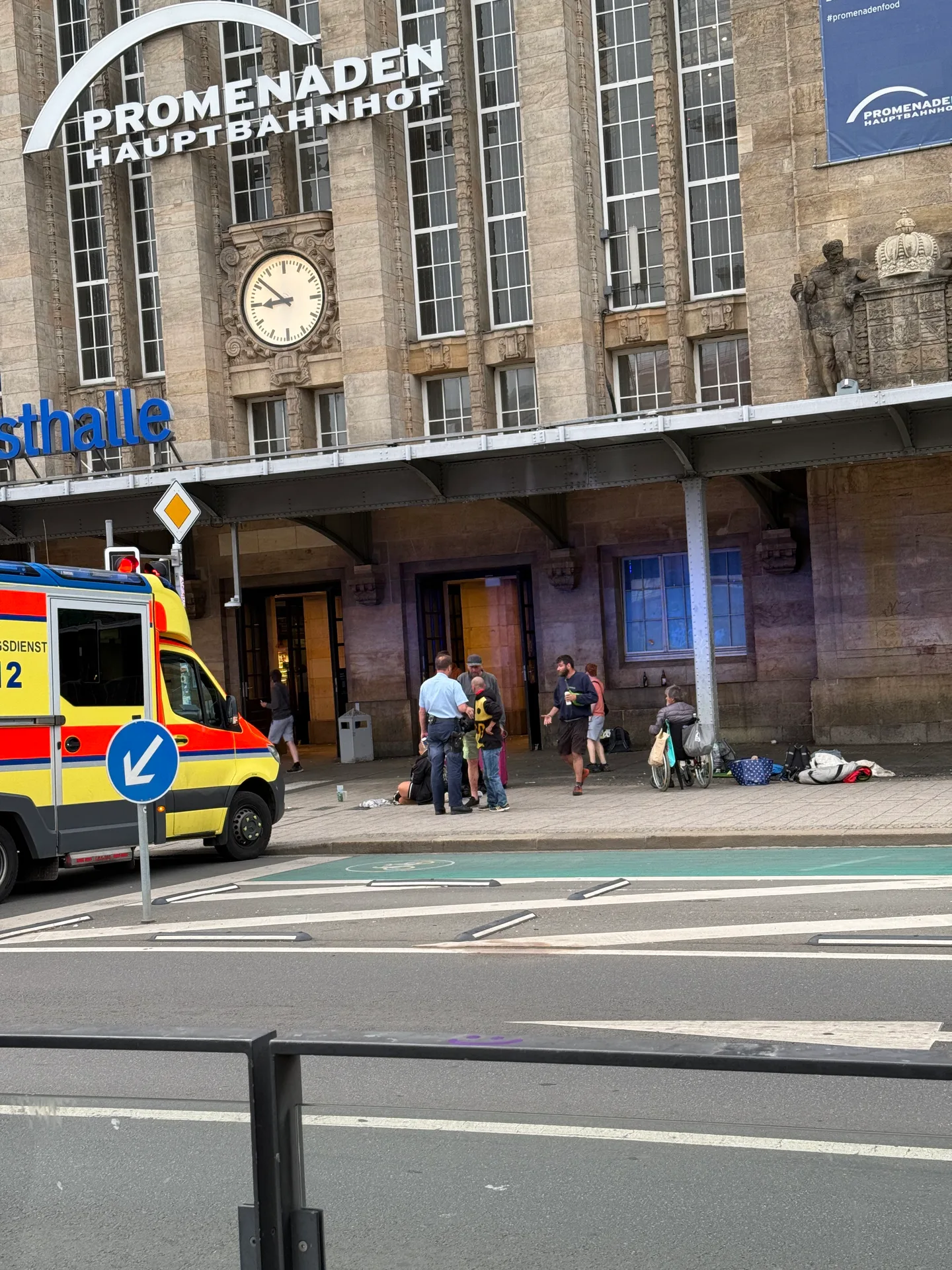
The building has carried soldiers, endured bombing and acquired a shopping centre beneath its tracks. Today the name Promenaden Hauptbahnhof makes the commercial role almost as visible as the railway one. Outside, everyday difficulties continued beside the monumental entrance. A grand station does not make a city's problems disappear.
02
July's blue hour
Ten minutes south brought me into the old town. In July, twilight lingers. Streetlights were on while the sky still held blue and violet, leaving the city suspended between day and night.
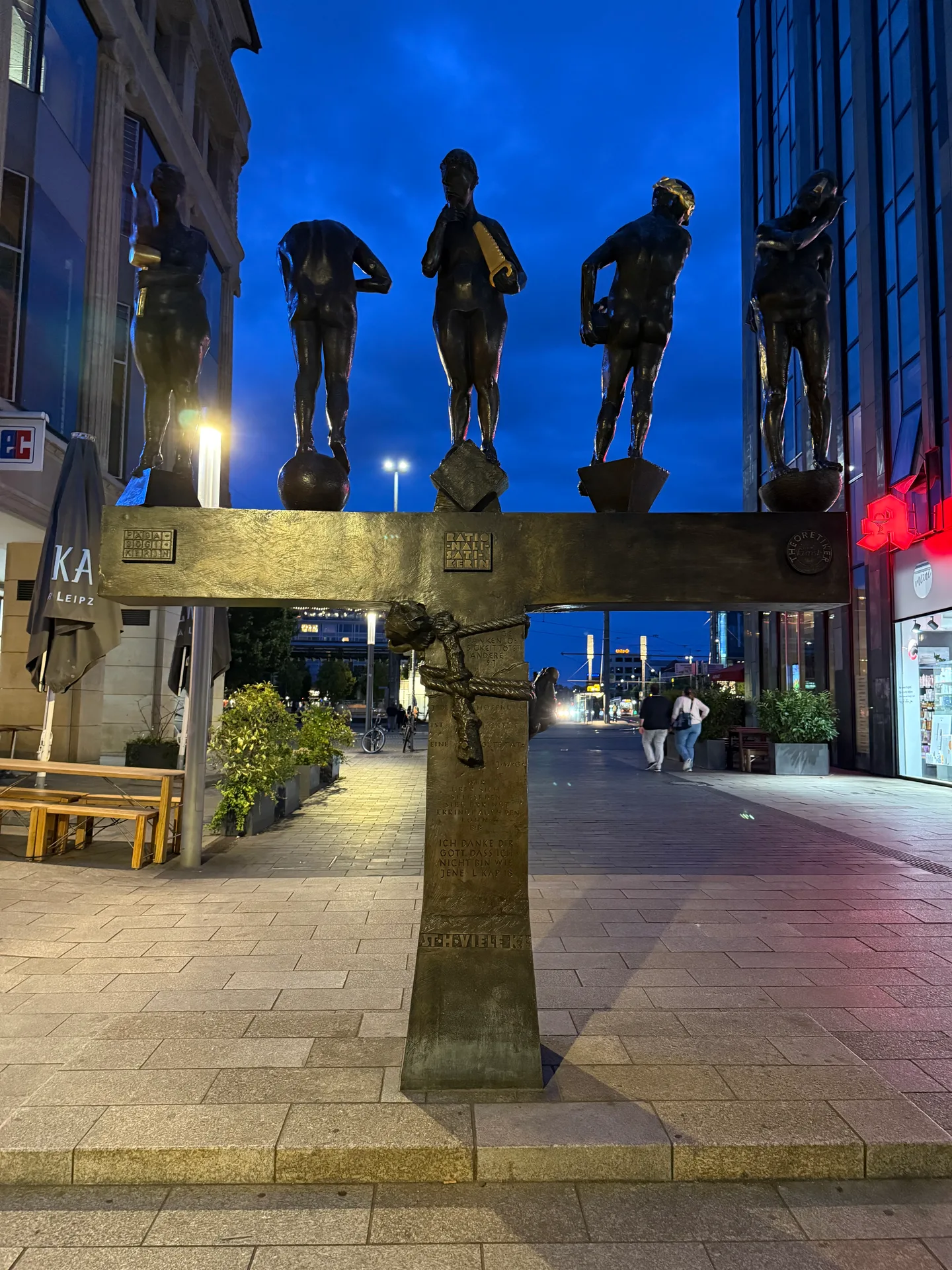
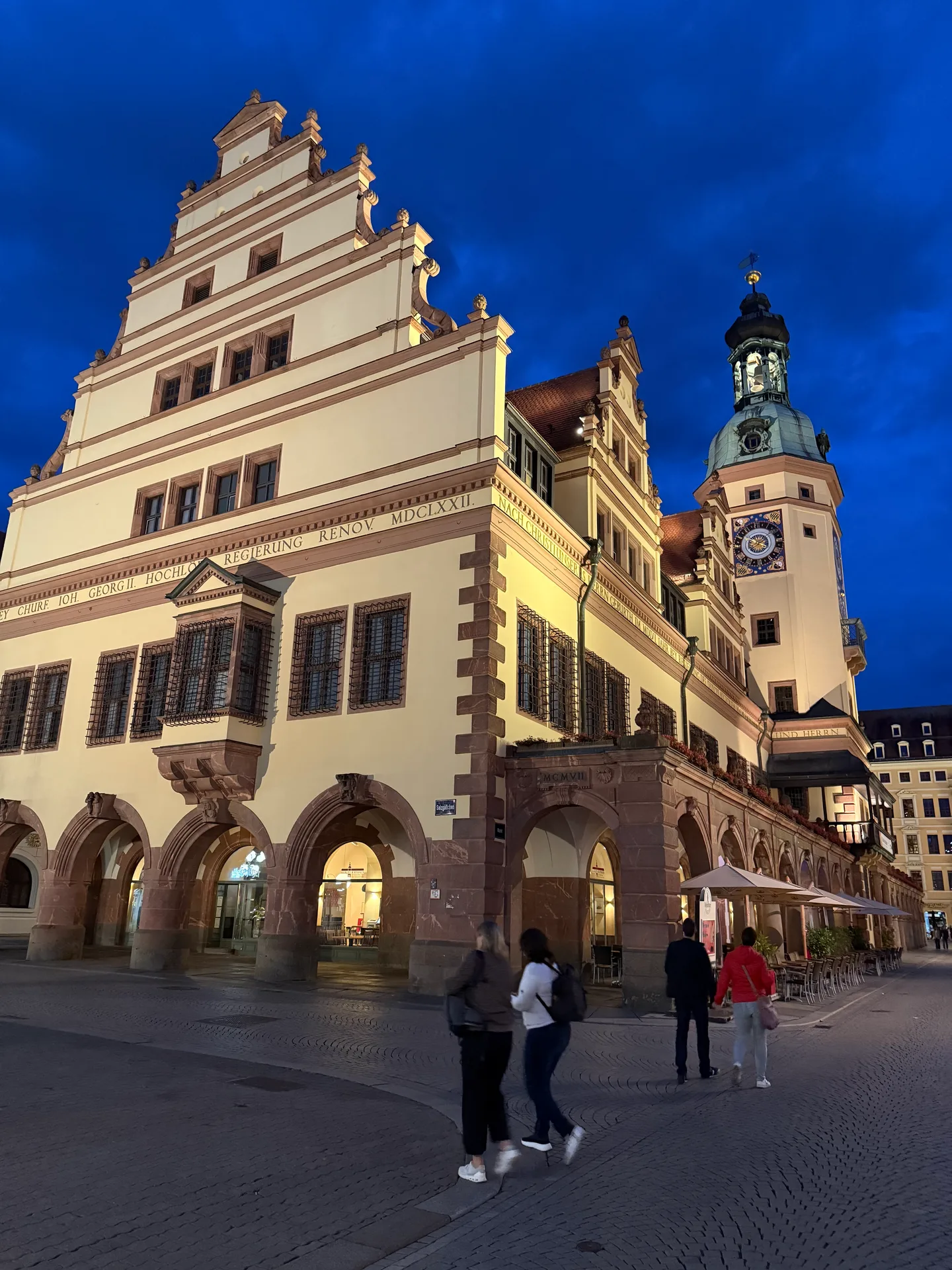
On Grimmaische Straße, Bernd Göbel's Unzeitgemäße Zeitgenossen caught the light: bronze figures presenting an unflattering little catalogue of human weaknesses. A few streets later, the Markt opened around the old town hall.
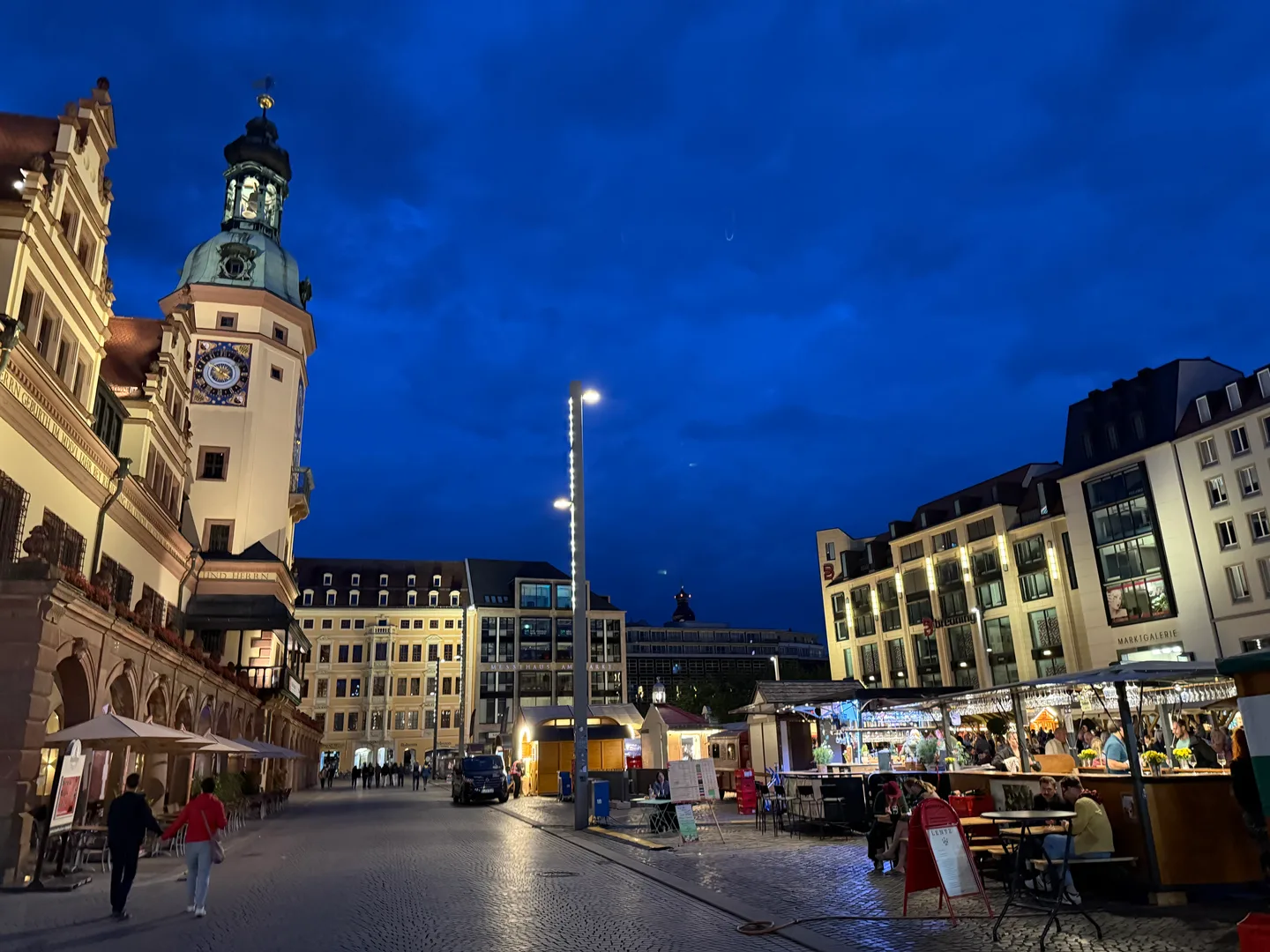
Leipzig's trade-fair history is part of the square's shape. Merchants once exchanged goods here; now people sat beneath strings of lights with beer and food. The town hall glowed yellow, its off-centre tower marking time. The products had changed, but the idea of people meeting to trade and linger had not.
03
A city in the score
The old town is threaded with passages and courtyards. A doorway can lead to a covered arcade, then another street. These routes grew from commerce and now shelter shops and cafés. Mädlerpassage contains Auerbachs Keller, whose literary life reaches into Goethe's Faust.
Music is harder still to separate from Leipzig. Bach's long years at St Thomas, the Gewandhaus Orchestra, Mendelssohn, Clara and Robert Schumann: names from scores become addresses and walking distances.
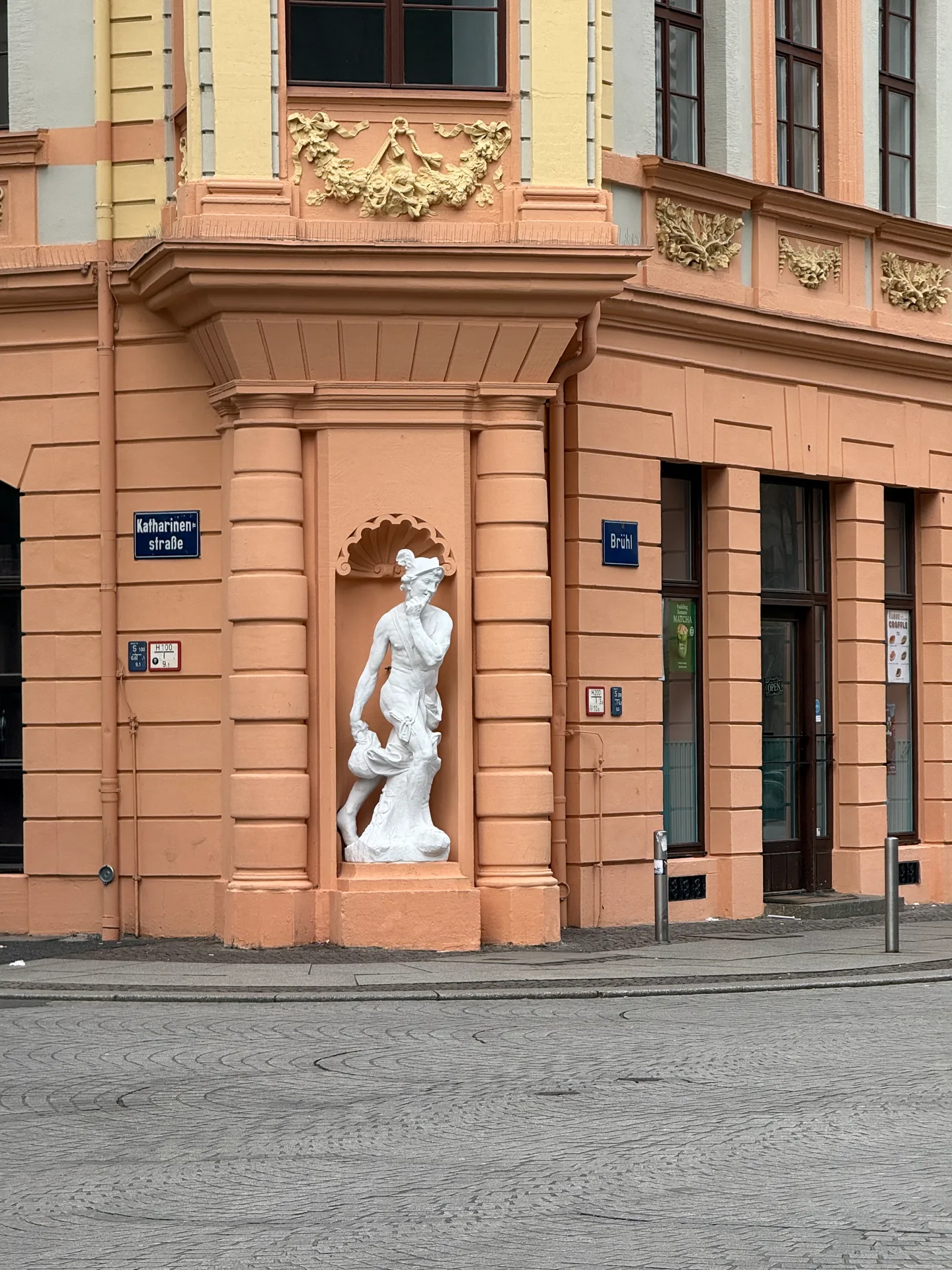
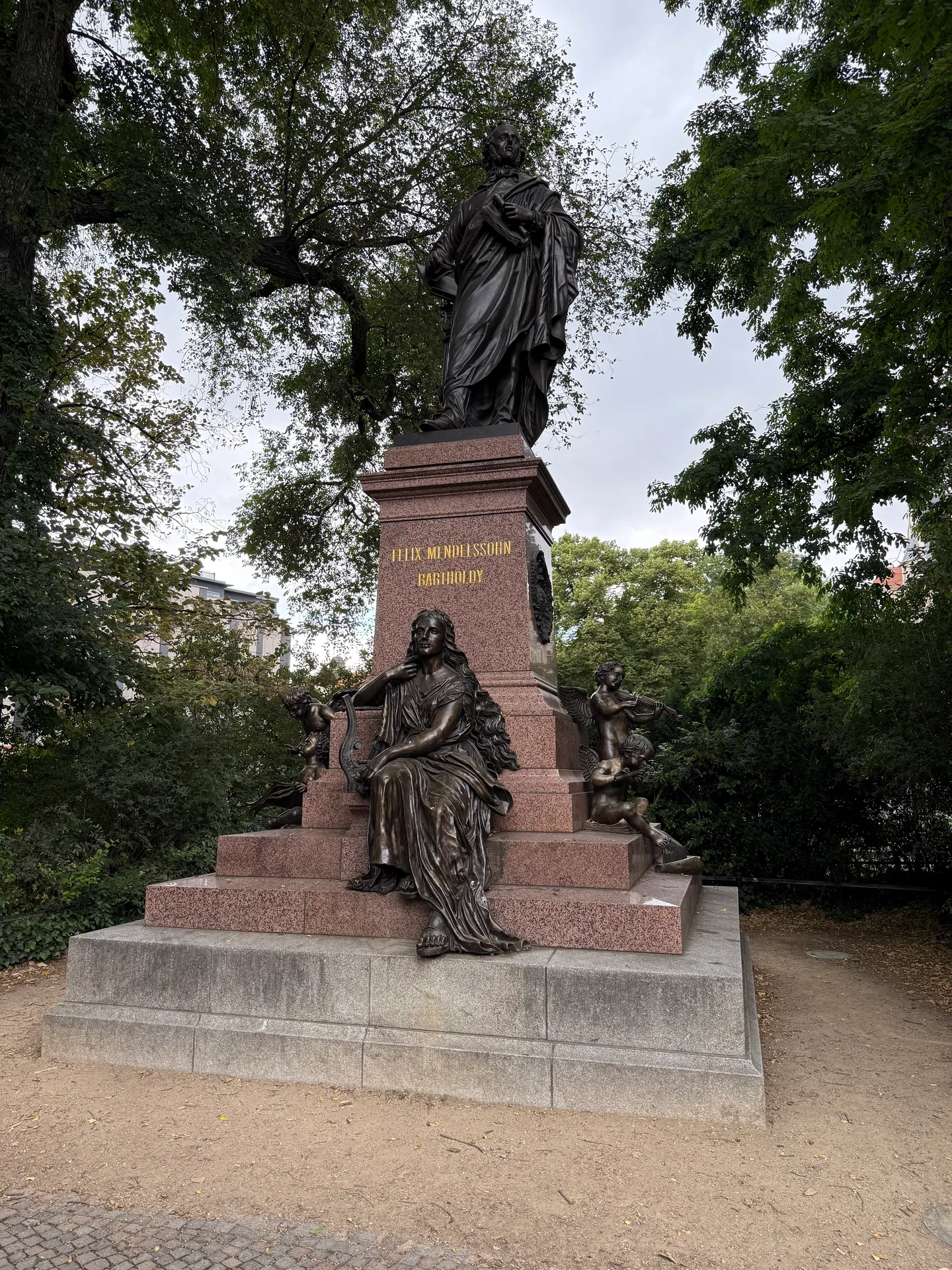
At the Mendelssohn memorial, I paused over a different part of that history. The original monument was removed by the Nazis because of the composer's Jewish ancestry. Its later reconstruction is more than a replacement statue. It records both an act of erasure and the decision to remember what was erased.
04
Remember
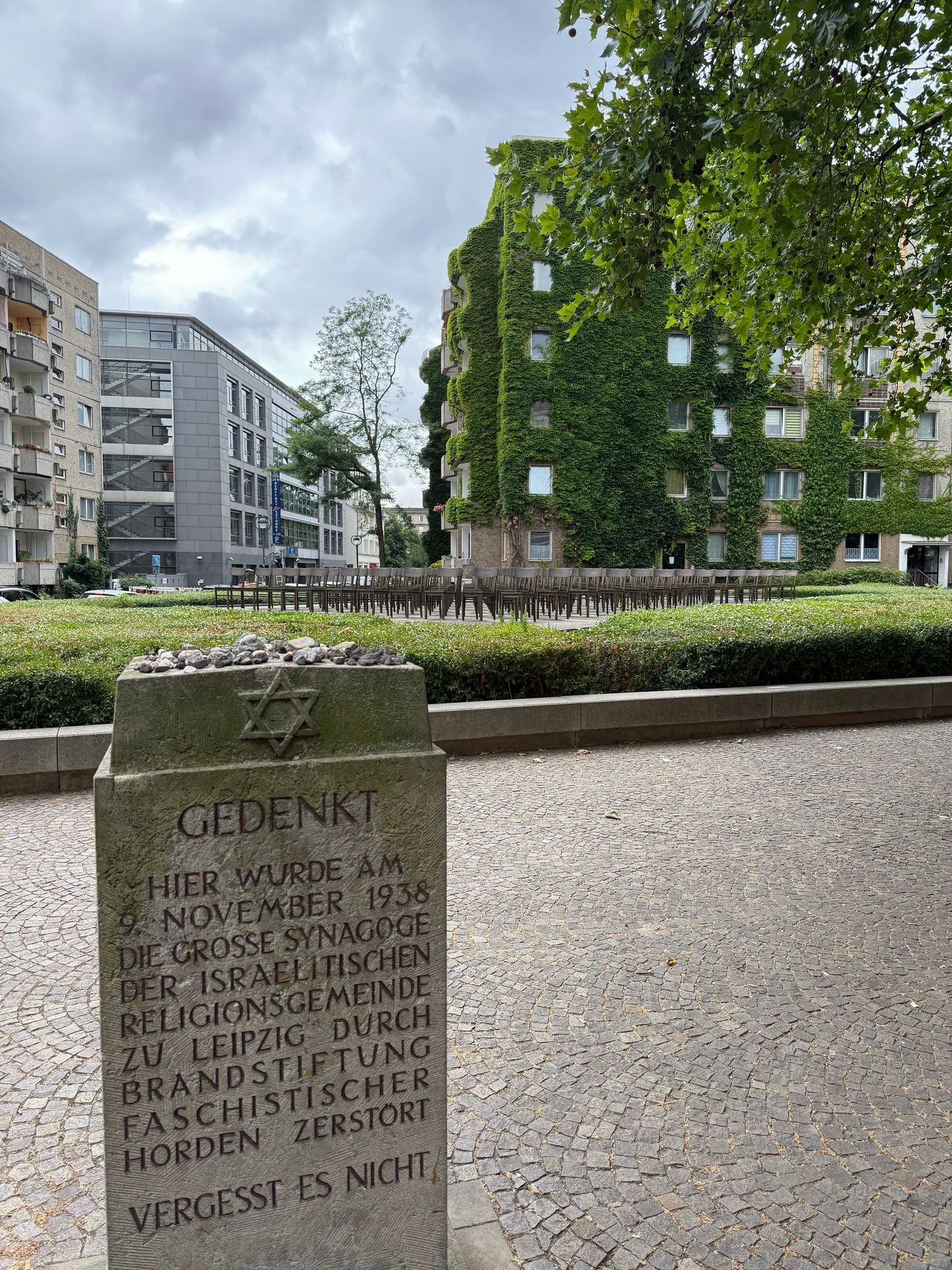
Nearby, a memorial marks the site of the synagogue destroyed in November 1938. A Star of David and the word “Gedenkt”—remember—say what the passing visitor needs to do.
The quietness of the site makes the loss more visible. A destroyed place of worship and a removed composer's monument are different acts within the same persecution. Walking between their memorials, the city's cultural history could no longer be treated as a list of celebrated names.
05
A court and a town hall
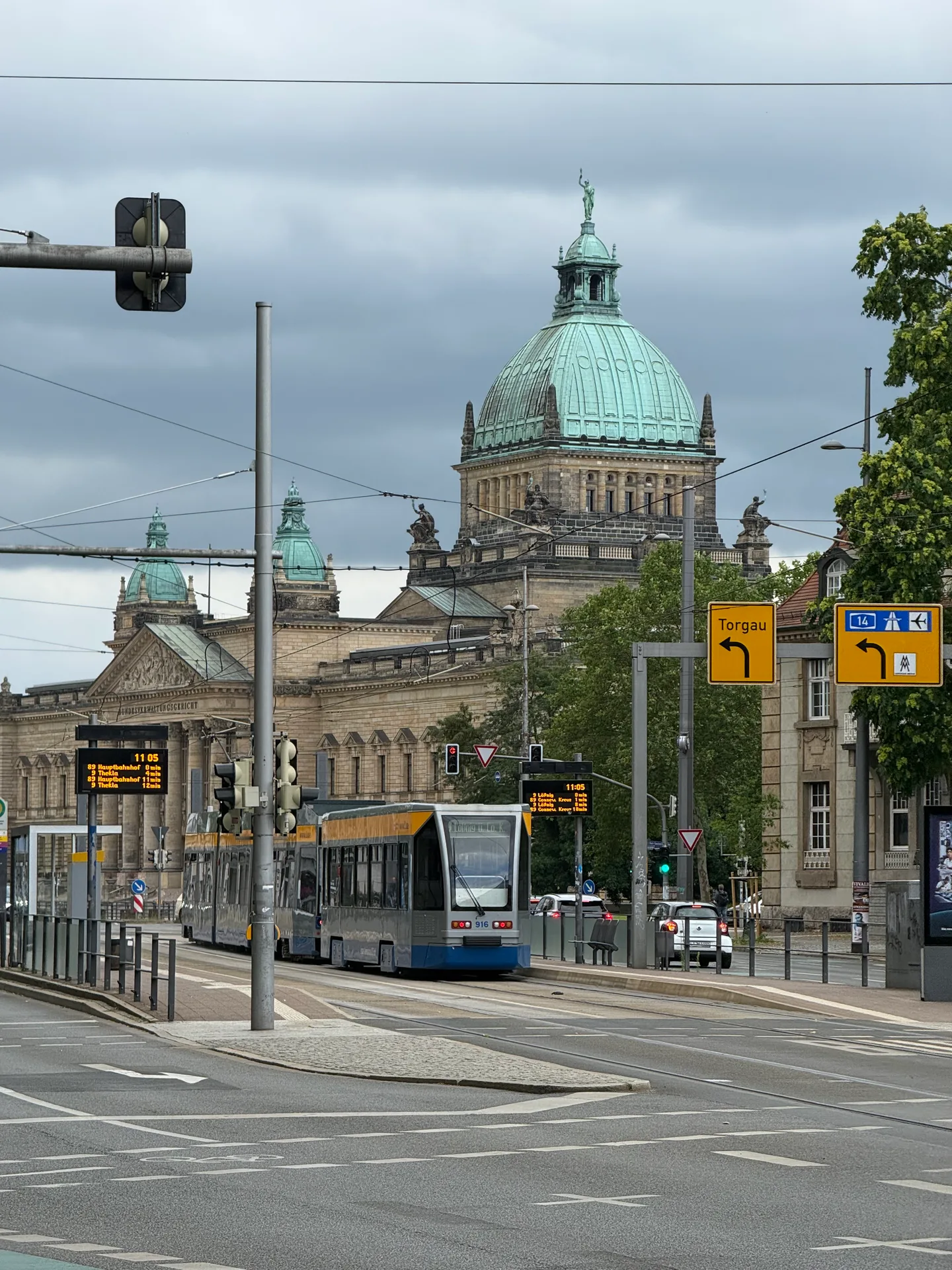
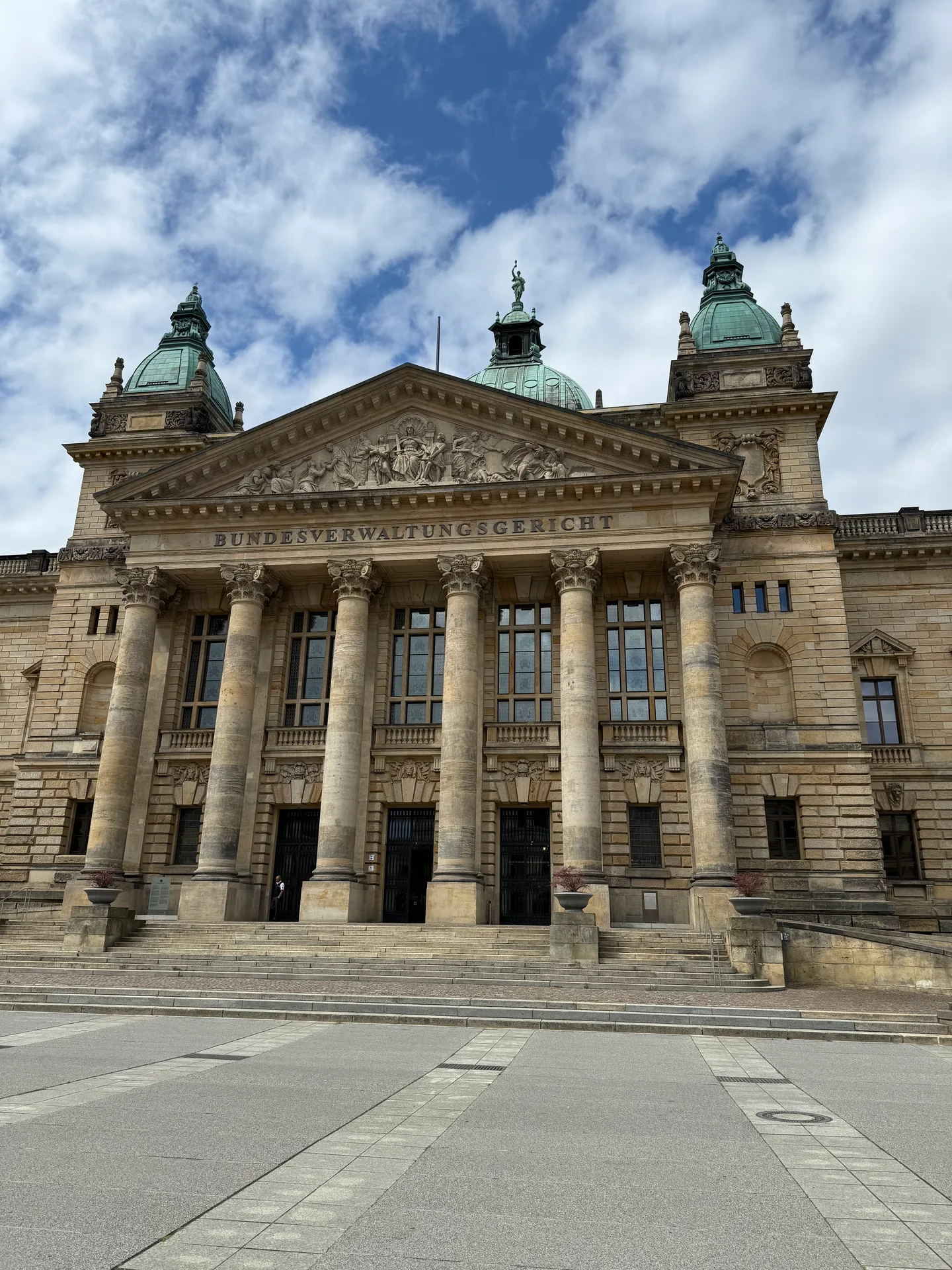
Farther south, the former Reichsgericht, now the Federal Administrative Court, presented its heavy dome and formal stone façade beneath the clouds. Its architecture declares authority. Its history asks what institutions do with that authority.
The building was the setting of the Reichstag fire trial, and later served other uses before becoming a court again. Stone outlasts political systems more readily than it explains them.
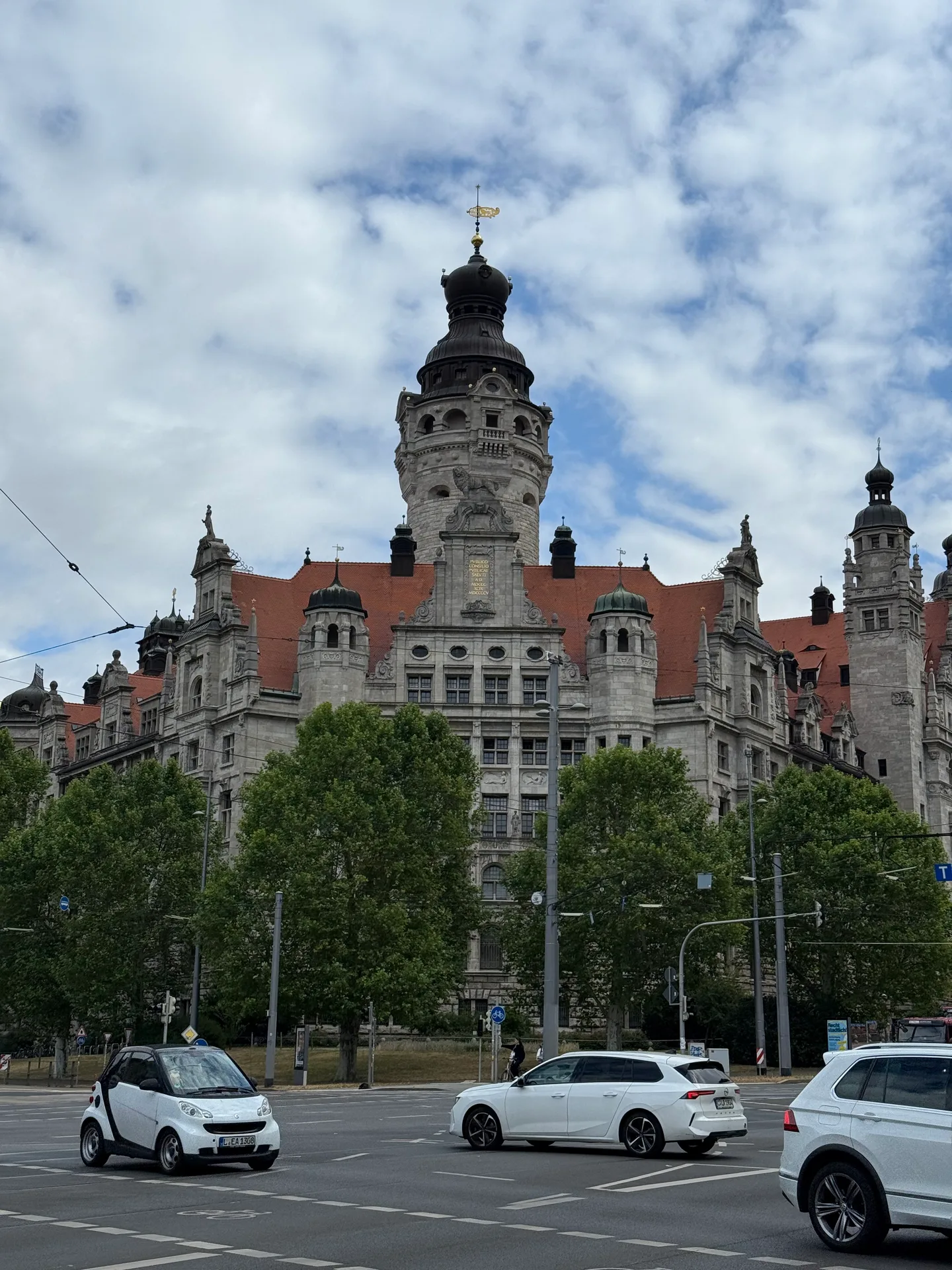
The New Town Hall stood nearby on the site of the old Pleißenburg. Another monumental tower, another earlier building underneath its story. Leipzig repeatedly places new uses on old foundations.
06
Beyond the centre
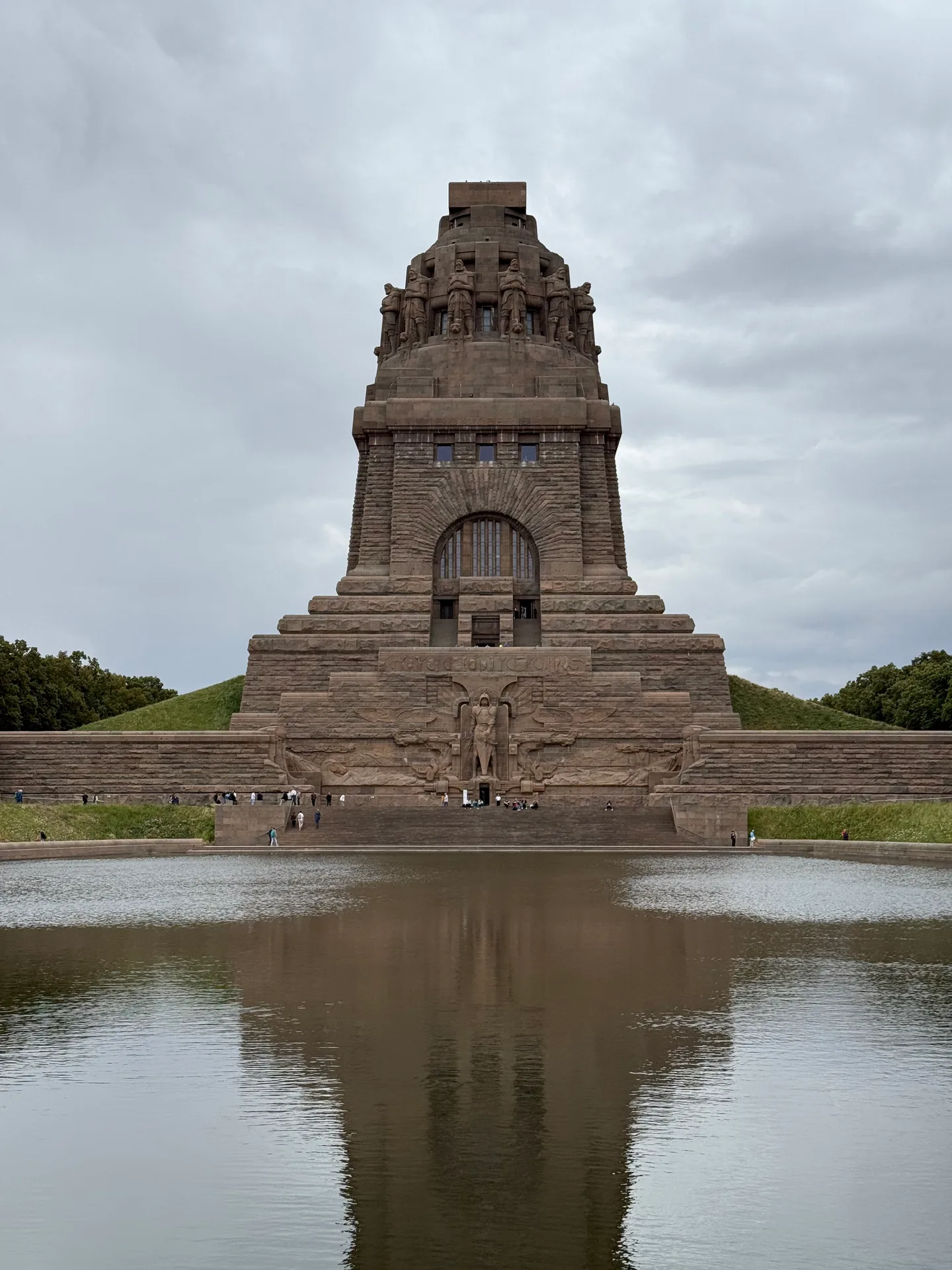
A tram took me southeast to the Monument to the Battle of the Nations. The enormous mass of stone commemorates the 1813 battle near Leipzig. Beneath an overcast sky, the monument and its reflecting pool were almost the same colour. It looked less like something assembled than something pushed up from the ground.
Standing there, I also thought about Leipzig in 1989: the Monday demonstrations, candles and crowds calling for change. A city remembered for a great battle became a centre of a peaceful revolution. The two histories do not cancel each other. They make the monument's silence more complicated.