GERMANY / TRAVEL NOTES
Frankfurt
Glass towers across the water, old gables over the bridge, and the city between them.
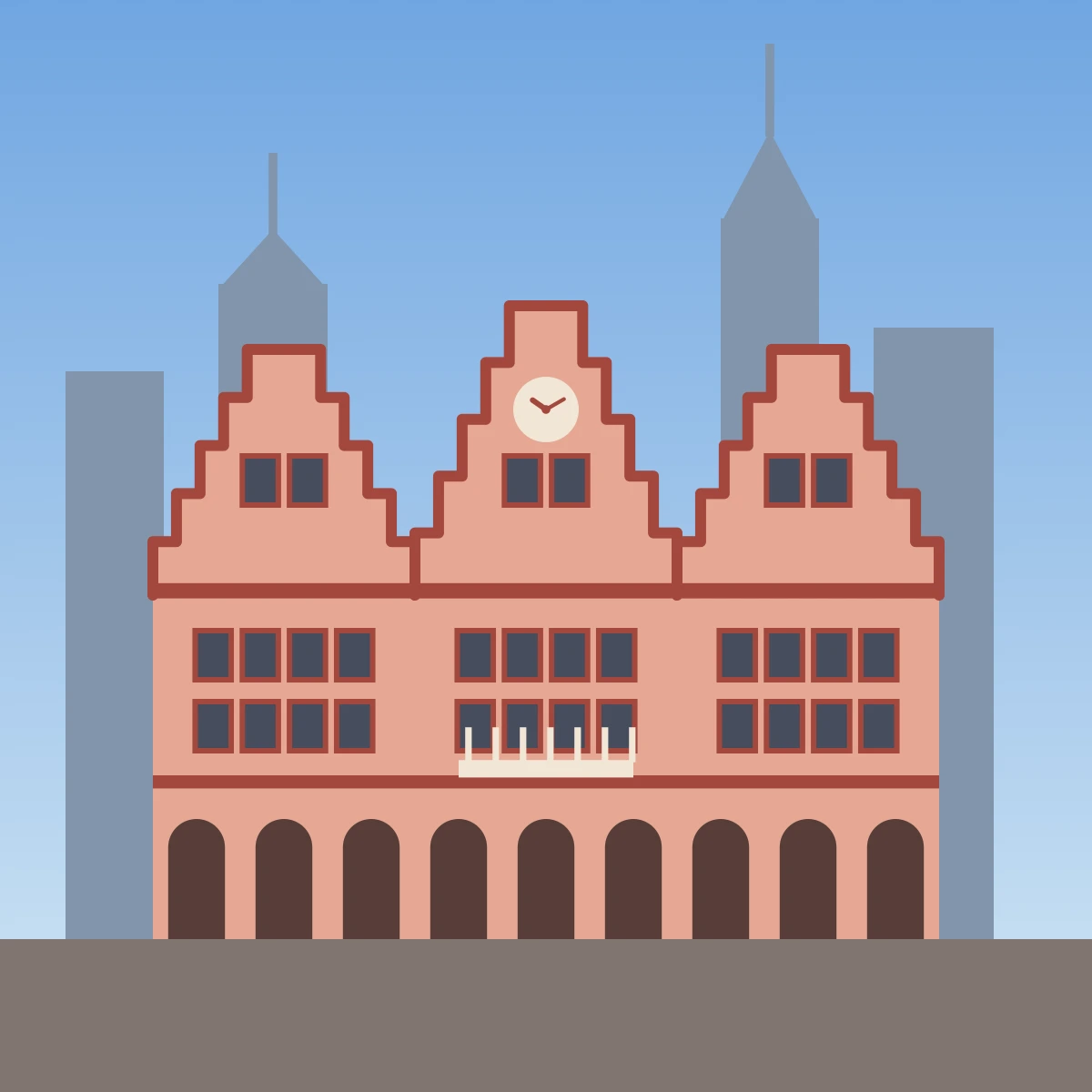
Frankfurt in Hourline shows the same artwork as the app, bringing its landmarks together in a composed scene.
01
Arriving by train
The last time I visited Frankfurt was in 2014, on a coach tour: a circuit of the old town, some shopping, then back to the hotel. This time I came independently and stayed near the station. The rail network made it easy to move between the airport, the centre and the banking district, and I finally had time to look around.
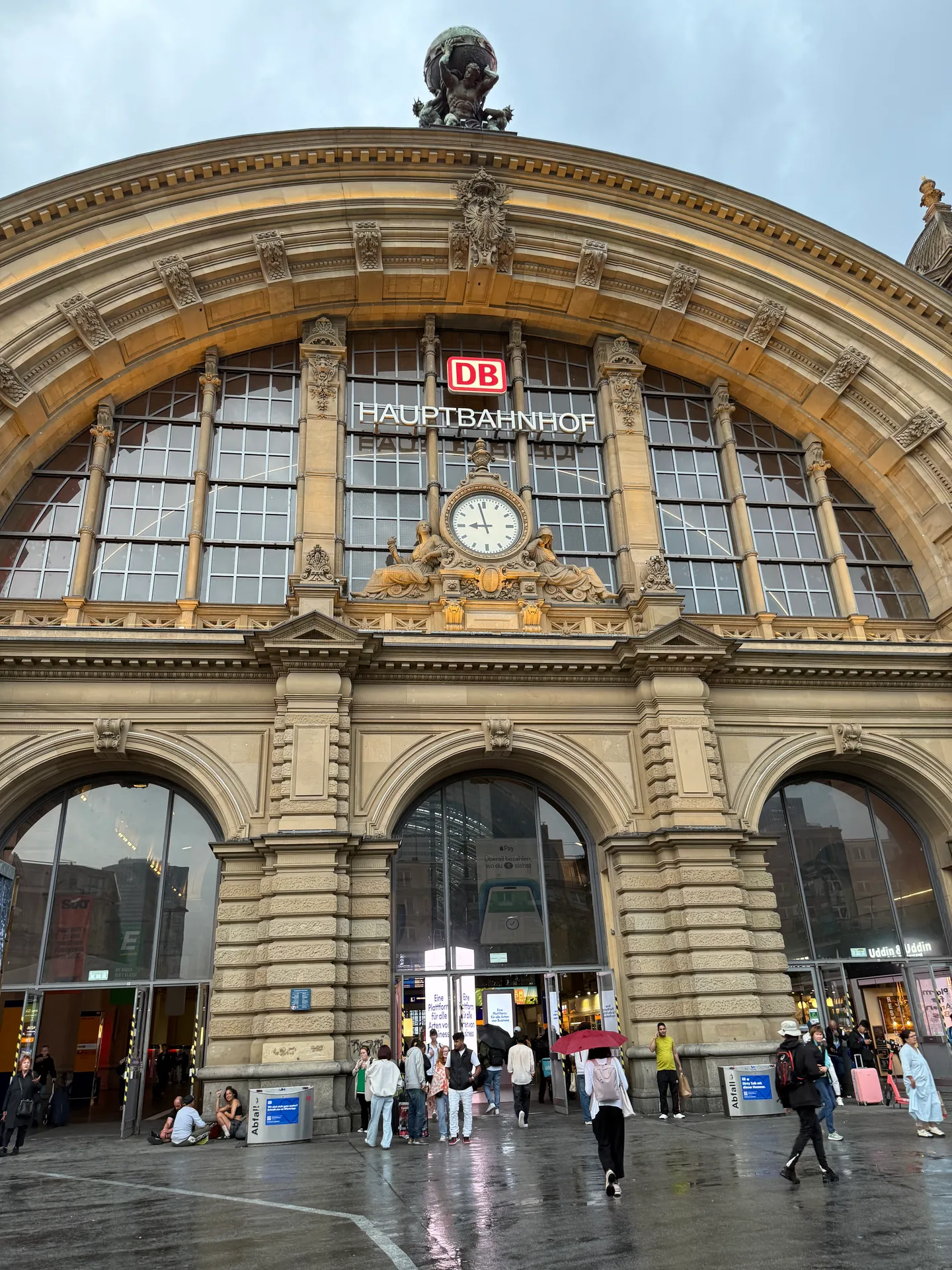
The Hauptbahnhof has the confidence of a nineteenth-century station: sandstone, great arches, a clock and Atlas carrying the globe above it all. Inside, iron and glass form the roof. Outside, döner shops and currency exchanges crowd the streets. It is untidy, energetic and unmistakably the approach to a big-city railway station.
02
Along the Main
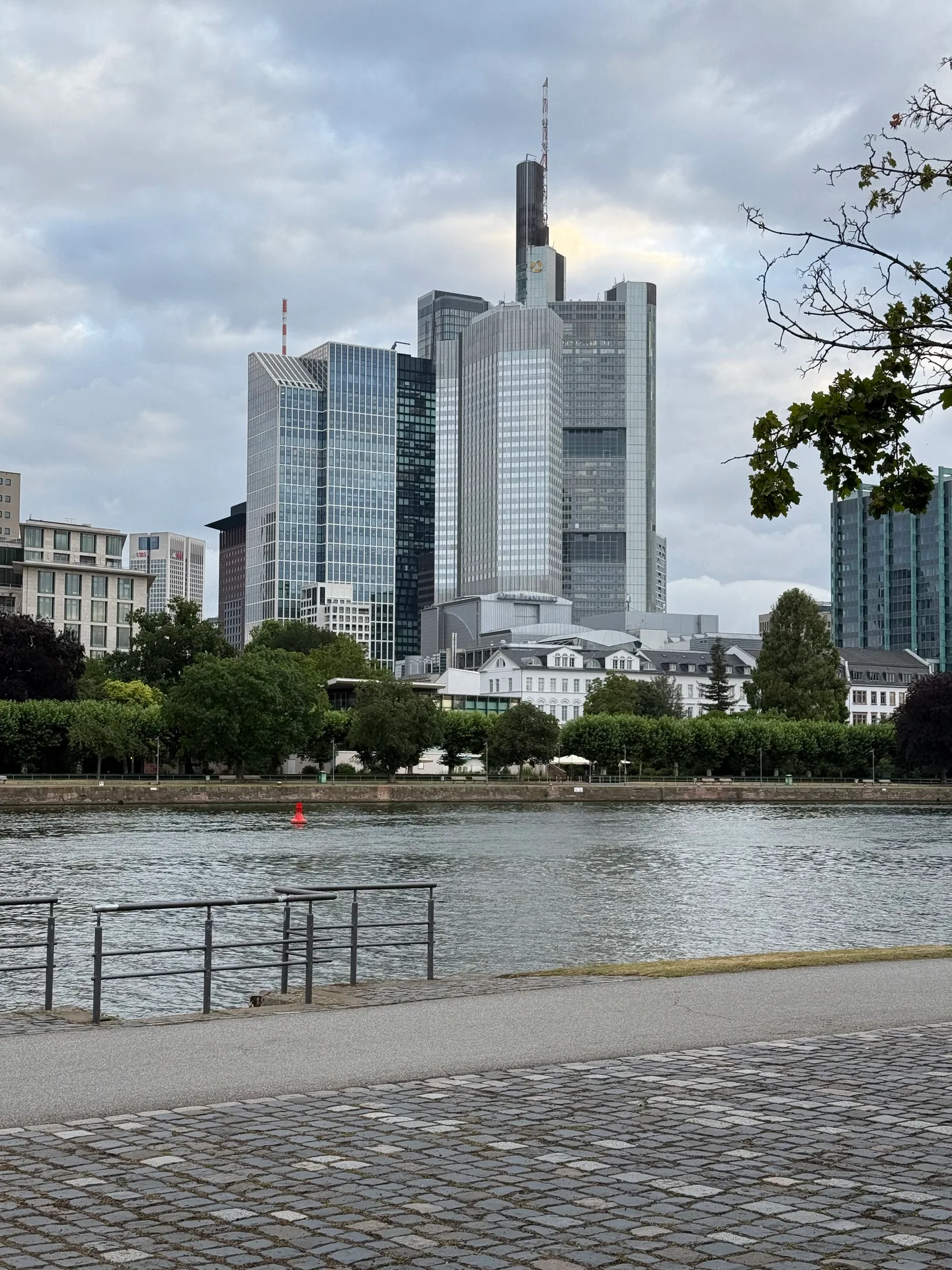
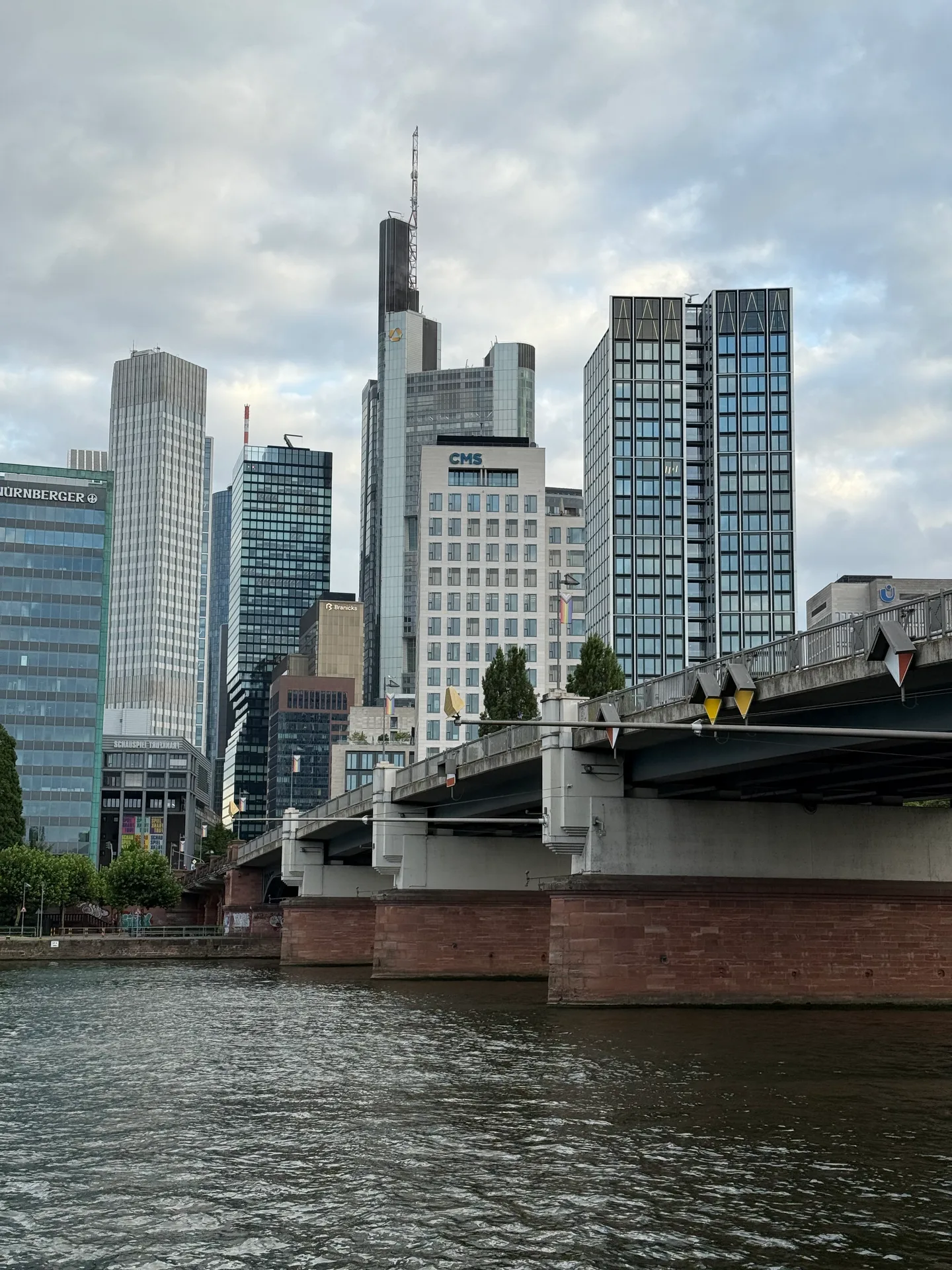
Early the next morning, I walked beside the Main. It was already light, with only a few runners on the riverbank. The river itself is modest; the skyline across it is not. Glass towers rise behind the water, earning Frankfurt its nickname, Mainhattan.
After living among the low brick buildings of the Netherlands, I found the towers unexpectedly striking. I had barely noticed them on my earlier visit. Sometimes a city changes because your point of comparison has changed.
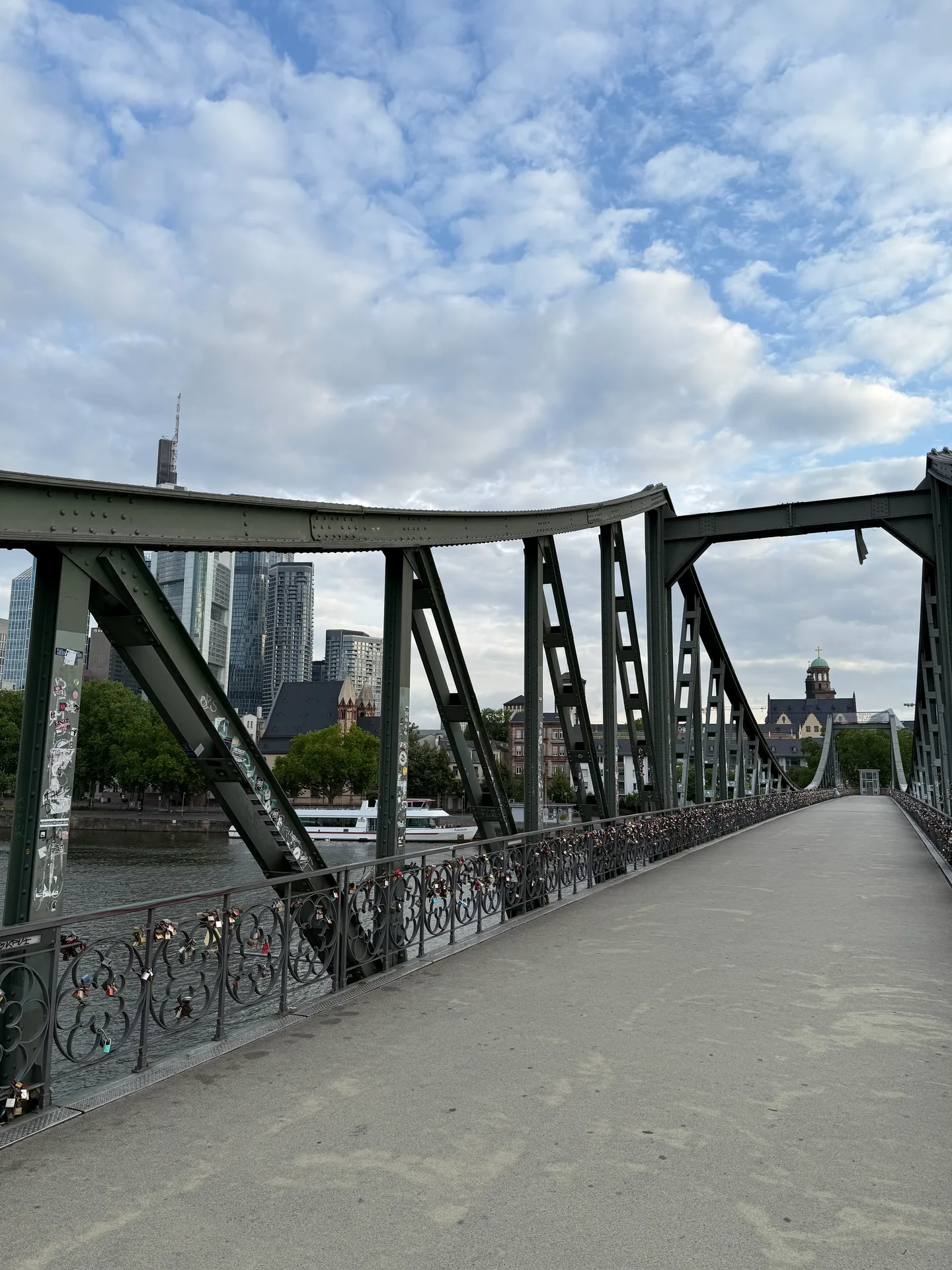
Farther east I reached the Eiserner Steg, the iron footbridge with love locks along its railings. There was a strong breeze in the middle. In one direction, glass and steel; in the other, the spires of the old town. Frankfurt's two faces look directly at each other across the river.
03
Römerberg
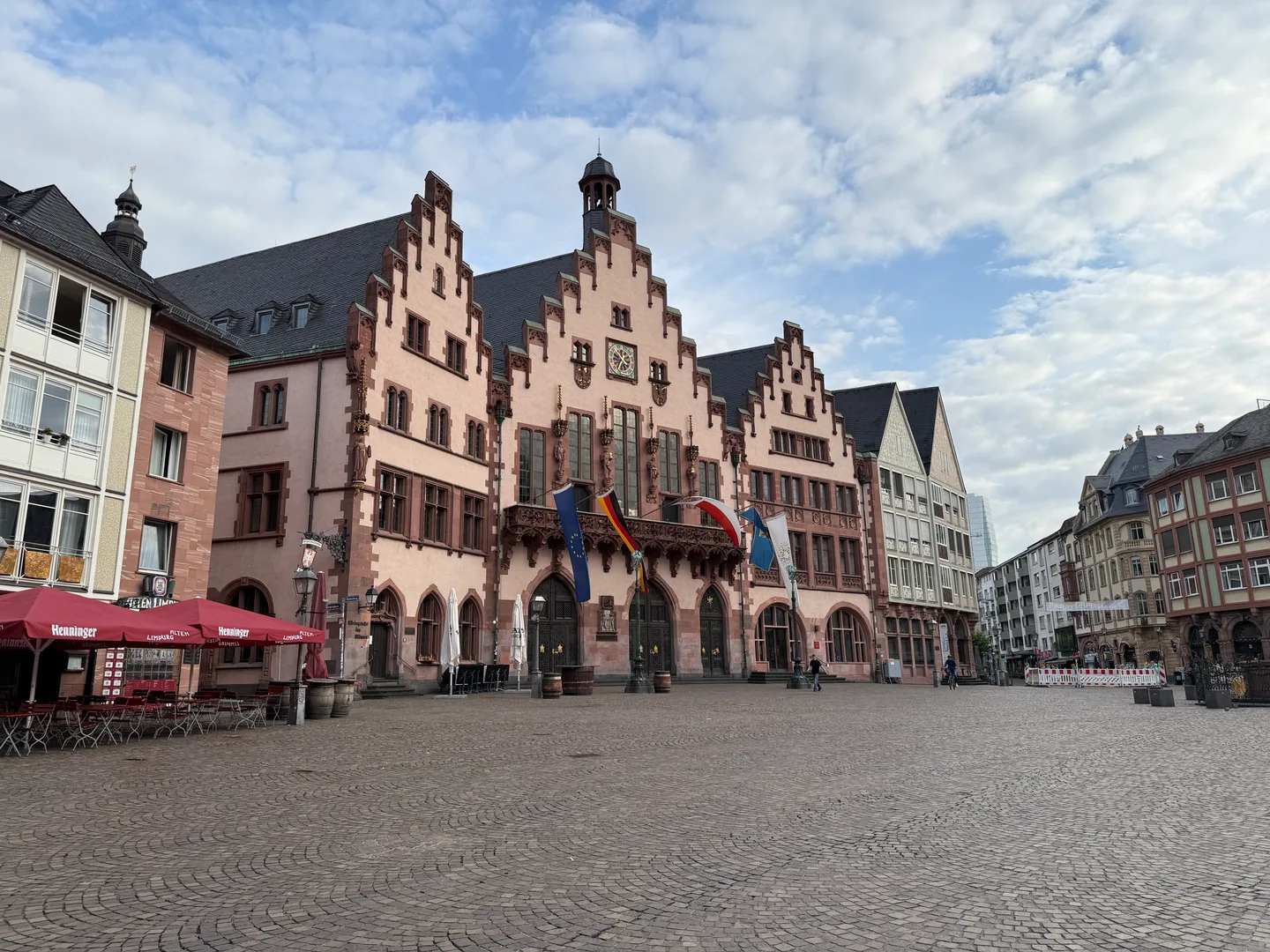
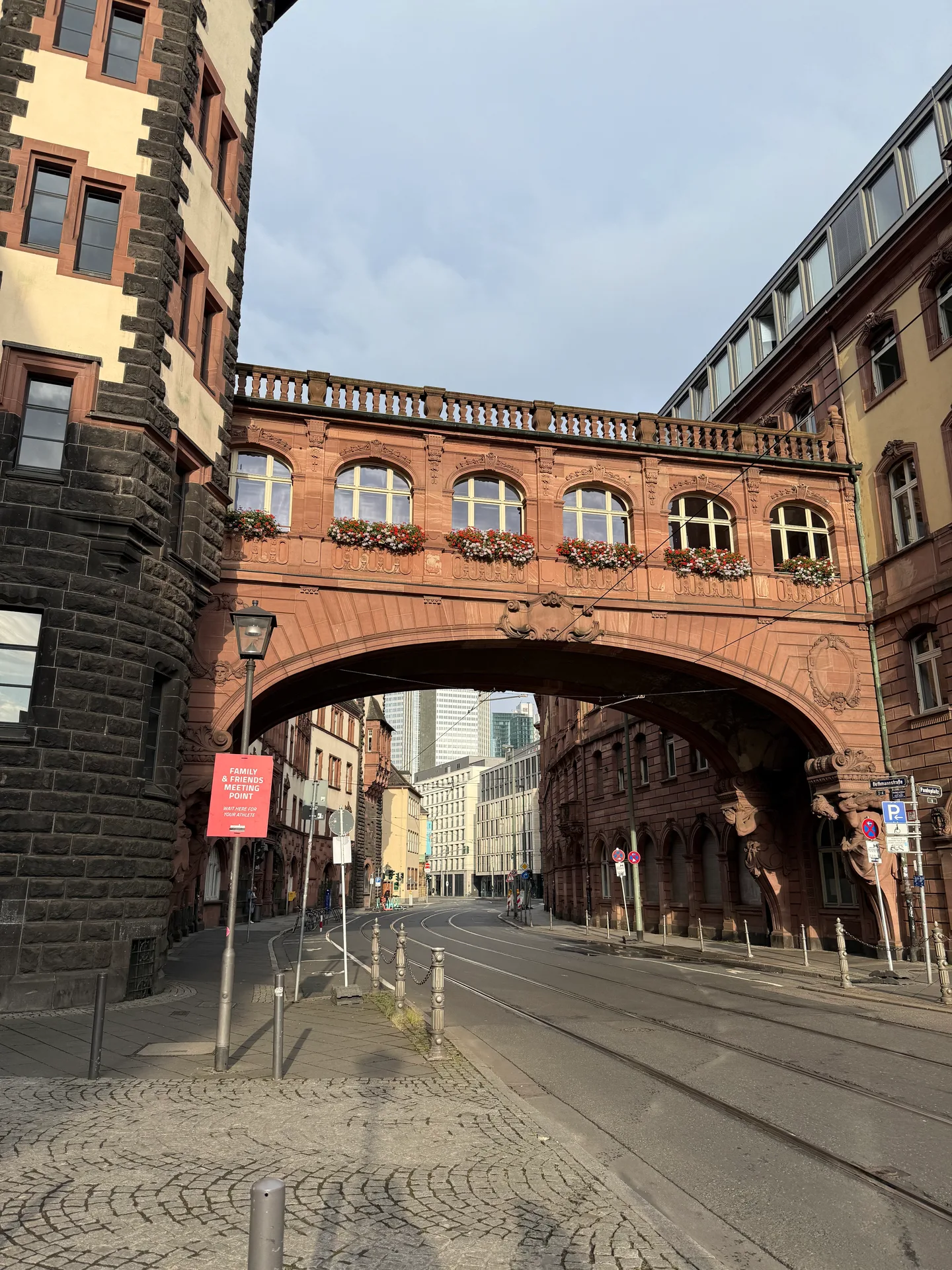
Over the bridge and into the old town, Römerberg gathers its half-timbered façades around the Fountain of Justice. The stepped gables of the Römer, the historic town hall, make the square instantly recognisable.
Much of what looks old here is reconstruction. Wartime destruction was followed by decades of rebuilding, and the more recent DomRömer project returned a network of small houses and lanes to an area once occupied by post-war concrete. Some buildings follow old photographs; others use traditional materials in new designs. Walking through it, the distinction between preservation and reinvention feels less simple than it does on paper.
04
North into the towers
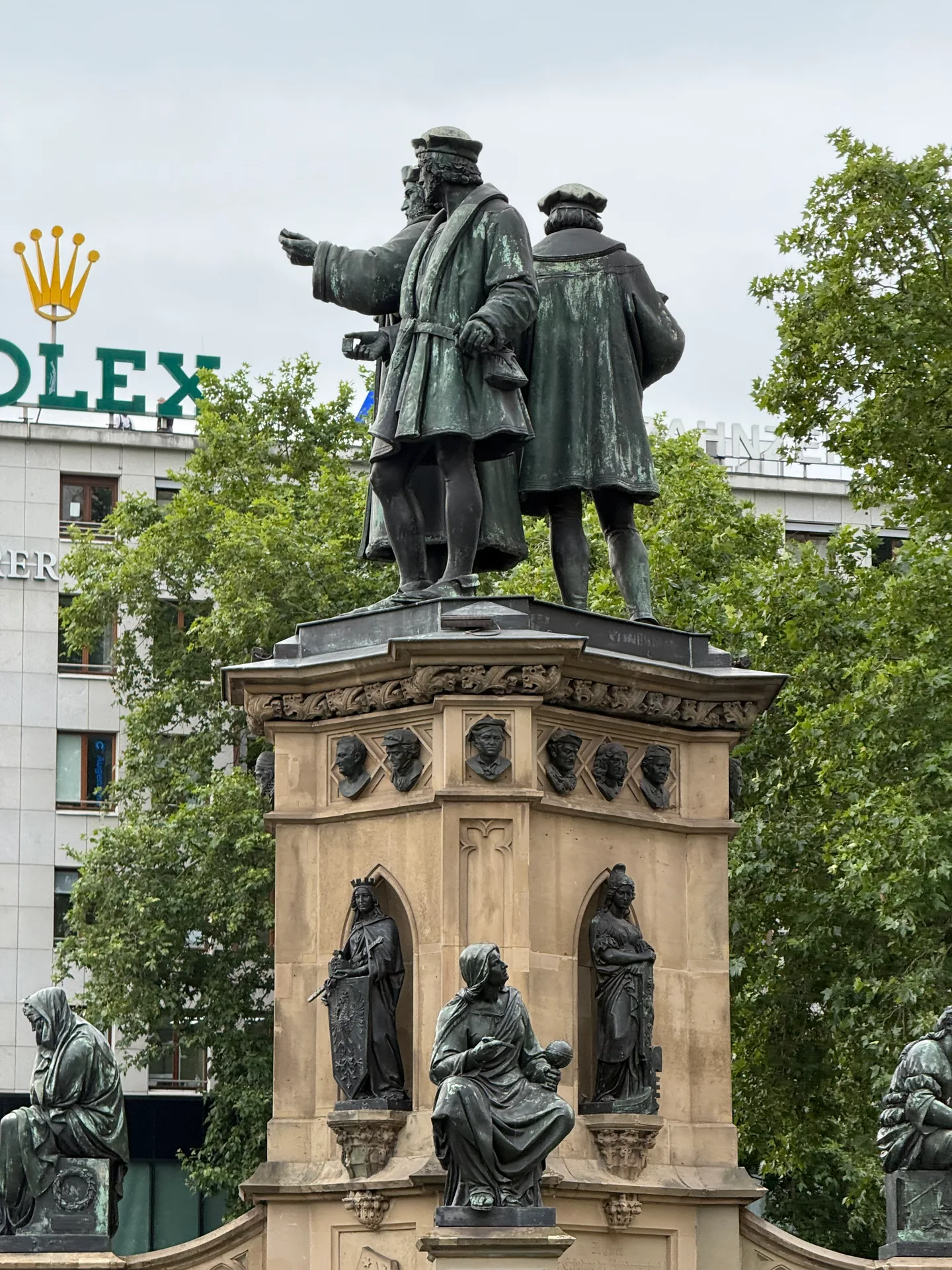
Leaving the old town, I passed the Gutenberg monument at Roßmarkt. Behind the inventor of movable type stood a Rolex advertisement. Print culture and luxury branding sharing the same view: it felt very Frankfurt.
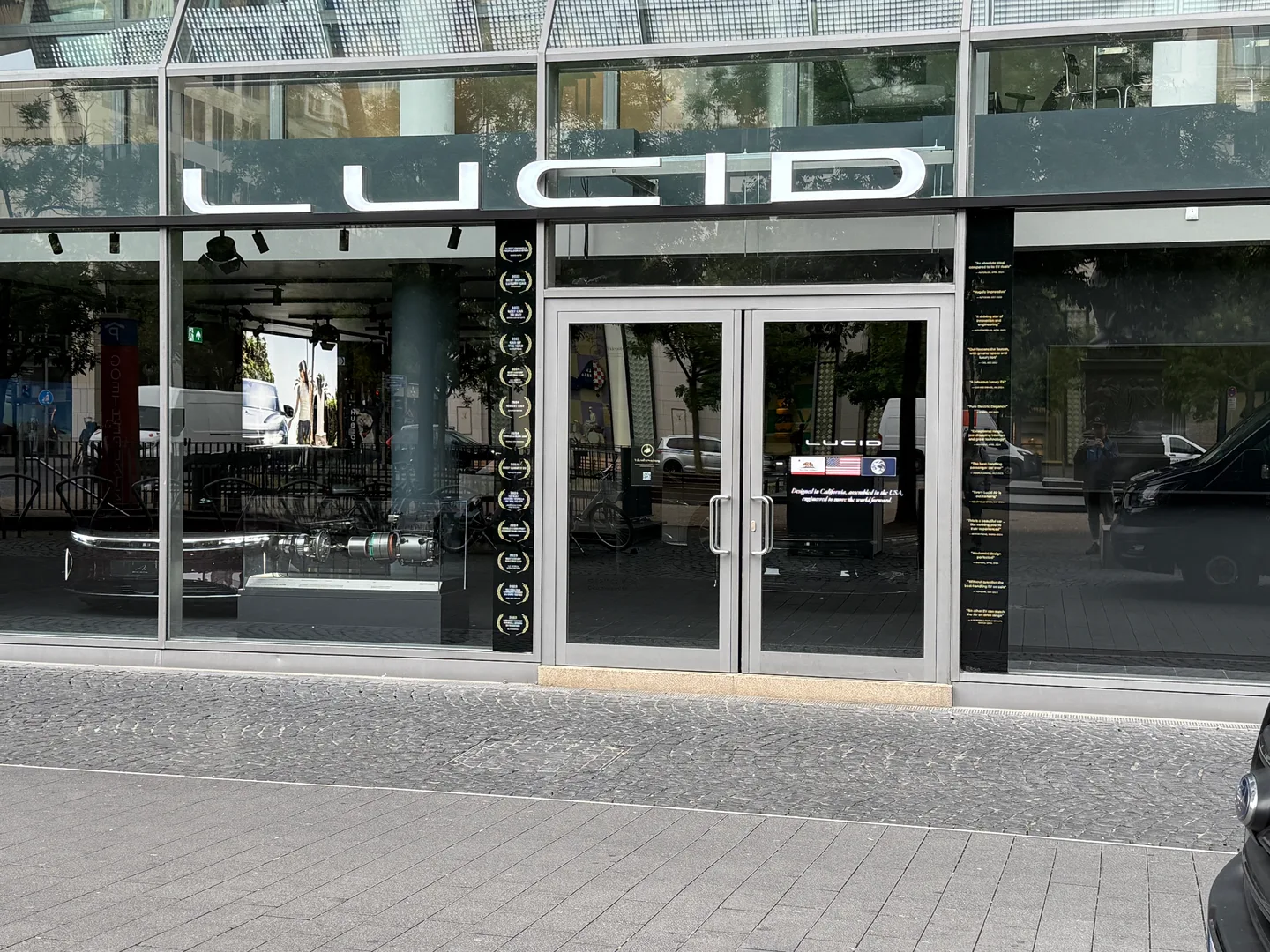
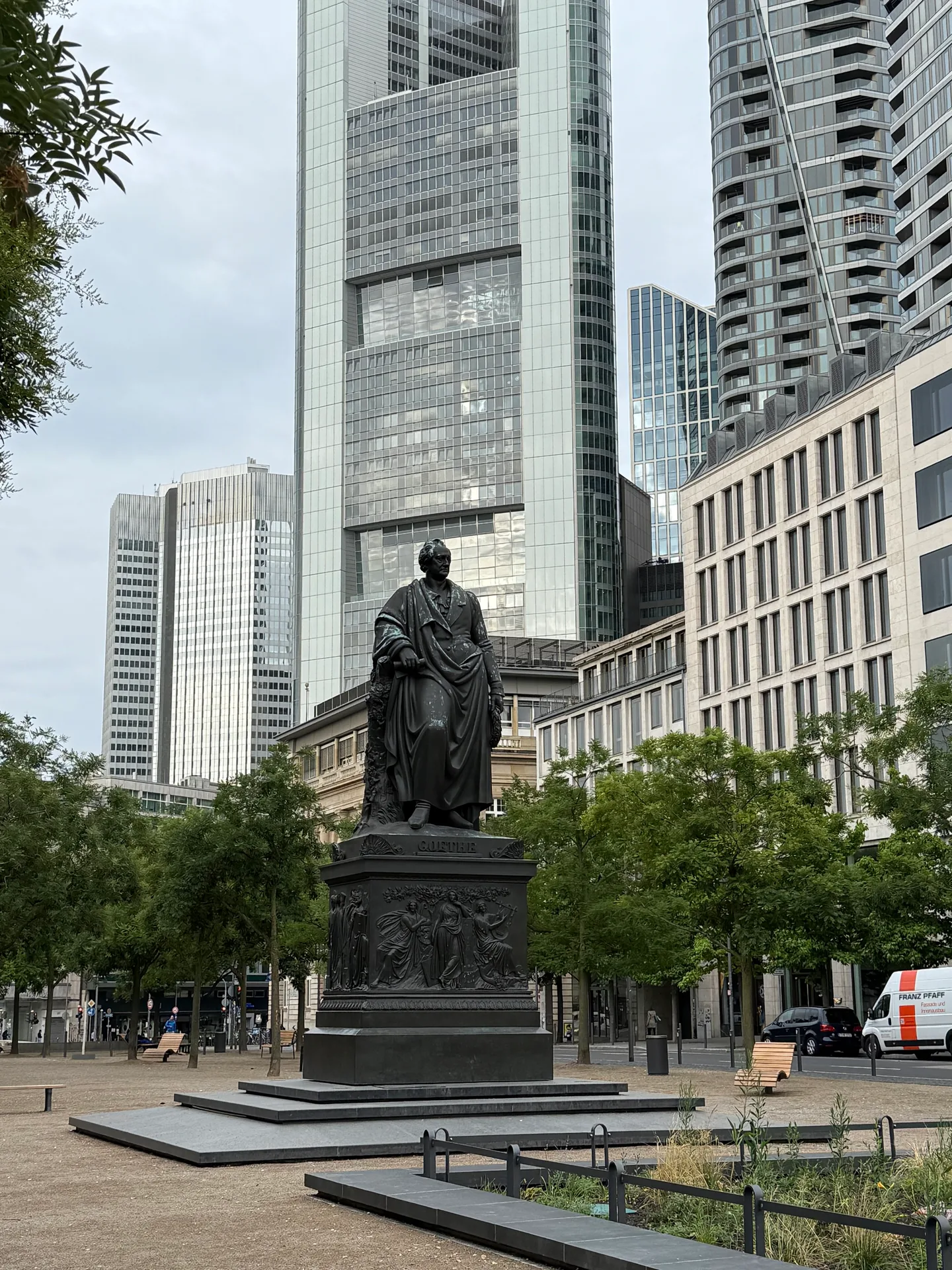
The banking district continues the collision. A bronze monument stands at the foot of a glass façade; a Lucid showroom occupies the ground floor of a tower. The city does not spend much time smoothing the transition between its centuries. It simply cuts from one to the next.
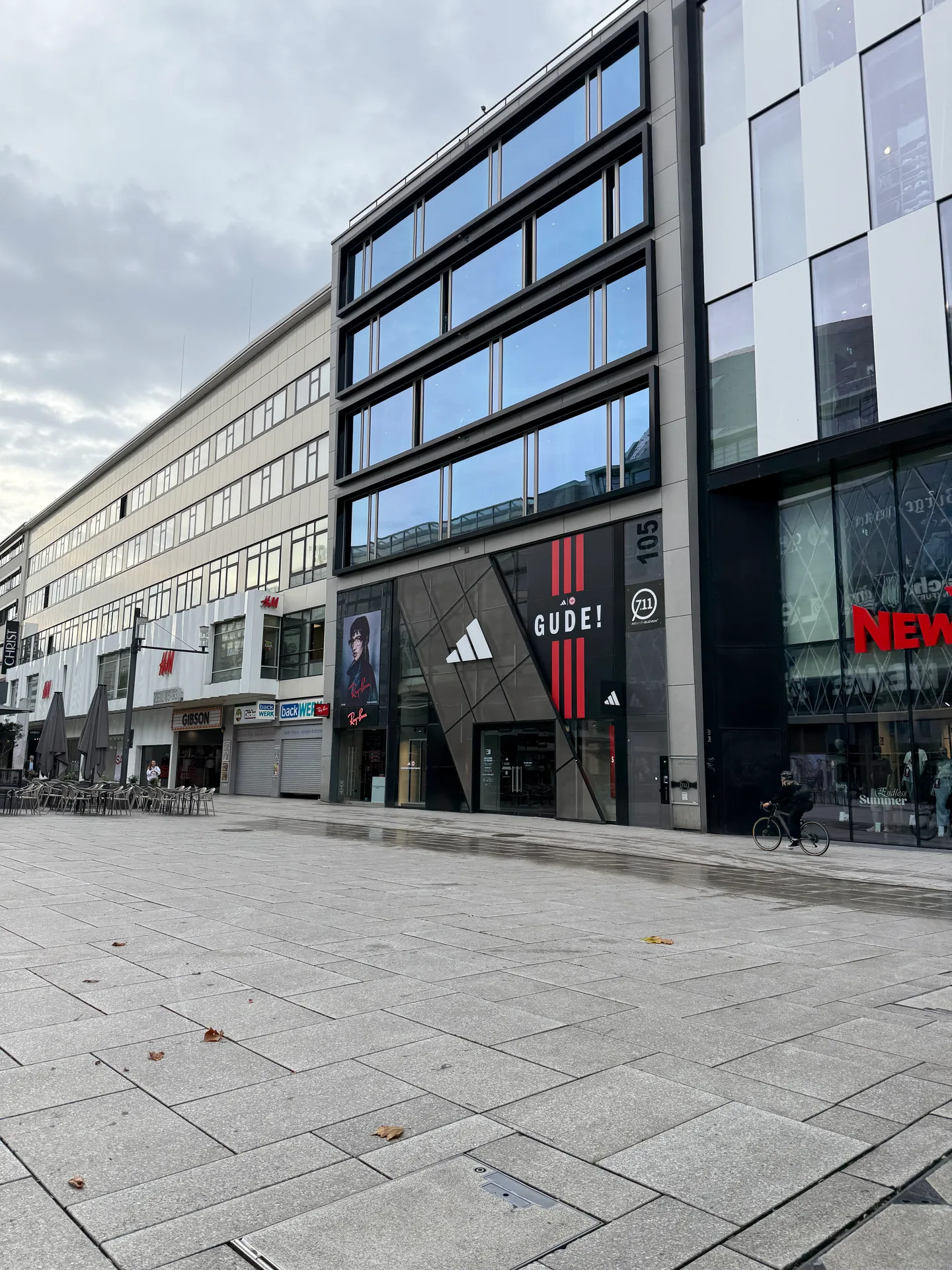
On the Zeil, the shops were busy. An Adidas storefront greeted passers-by with “GUDE!”, the local hello. The brands might have belonged to almost any European shopping street, but the energy was its own. Returning after all these years, I still saw something of a compact North American financial city transplanted into Europe. The old town supplies one face; the skyline supplies another.