GERMANY / TRAVEL NOTES
Cologne
Easter quiet, a cathedral measured in centuries and a slow crossing above the Rhine.
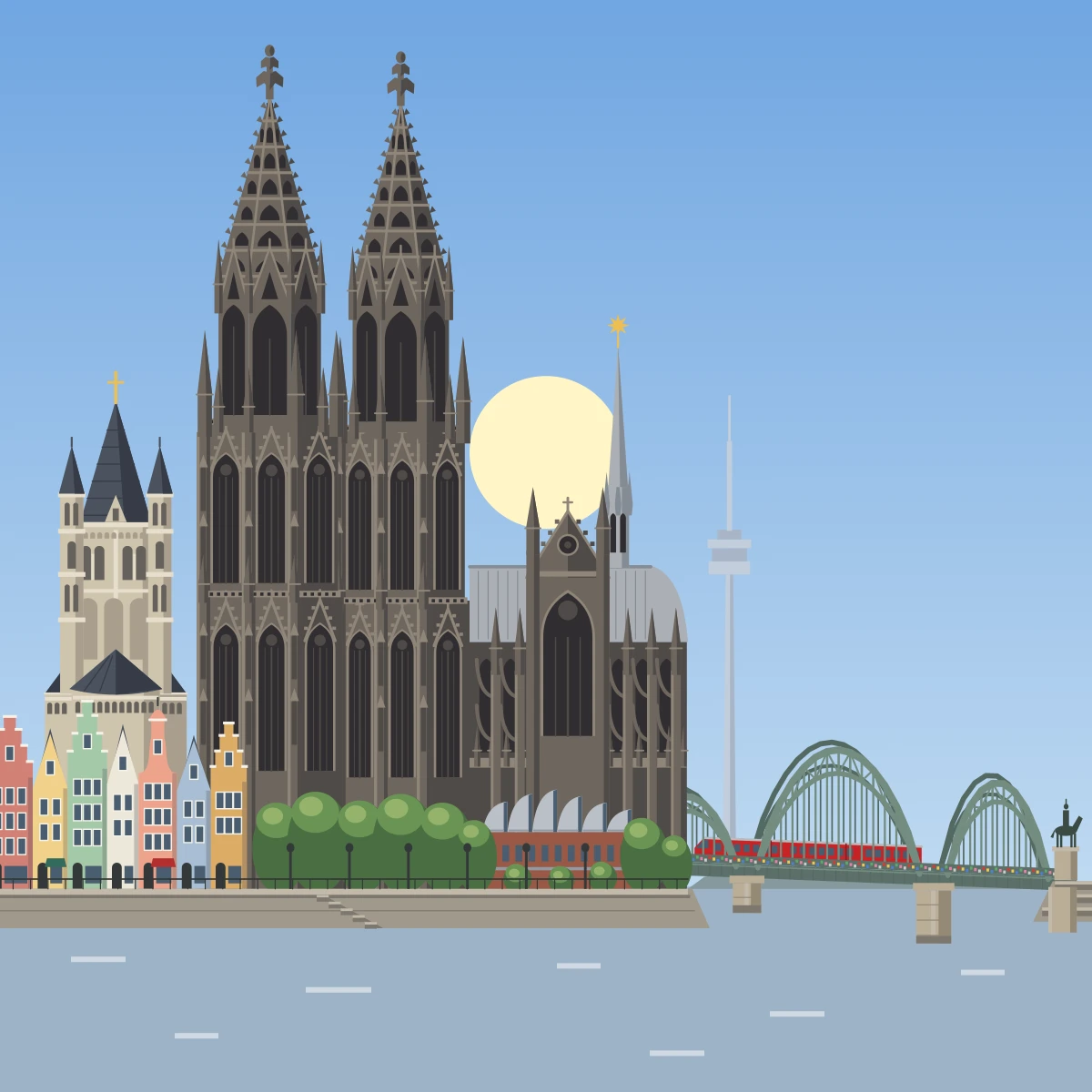
Cologne in Hourline shows the same artwork as the app, bringing its landmarks together in a composed scene.
01
The city gate
Cologne woke slowly on Easter Monday. The weather was bright and cool, the streets nearly empty and the shops closed. Public holidays felt more complete here than in the Netherlands—even the supermarkets had stopped.
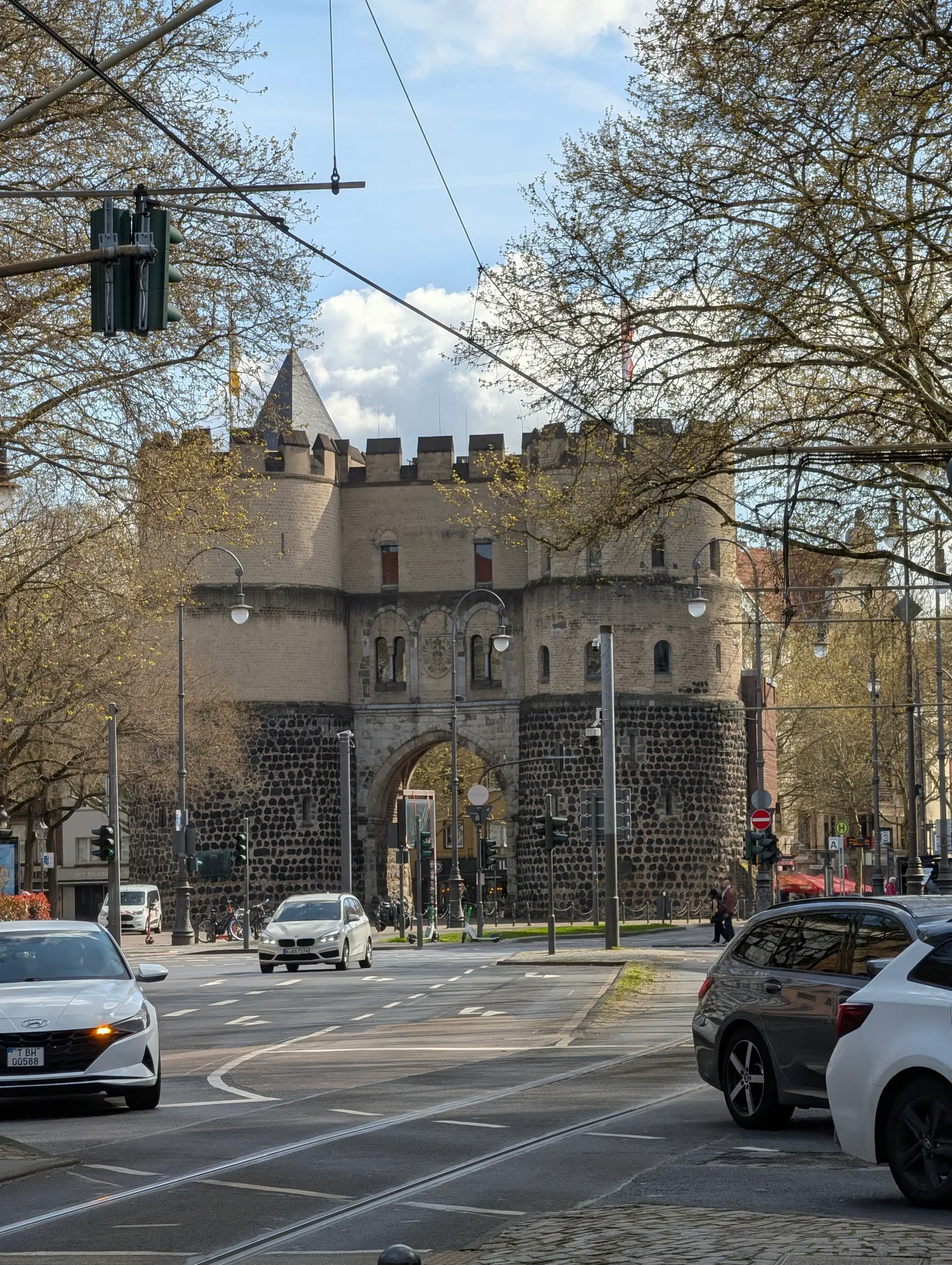
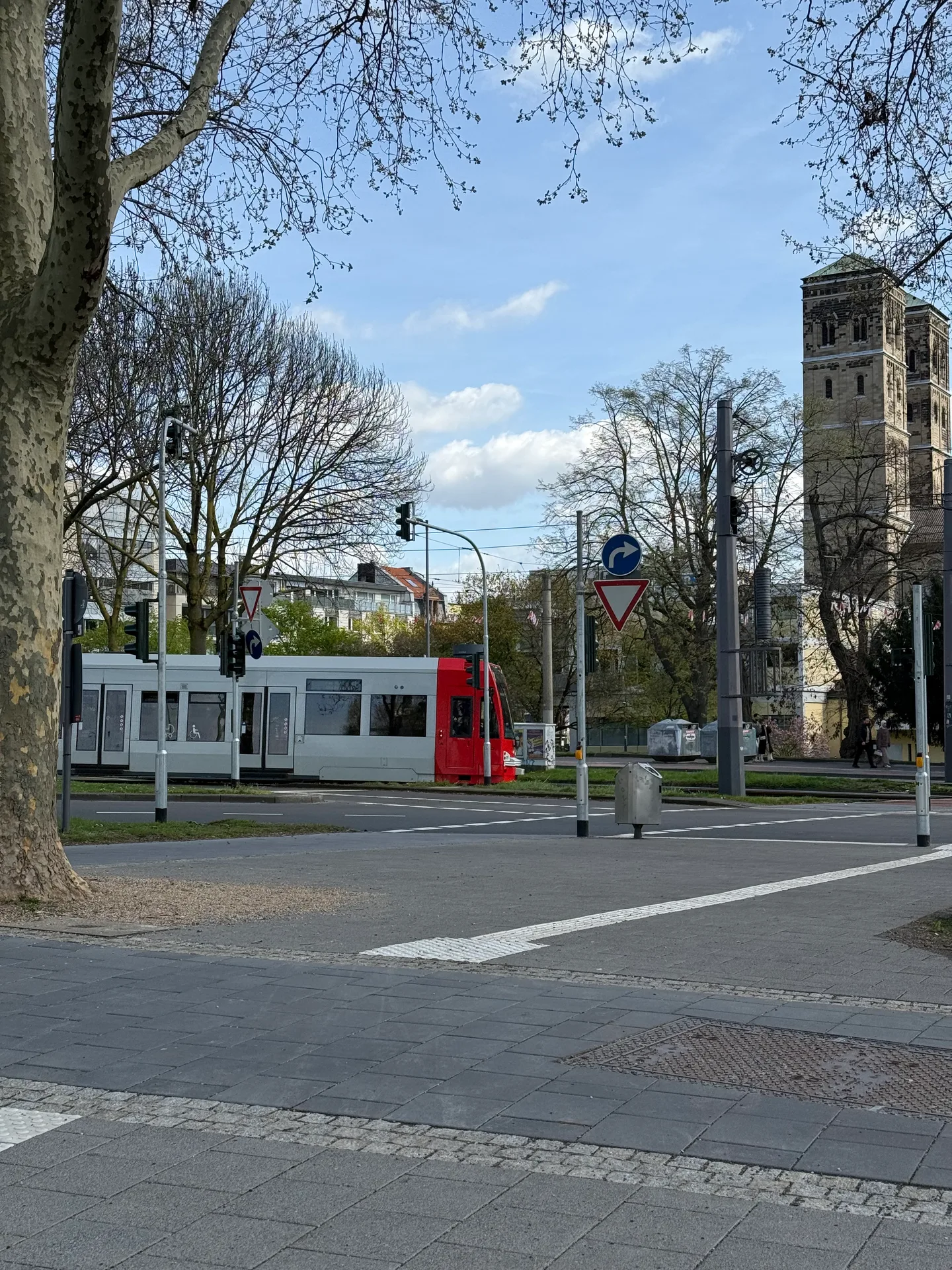
On the way towards the old town I passed the Hahnentor, a surviving medieval gate absorbed into the modern streets. The walls it once belonged to are gone. Traffic signals, tram tracks and stone towers now share the same space.
The city's name reaches farther back, to the Roman colony on the Rhine. Two thousand years have shortened the name without erasing its origin. Around me, new leaves were appearing and sunlight whitened the stone. I stopped for a döner: fresh bread, crisp-edged meat, vegetables and plenty of sauce. History did not prevent lunch from being the most immediate concern.

02
A mountain of stone
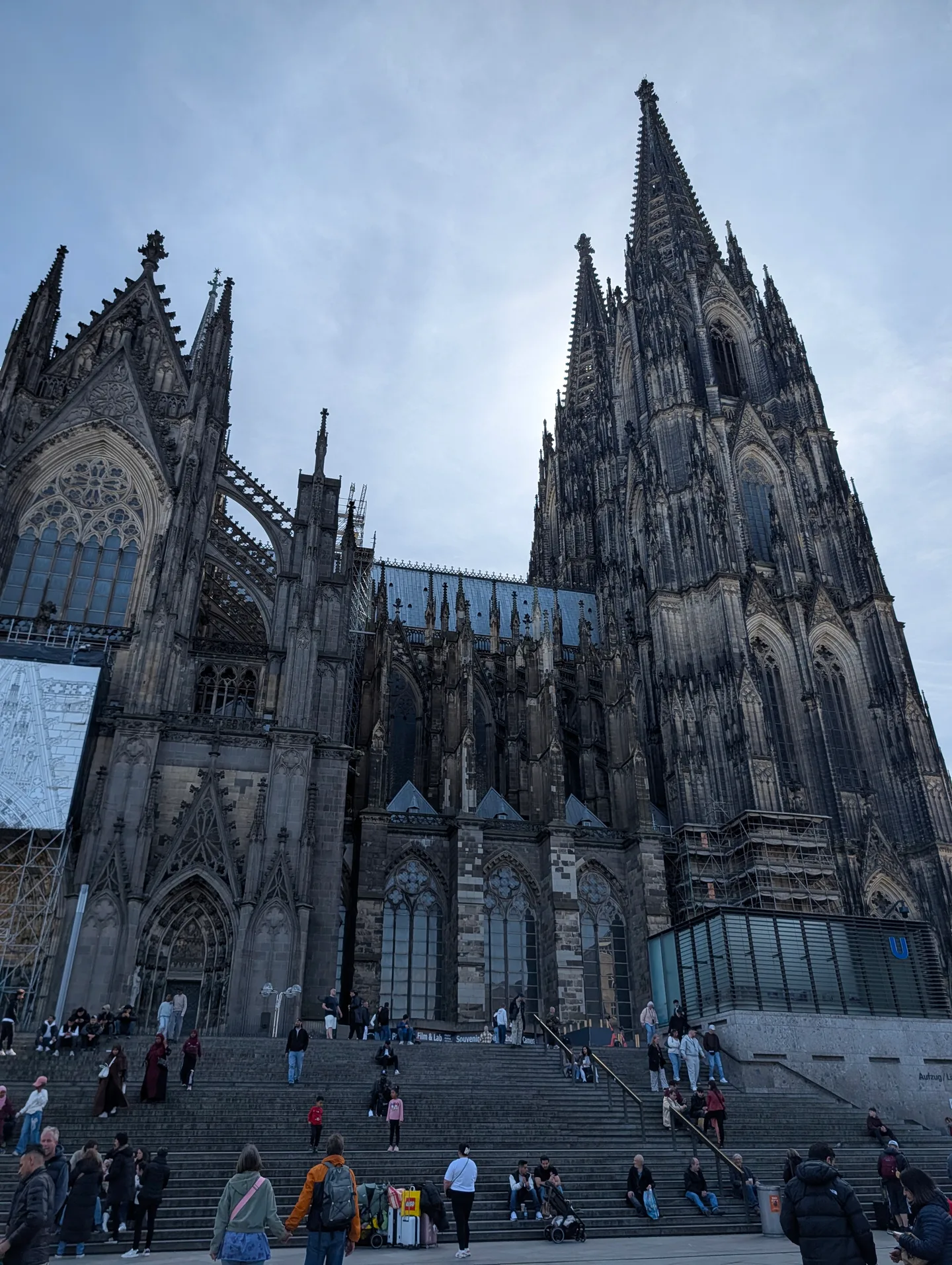
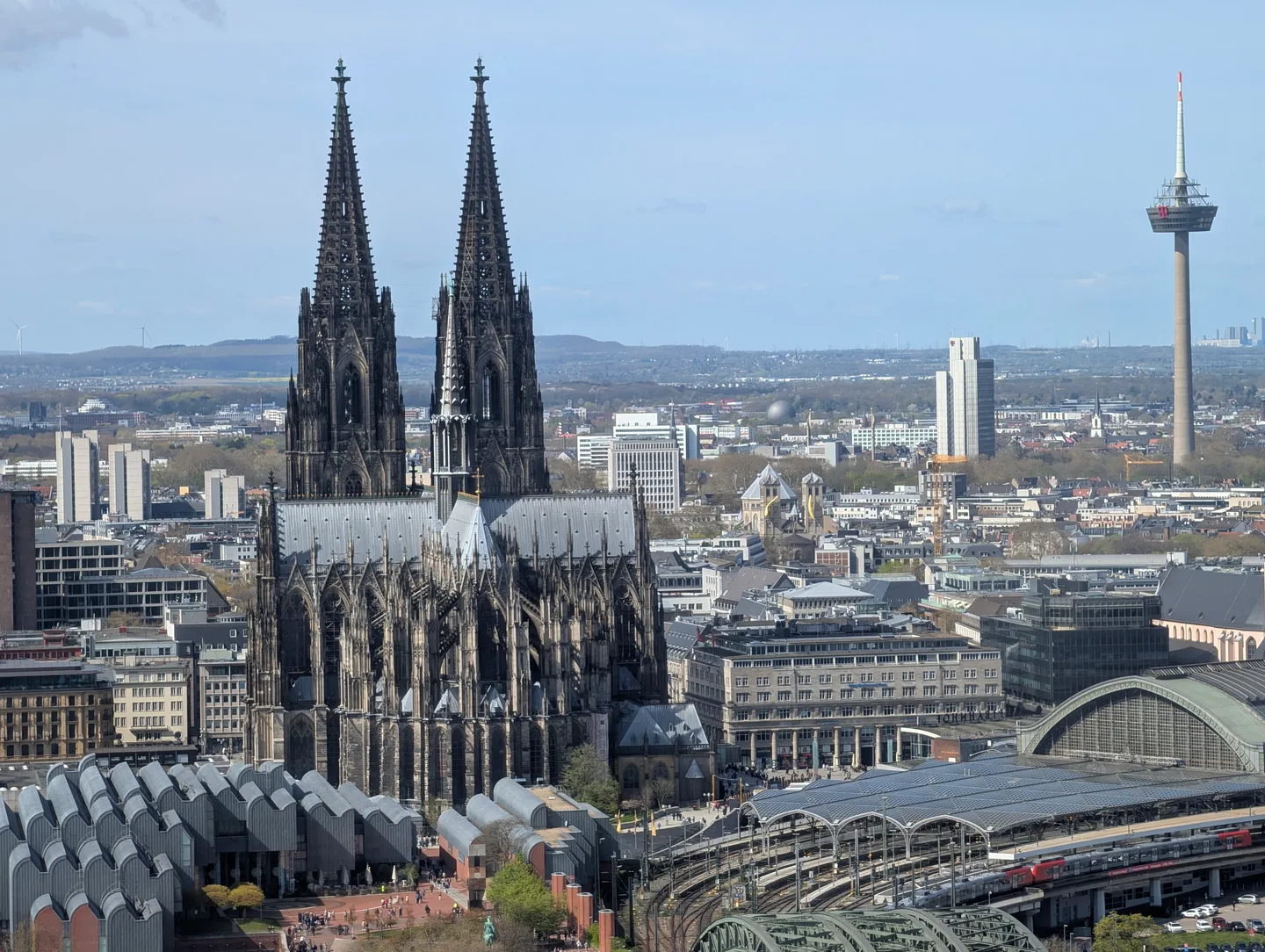
Cologne Cathedral feels like a construction project measured in centuries. Work began in 1248, stalled for a very long time, and resumed before its nineteenth-century completion. The finished towers look so inevitable now that it is hard to imagine generations living beside the unfinished building.
Looking up from the pavement, the first impression is not prettiness but pressure. Dark stone, pointed arches, buttresses and smaller pinnacles pile towards the sky. Gothic architecture turns weight into an upward movement of the eye.
The cathedral survived the war badly damaged while much of the surrounding city was destroyed. Its endurance is often wrapped in local stories. What matters in the view today is the contrast: a building that still anchors the skyline, surrounded by a city that had to be made again.
03
Across the Rhine
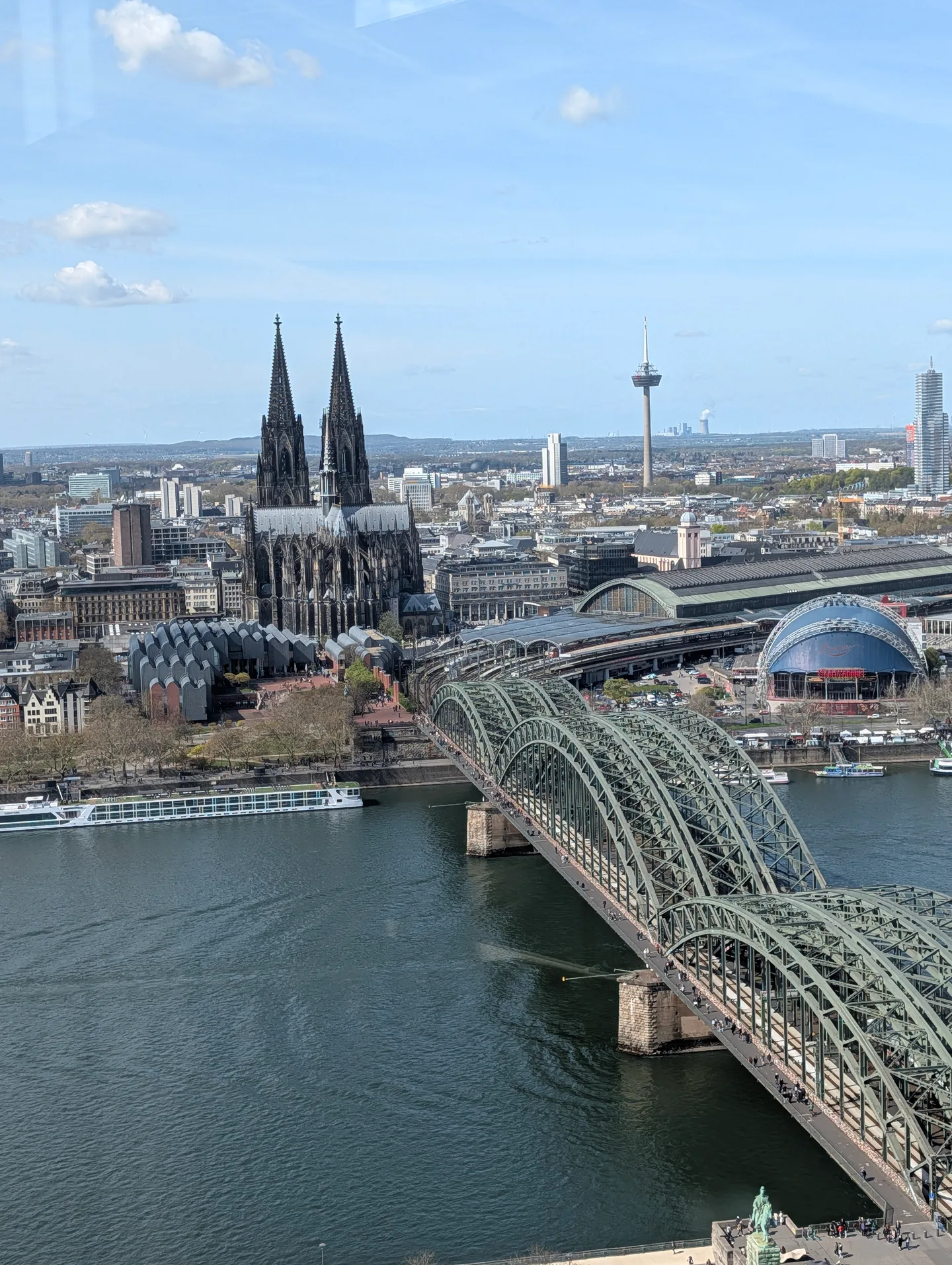
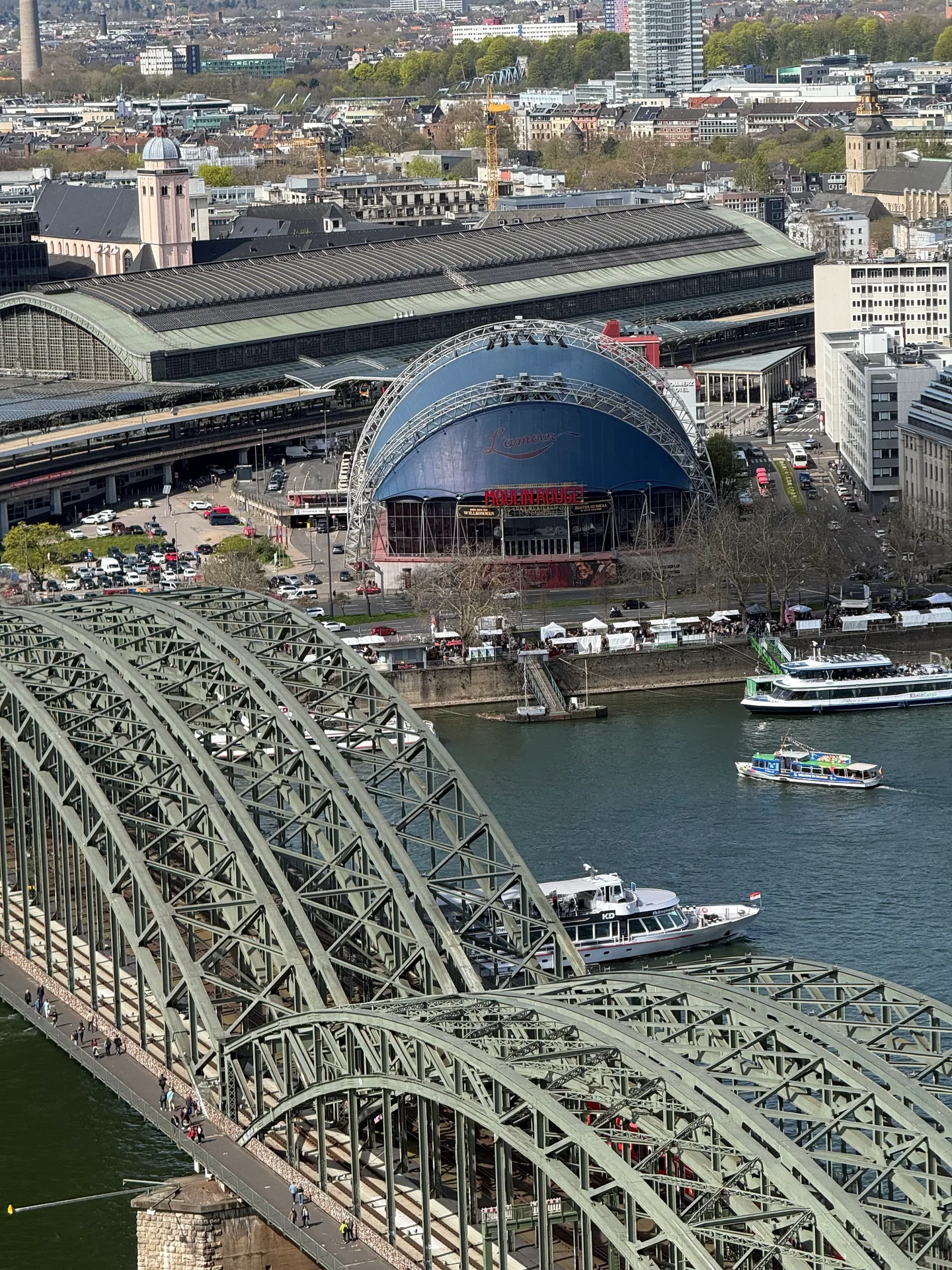
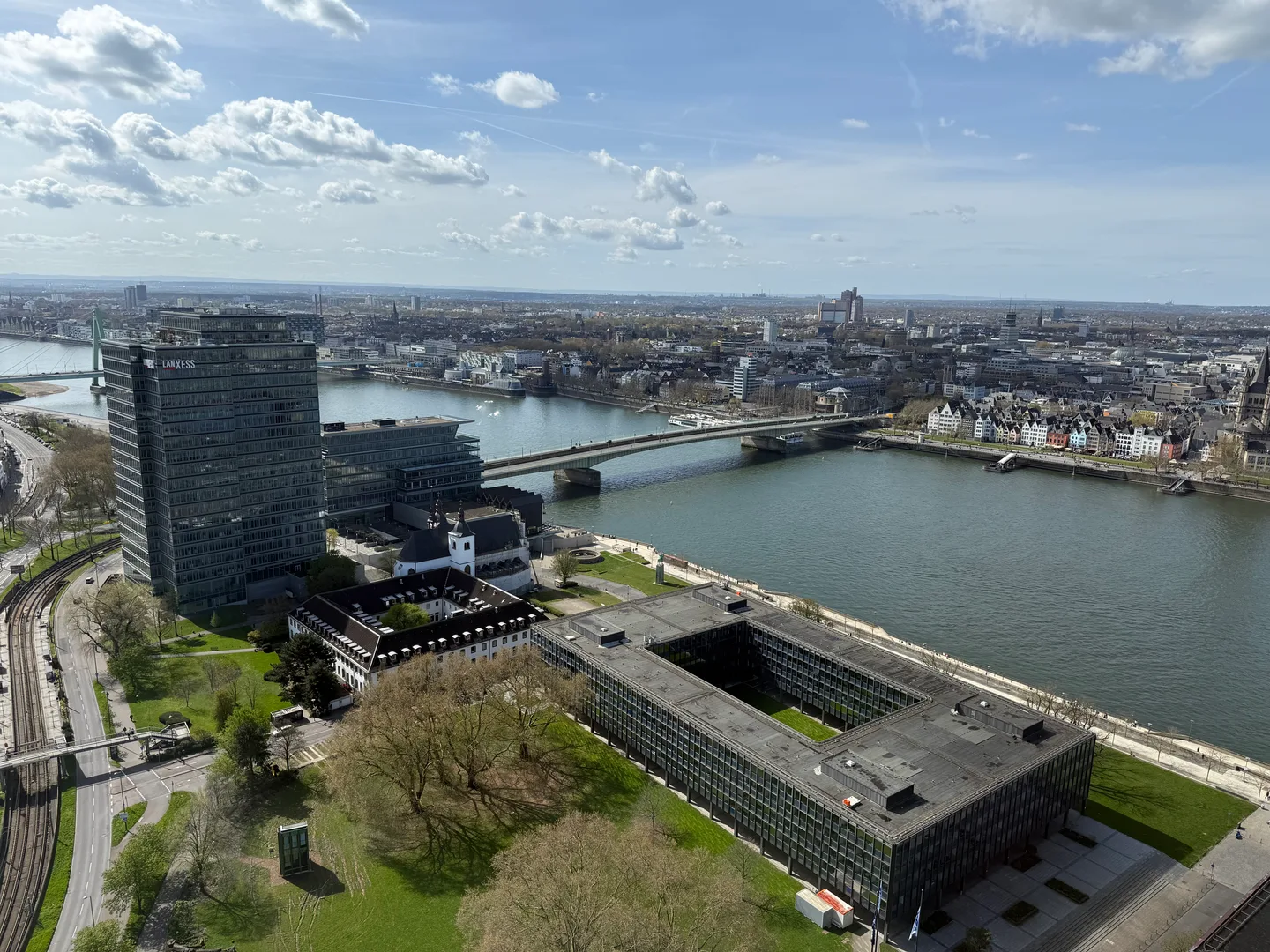
For the whole cathedral rather than its details, I went to the KölnTriangle observation deck on the opposite bank. The lift carried me up, and the towers appeared beyond the Rhine and the Hohenzollern Bridge.
From this distance the proportions made sense. The station's curved roof sat beside the cathedral, while trains crossed the bridge below. Love locks crowd the bridge railings, tiny declarations attached to a very large piece of infrastructure.
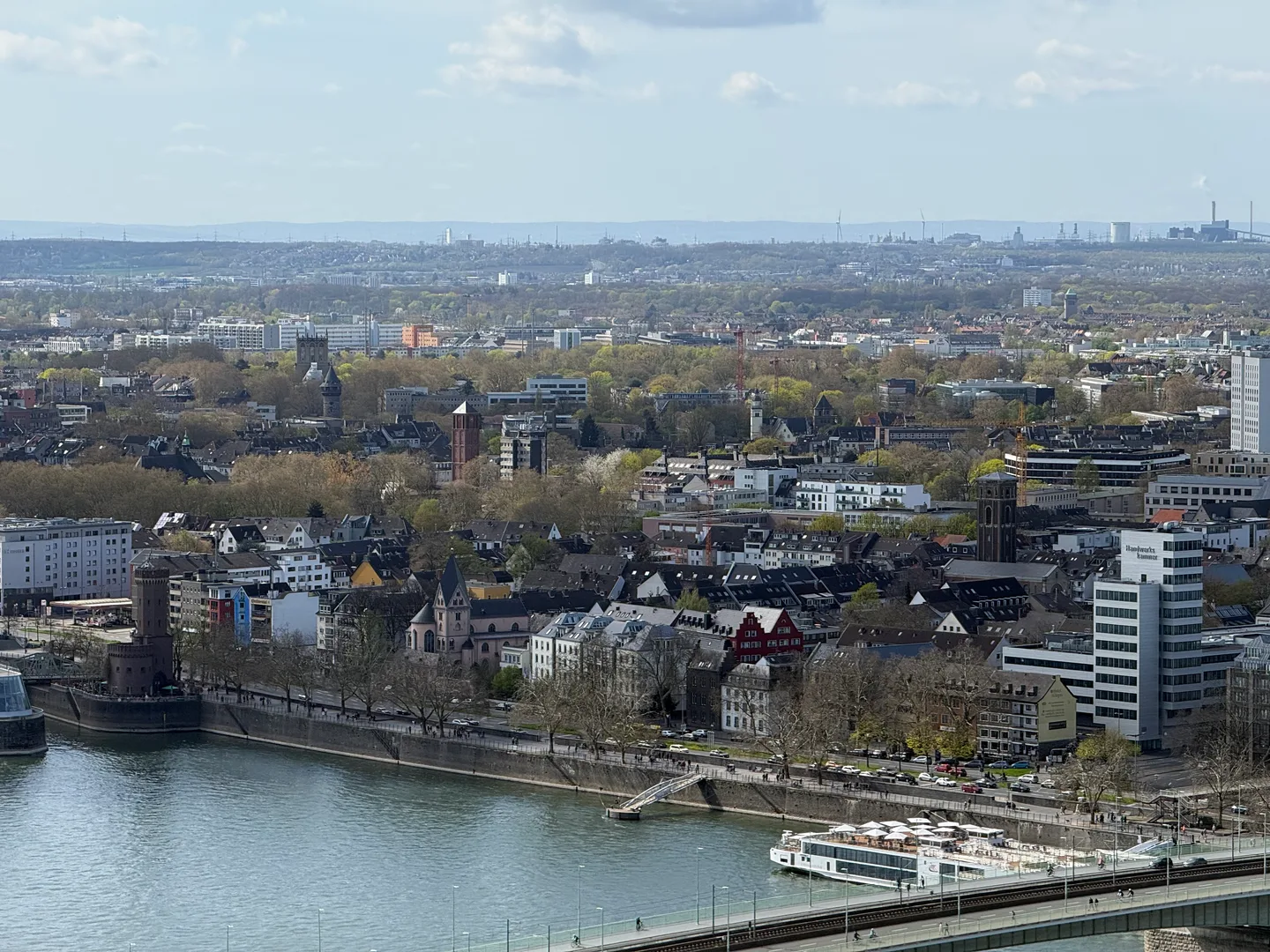
Looking south, the river curved away into a flat horizon. Other church towers emerged from the old town. Cologne has more architectural history than its most famous building lets you notice. From above, some of those quieter landmarks finally had room.
04
Over the water
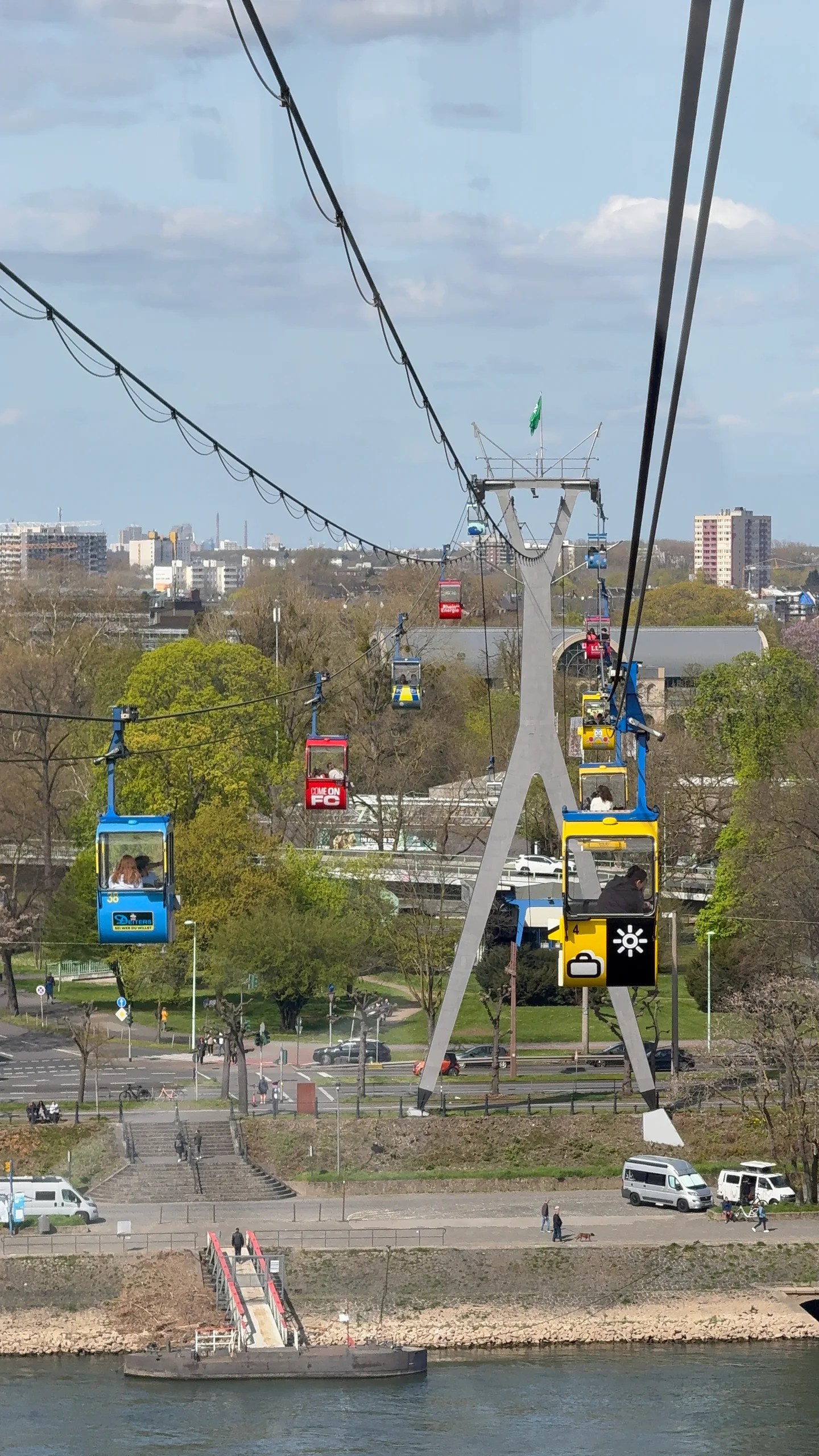
Later I rode the cable car across the Rhine. The cabin was small, the movement slow, the water grey-green below. A barge passed under us. Even in a modest spring breeze, there was enough sway to remind me that I was suspended above a river.
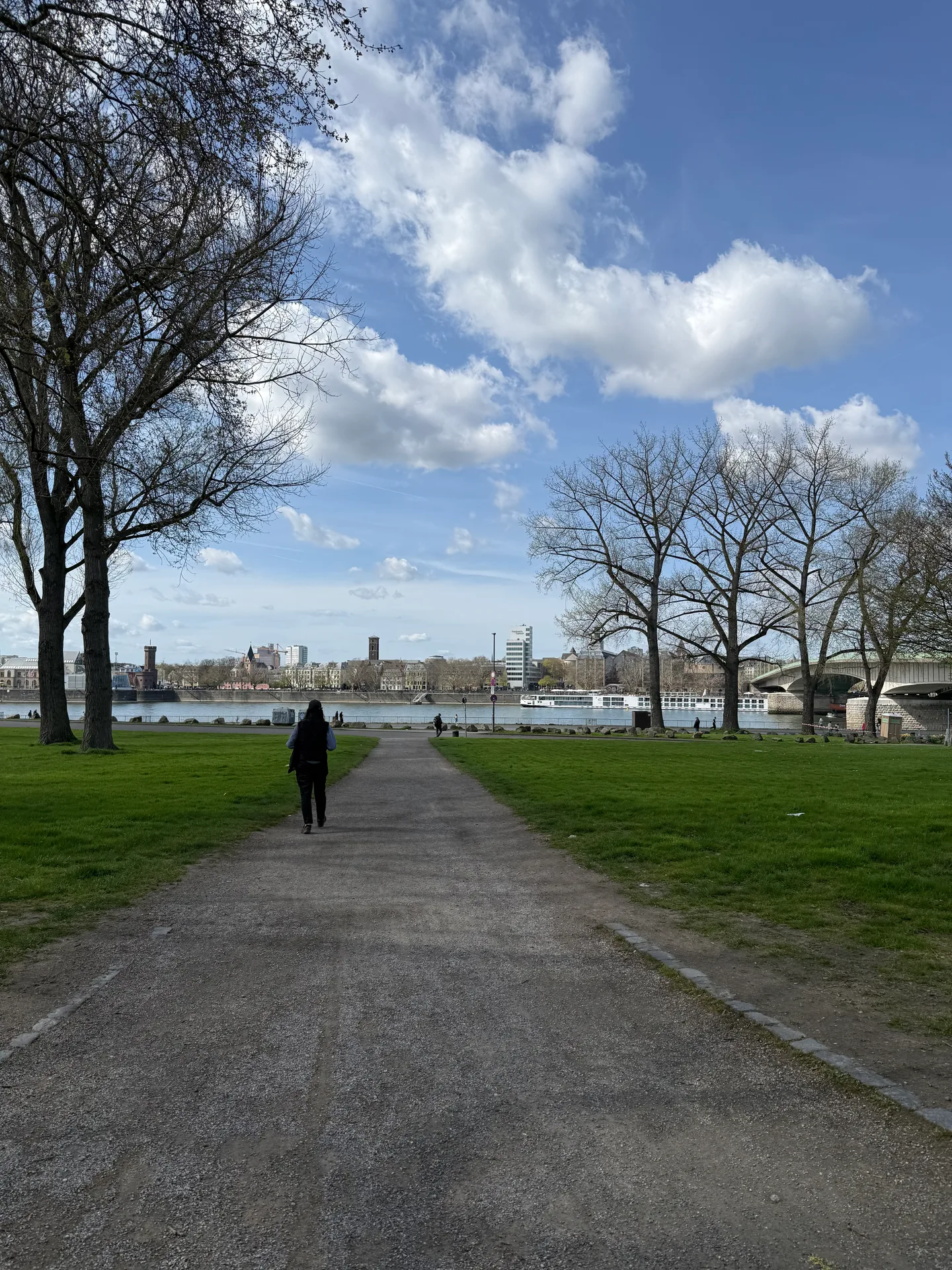
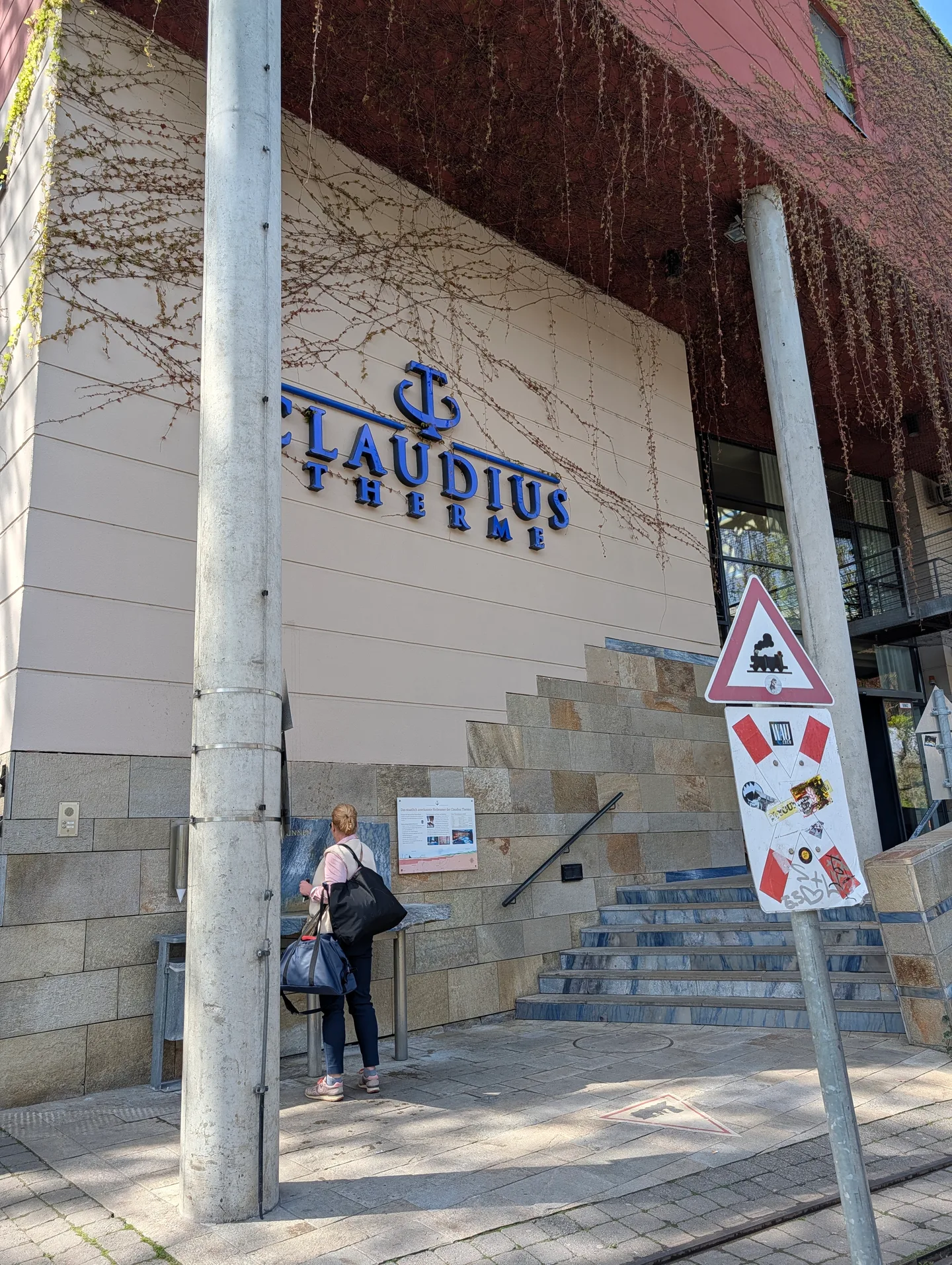
The parks offered another version of the holiday. Bare branches still drew dense lines against the sky; families picnicked and children searched for Easter eggs. Near the Claudius Therme, I thought about the long history of public bathing here. Cologne's Roman past is easy to discuss as archaeology. Warm water, leisure and a day without work make it feel much less remote.