HUNGARY / TRAVEL NOTES
Budapest
Two banks, yellow trams and a river holding beauty and remembrance together.
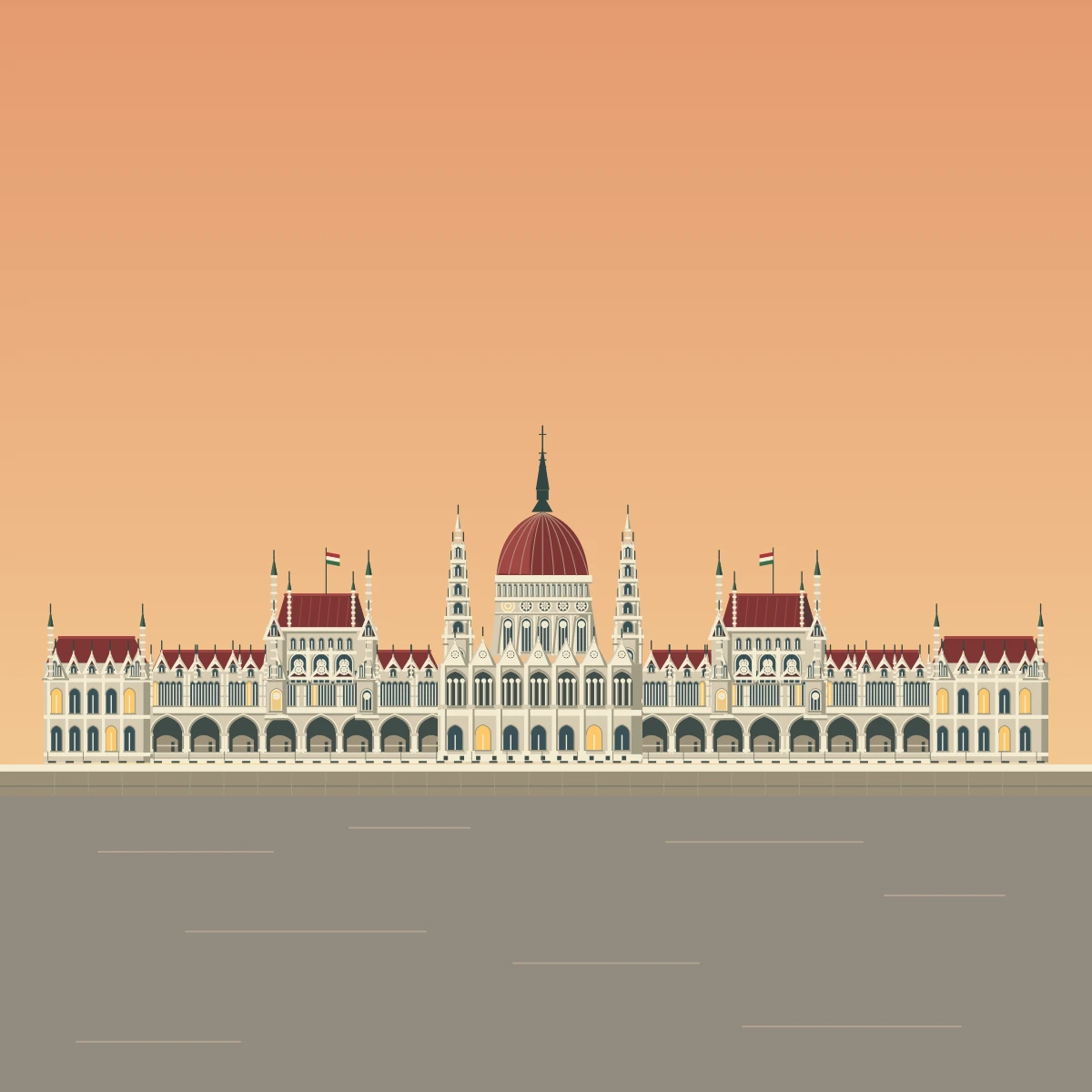
Budapest in Hourline shows the same artwork as the app, bringing its landmarks together in a composed scene.
01
A city on two banks
Budapest begins with a difference in terrain. Buda rises on the western hills; Pest stretches across the eastern plain. The Danube separates them and holds them together. Their union in the nineteenth century gave a rapidly expanding imperial city its name.
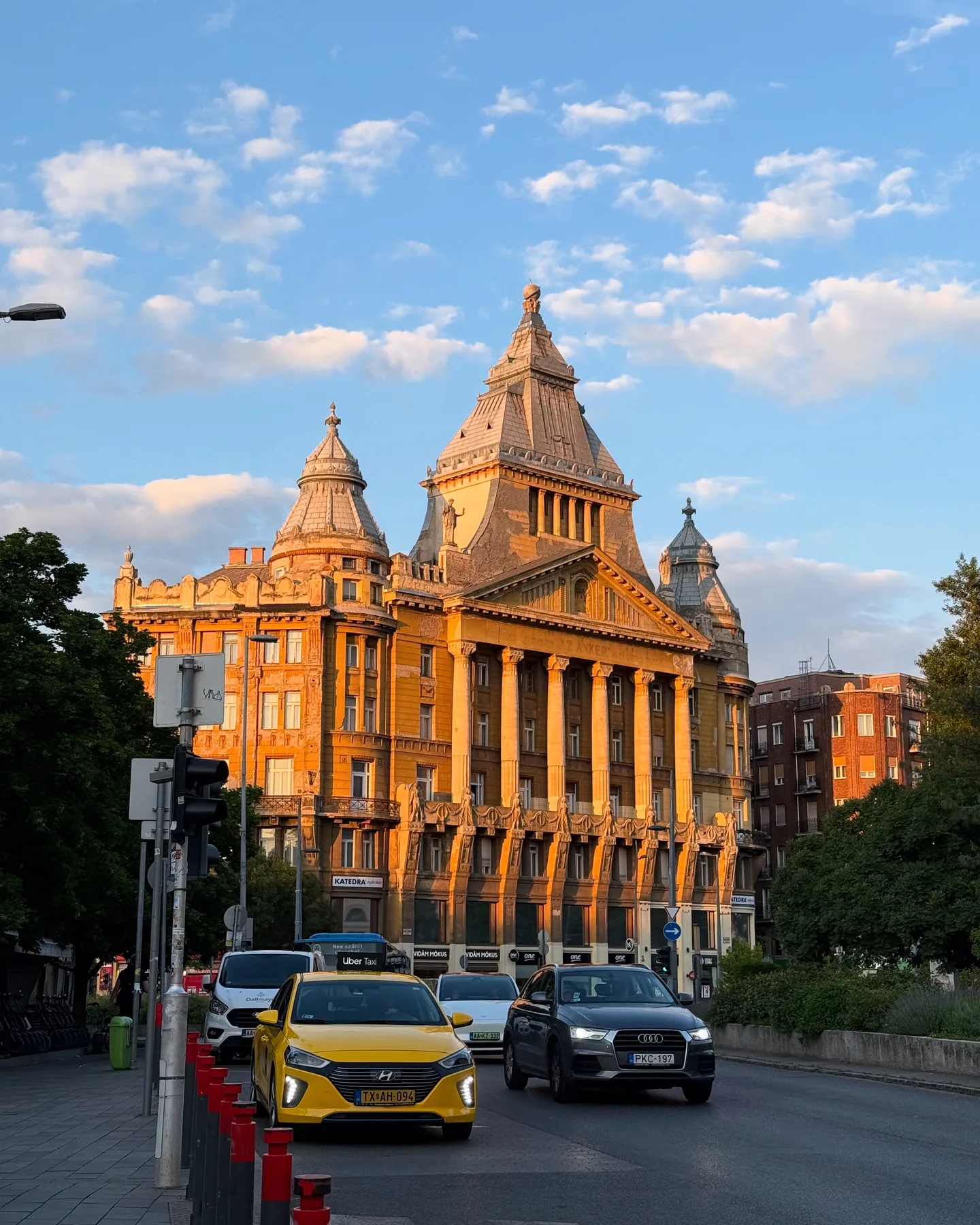
At seven on a late-May evening, the sun was still high. I walked north along the Pest riverbank, with broken gold on the water and honey-coloured façades beside me. The scale and decoration spoke of a city determined to be a capital.
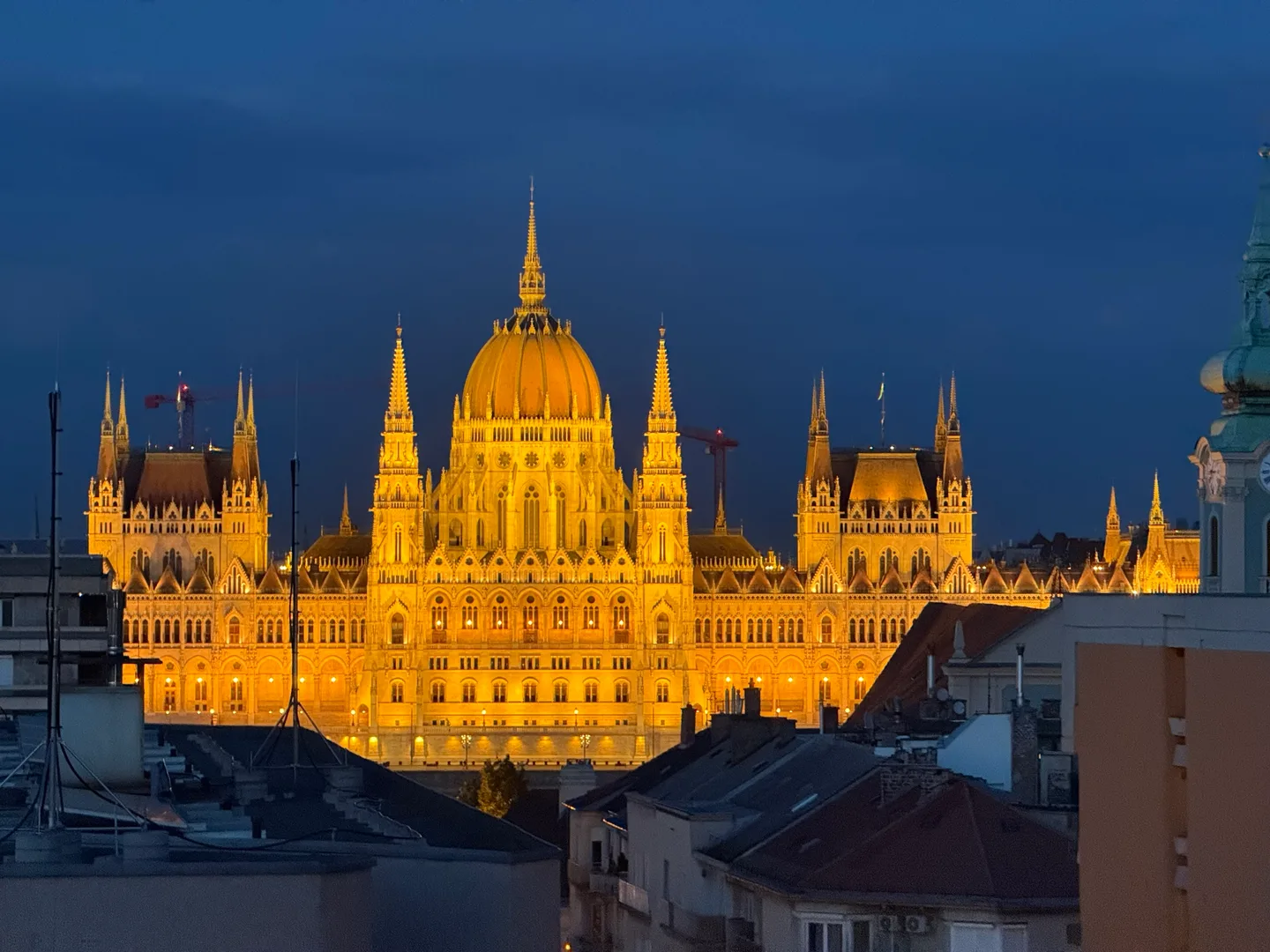
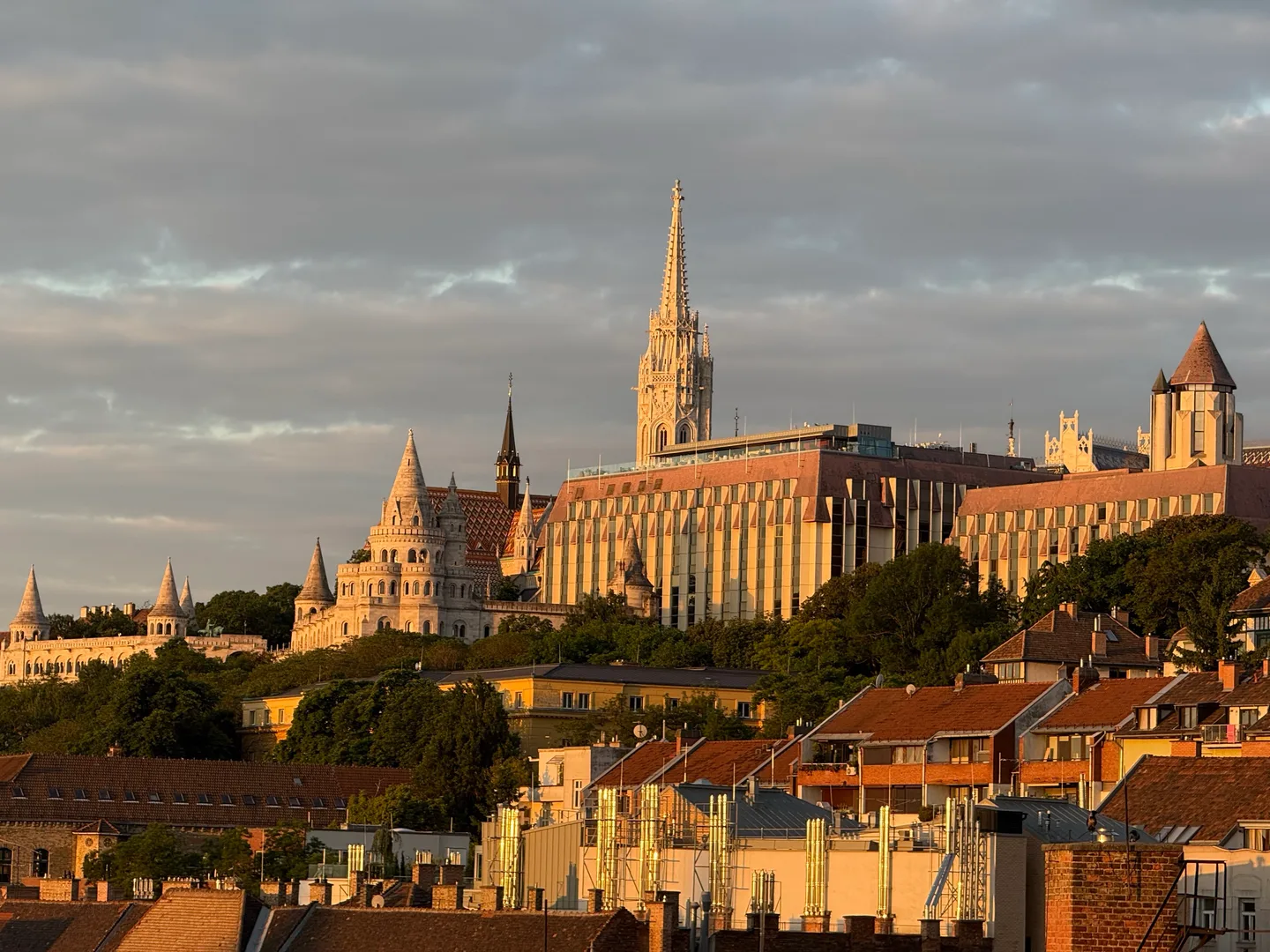
After dark, the view from my balcony changed completely. Fisherman's Bastion and Matthias Church glowed on the opposite hill. Farther along the river, Parliament seemed to float in the darkness, its long illuminated façade resembling a ship moored to the bank.
02
The river between them
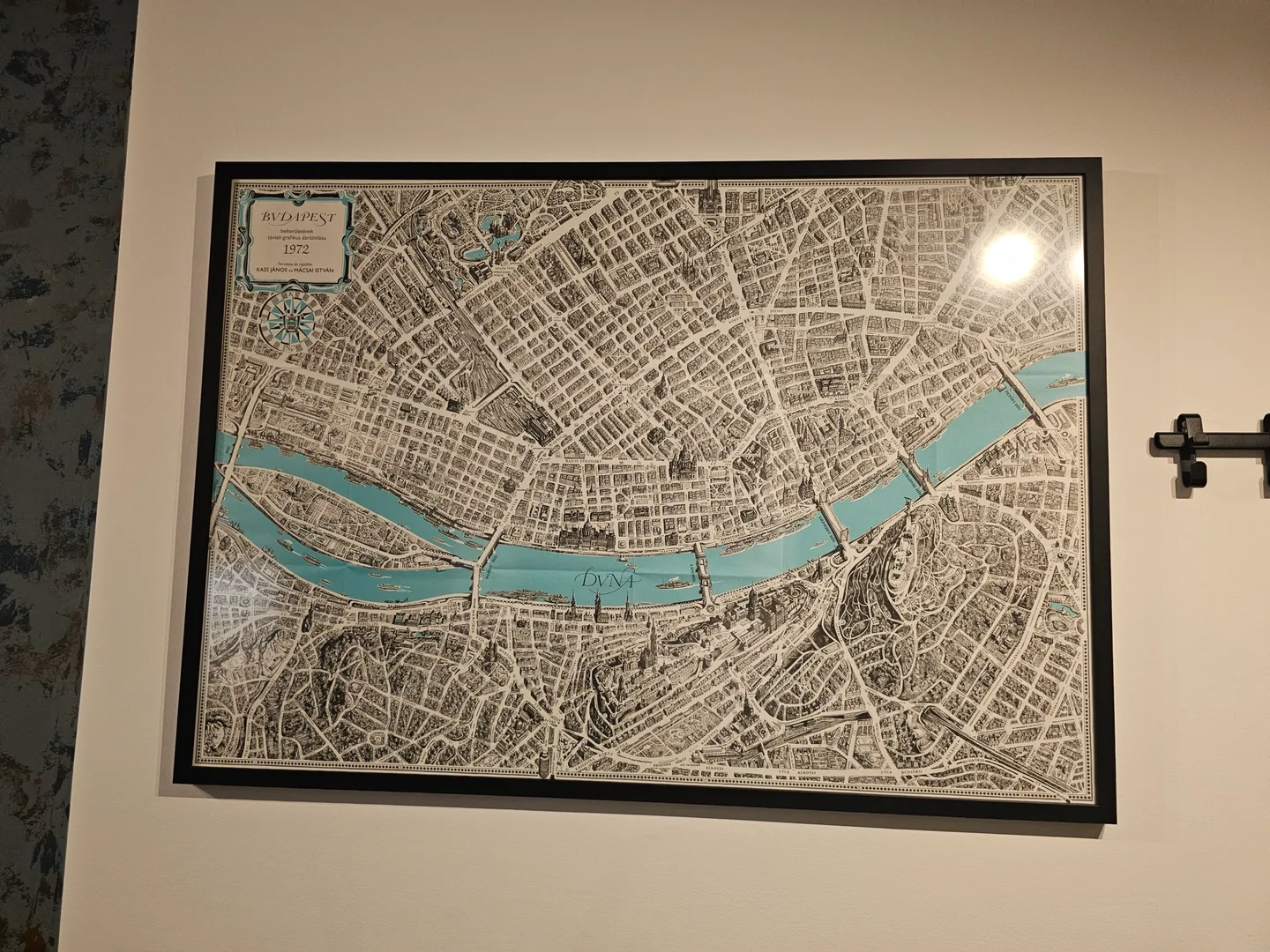
A hand-drawn map in the apartment labelled the river Duna. On paper, boulevards curved around Pest like growth rings. In the early morning, the view beyond the balcony was quieter: the pale towers on Castle Hill slowly taking on colour.
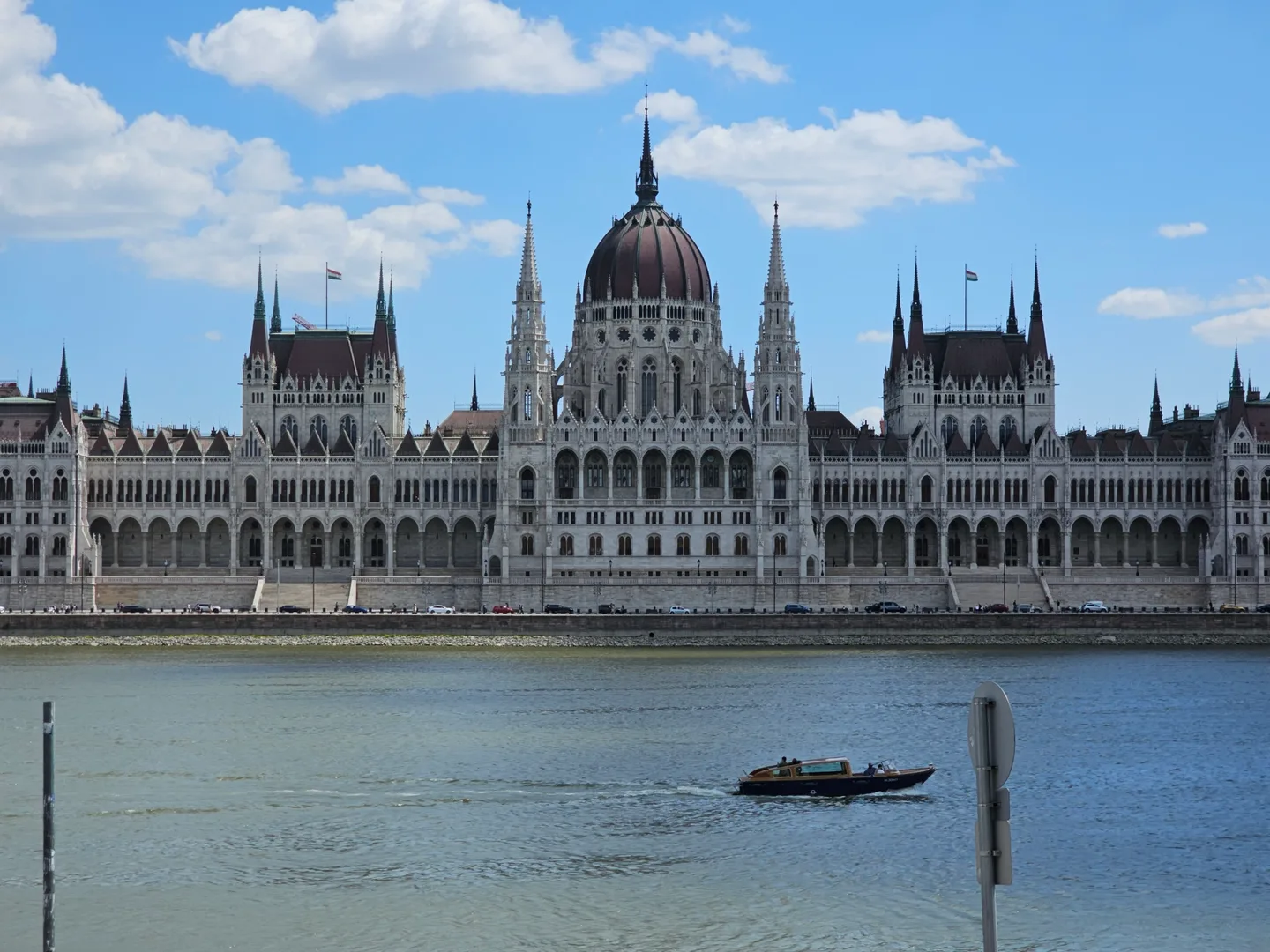
Fisherman's Bastion looks much older than it is. Its towers belong to the turn-of-the-century period when Budapest was telling its national story in stone. Across the river, Parliament makes an even larger statement. A passing boat broke its reflection and left the water to assemble it again.
03
The everyday city
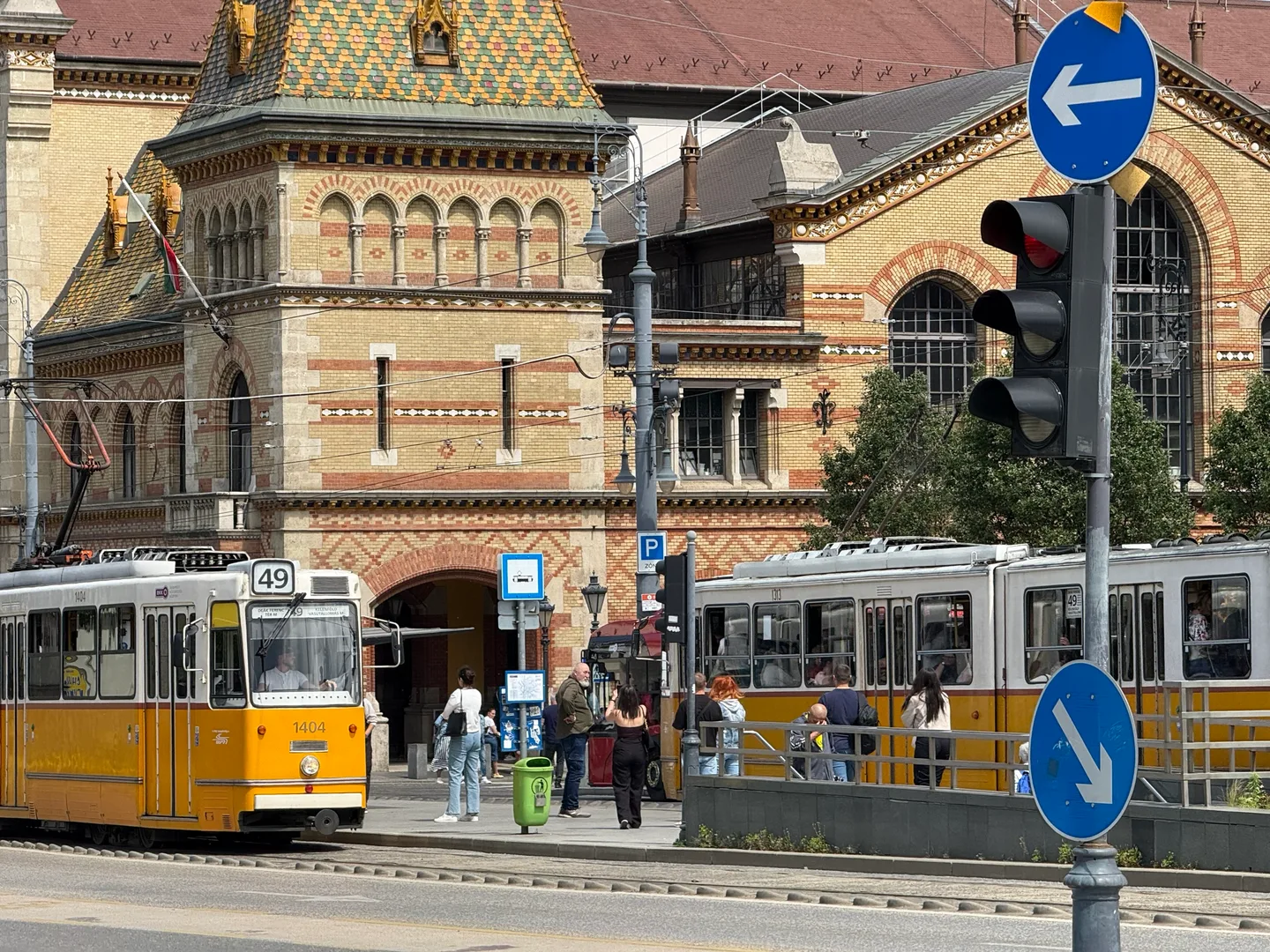
A yellow tram brought me to the Great Market Hall. The trams are as much a part of Budapest's appearance as the bridges. Their movement gives the monumental riverfront a daily rhythm.
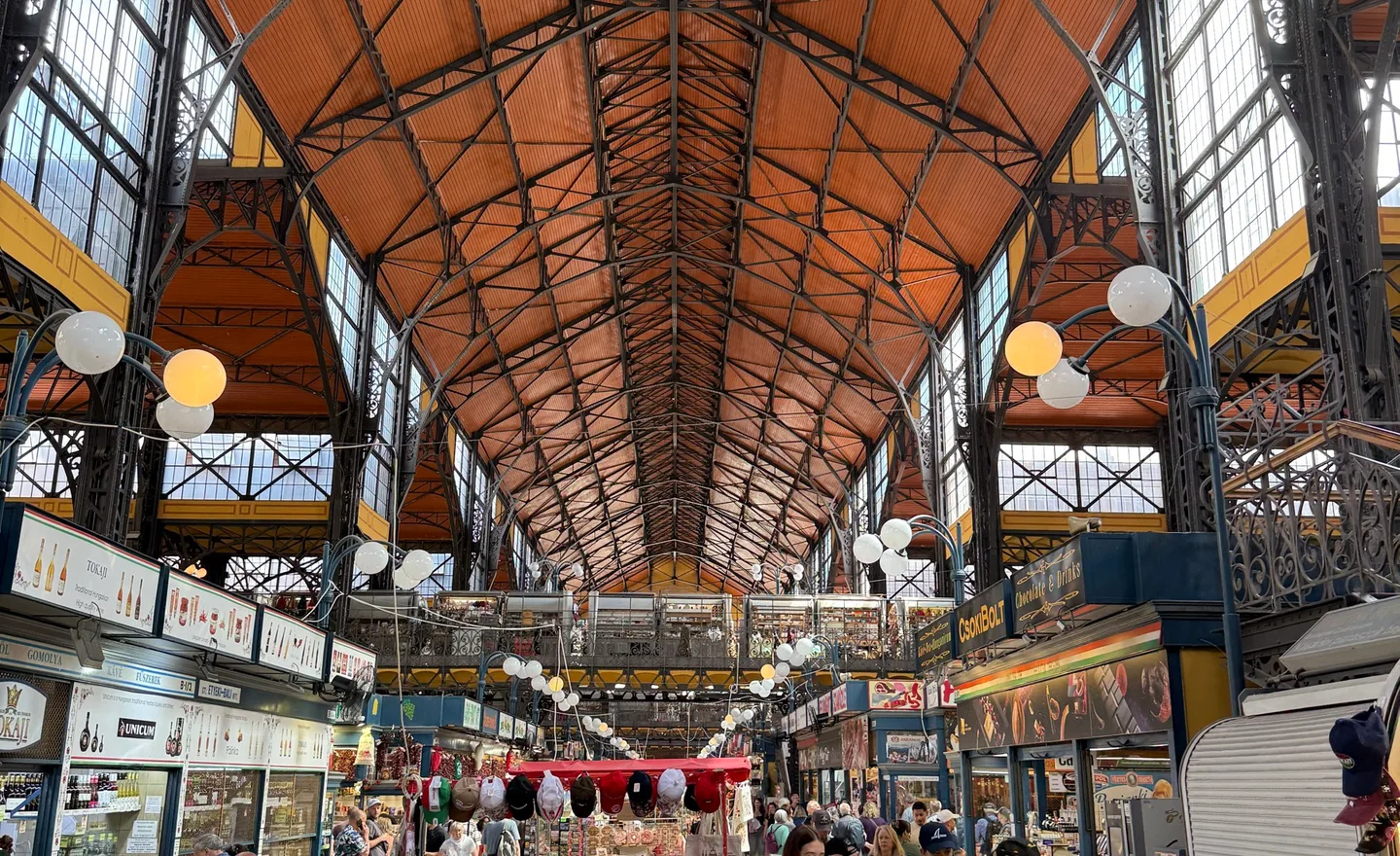
Inside the market, iron trusses rise over stalls full of produce and paprika. Upstairs, people queued for lángos piled with sour cream and cheese. The building has the ambition of a public monument but continues to do the ordinary work of a market. Voices, food and shopping bags make its history feel inhabited.
04
Scars on the hill
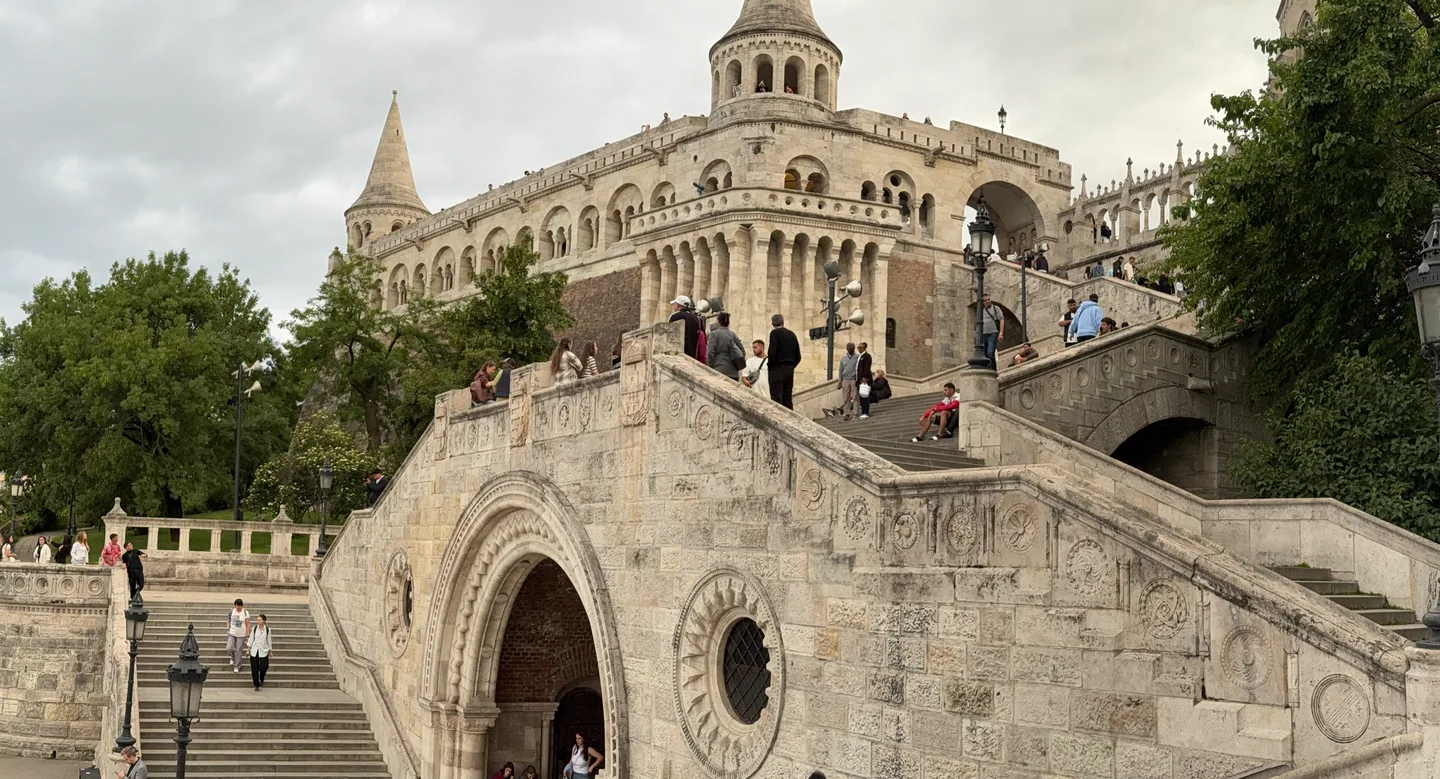
Crossing to Buda, I looked through the arches of Fisherman's Bastion towards Pest. The city fitted into a frame: Parliament, domes, bridges and the distant plain. Tourists filled the steps and an accordion played nearby. It was difficult to imagine the destruction this hill had experienced.
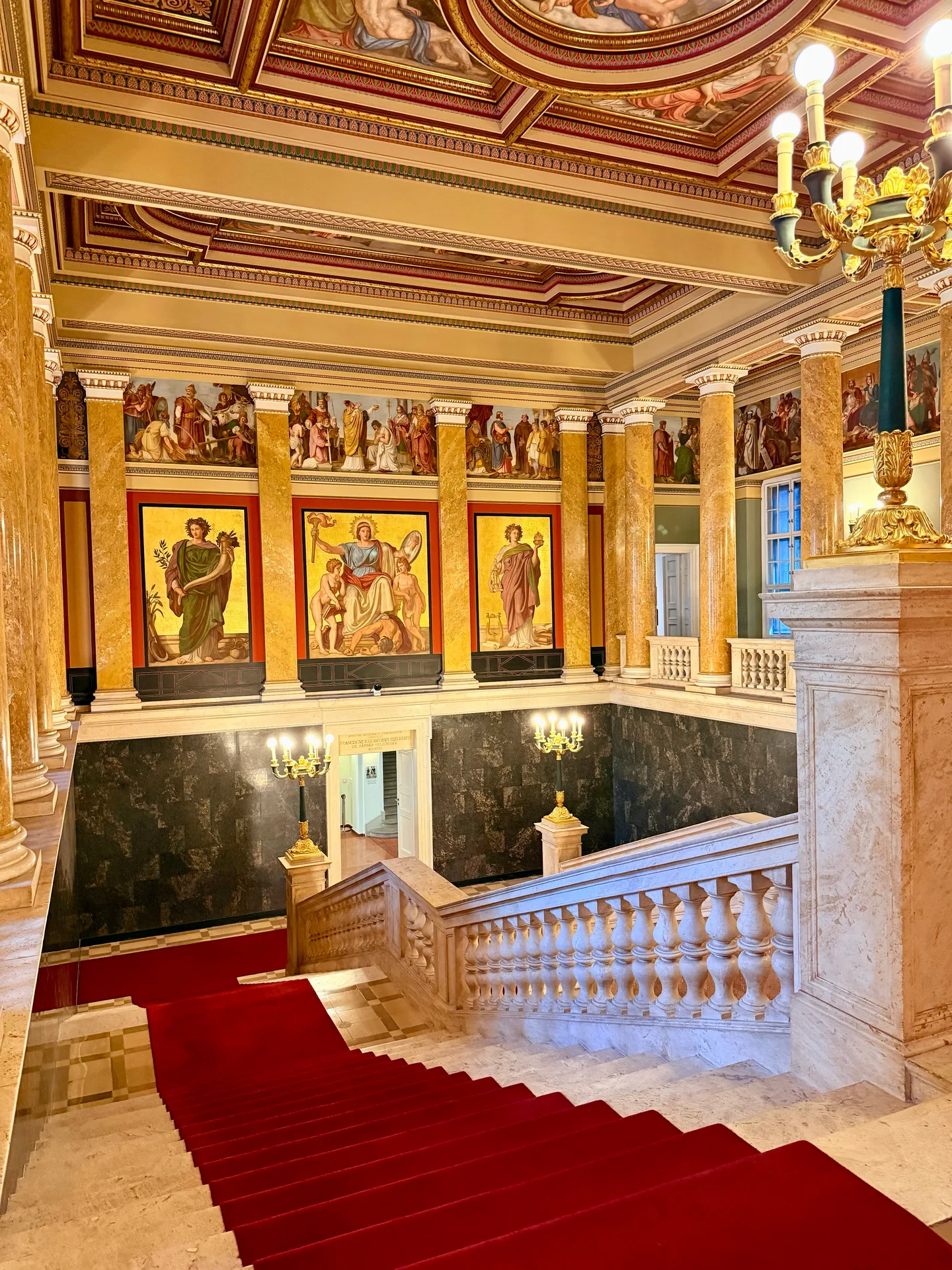
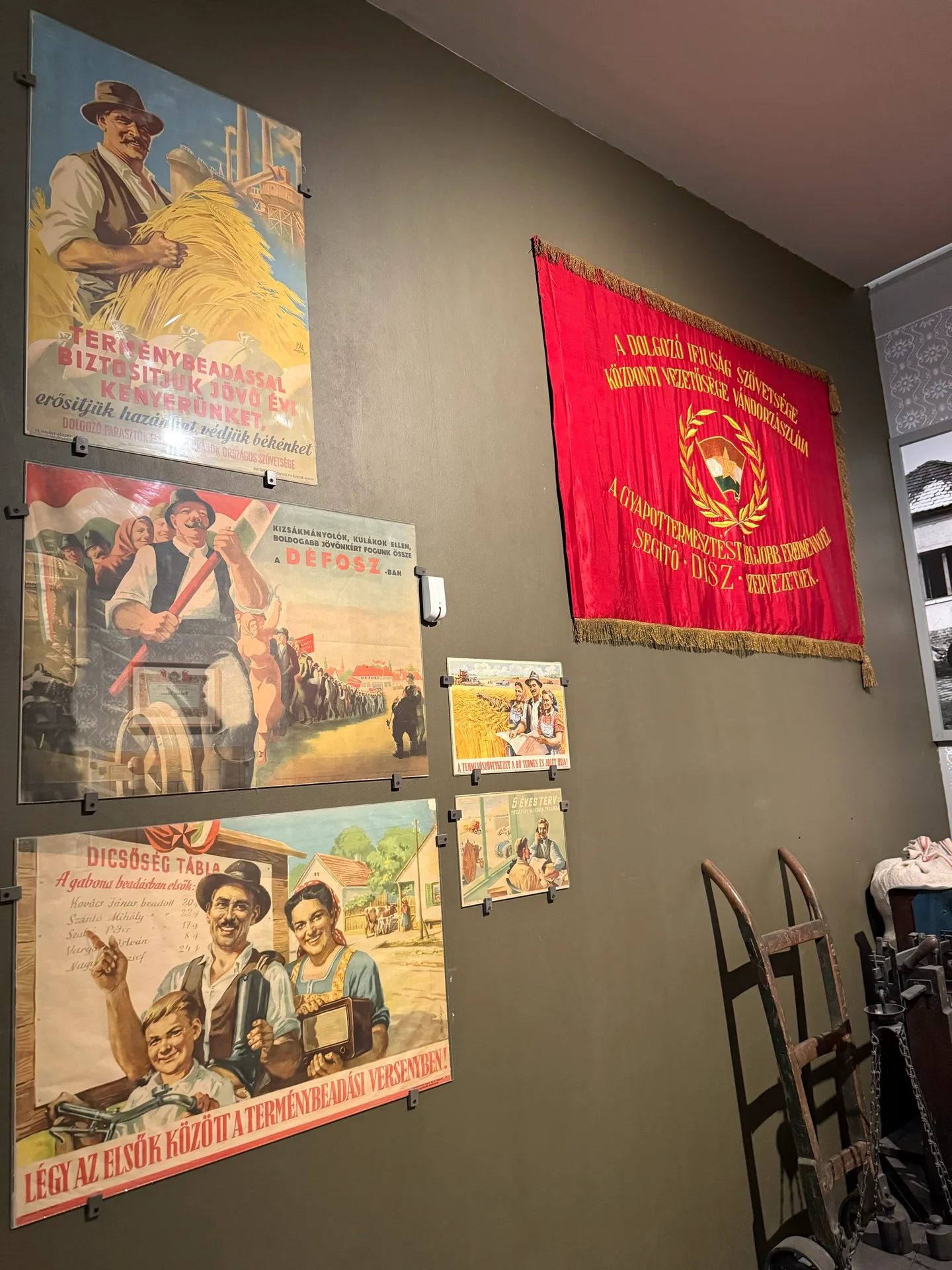
The castle's history is a sequence of conquest and reconstruction. Polished interiors and restored façades can conceal how many endings a building has survived. Museum displays made some of the twentieth century harder to overlook: propaganda banners, official optimism and the memories of the 1956 uprising. The distance between an imperial panorama and a history of violence was only a few rooms.
05
Golden hour
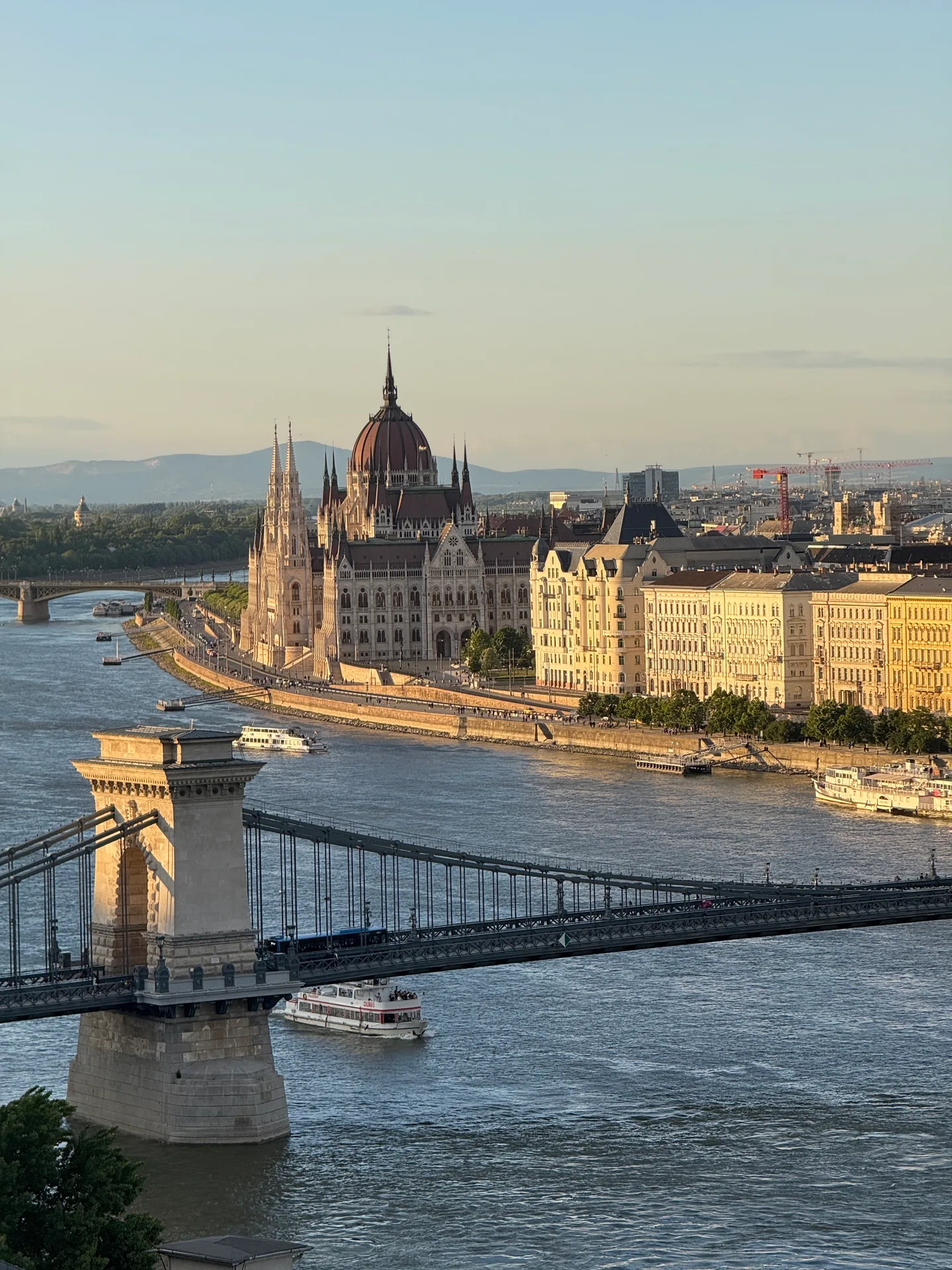
On the third evening, I watched the Danube from the heights of Buda. Low light caught the Chain Bridge and Parliament. The bridge changed the relationship between the two banks long before they became one city. Seen from above, it is easy to understand how a crossing can become the centre of a city's story.
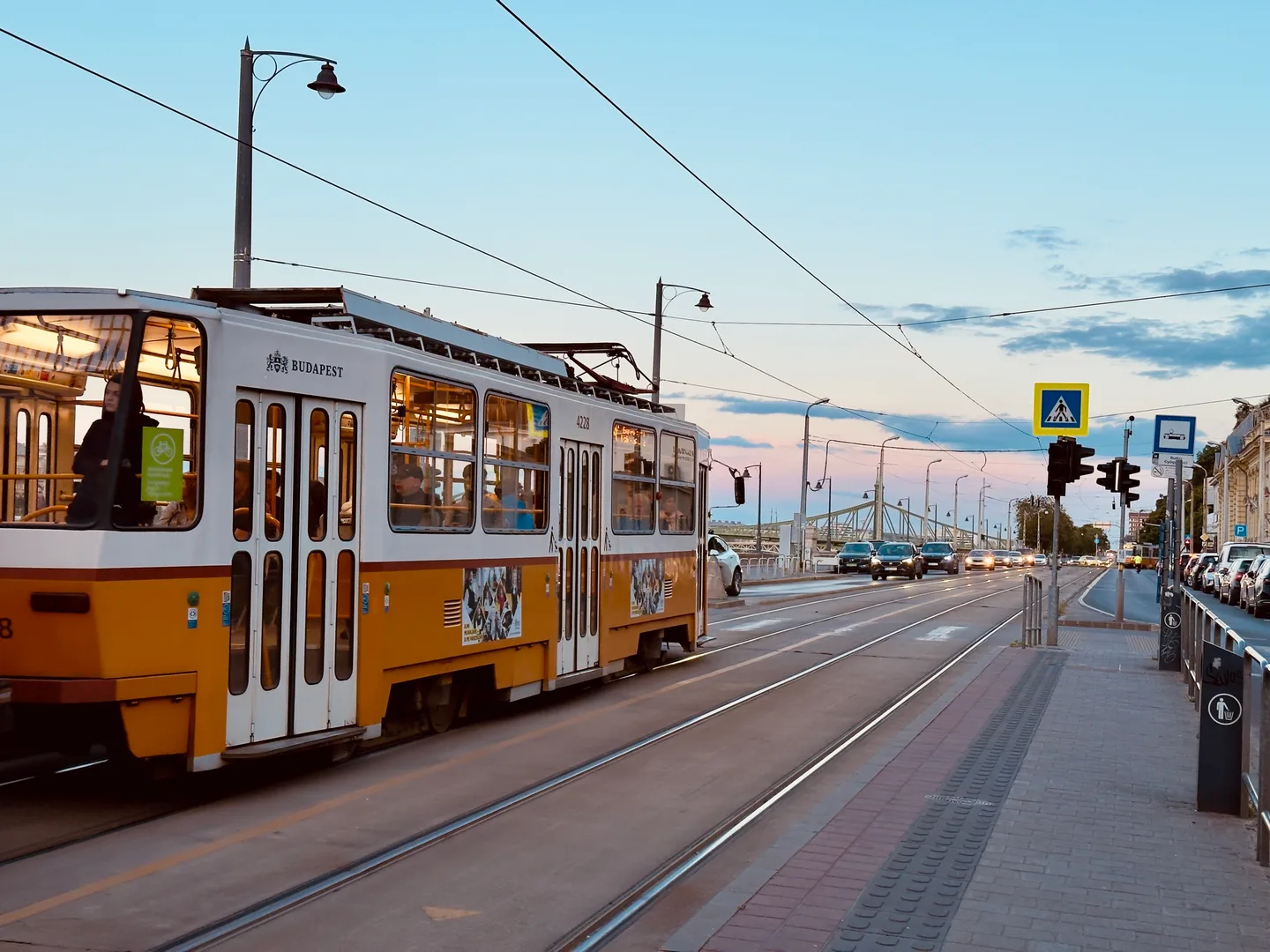
Back by the water, a yellow tram passed. Budapest's older transport has a particular physical character: seats, handrails, tiled stations and the small sounds of machinery. It carries people through a city whose monuments tend to draw the eye away from ordinary life.
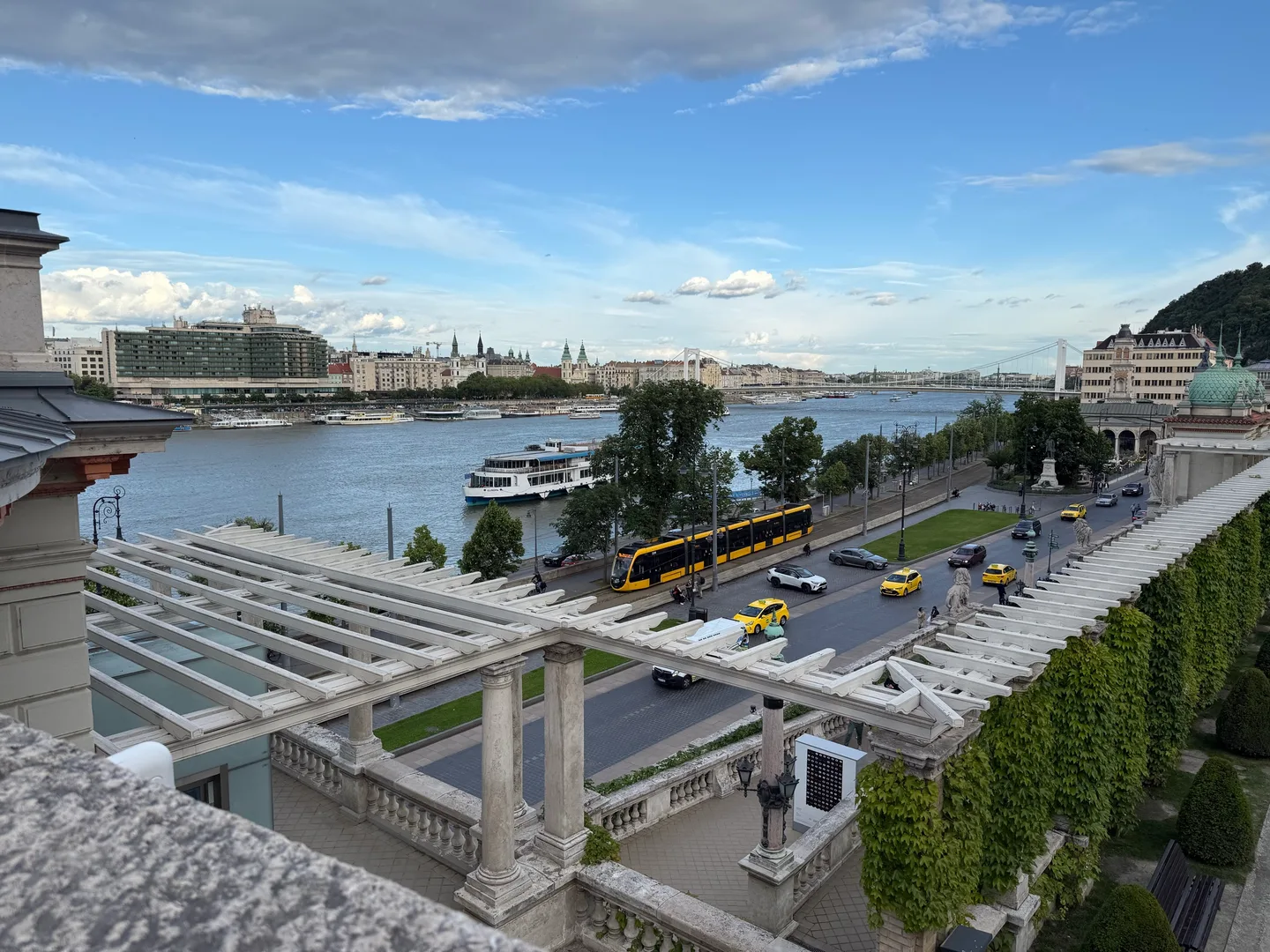
From the castle gardens, the river curved gently between its banks. Boats rested at the quays; reflections lengthened in the water. The buildings were different from anything the city's earliest inhabitants knew. The bend of the river was not.
06
Shoes and a rider
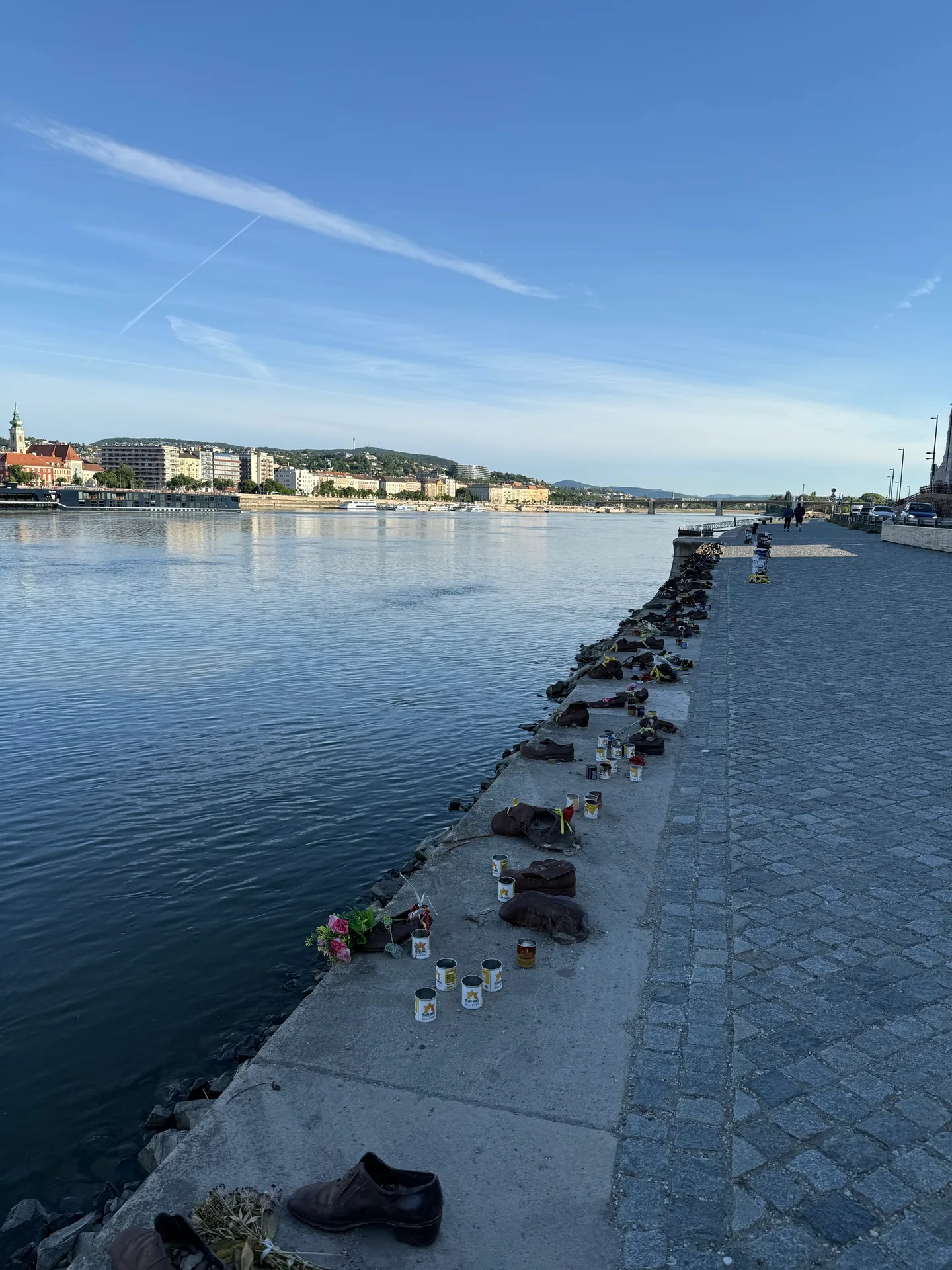
On my last morning I visited the Shoes on the Danube Bank. Iron shoes face the water: men's, women's, children's. They commemorate people murdered at the river during the Holocaust. Candles, flowers and small stones had been placed among them.
The scale is devastatingly human. After so many domes, towers and great façades, an empty shoe can say more than a monumental building.
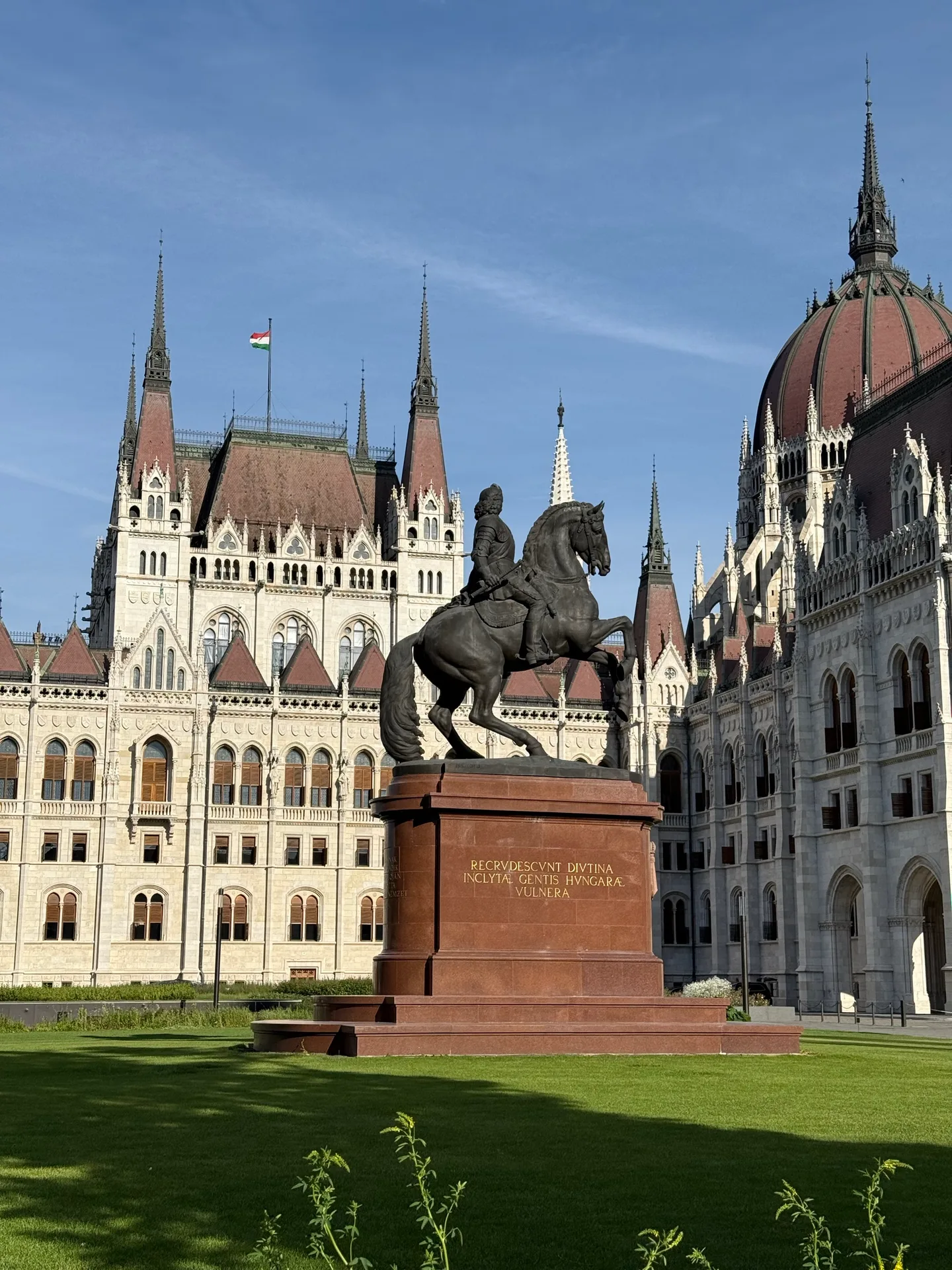
Farther along stood an equestrian statue before Parliament. The rider seemed to look ahead, while the shoes kept facing the river. Budapest's monuments pull attention in different directions: towards an imagined future, and towards people who must not be forgotten.