NETHERLANDS / TRAVEL NOTES
Keukenhof
A spring garden that accepts what castles and cathedrals try to resist: time.
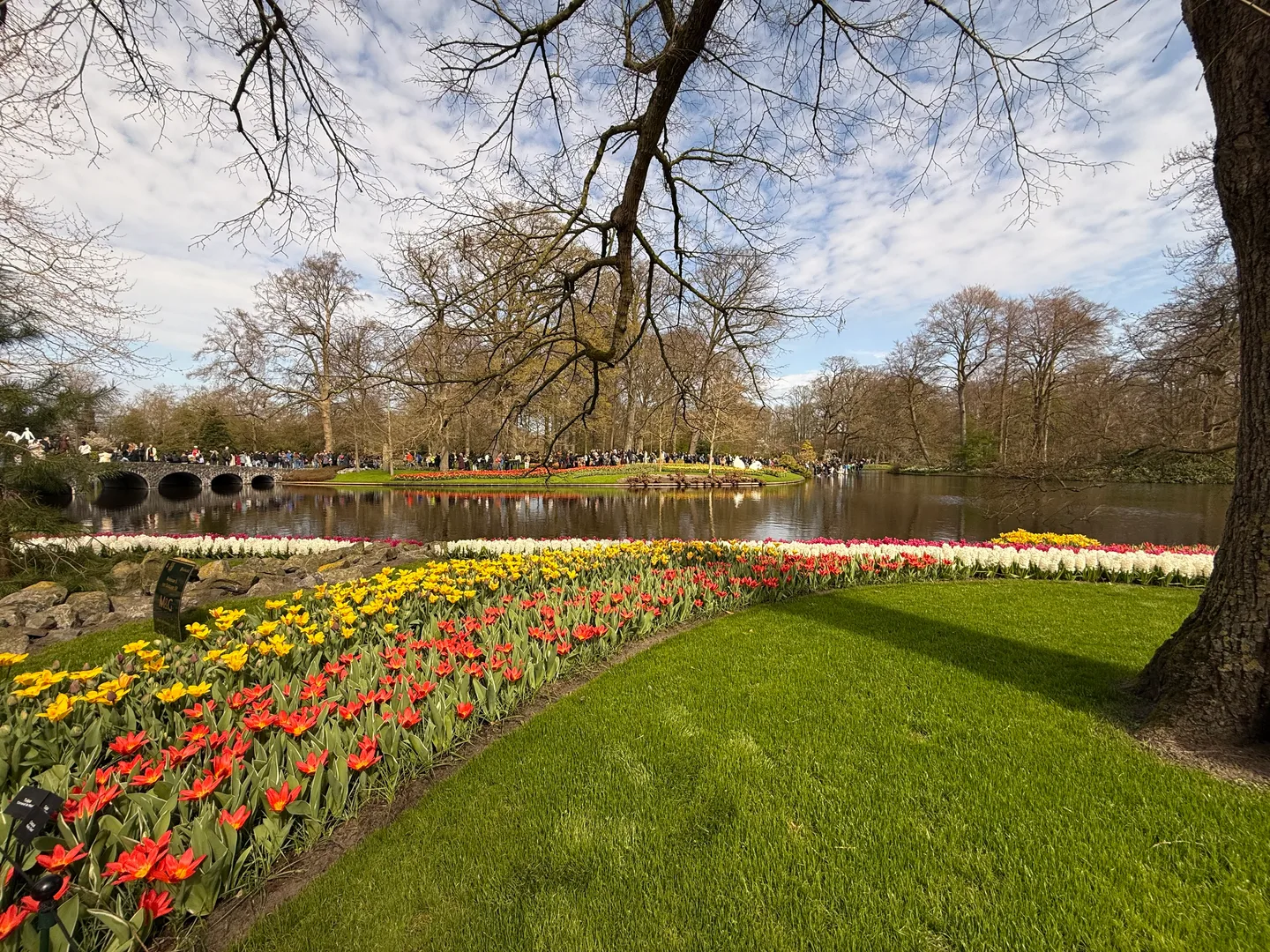
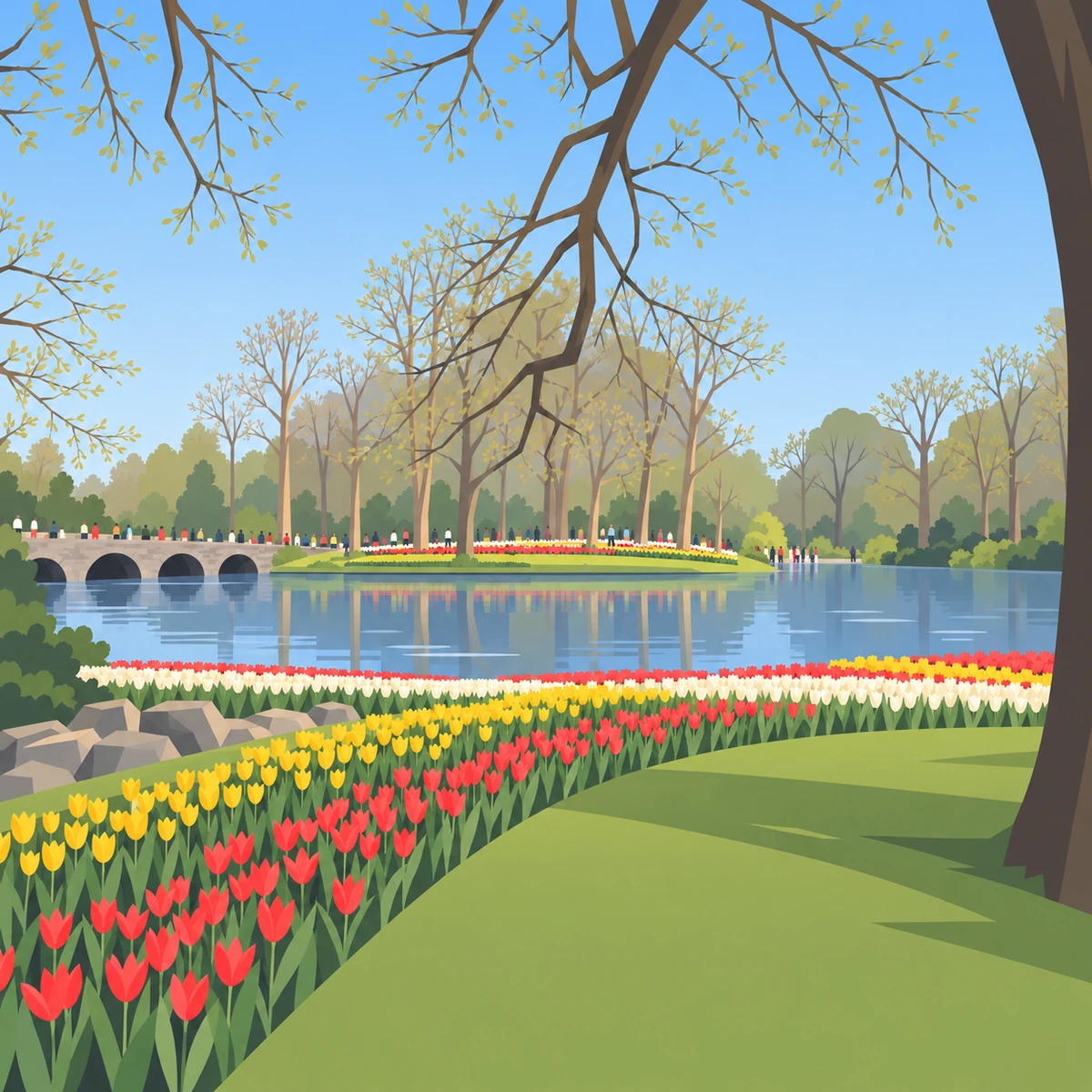
An illustration created from this photograph, using Hourline’s cut-paper artwork as its visual reference.
01
From a bulb to a bubble
The story of tulip mania follows the flower everywhere: a seventeenth-century market in bulbs, extraordinary prices and a collapse that became a lasting image of speculation. The tulip's journey was longer than the financial episode. It travelled from Central Asia through the Ottoman world to European gardens, including the botanical garden at Leiden.
On 4 April I took the bus from Leiden towards Keukenhof. Beyond the window lay the Bollenstreek, the bulb-growing region. The fields were not yet at their peak, but pink, yellow and purple bands already stretched across the flat land like lengths of fabric laid out to dry.
02
The garden
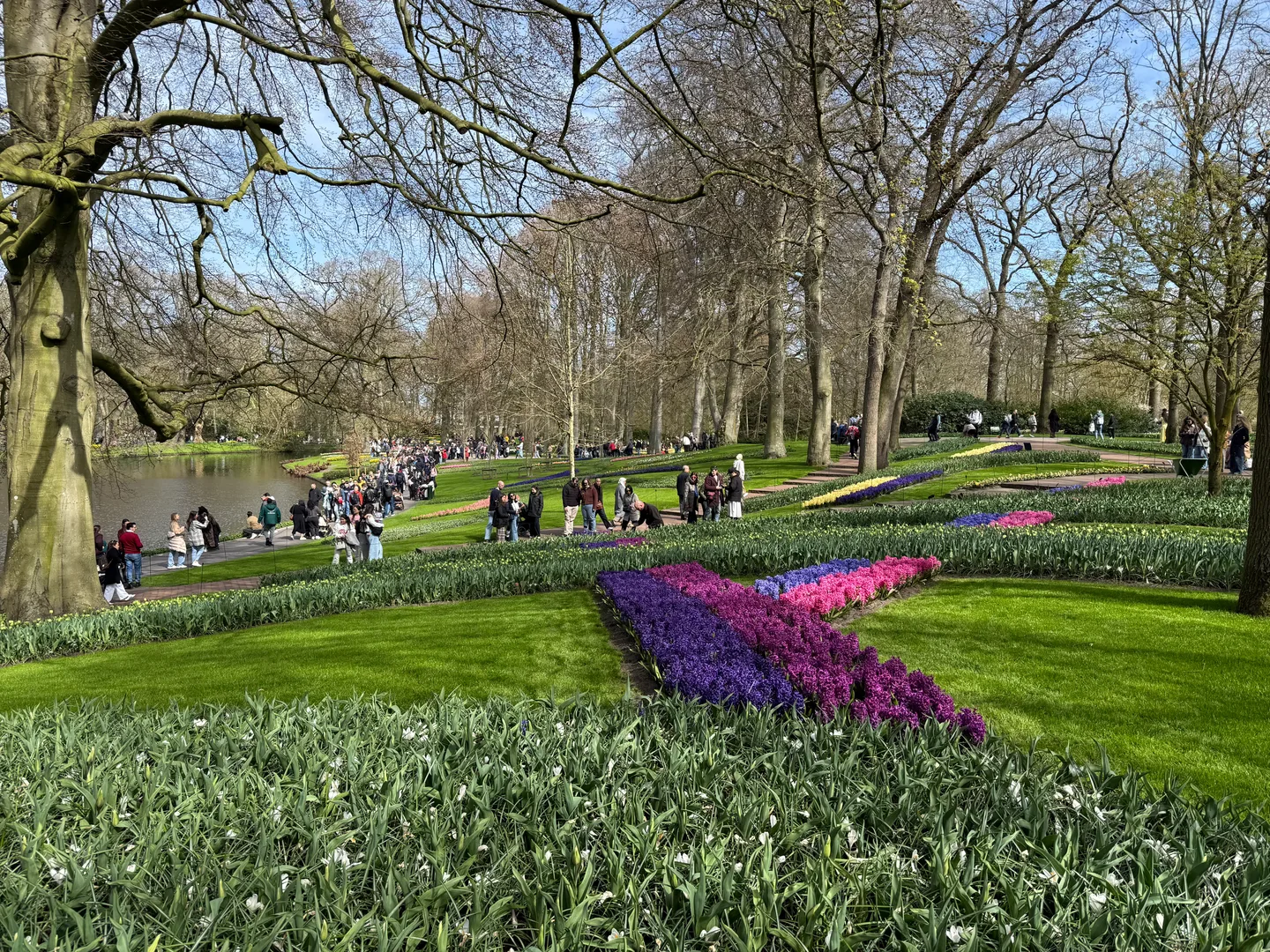
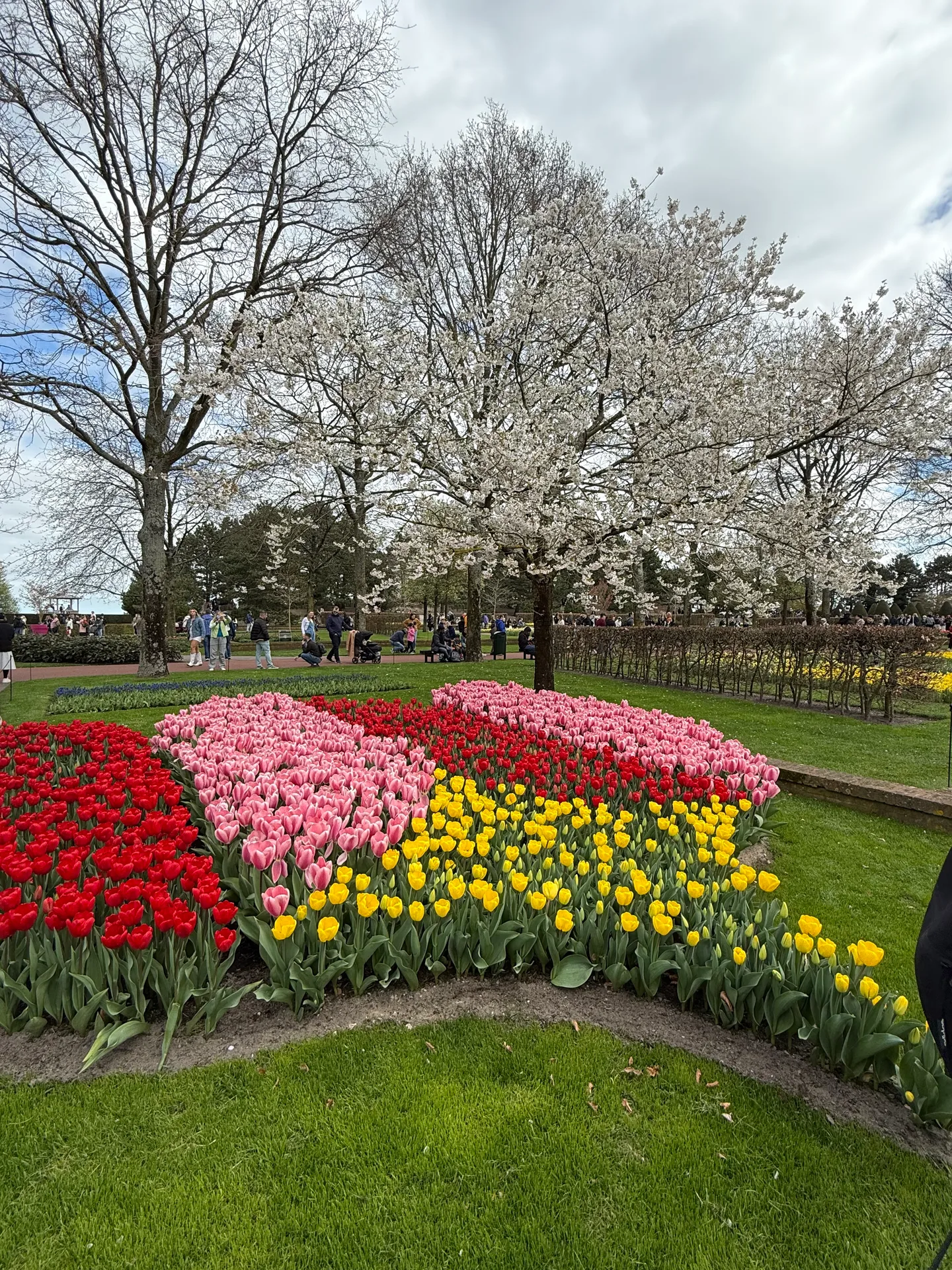
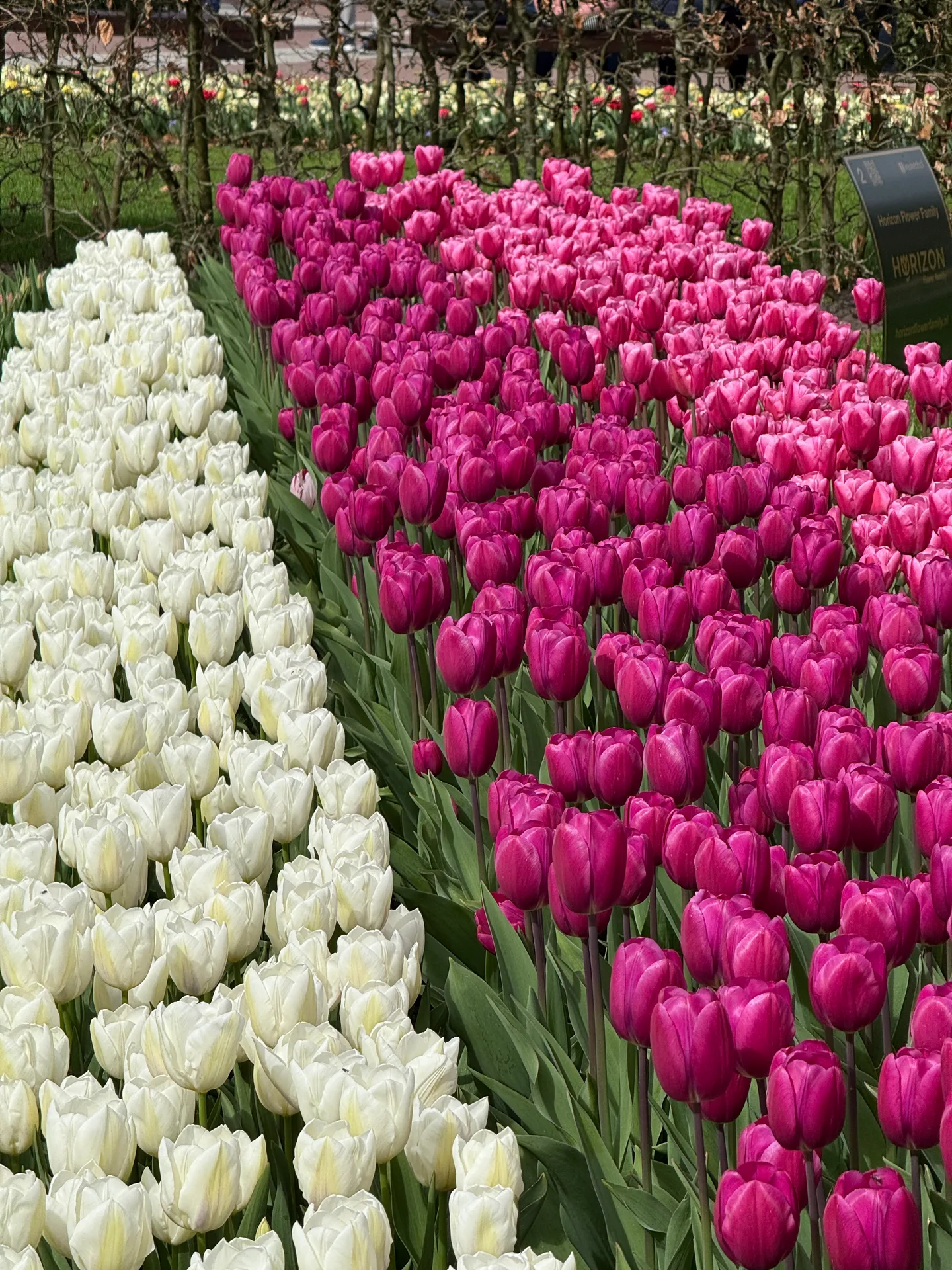
Keukenhof means “kitchen garden”, a modest name for a place that now turns spring into an enormous exhibition. The planting is deliberate down to the curve of each bed. Colours meet as neatly as pieces of a carpet.
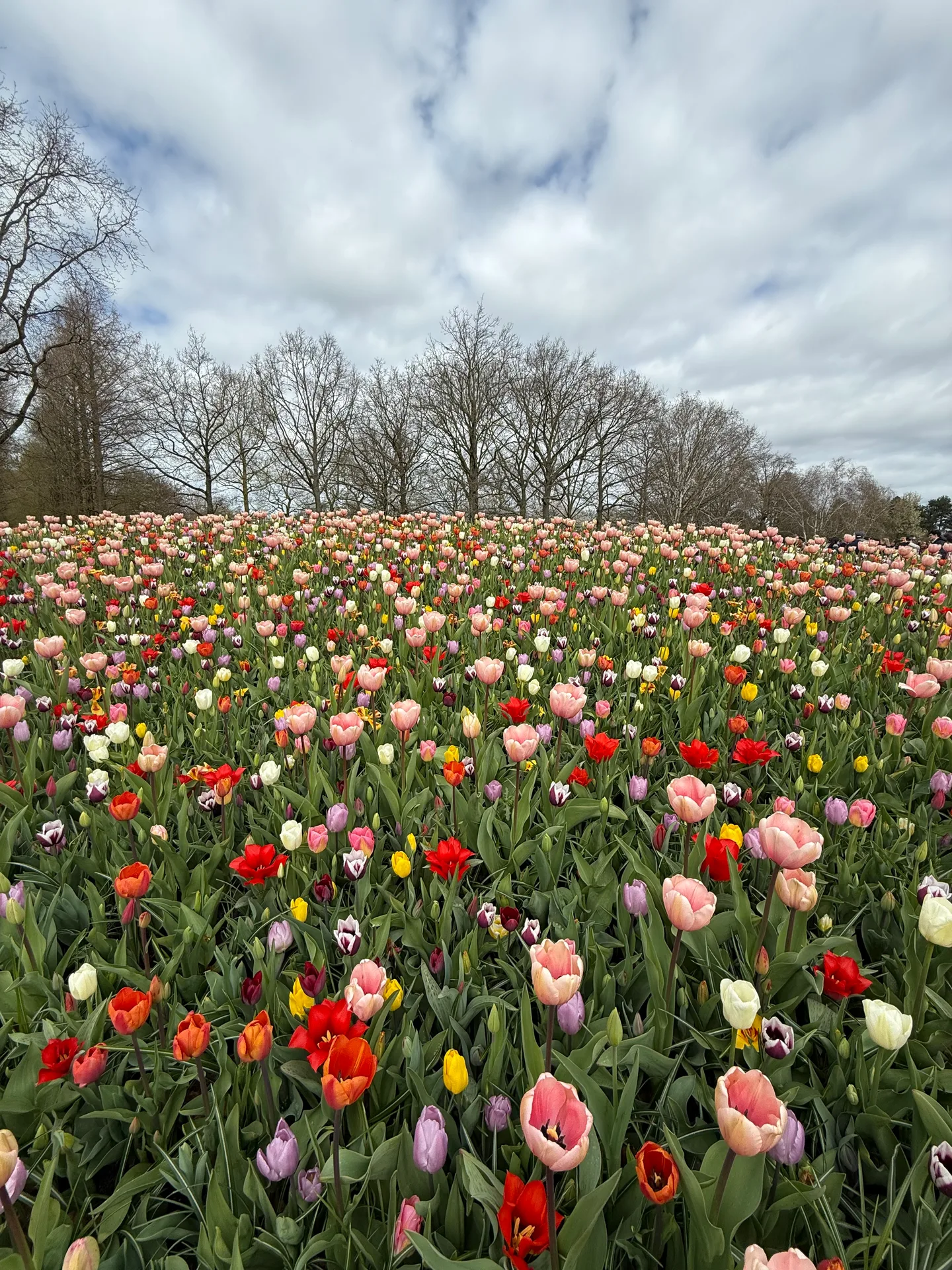
At the entrance I turned towards the outer paths while most people went straight for the centre. Daffodils and hyacinths lined the quieter route. The hyacinth scent was so sweet and dense it reminded me of a perfume counter. Some tulips were still closed like fists; early varieties had opened, their petals thin enough for the light to pass through.
03
Under glass
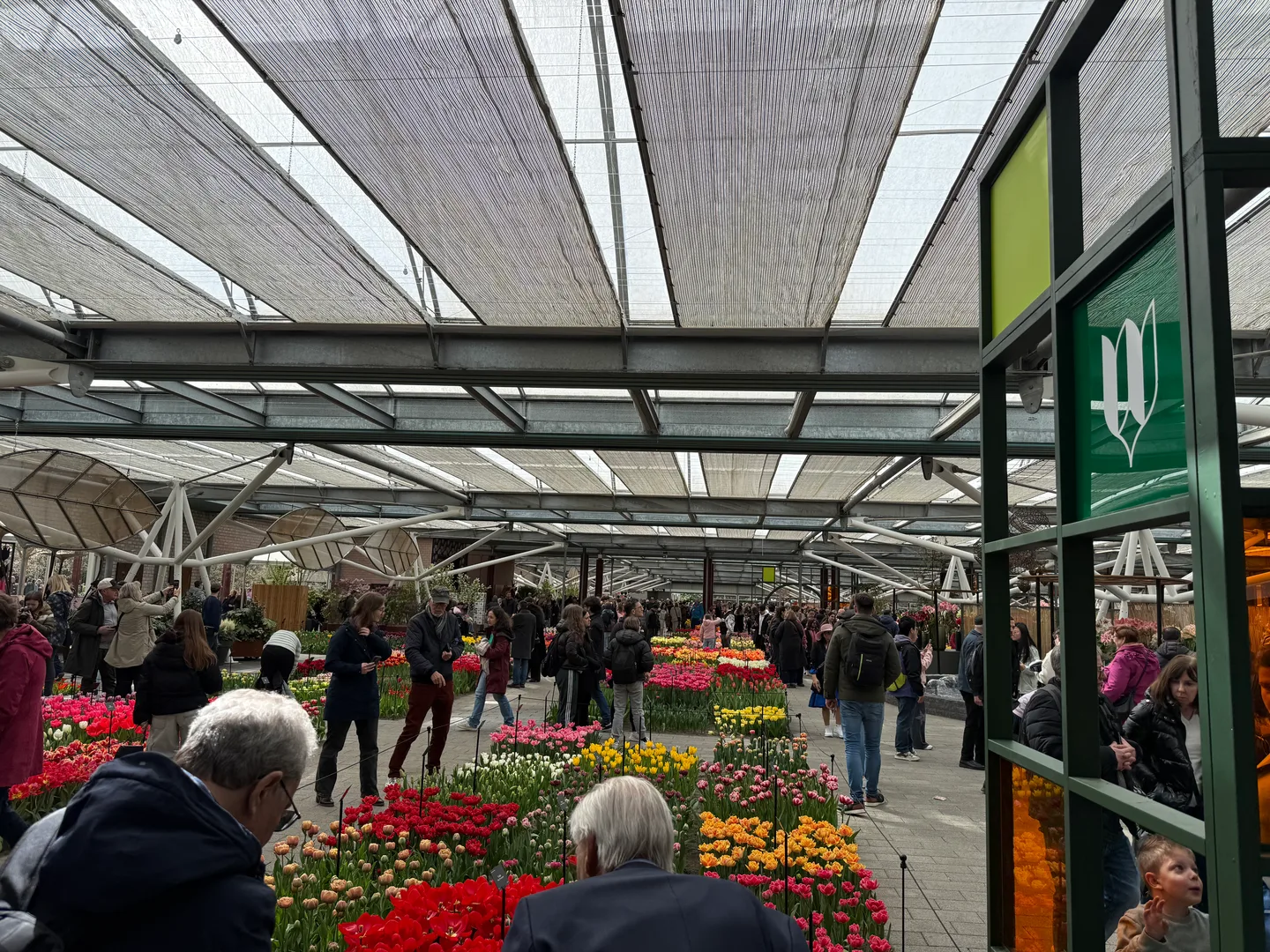
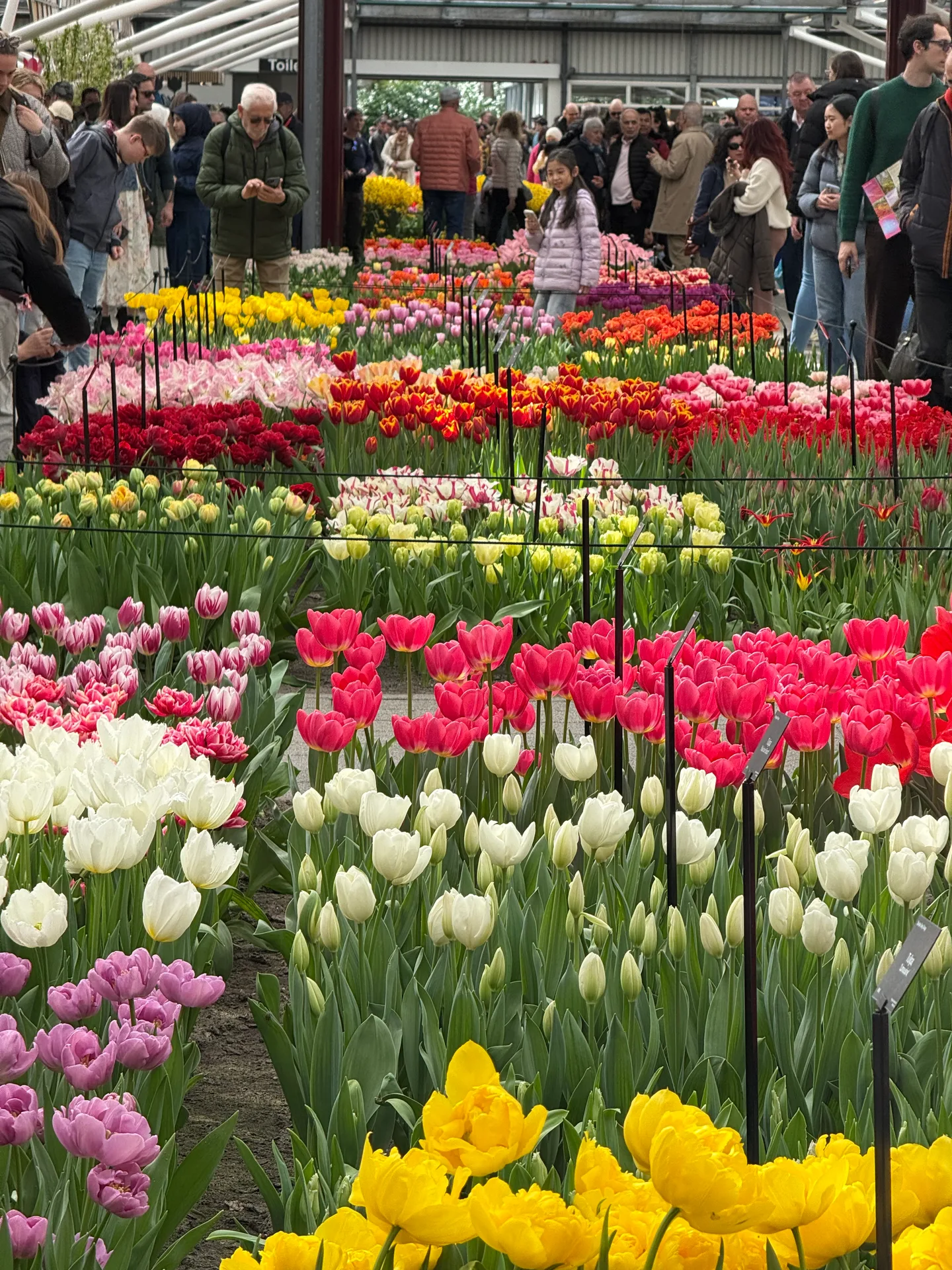
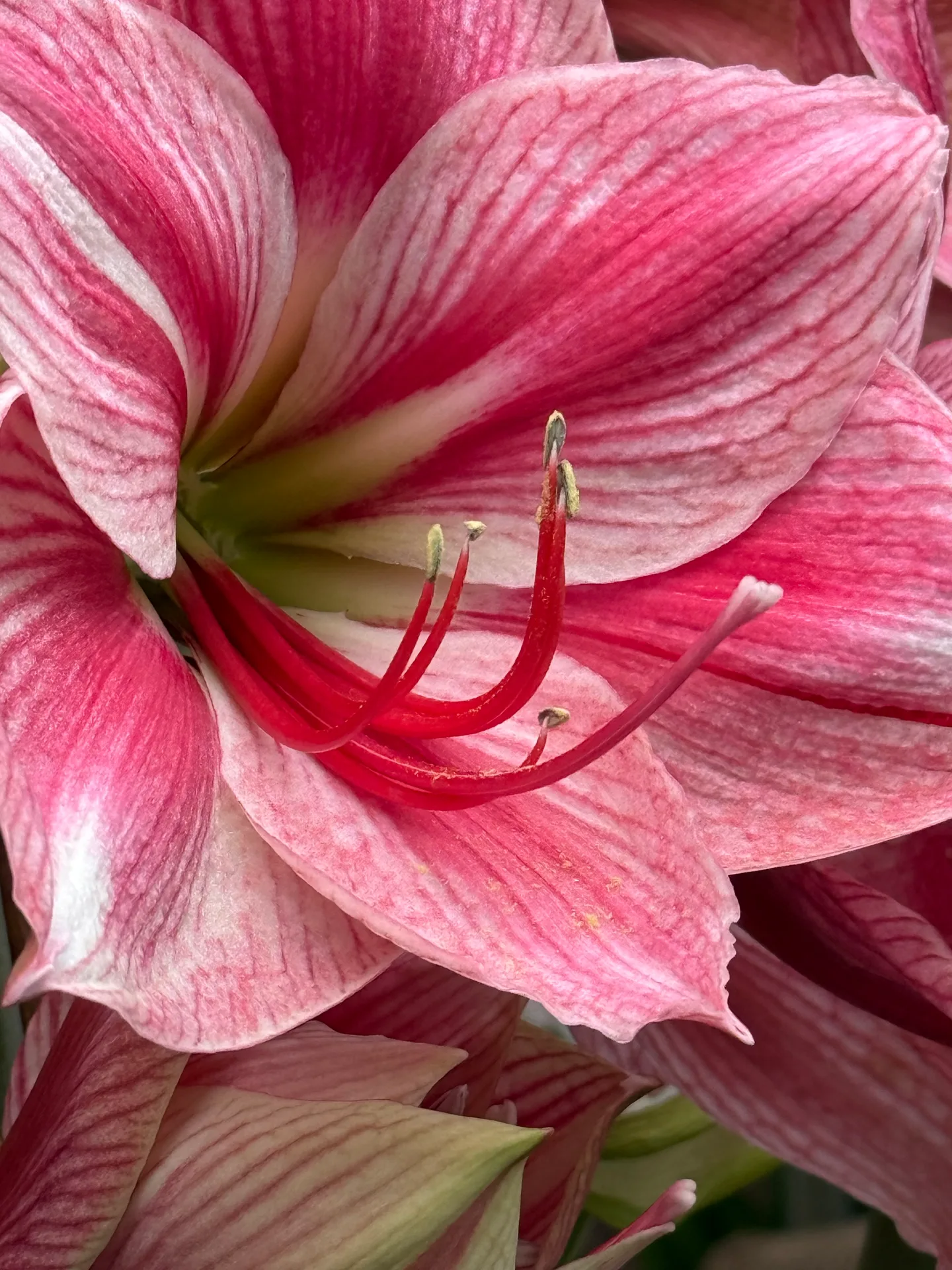
The Willem-Alexander pavilion felt like stepping inside a kaleidoscope. Varieties still waiting for their moment outdoors were already flowering under glass. Nearby, orchids offered a different idea of beauty: elaborate and symmetrical beside the tulip's simple stem and cup.
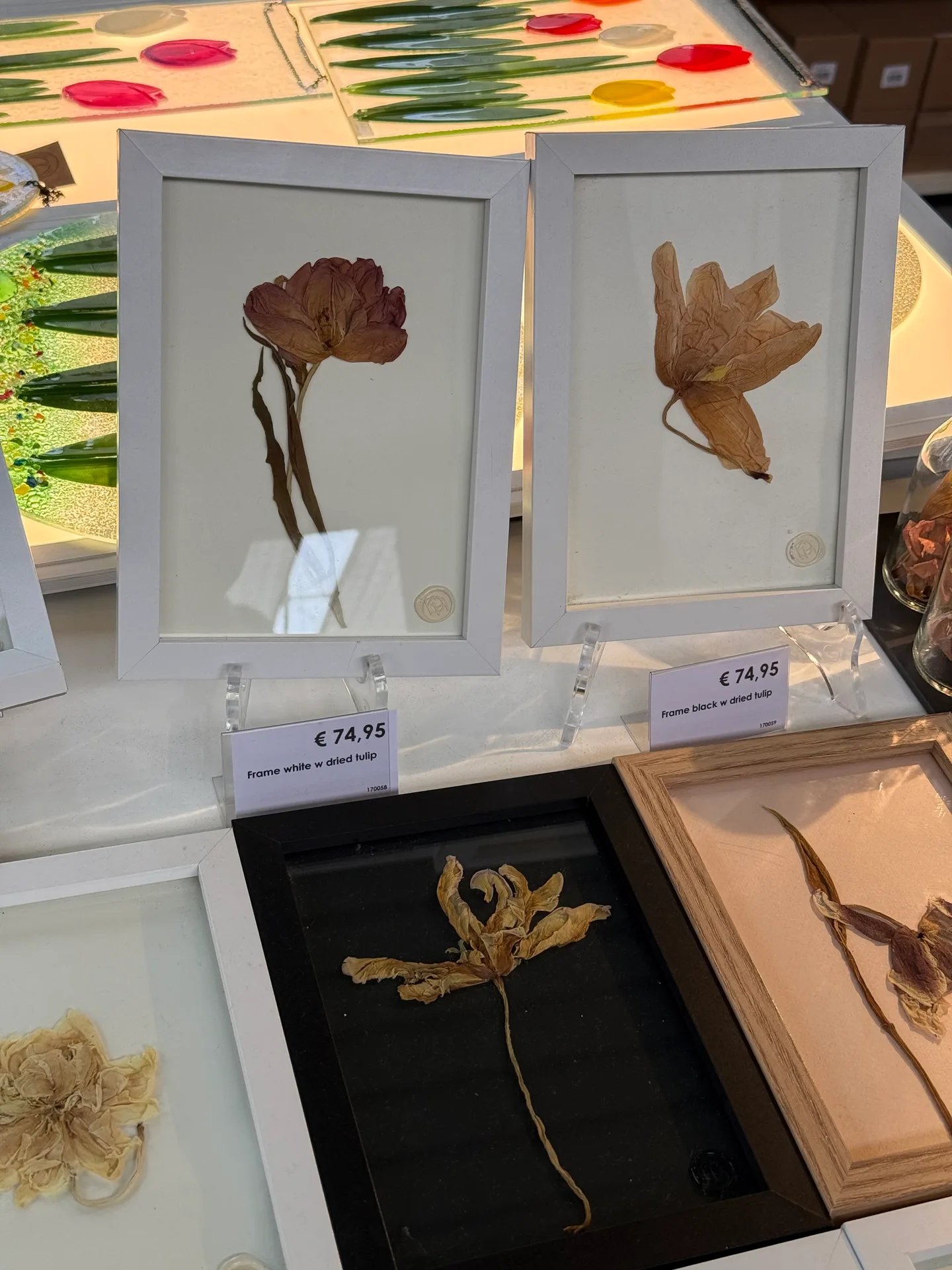
In the souvenir shop, a dried flower in a frame cost €74.95. A fresh bunch at a supermarket costs only a few euros. I stood there considering the strange economics of a flower becoming more valuable after it had stopped being alive.
04
Beyond the windmill
The garden's windmill offers a view beyond the display beds to the commercial fields outside. Long rectangles of colour run towards the horizon, their boundaries almost ruler-straight. Inside the fence is the exhibition; outside is the industry that makes it possible.
The flower that once symbolised speculation has become an organised trade. What stays with me is the scale of that transformation: affection for something delicate turned into an entire landscape of work.
05
Beside the water
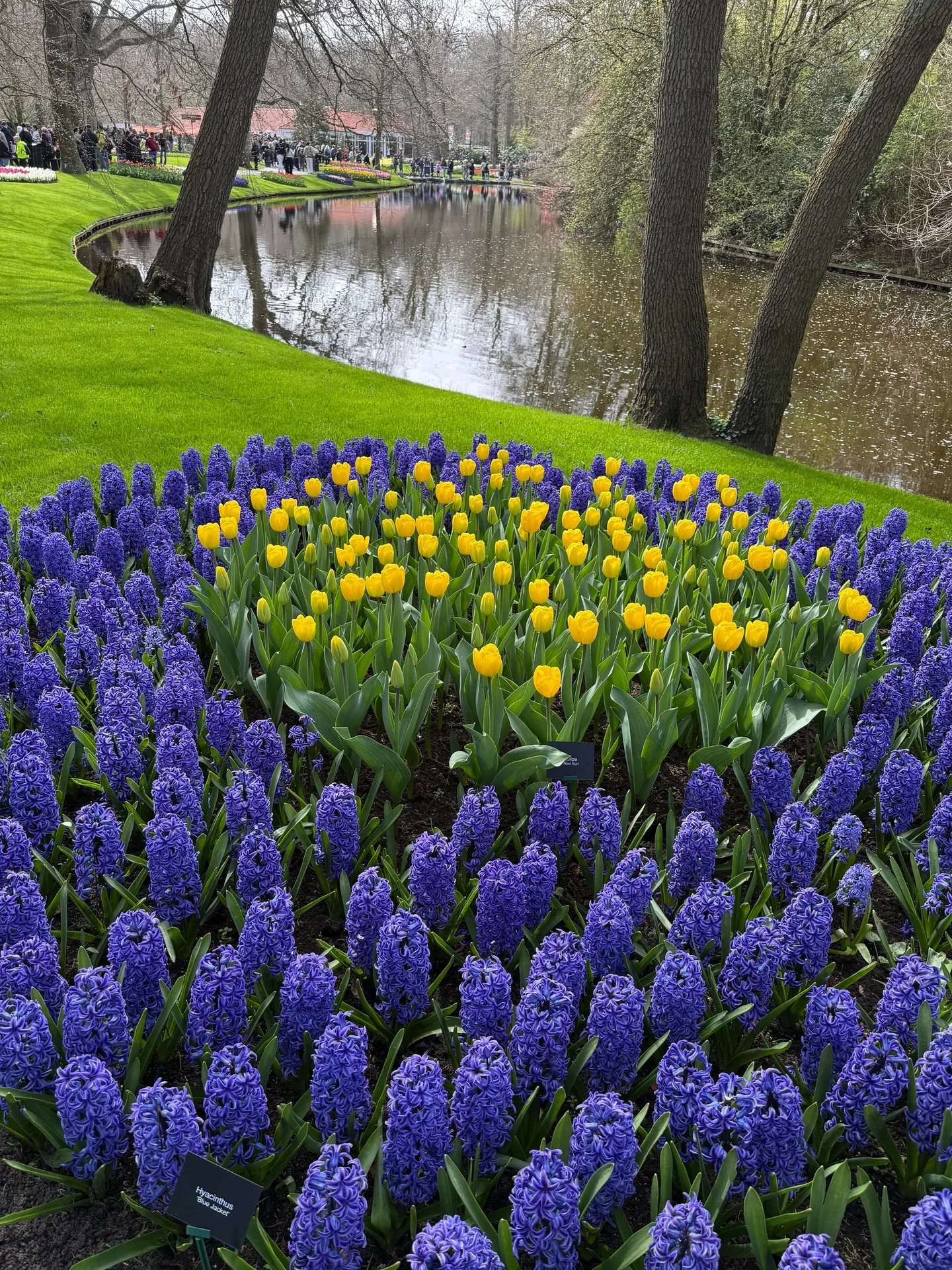
At the lake, stepping stones make a path across the surface. Sunlight stretched and broke the surrounding colours in the ripples. A low stone bridge crossed one end; flower beds followed the shore, with bare spring branches still drawing lines across the sky.
The water changed the way the garden was seen. Looking down at flowers is one thing. Finding them repeated, upside down and moving, is another. This was the view I wanted to keep.
06
The way back
The sun was moving west when I returned to the bus. The ride to Leiden took roughly as long as the journey out. The garden would continue through its short spring season, then close again.
Most places I visit—churches, castles, canals and bridges—seem to be resisting time. Keukenhof accepts it. The whole display is planned around a brief flowering, and next year's garden will have to be made again. Every flower here comes with a countdown.