SPAIN / TRAVEL NOTES
Barcelona
December sunlight, a forest of stone and a city comfortable with starting again.
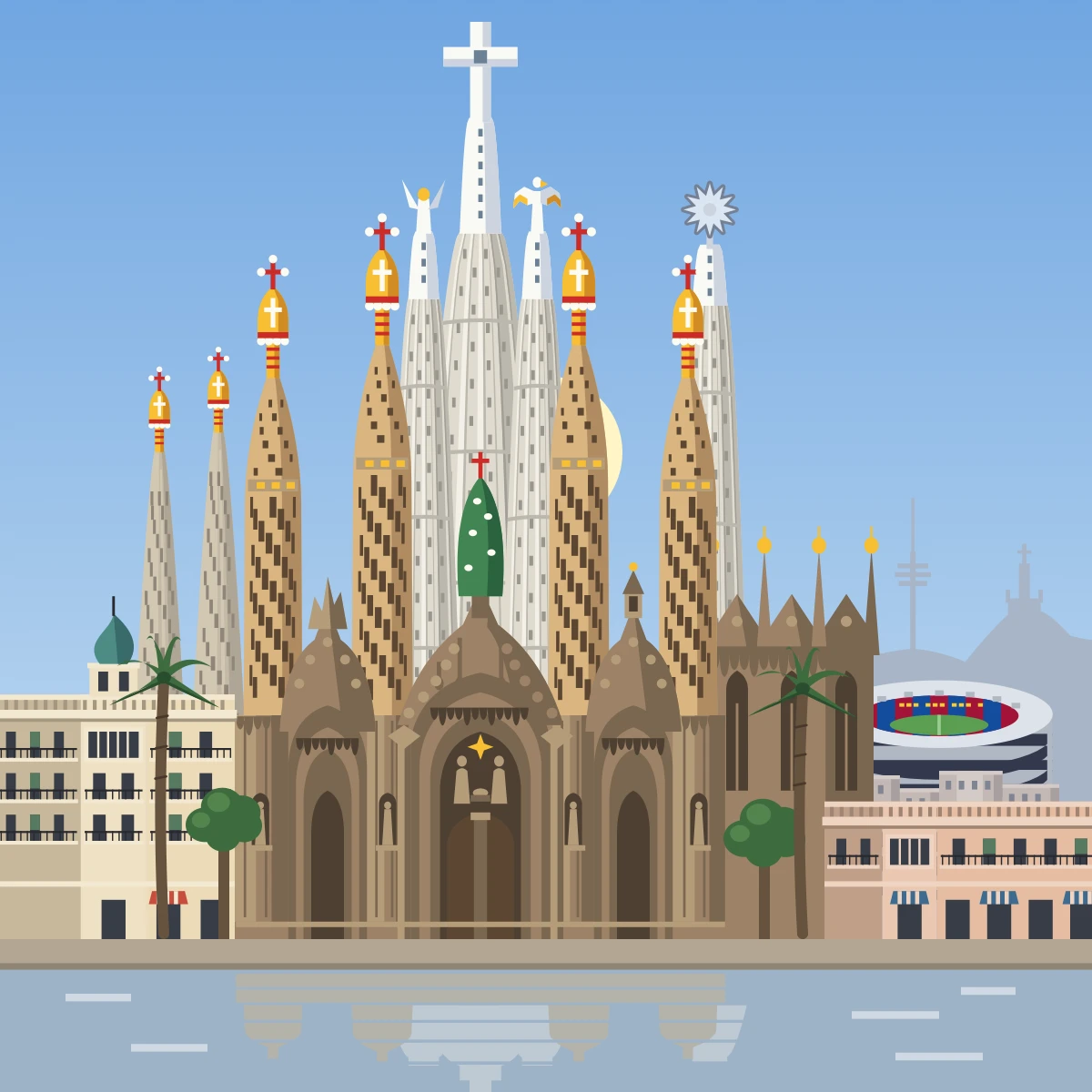
Barcelona in Hourline shows the same artwork as the app, bringing its landmarks together in a composed scene.
01
Arriving in the light
I left the Netherlands under December cloud and stepped out of Barcelona airport into sunlight. My first act was to put my coat in my backpack. The sky did not look like December; neither did the people in short sleeves.
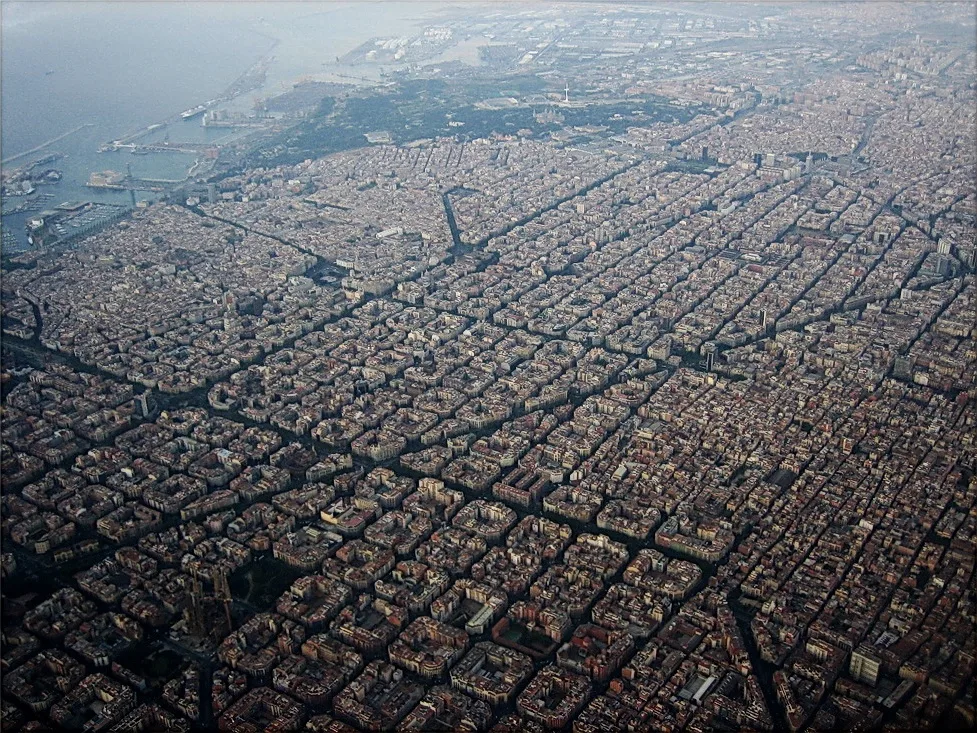
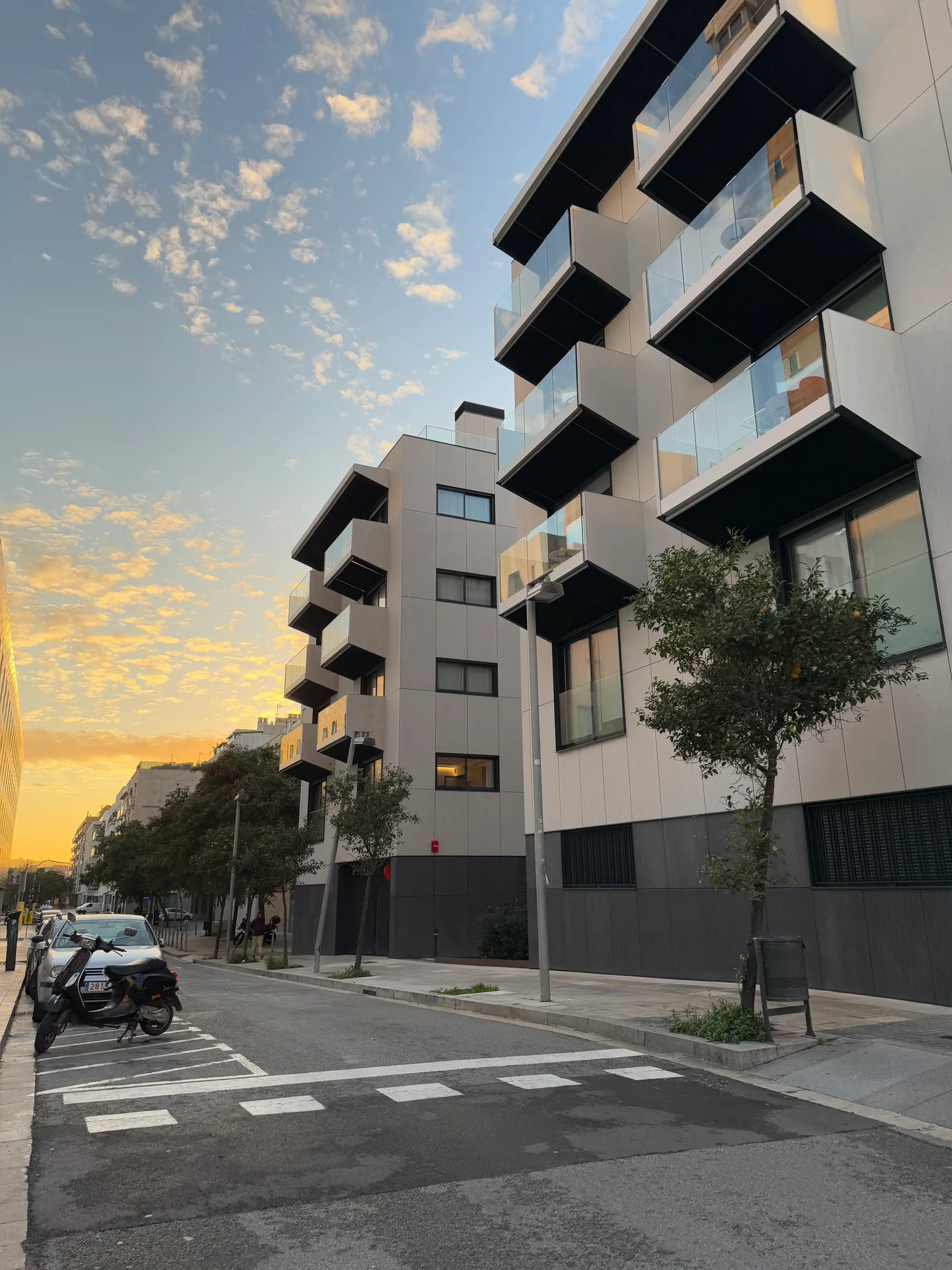
The airport bus carried me through the Eixample. Its regular streets and chamfered corners made the city feel unusually open to the light. After the grey Dutch winter, even an ordinary walk between blocks felt like an improvement in the weather of my mind.
02
By the sea
On my first evening I walked east to the waterfront. Much of the present seafront owes its shape to the transformation around the 1992 Olympics. Around Poblenou, old industrial brick survives among newer offices, homes and public spaces.
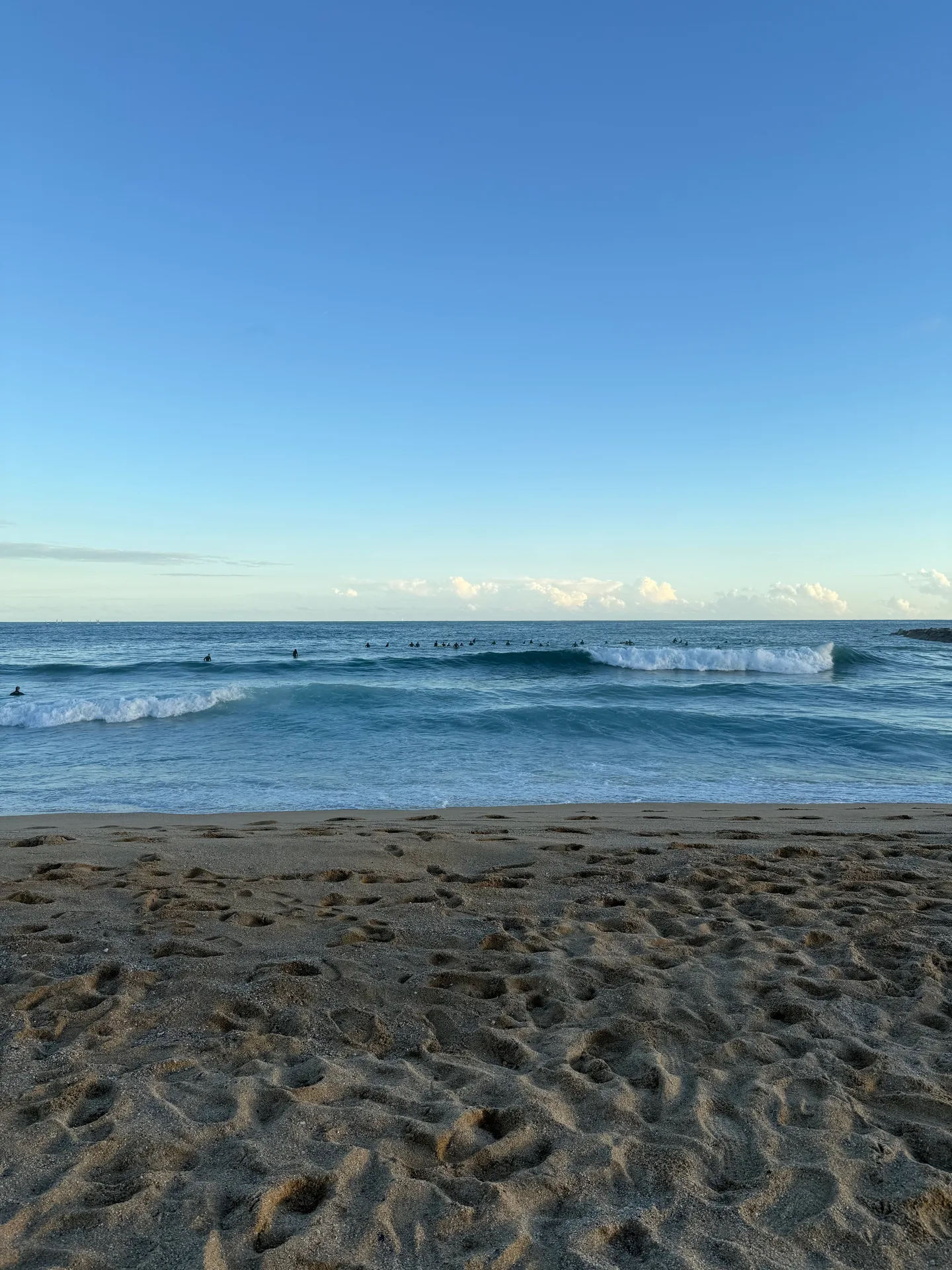
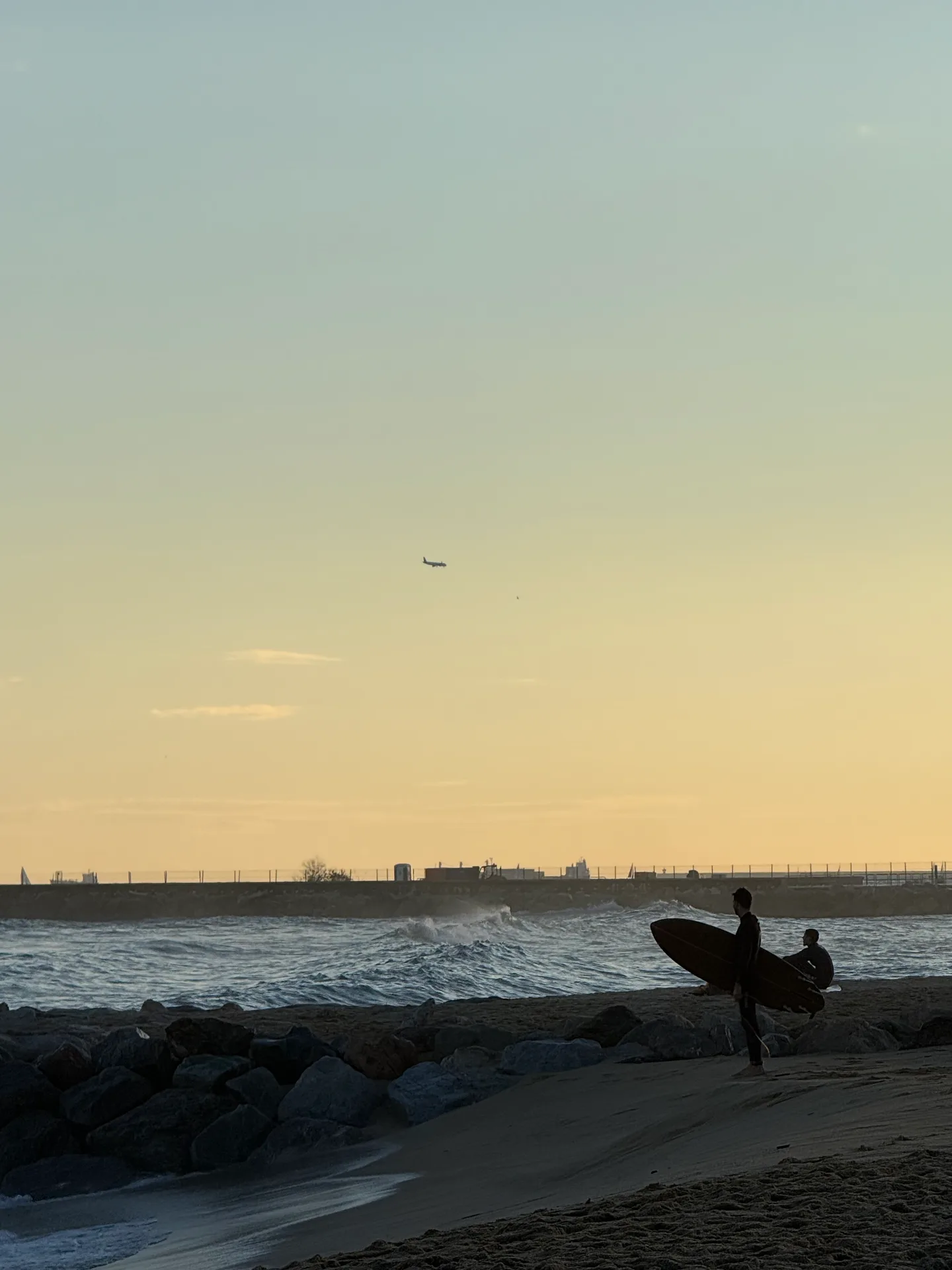
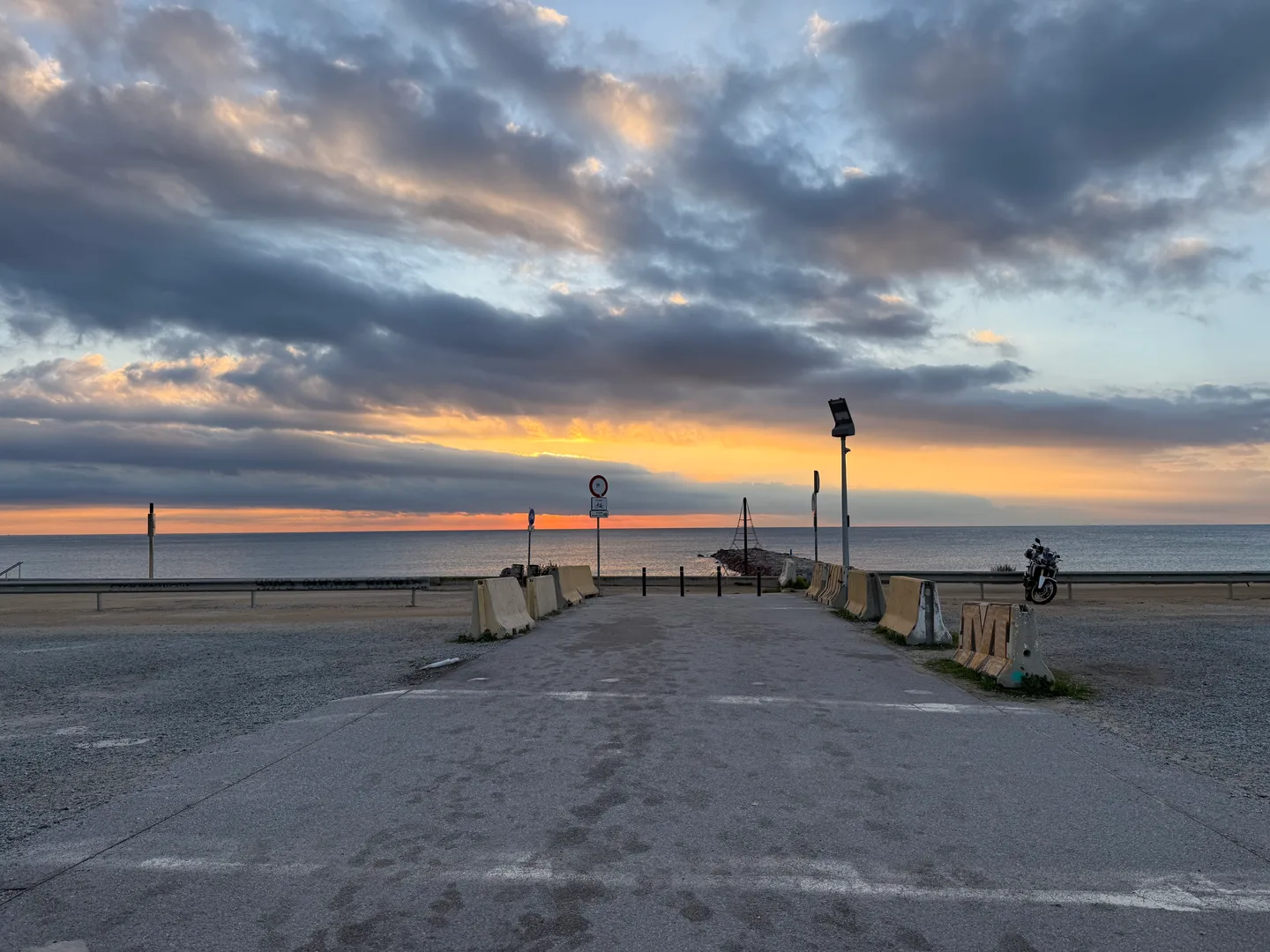
The December beach was quiet. Small waves touched the rocks, graffiti covered the breakwater, and a surfer became a silhouette. As the sun went down in one direction, the moon rose in the other. After months of cold weather, the scene offered a slightly unreal happiness.
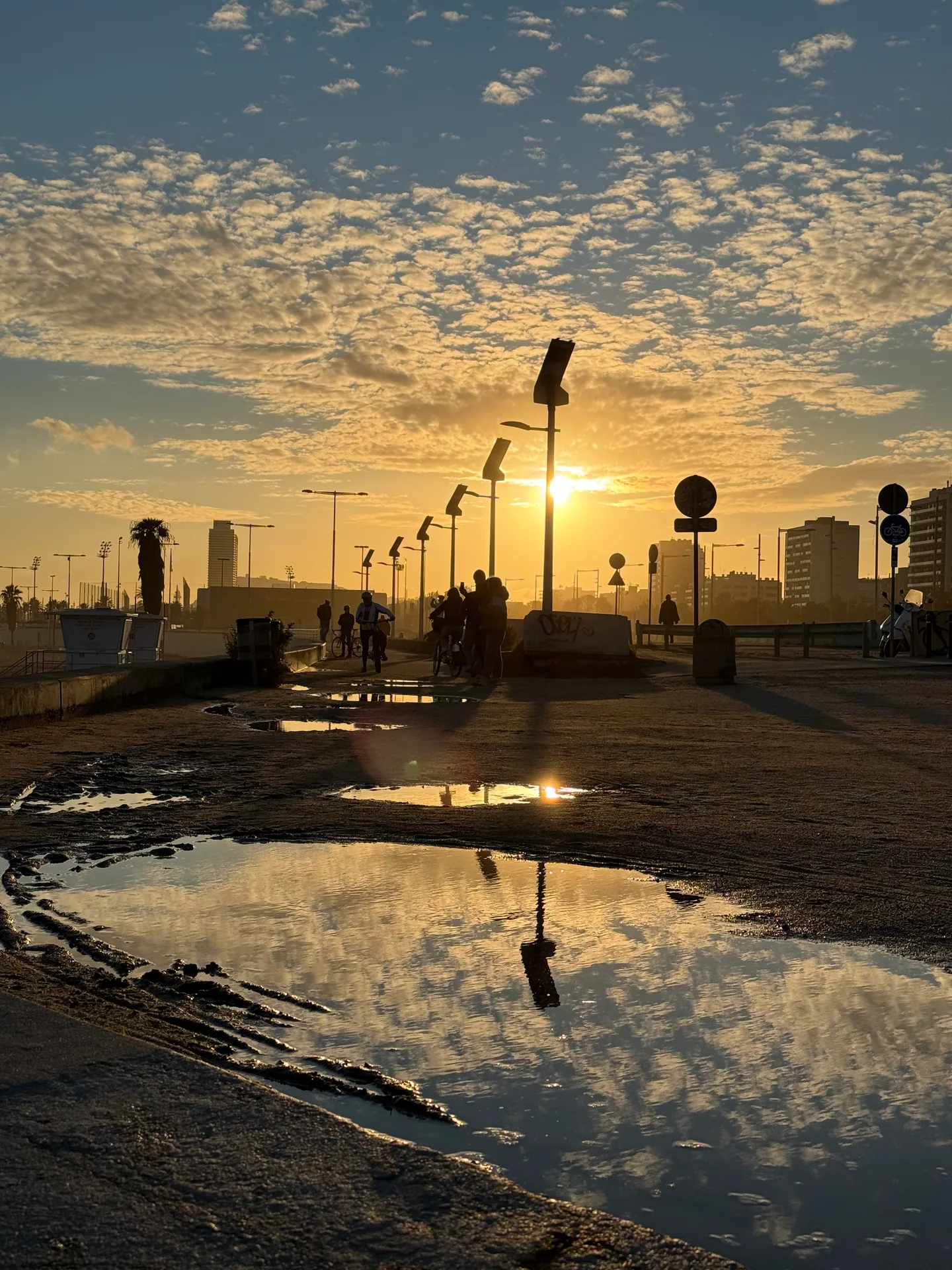
I returned another morning. Low clouds let the sunrise through in strips. The same sea had become a completely different picture.
03
Camp Nou, under construction
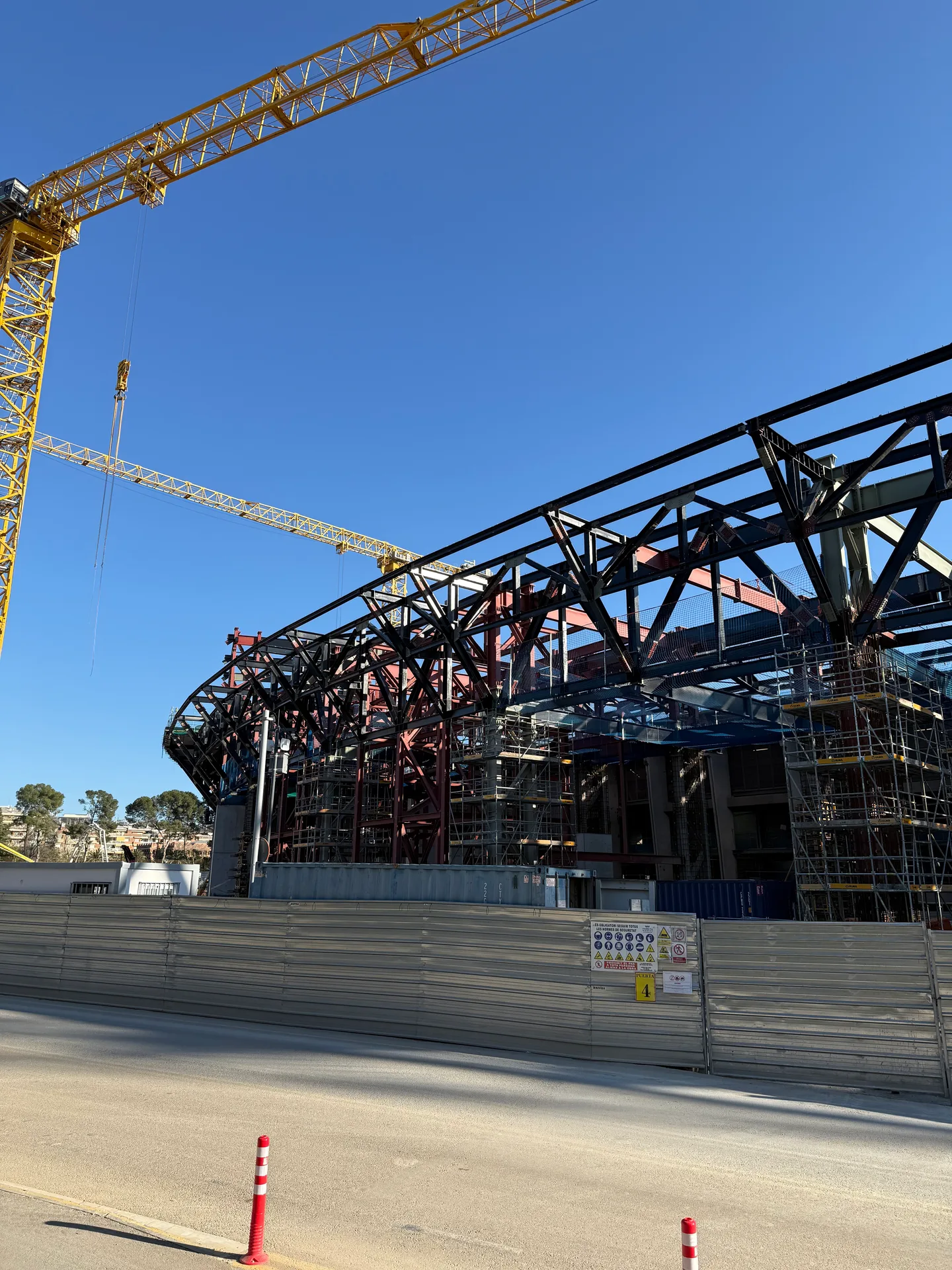
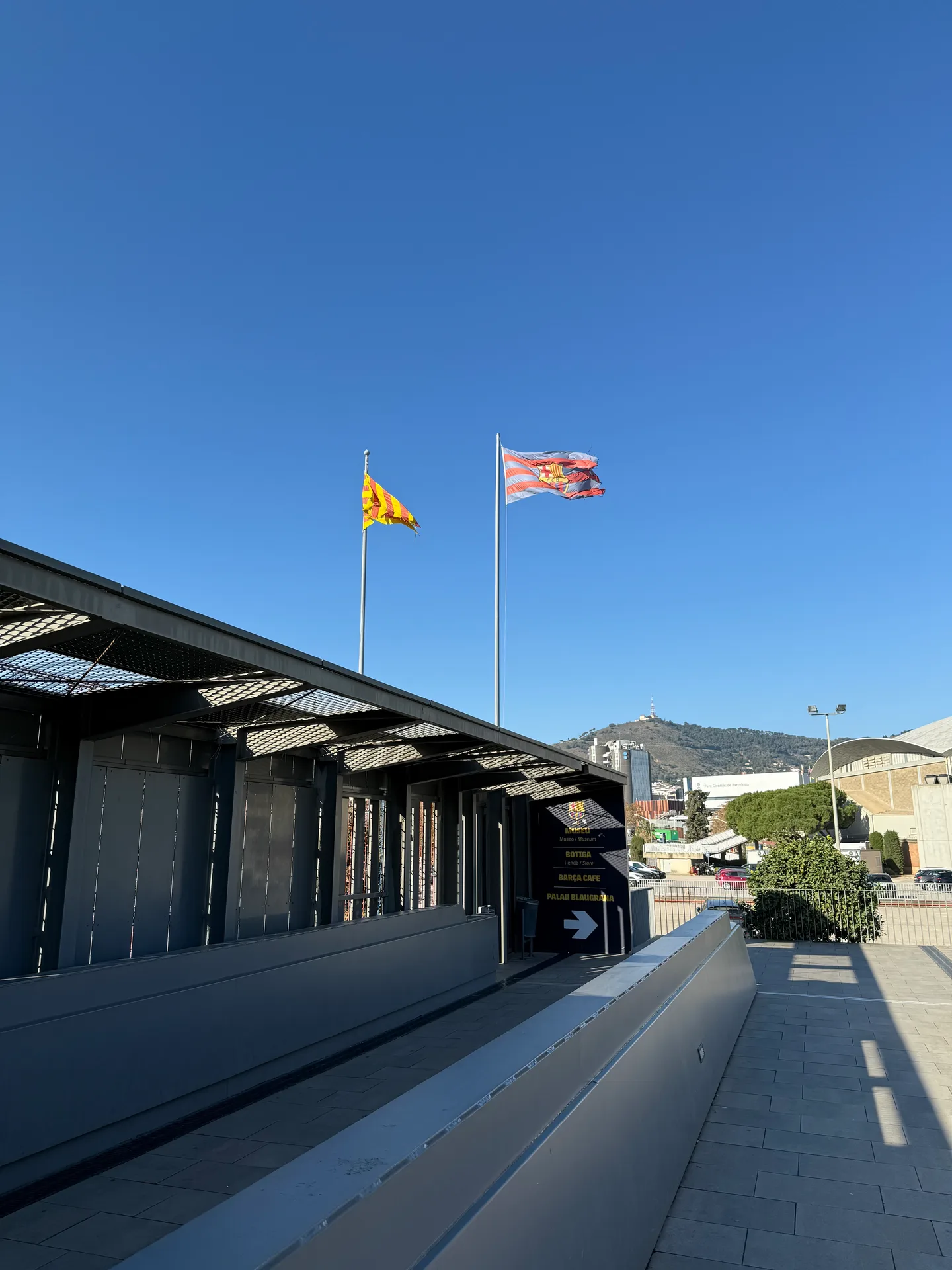
The next day I visited Camp Nou—or, more accurately, the construction site where Camp Nou was being remade. Steelwork and cranes filled the view. Catalan flags hung outside the barriers. Even in that unfinished state, it was clear that this was more than an ordinary sports venue.
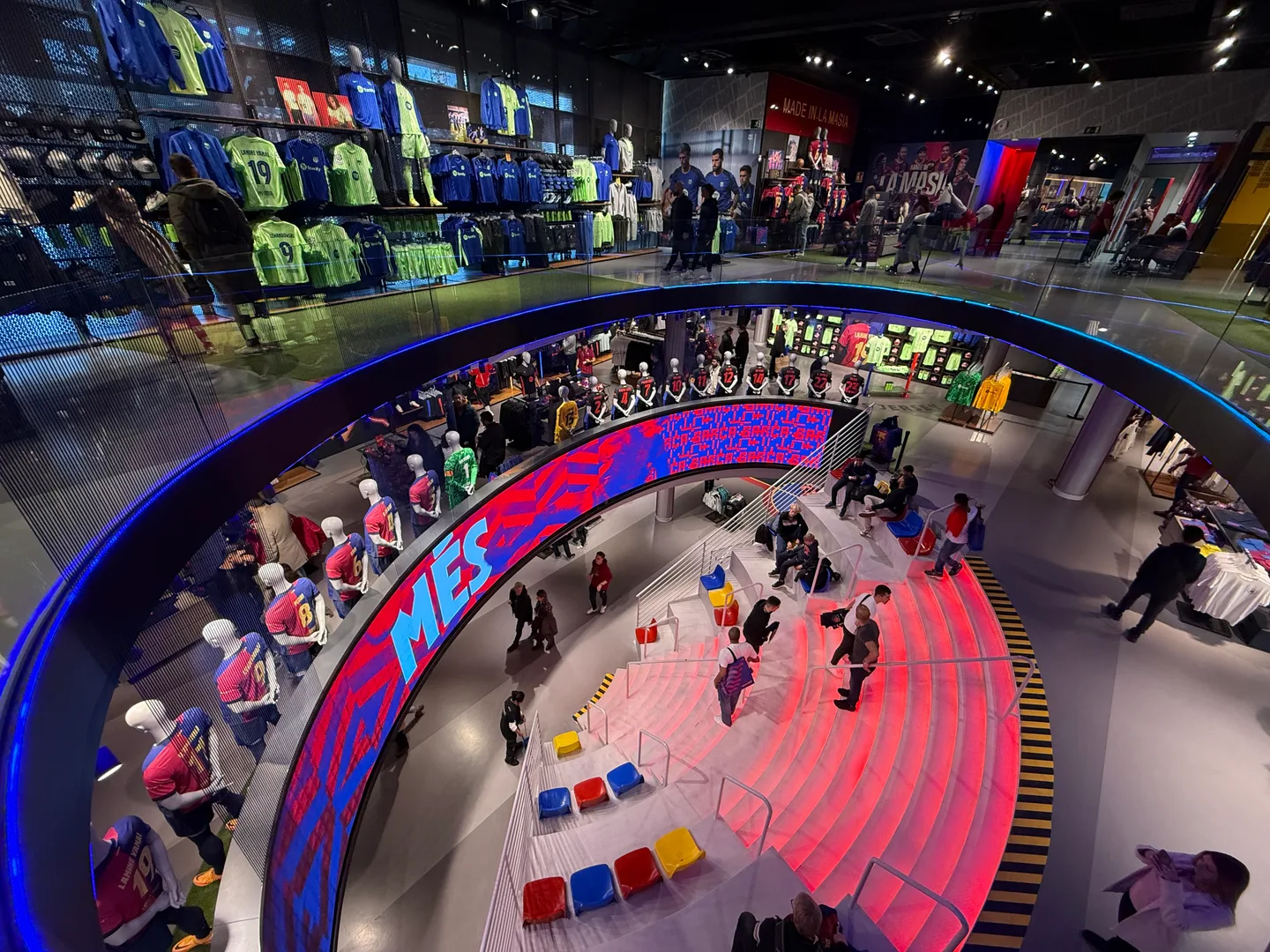
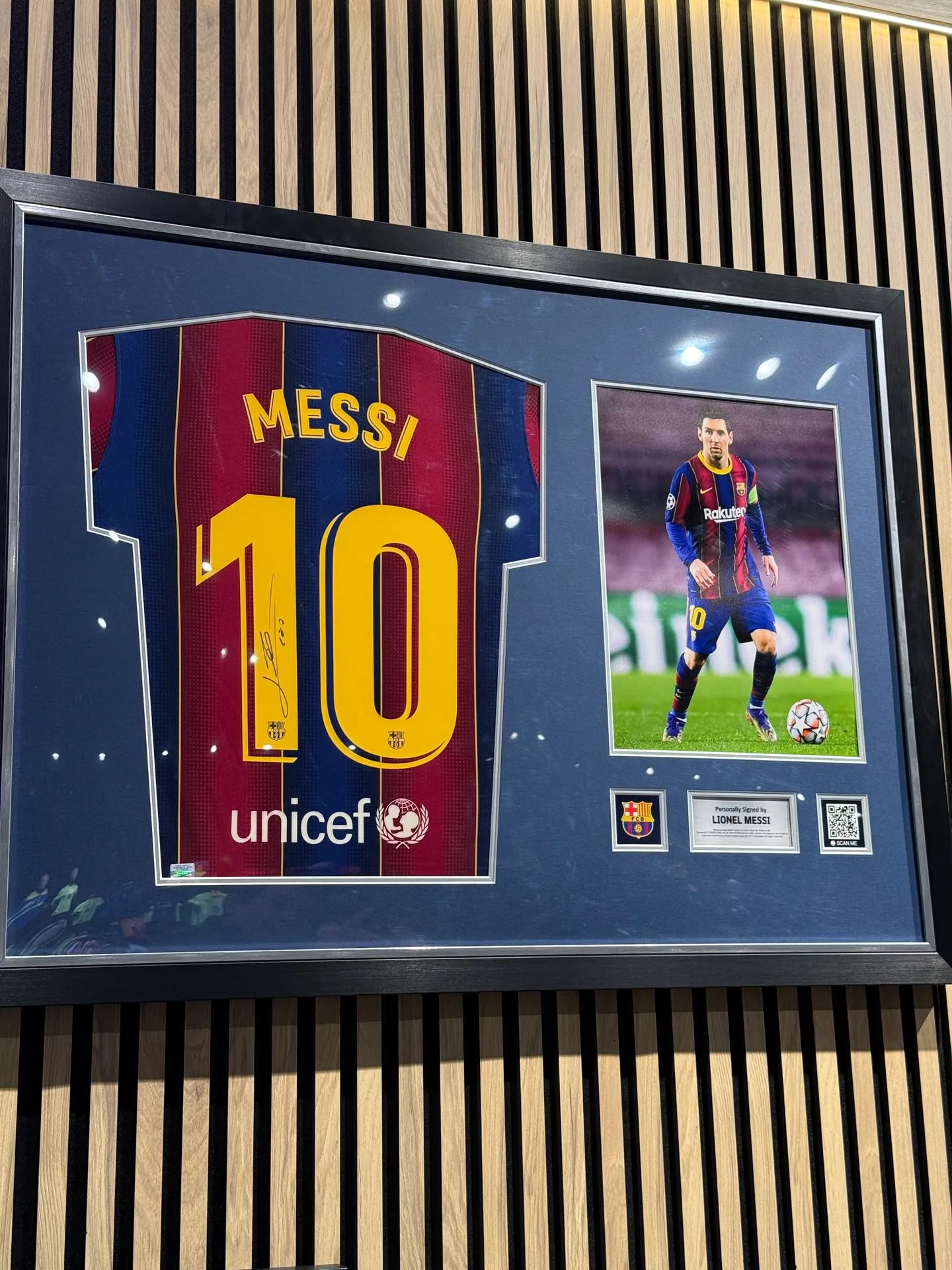
The temporary shop was busy, with shirts on several floors and goals repeating on screens. A signed Messi No. 10 shirt occupied a prominent position. I remembered watching his farewell in 2021, the summer I finished my undergraduate degree. I spent a long time inside and nearly bought an away shirt. The price helped me decide against it.
04
Montjuïc
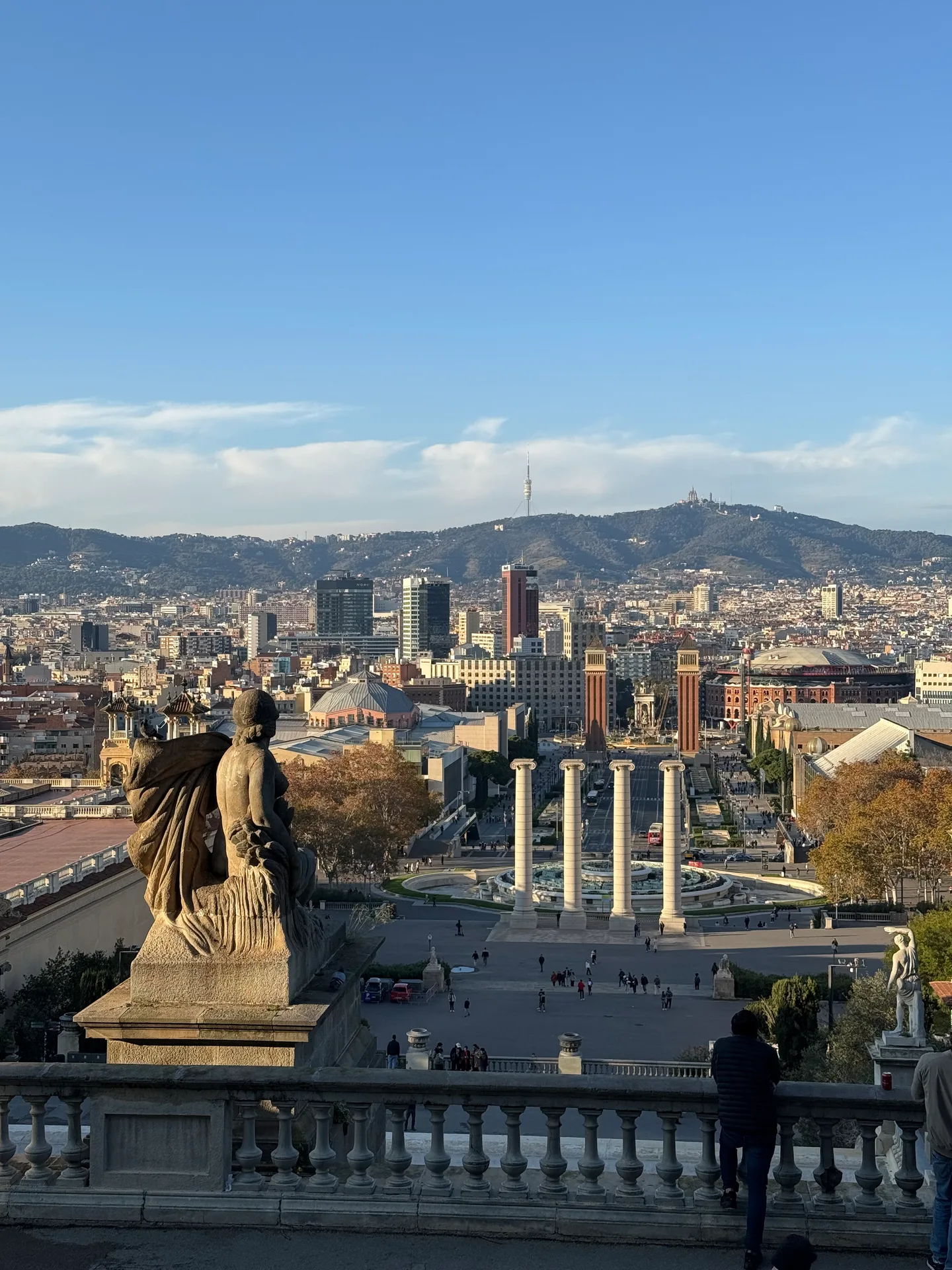
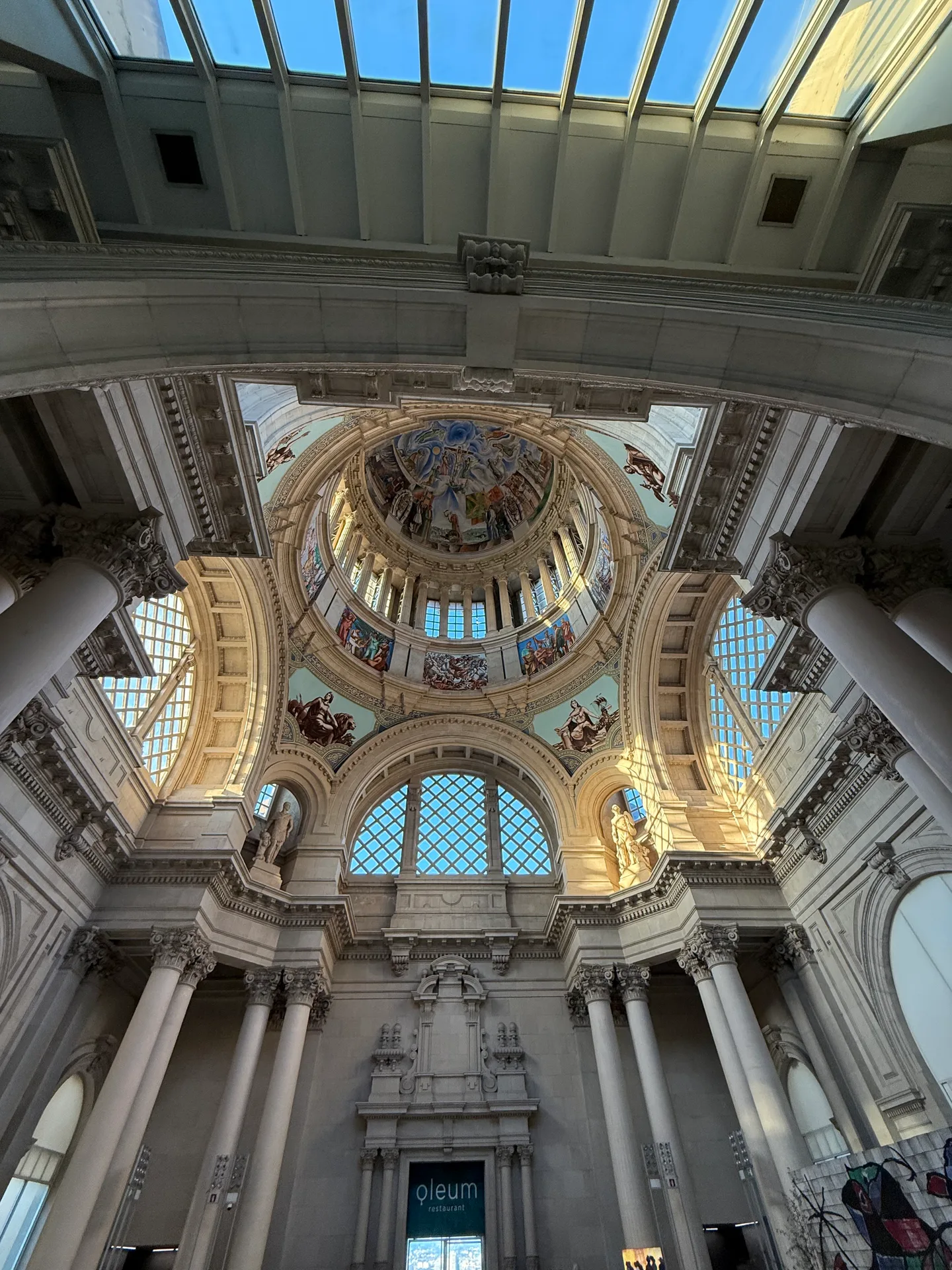
In the afternoon I went up Montjuïc. The city spread below the hill, while the Museu Nacional d'Art de Catalunya offered its own impressive architecture. Light entered high above the interior decoration. The collection's Romanesque murals brought fragments of mountain churches into the city.
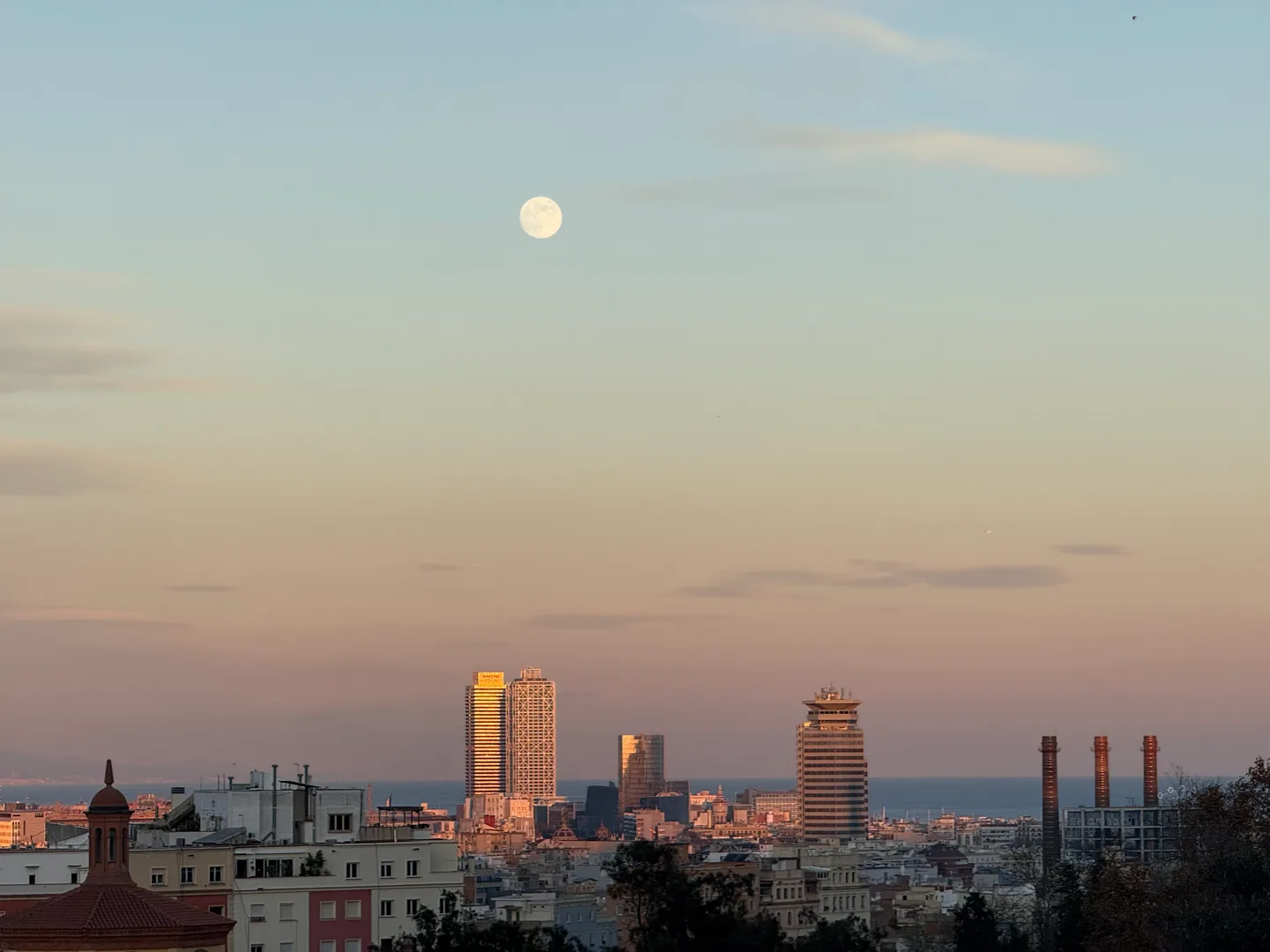
At sunset I sat outside. Barcelona's fairly low roofs made the view easy to read. The sky moved slowly from gold to pink, a moon rose towards the harbour, and someone played a saxophone near the steps. It was an excellent place to do very little.
05
Inside the Sagrada Família
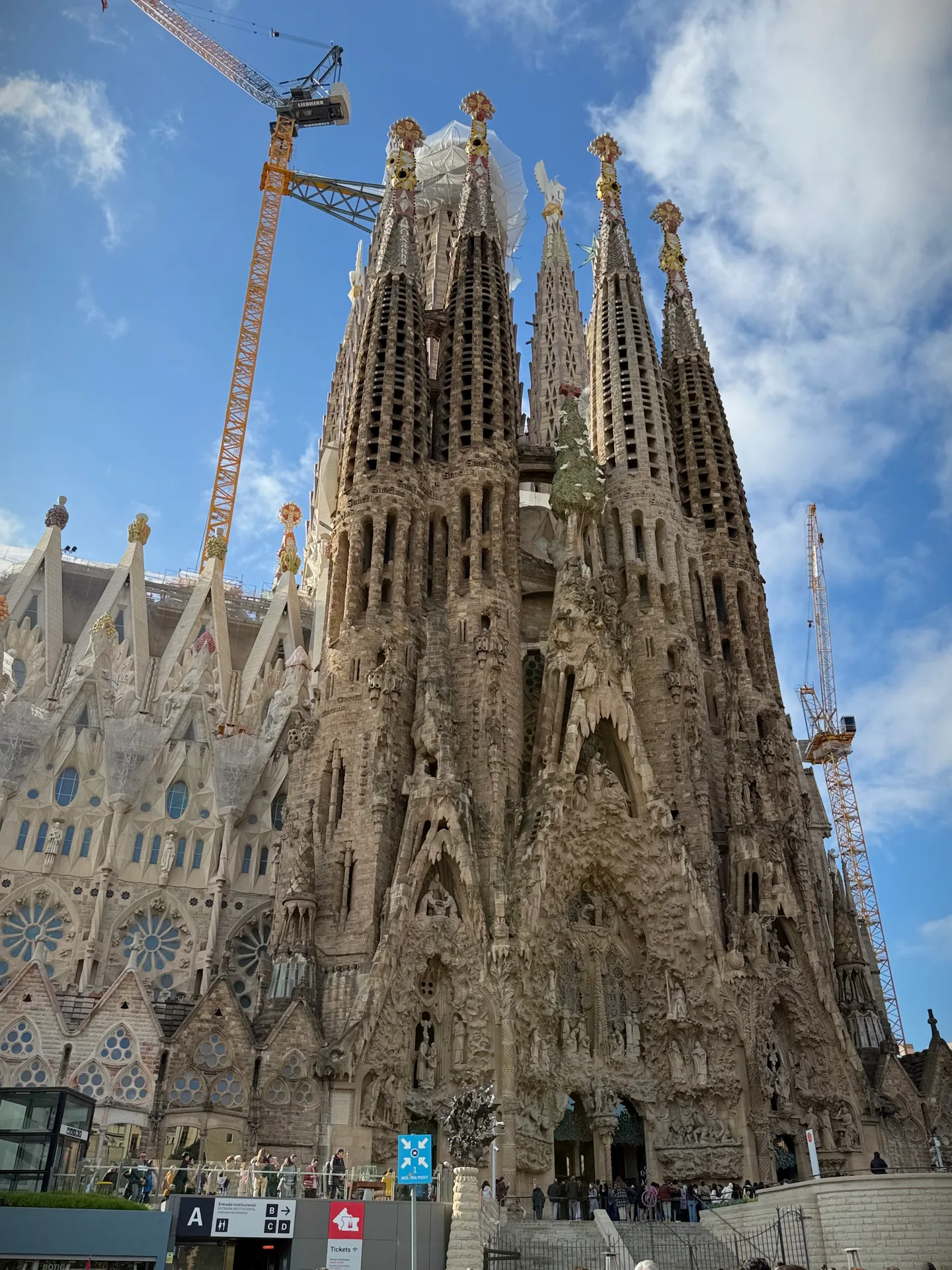
We had booked an afternoon visit to the Sagrada Família. Outside, the Nativity façade was dense with figures, plants and creatures, stone almost refusing to remain a wall. Cranes still rose above the building.
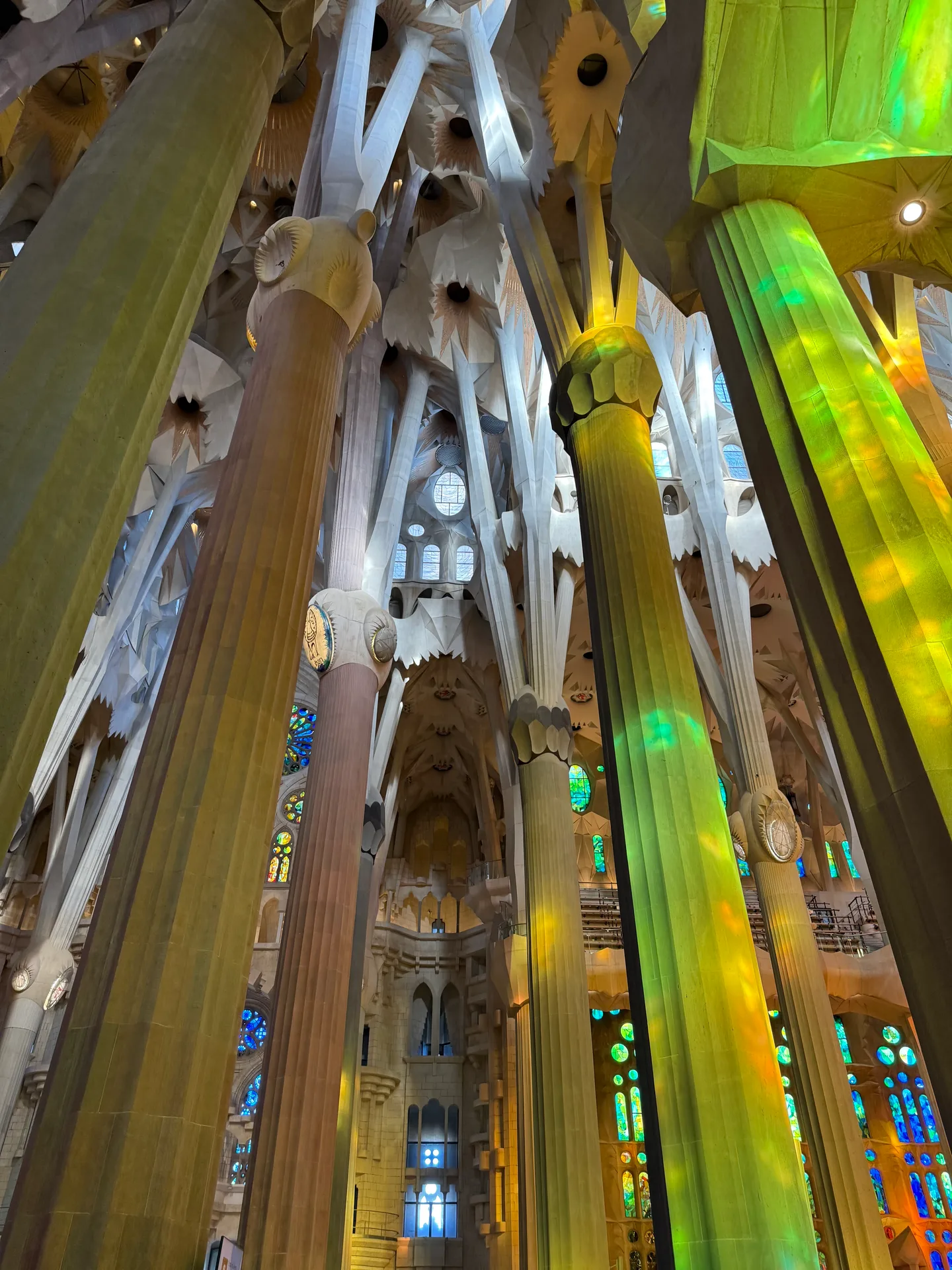
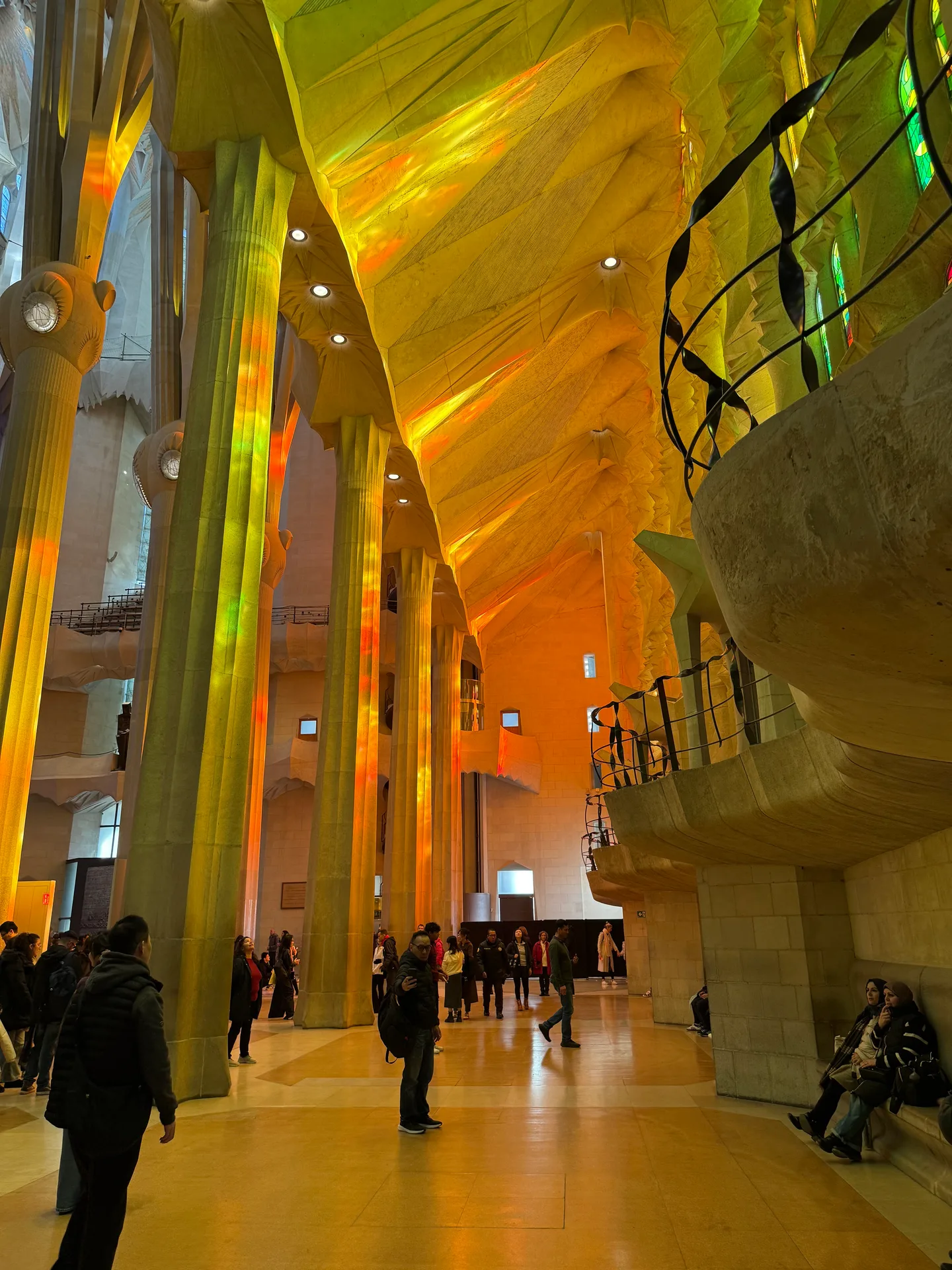
Inside was the greater surprise. Columns branched overhead like trees. Coloured windows changed the incoming sunlight, and our afternoon visit caught the warm western light. The nave seemed immersed in gold. Several people stood without moving, looking up for minutes. I joined them.
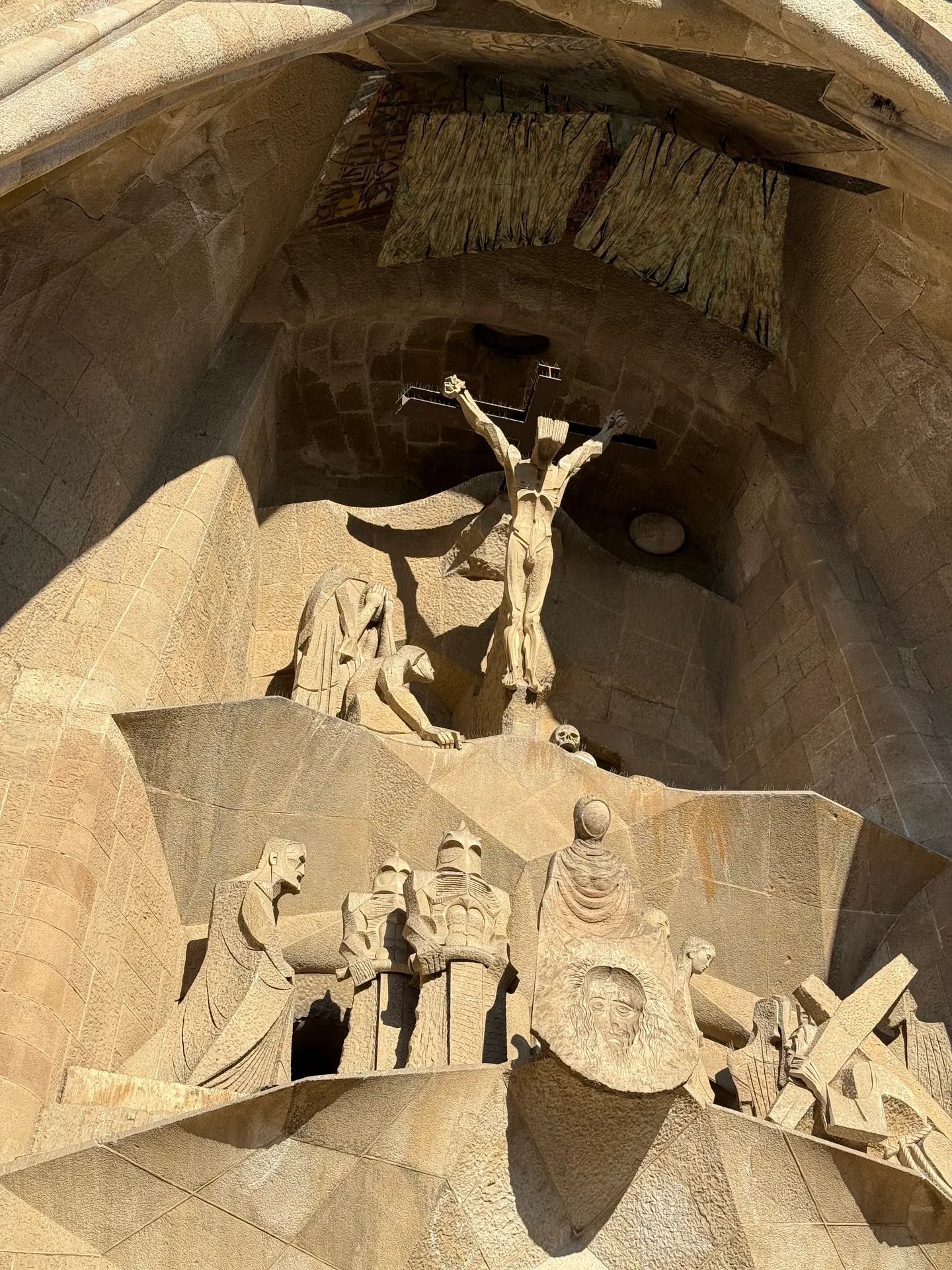
The Passion façade used a very different language: angular, severe, geometric. Moving around the building meant encountering more than one idea of how its story could be told.
06
Through the older streets
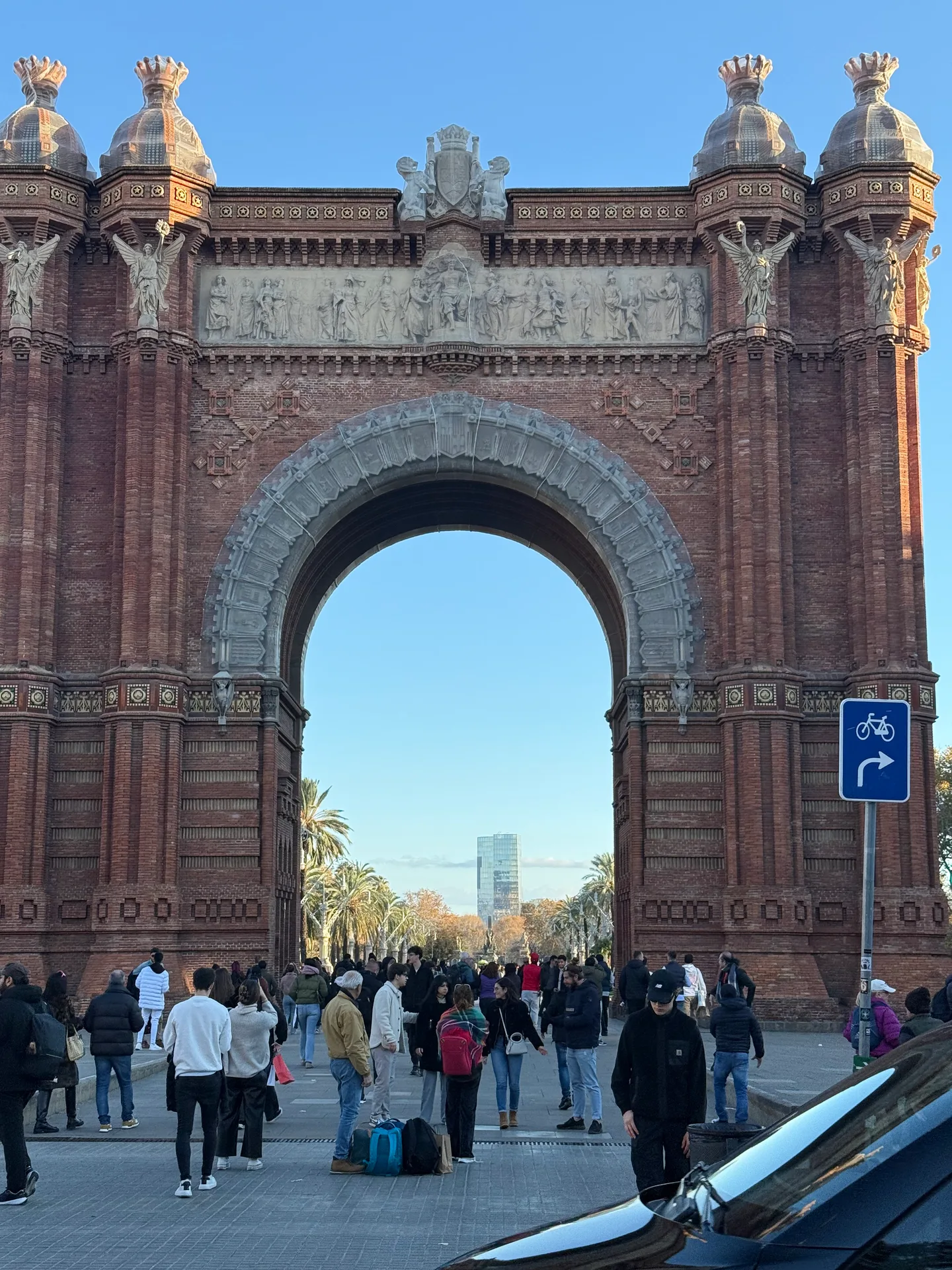
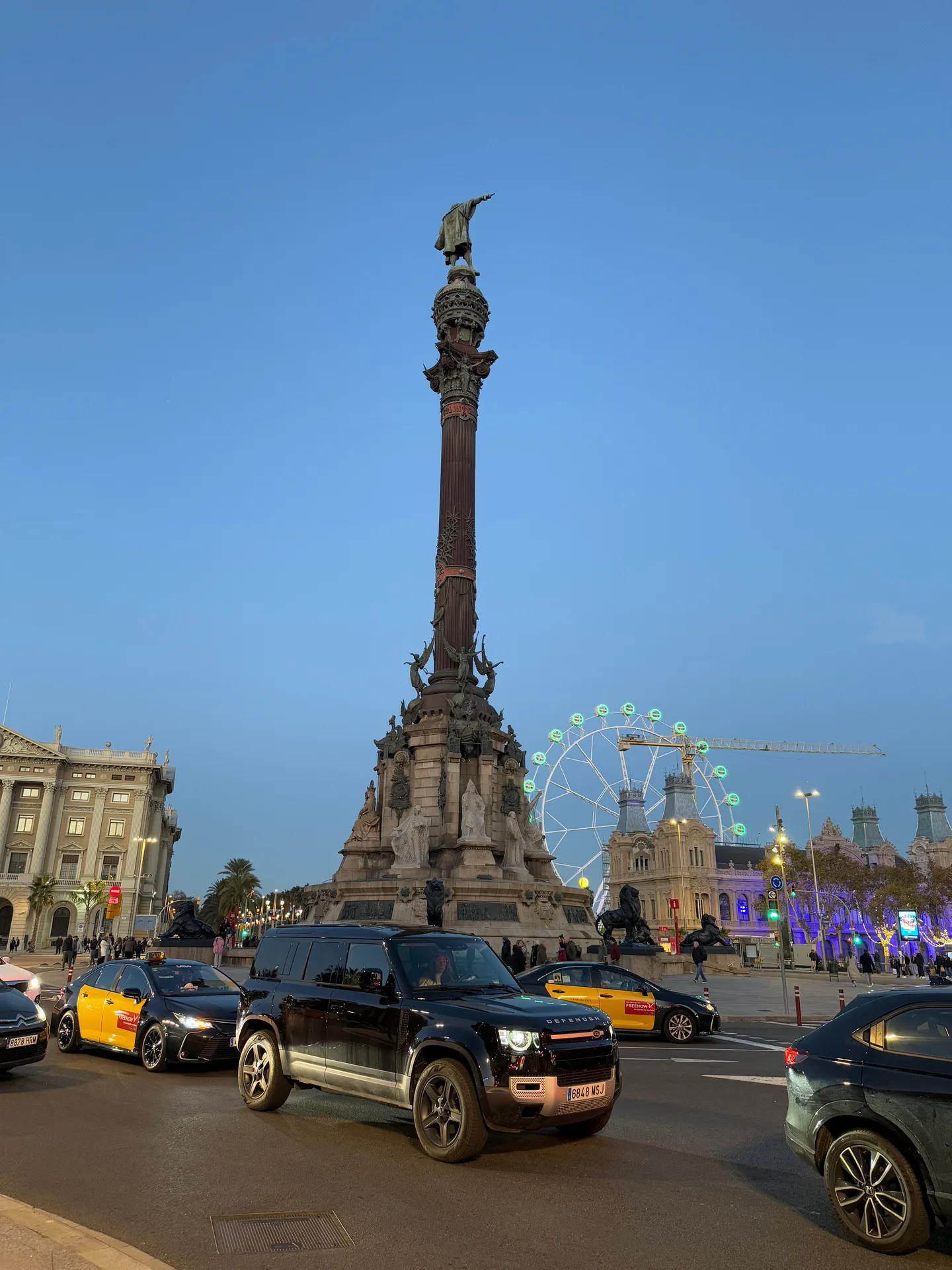
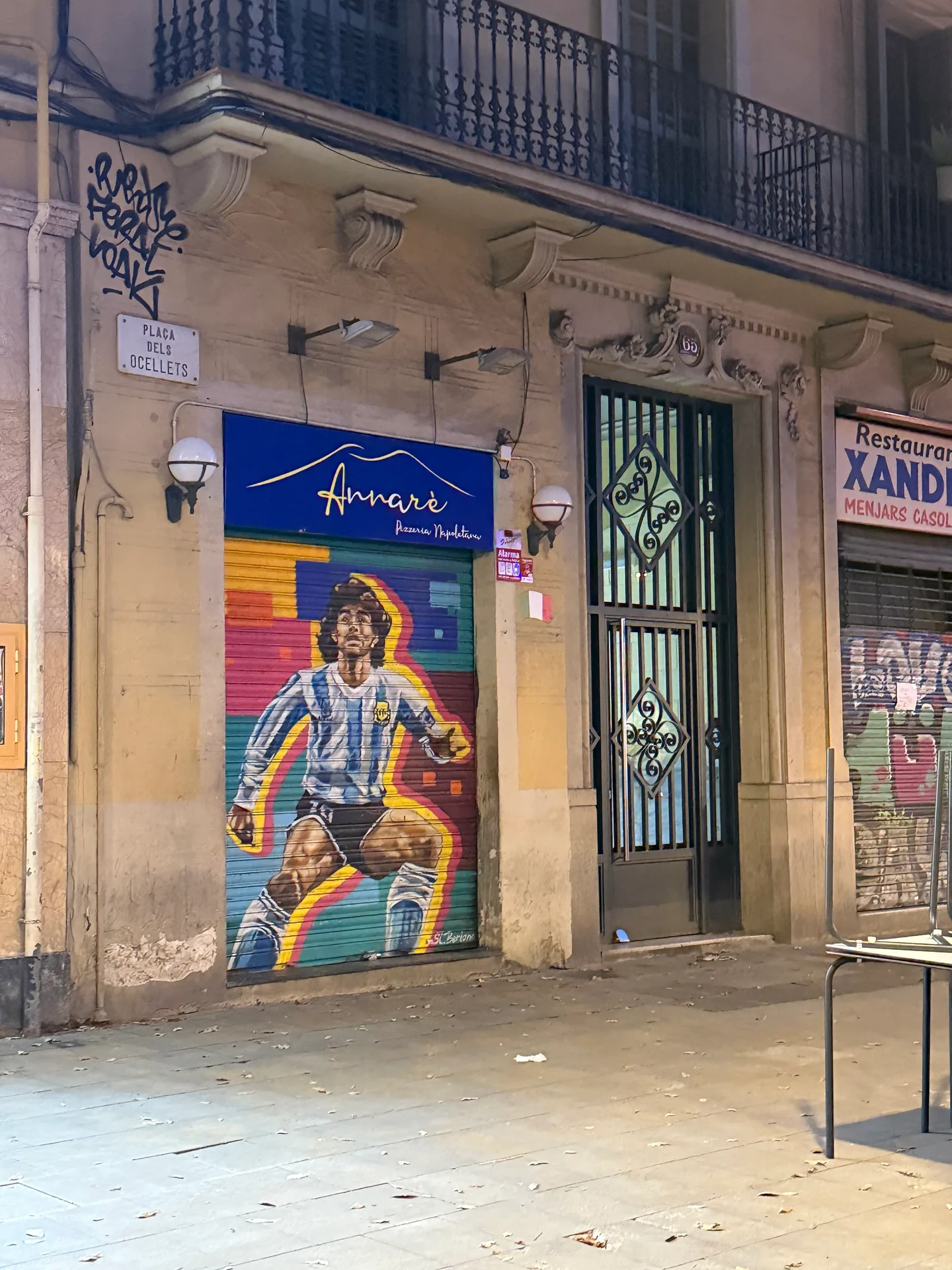
Later I passed the red-brick Arc de Triomf and walked towards the waterfront. Monumental Barcelona gave way to small streets and everyday details. Near La Rambla, a mural of Maradona appeared on a metal door.
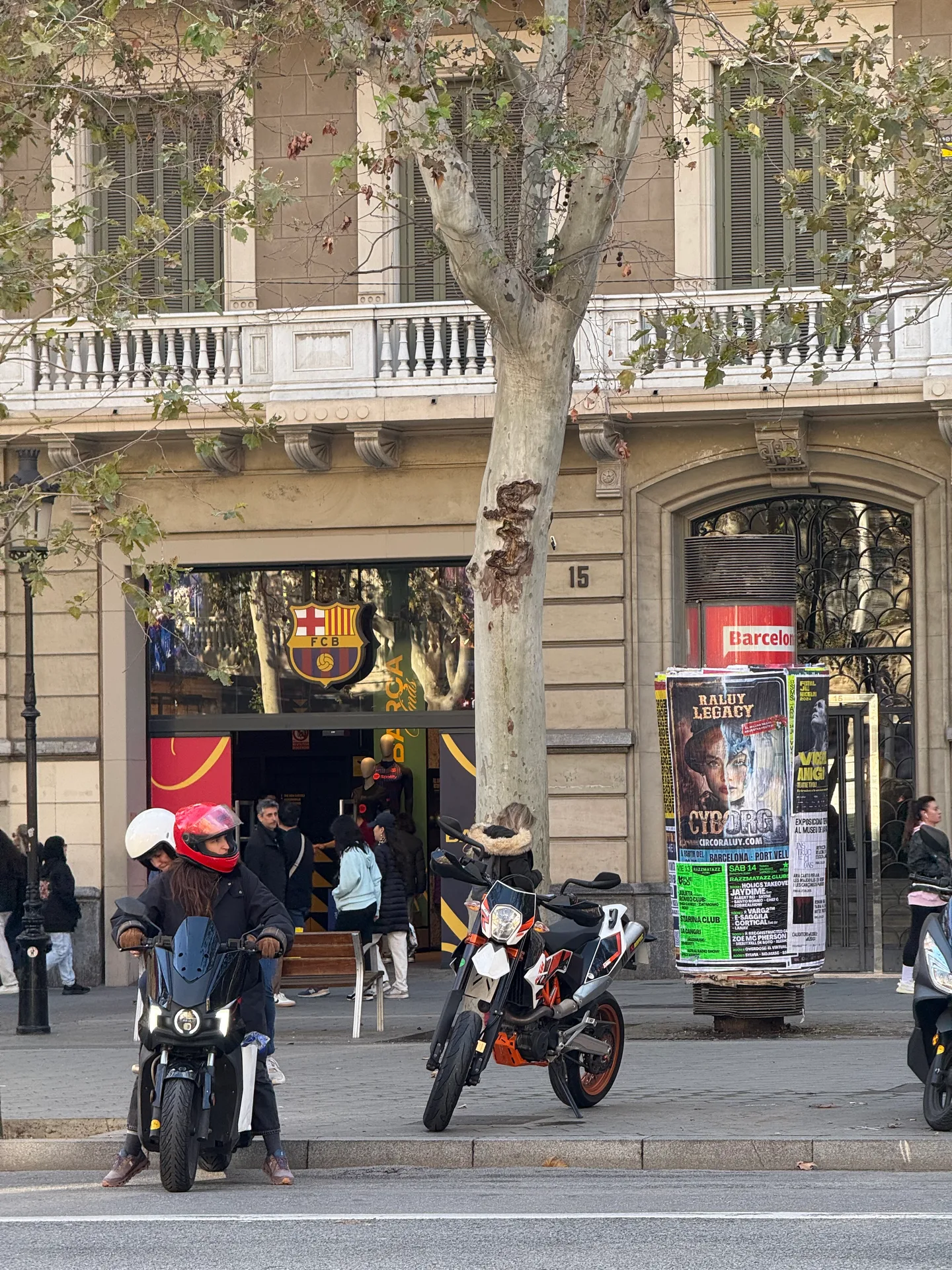
Football was everywhere: official shops, vintage shirts, street art and conversations. The stadium might have been under reconstruction, but the city's relationship with the game was not waiting for the work to finish.
07
Match night
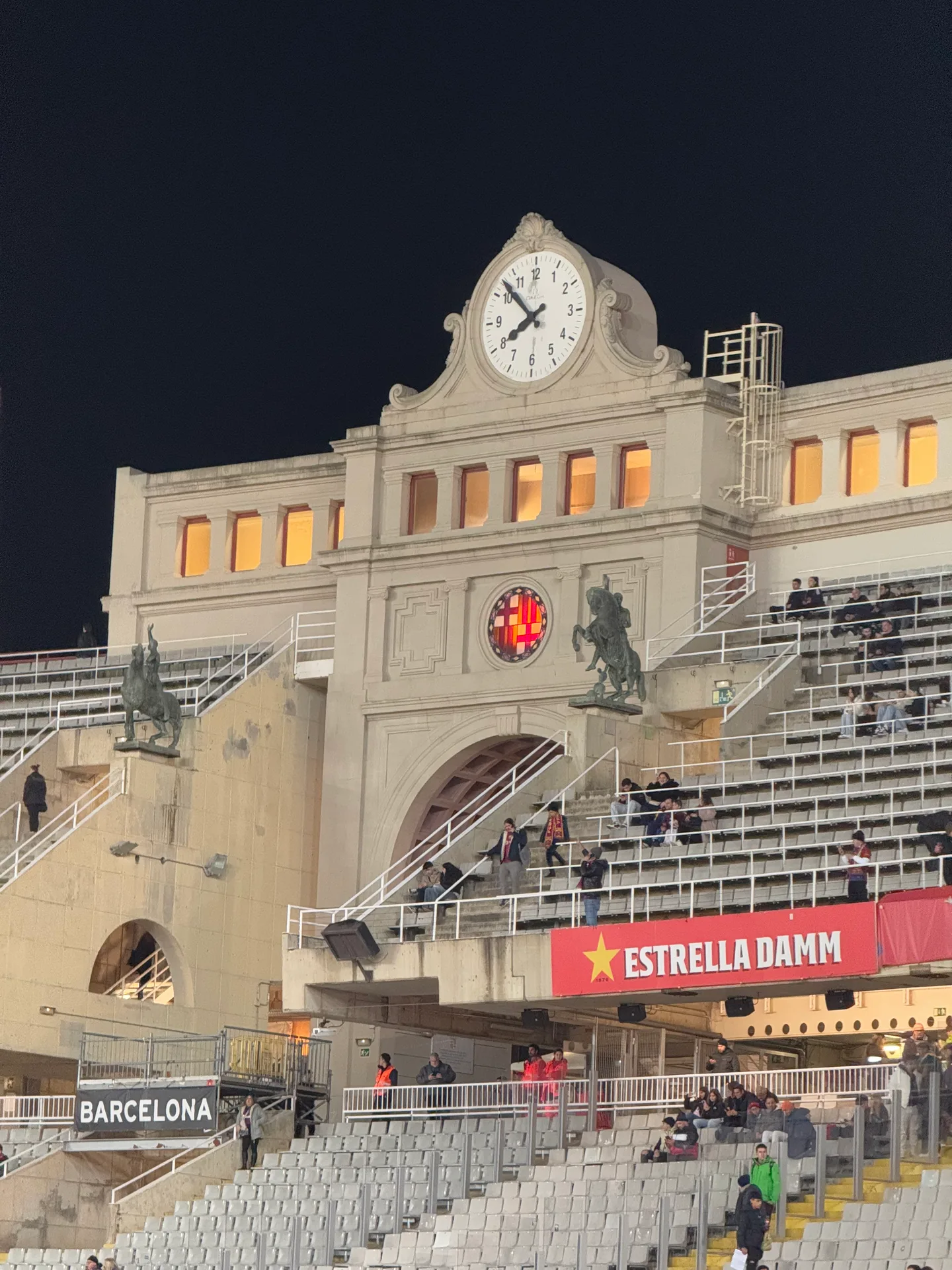
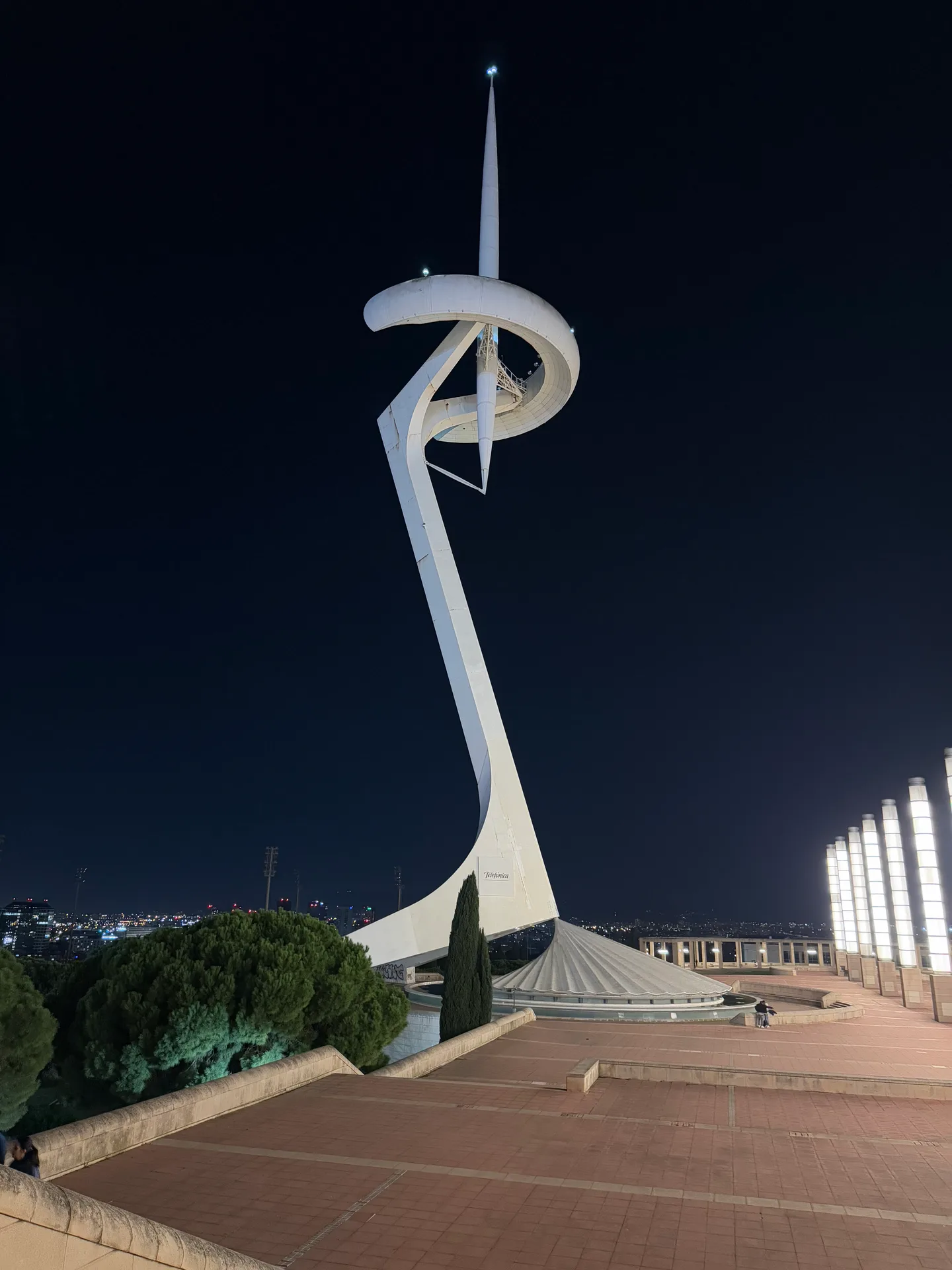
During my visit, Barça played at the Olympic stadium on Montjuïc while Camp Nou was being renovated. Outside, the white communications tower glowed against the night. Another generation of the city's sporting architecture had acquired a new role.
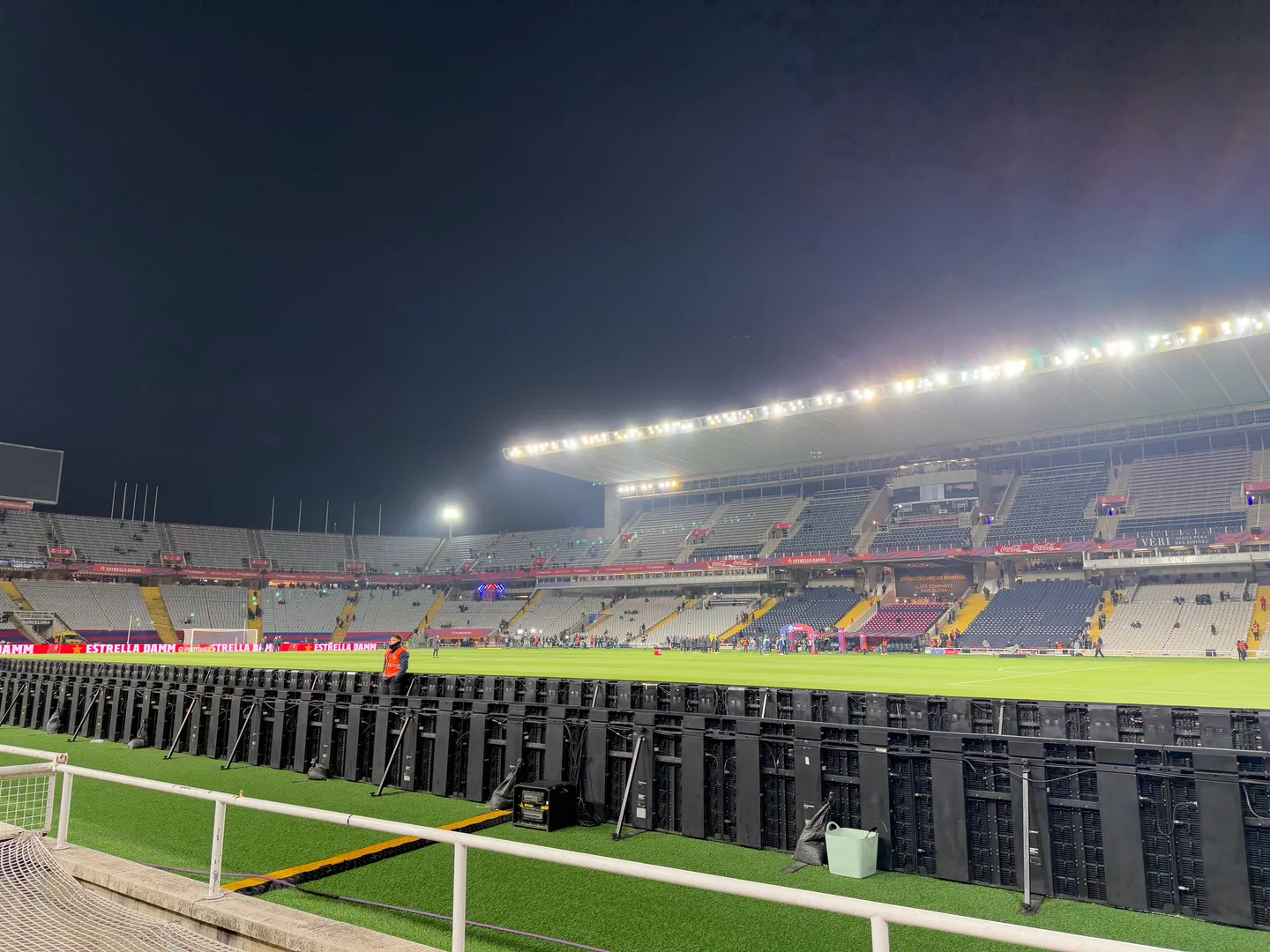
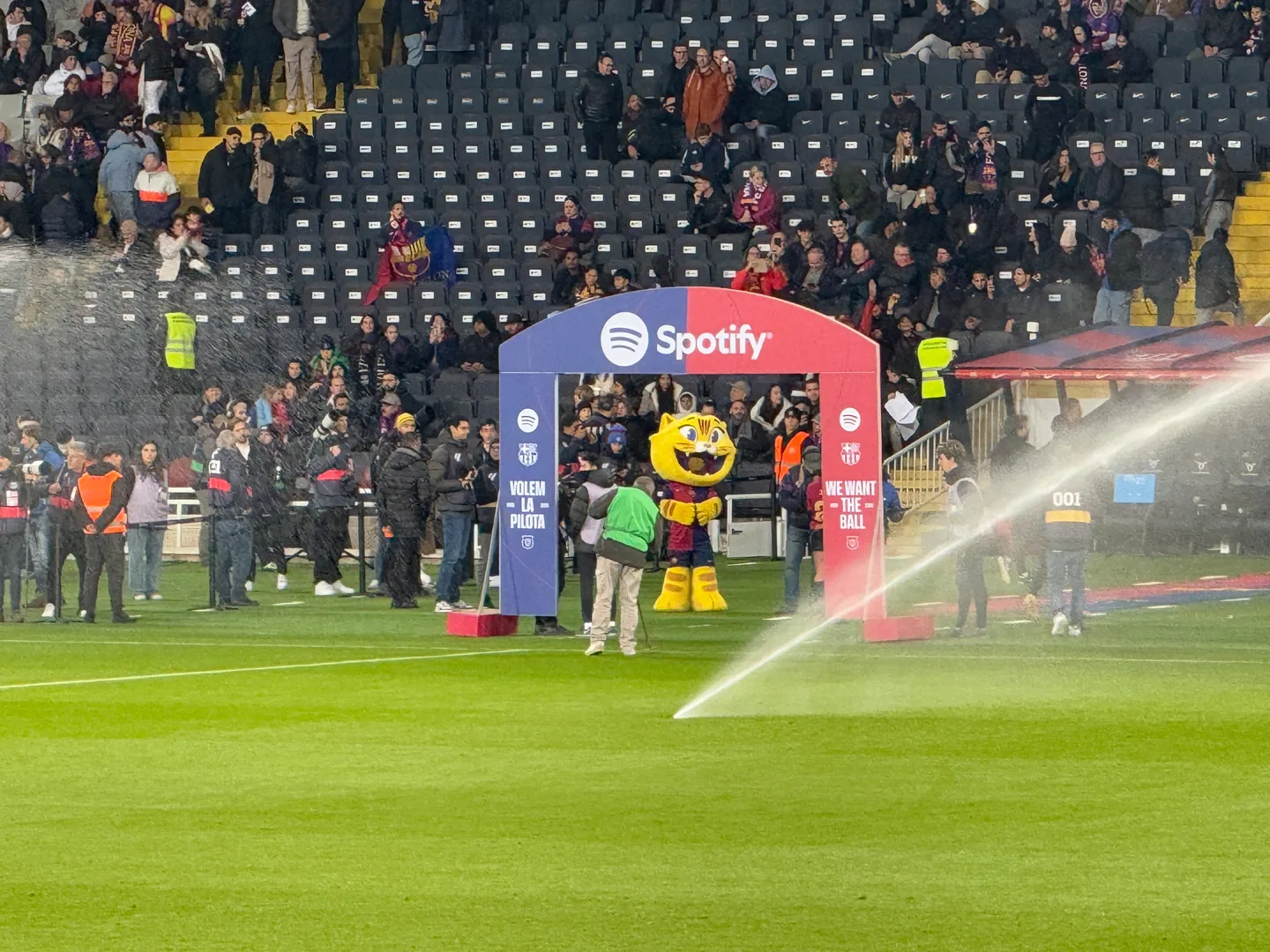
Inside, the pitch was brilliantly green. Sprinklers made a final pass and supporters began singing. The temporary ground was different from the Camp Nou I had imagined, but the moment the floodlights and grass came into view, the excitement was real.
Barcelona seemed comfortable with unfinished things: a church still being built, a stadium being rebuilt, a waterfront remade for another era. The city kept offering examples of something starting again.