GERMANY / TRAVEL NOTES
Berlin
Two days of walking through a city where even the journey underground becomes history.
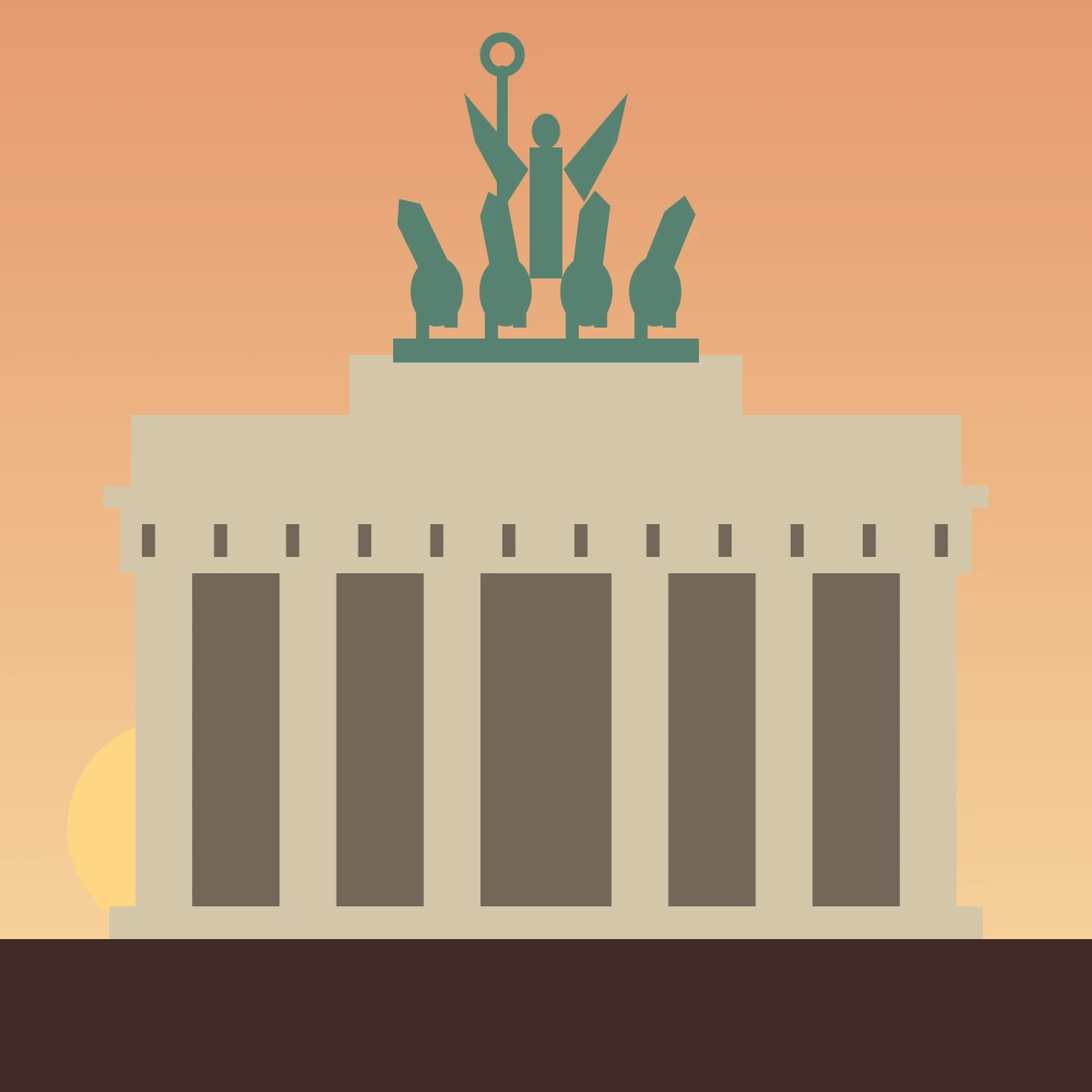
Berlin in Hourline shows the same artwork as the app, bringing its landmarks together in a composed scene.
01
The Brandenburg Gate
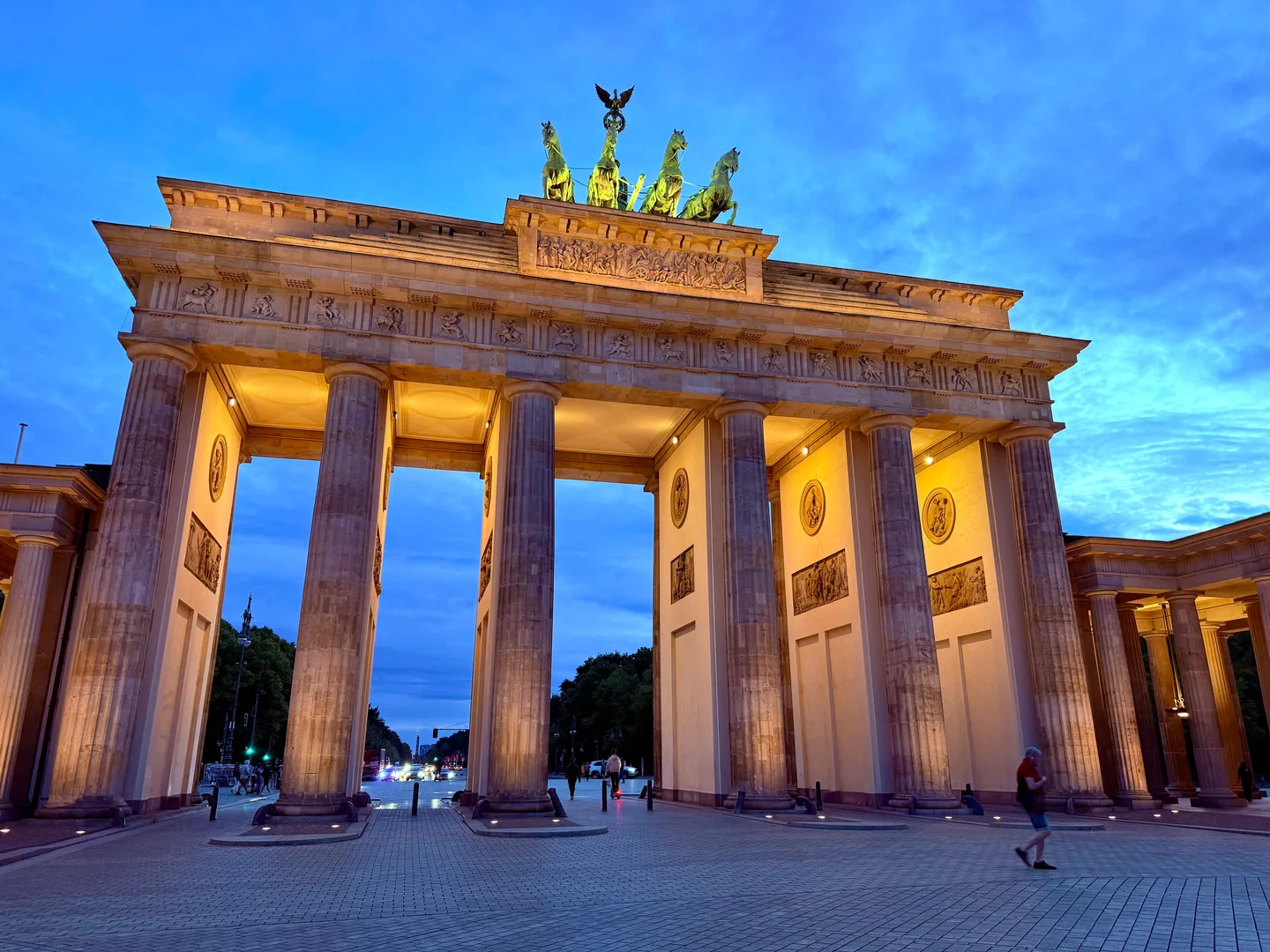
I reached Berlin on the evening of 9 July, dropped my bags and went straight to the Brandenburg Gate. At ten, summer had not quite let the sky go dark. Blue-violet clouds pressed above the roof while the columns glowed gold.
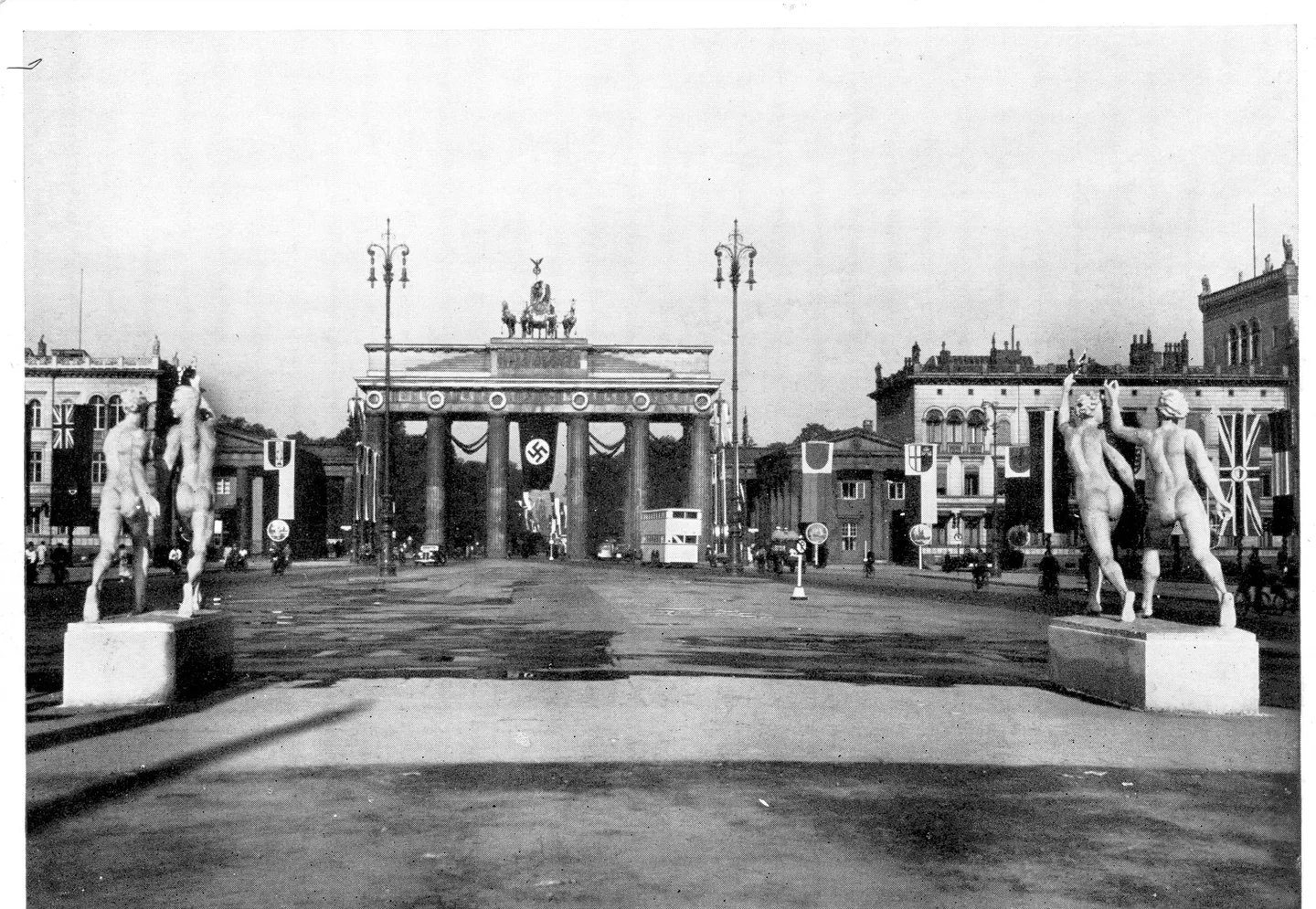
The gate has been claimed by so many versions of Germany: the Quadriga taken to Paris and returned, propaganda spectacles, wartime destruction, then decades in the border zone. People on either side of a divided city could look towards the same monument without reaching one another.
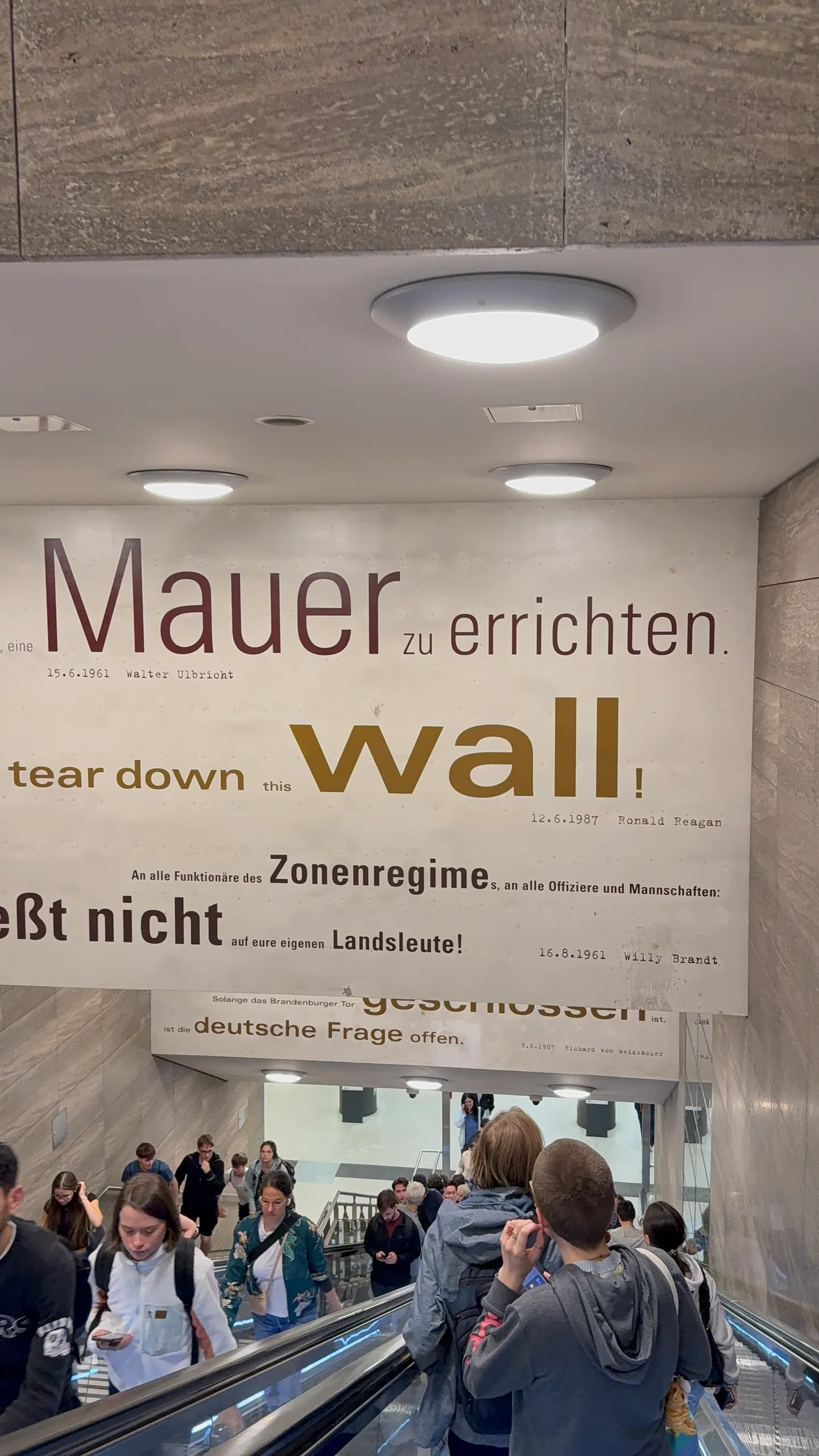
On the way back, quotations about the Wall filled the station walls beside the escalator. Denial, protest and demands for its removal appeared in sequence. In Berlin you can think you are merely catching a train, then discover you have walked into a history lesson.
02
The Victory Column
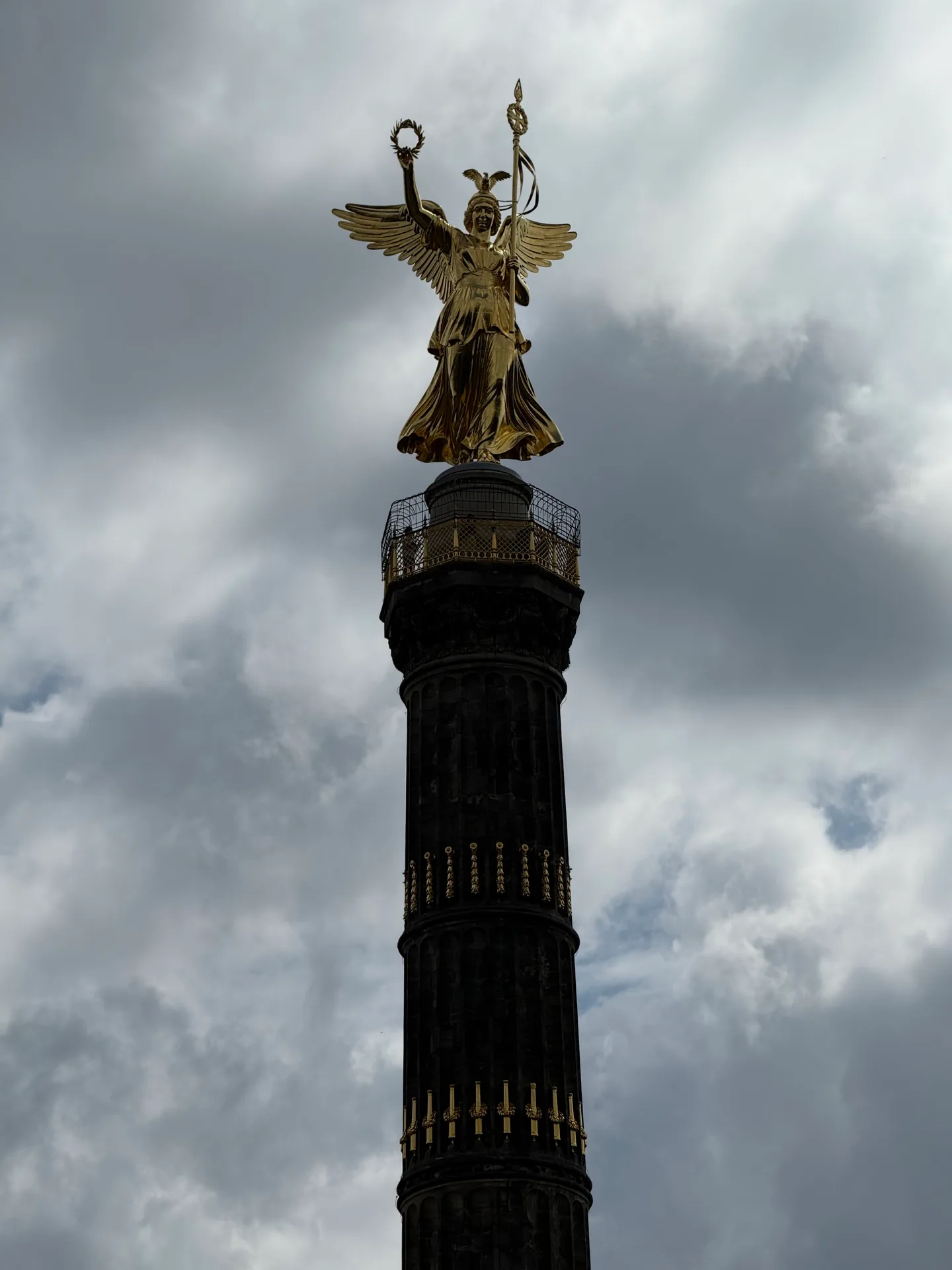
The next morning I went to the Victory Column in Tiergarten. High above it, the gilded figure Berliners call Goldelse held her wreath. I thought of the angel in Wim Wenders's Wings of Desire, watching the city from up there.
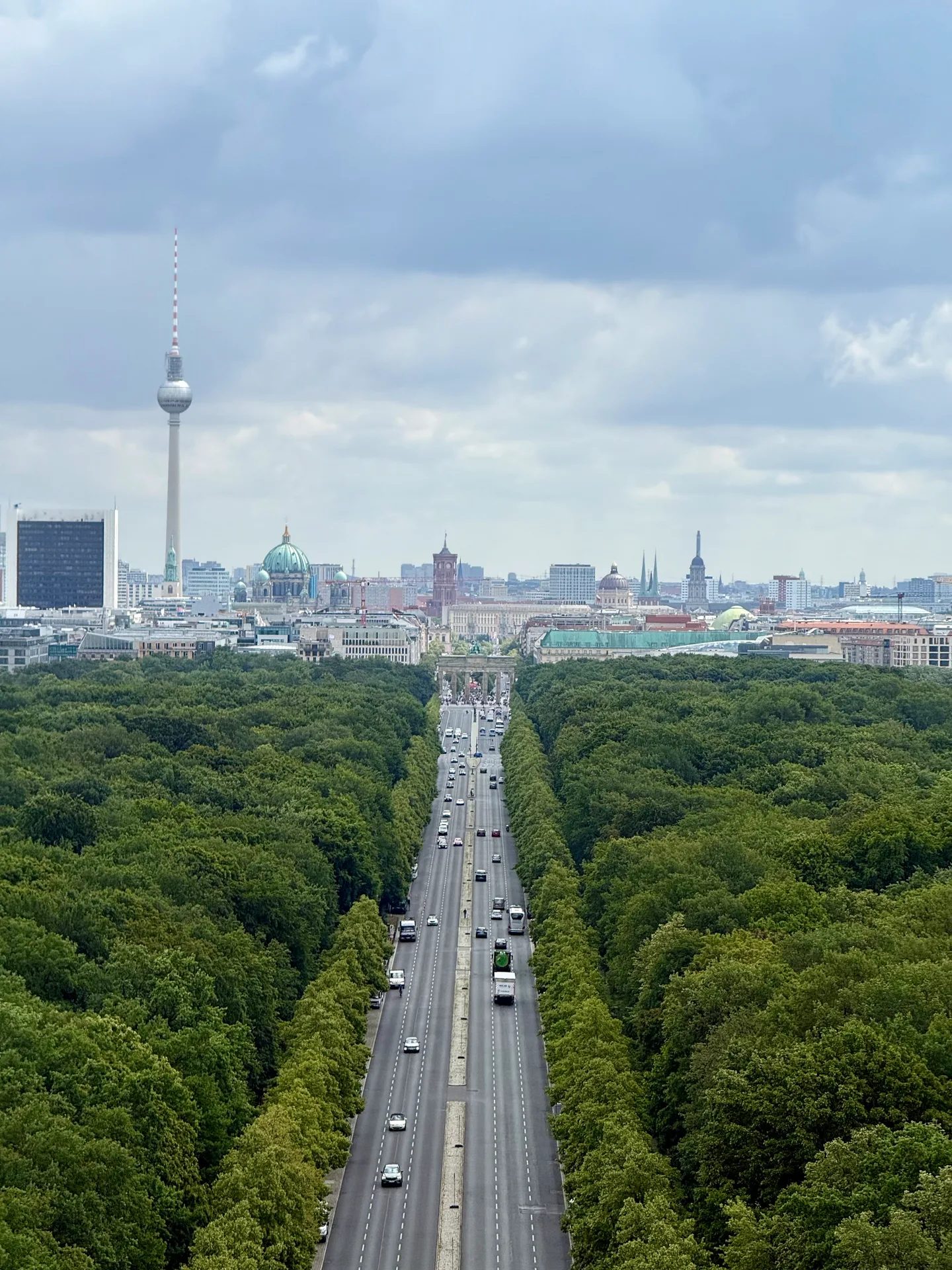
After the spiral stairs, the view stretched east along Straße des 17. Juni. The Brandenburg Gate was tiny at the end of the avenue, with the television tower farther away. Around the road, Tiergarten looked like a forest swallowing the city. Knowing how much of it had been lost during and after the war made that abundance of green feel less inevitable.
03
Potsdamer Platz
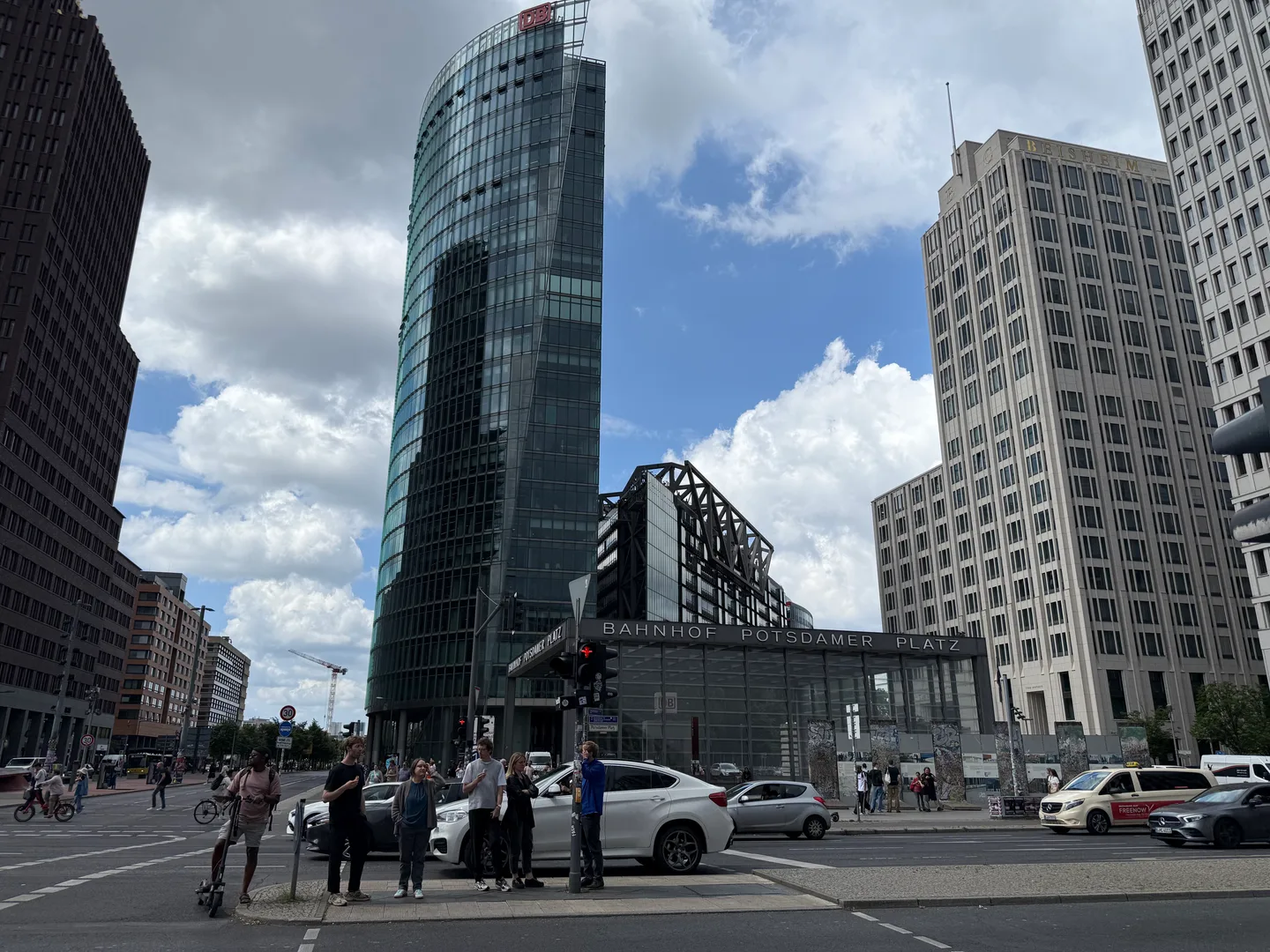
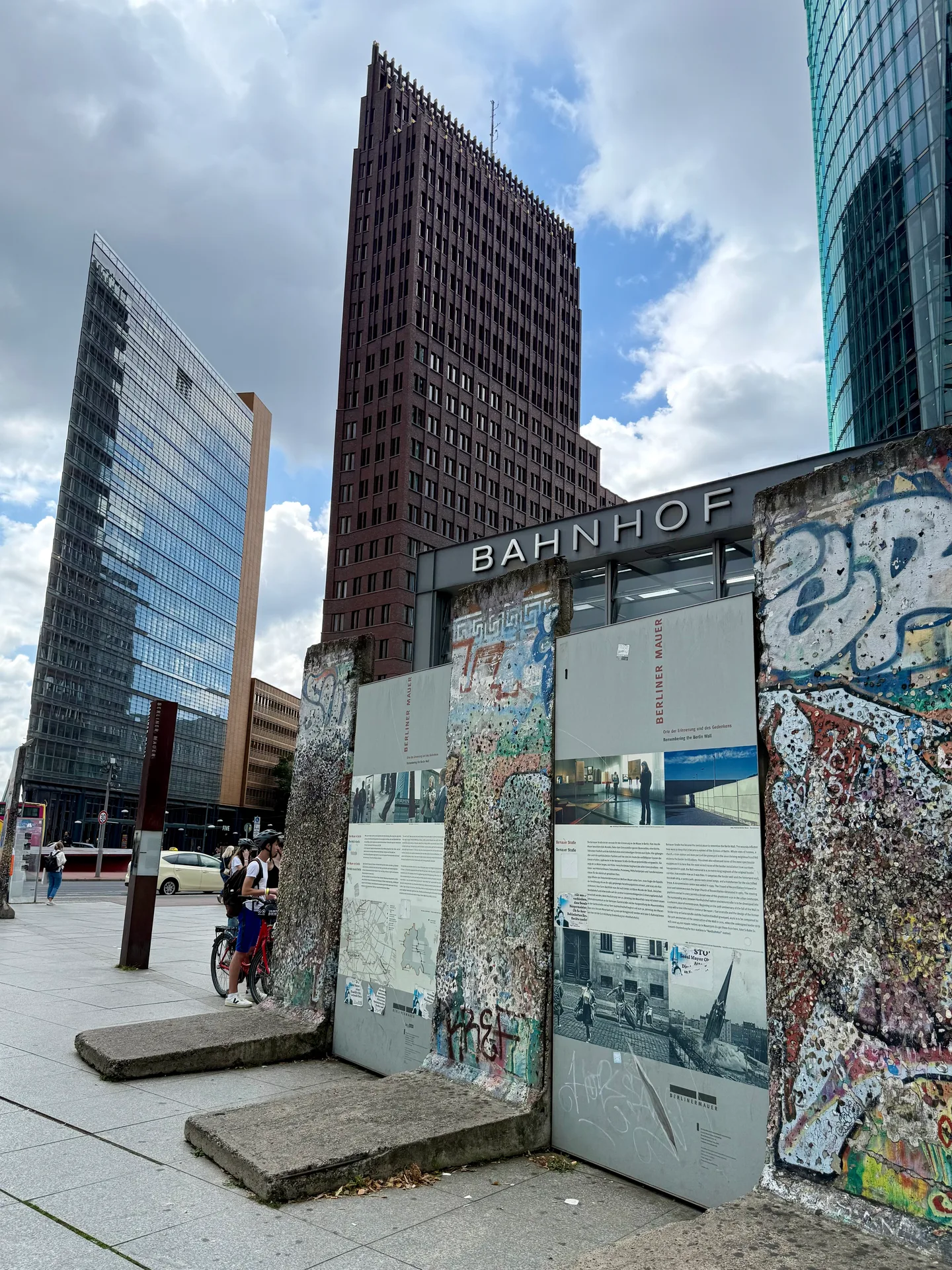
By midday I had reached Potsdamer Platz. Glass and steel made it look exceptionally new. The place has been a busy intersection, a ruin, a border wasteland and an enormous building site. Much of that history is easier to read in lines on the ground than in the buildings above them.
A few surviving Wall sections stood nearby. Photographs showed the same patch of city occupied by barriers, then by crowds, then by cranes. Standing still was enough to travel through several different landscapes.
04
Topography of Terror
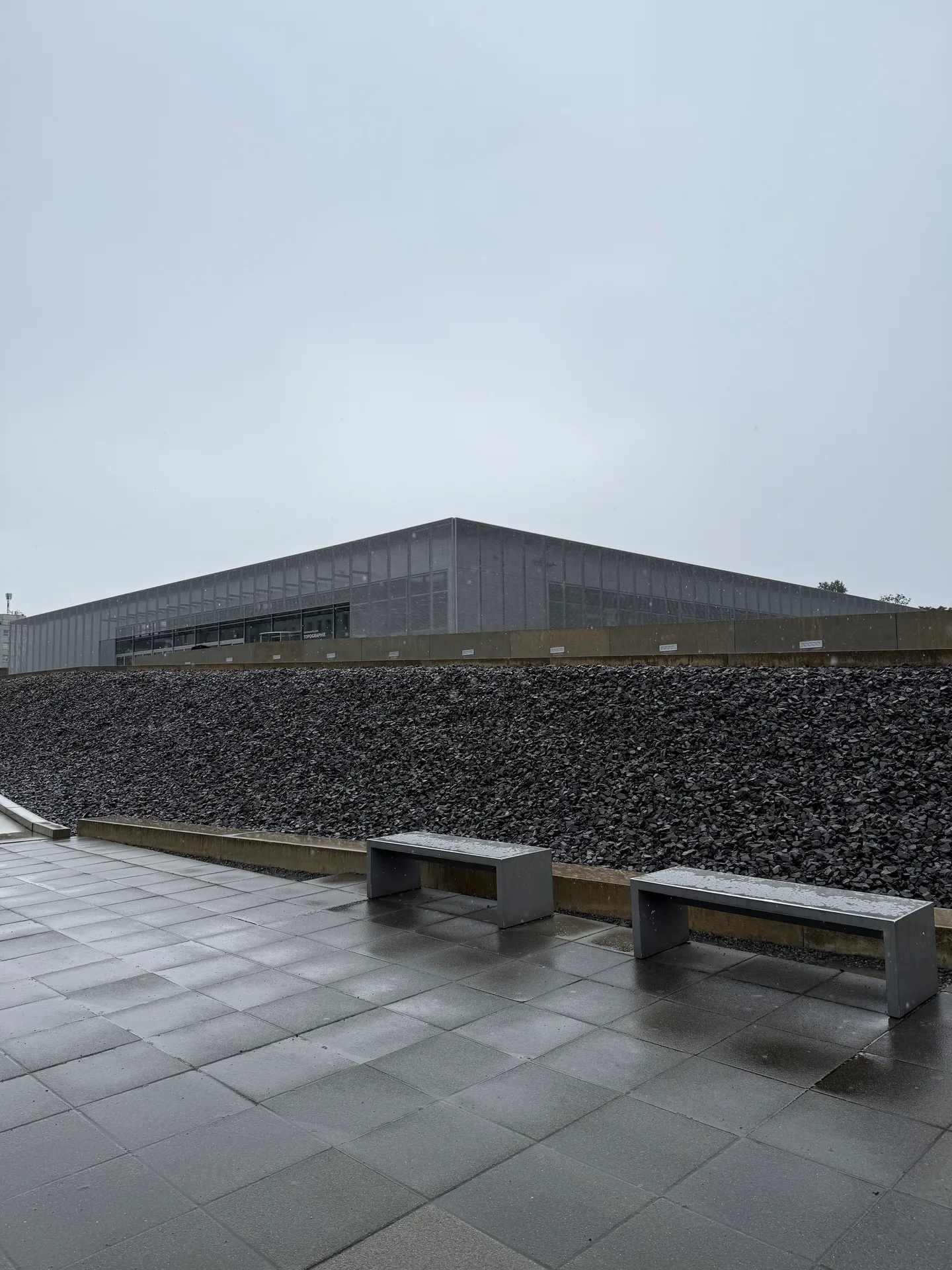
At the Topography of Terror, the tone changed. The documentation centre occupies the former site of the Gestapo and SS headquarters. Its restrained architecture gives the photographs, records and testimony little to hide behind.
The material shows how state terror became an organised system. It is a difficult place to visit, and the lack of theatrical presentation makes it harder to look away.
05
Checkpoint Charlie
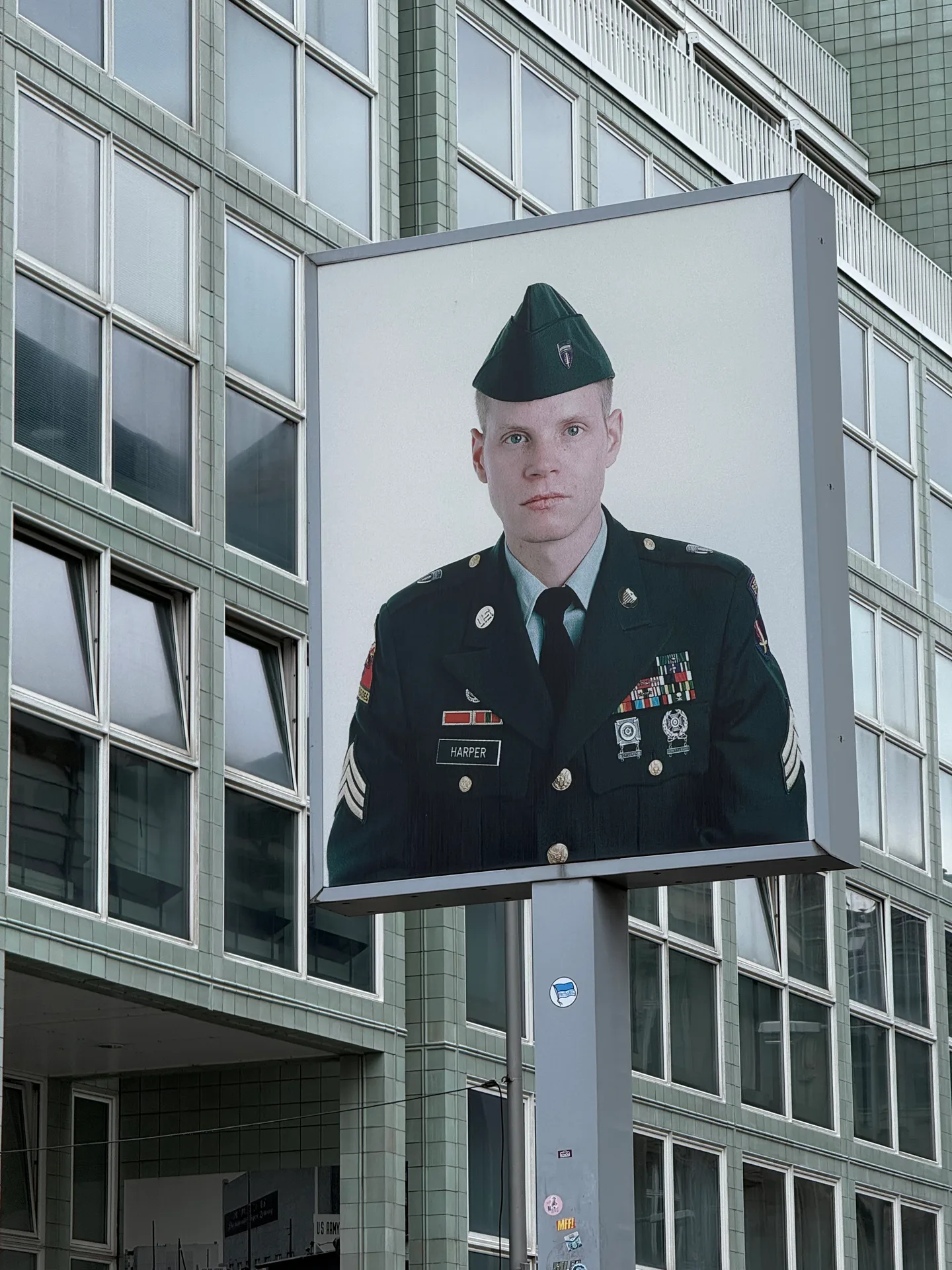
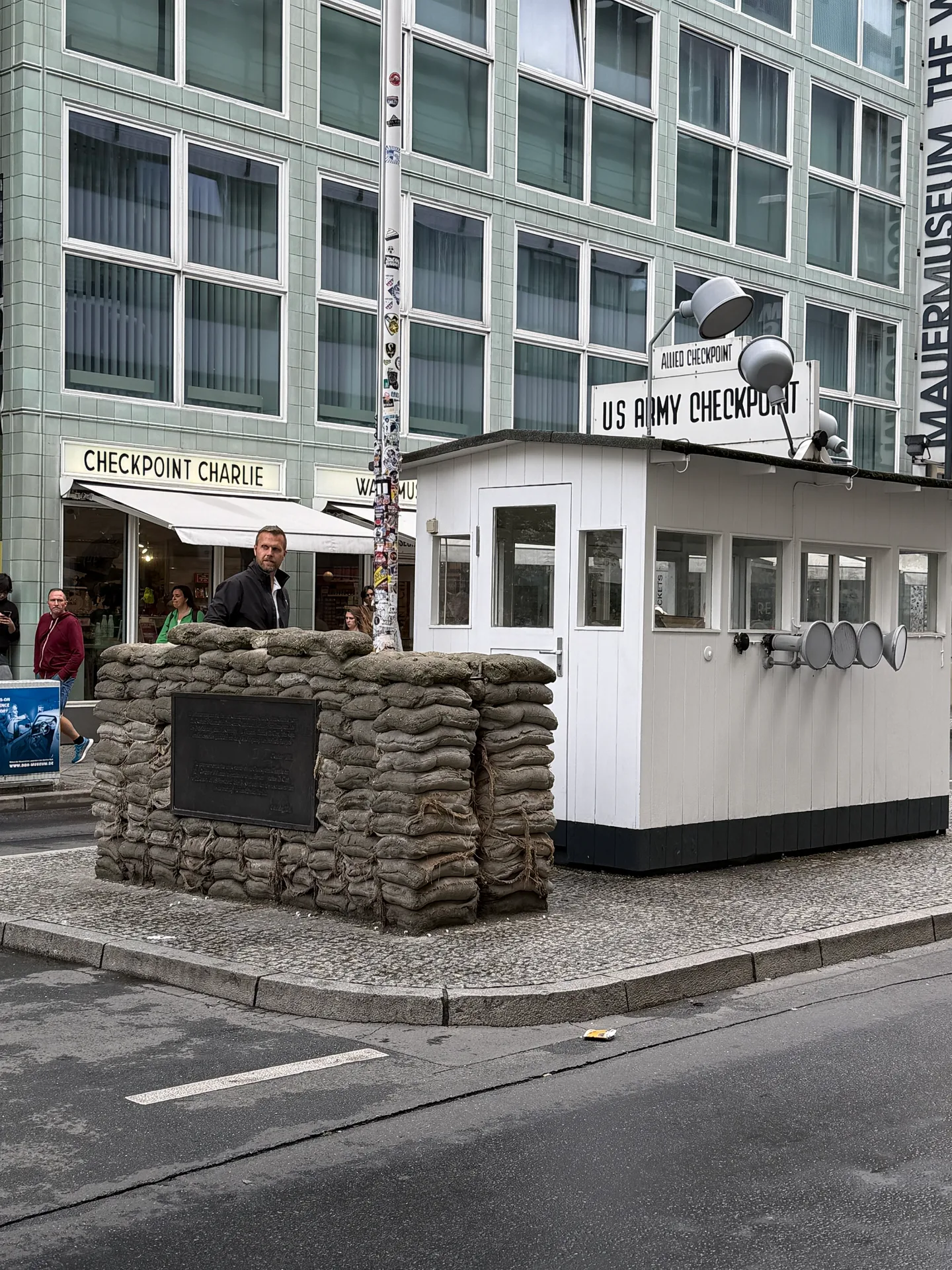
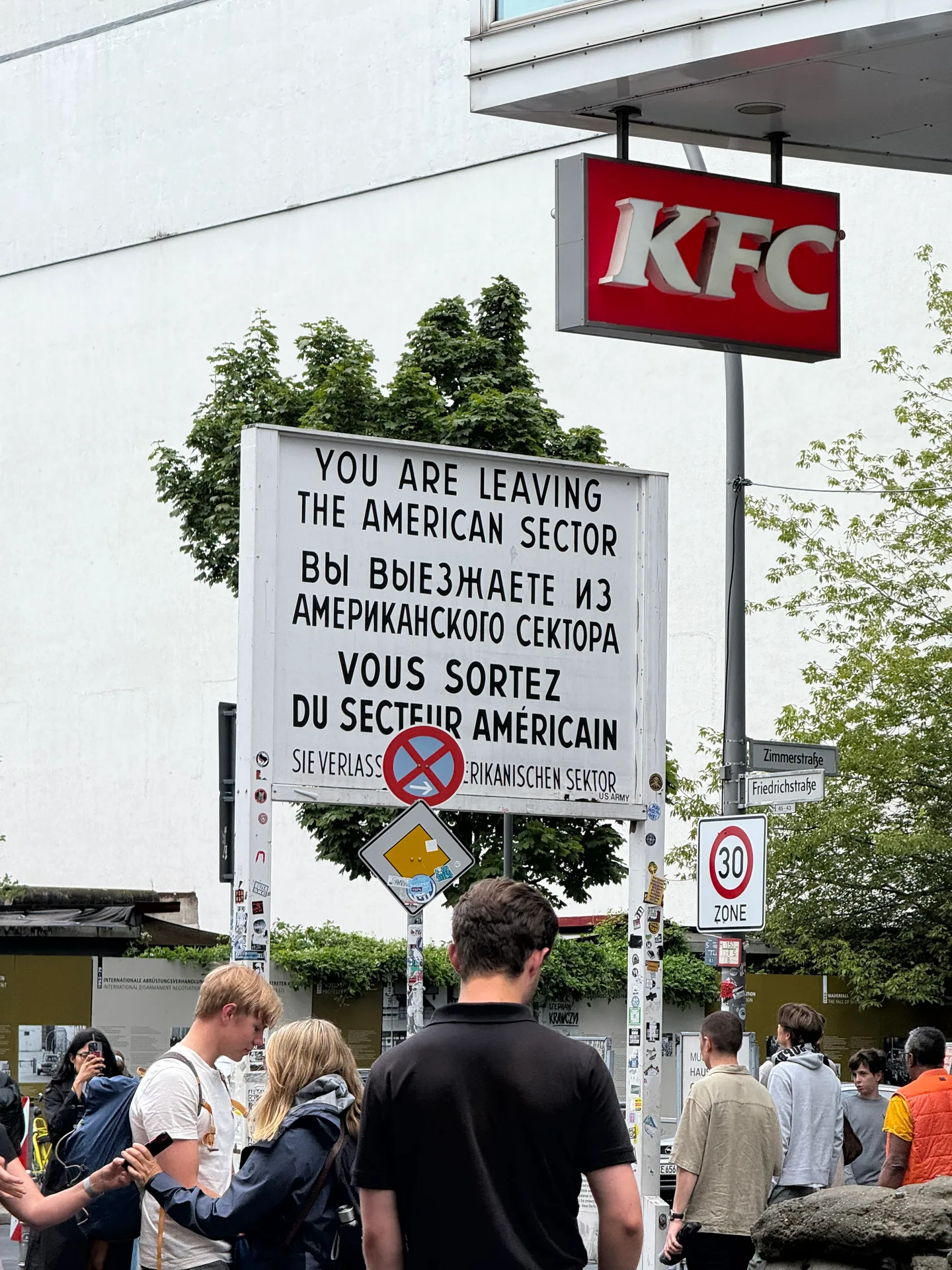
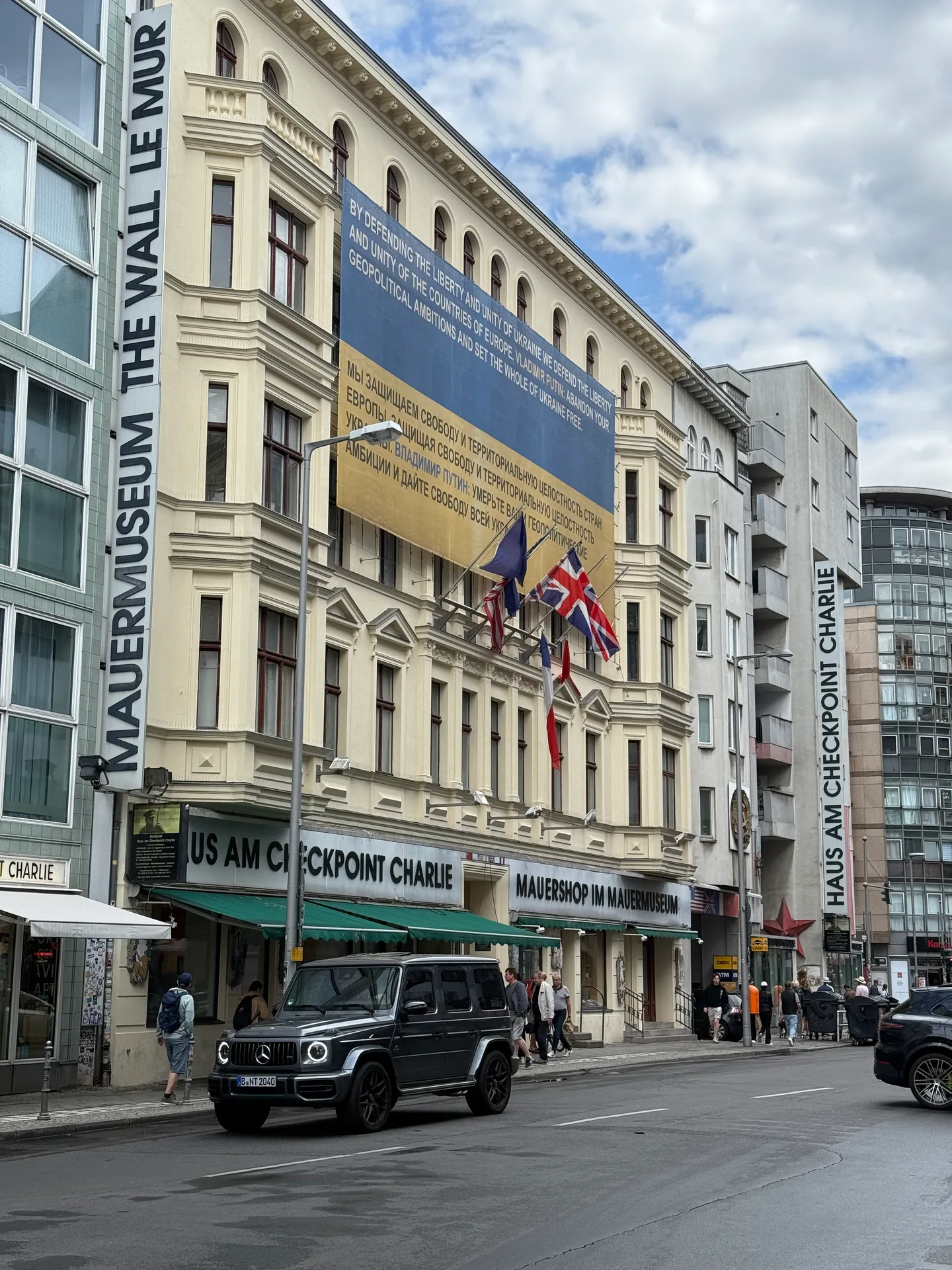
Farther along Friedrichstraße, Checkpoint Charlie was surrounded by visitors. The reconstructed guard hut, the portraits of soldiers and the multilingual sector sign recall a crossing where a border was once frighteningly real.
Now people queue for photographs. Fast-food signs share the view with Cold War warnings. The distance between those two uses of the same street is almost impossible to measure while standing in it.
06
Unter den Linden
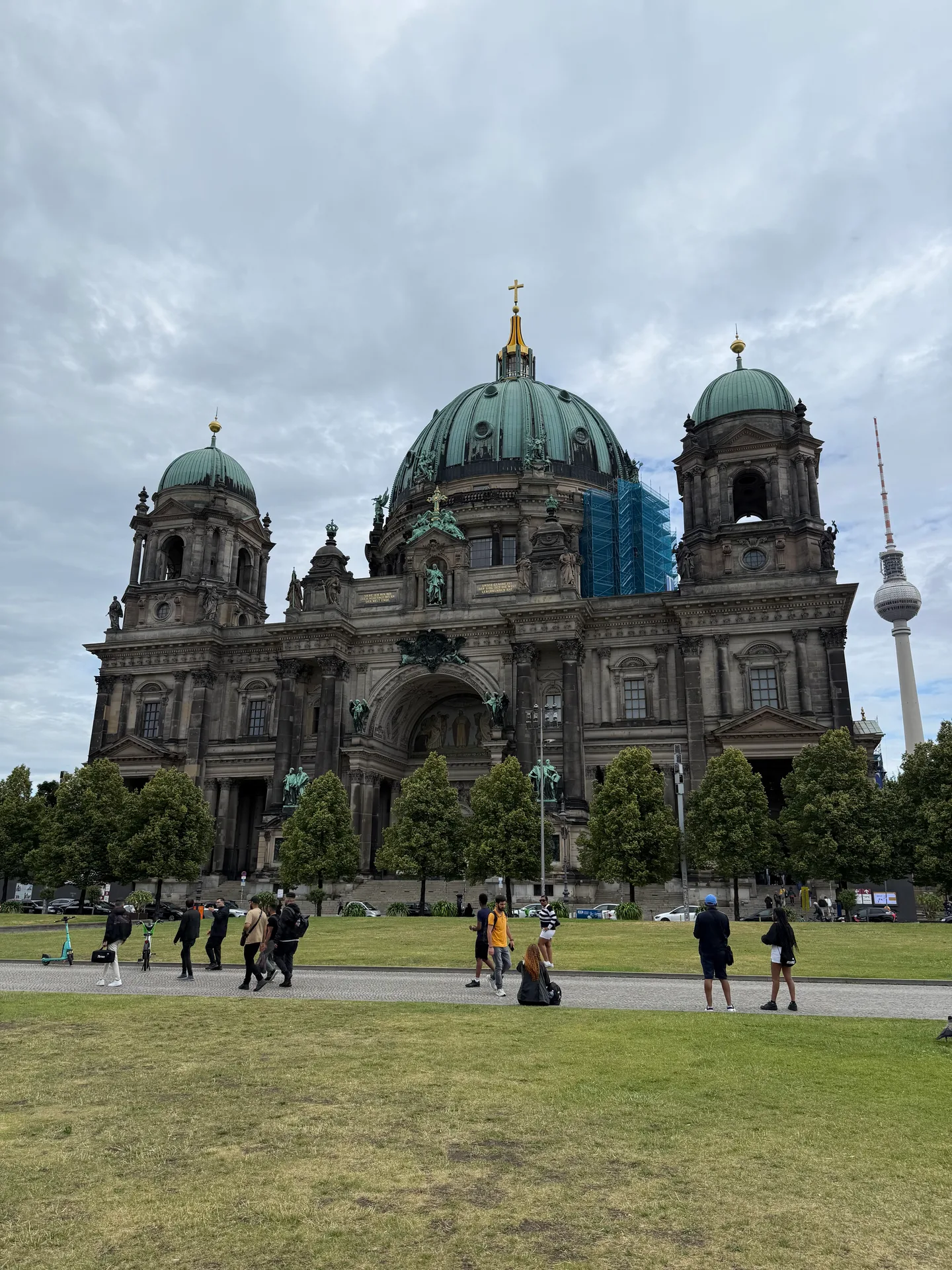
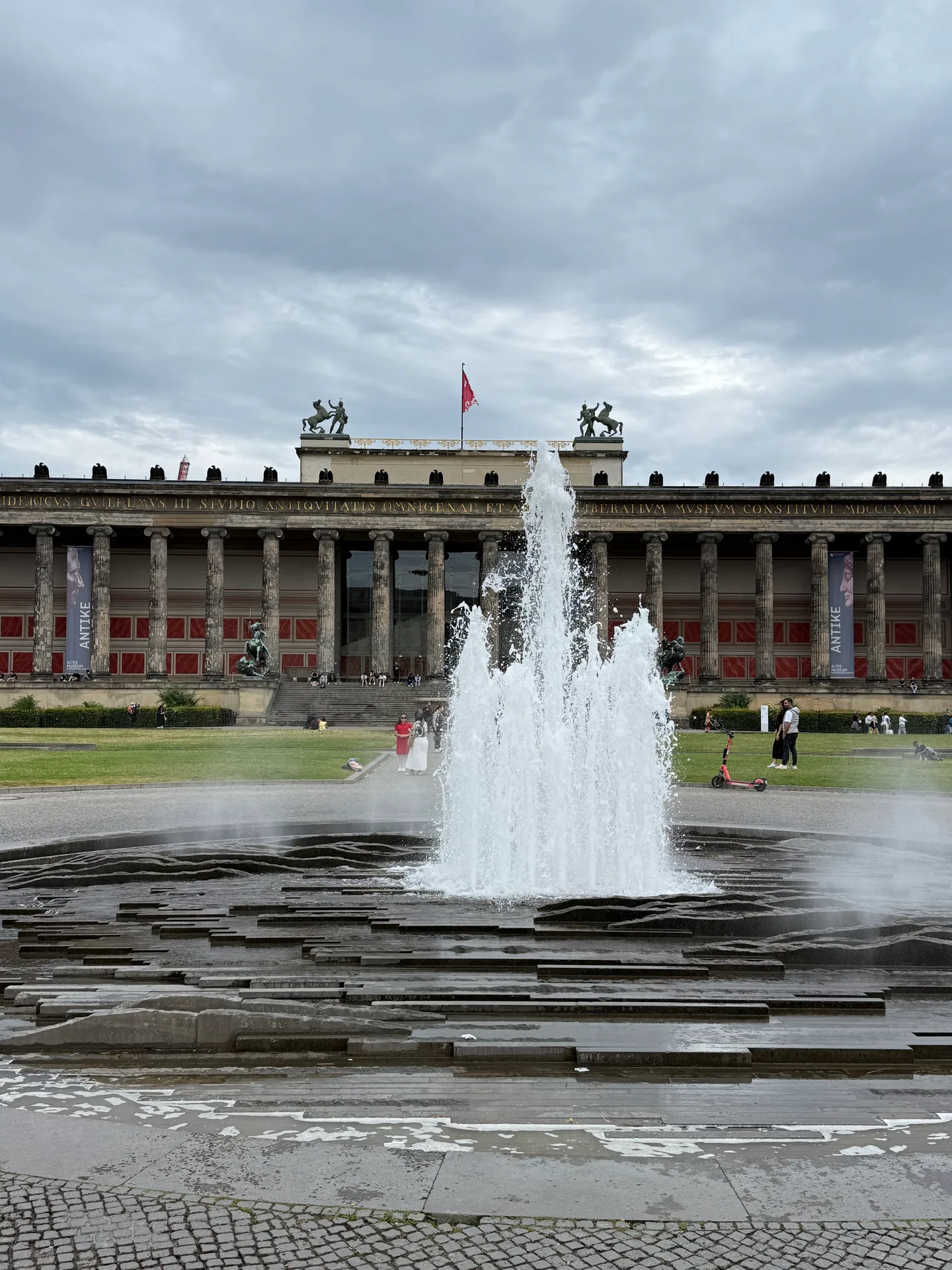
In the afternoon I walked around Museum Island. The cathedral's green dome rose near the silver sphere of the television tower. People lay in the sun on the Lustgarten lawns. The Altes Museum's long colonnade gave the square a different kind of order. I did not have time to visit the museums, so this was a walk around their outside edges.
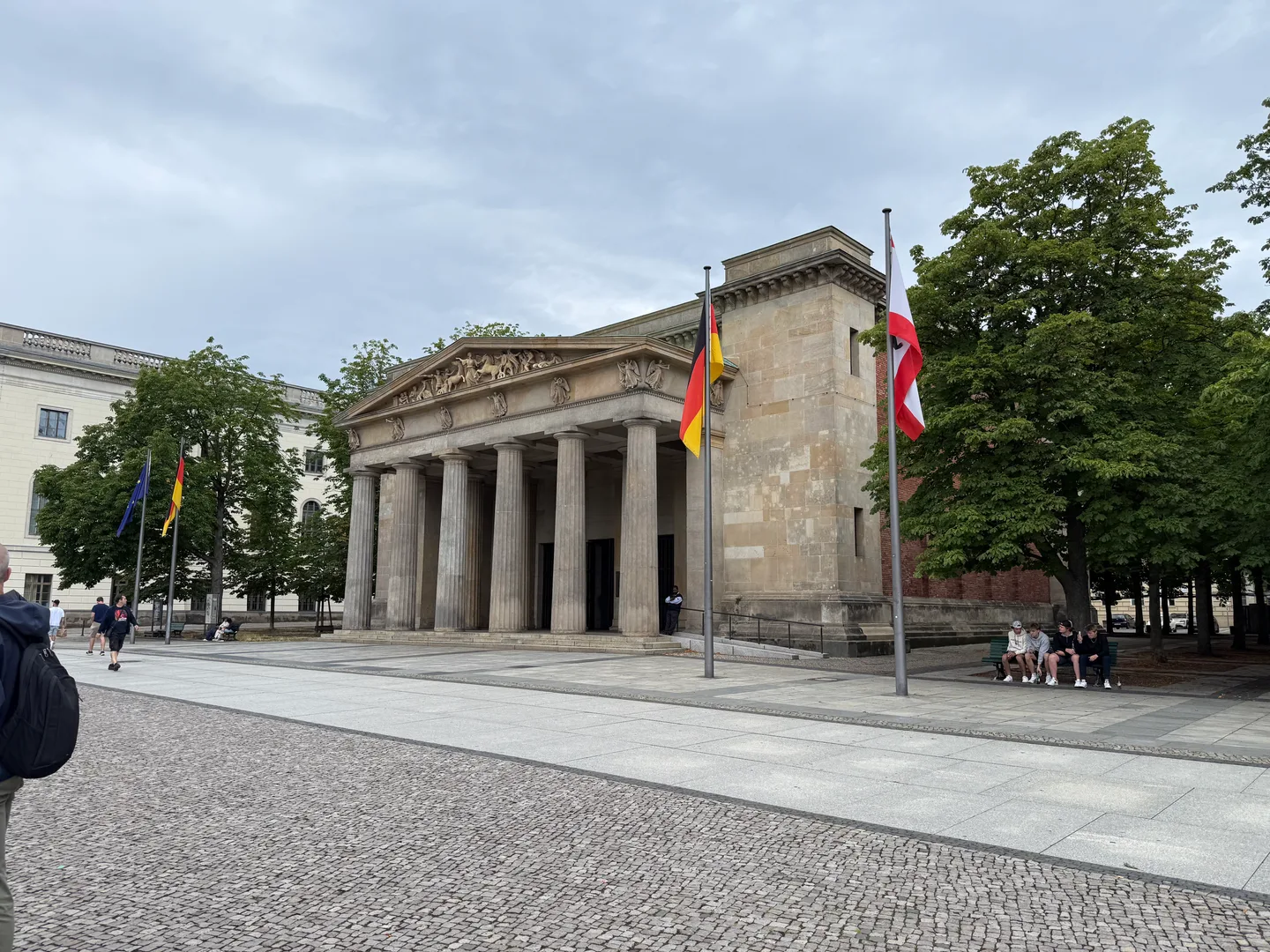
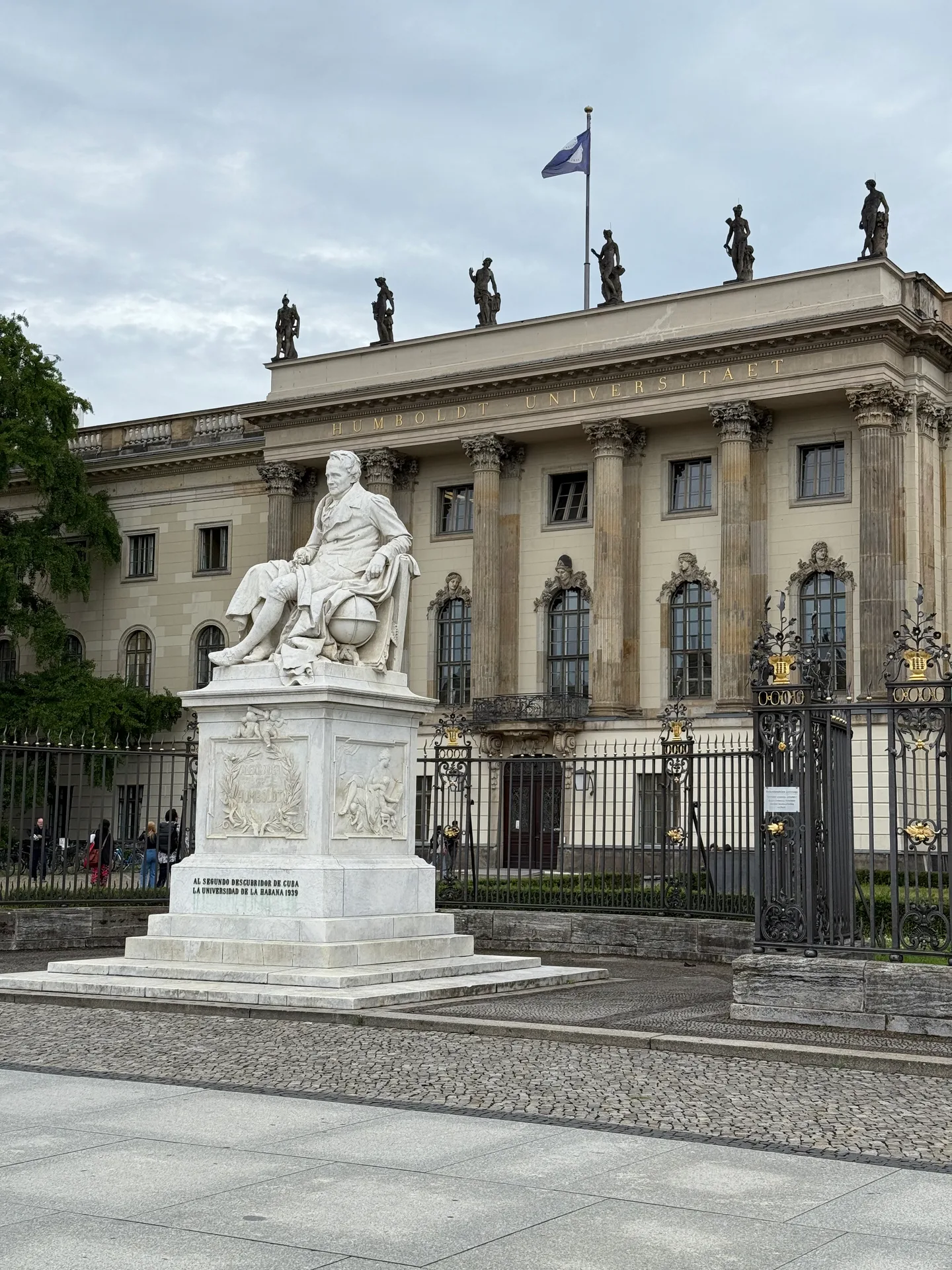
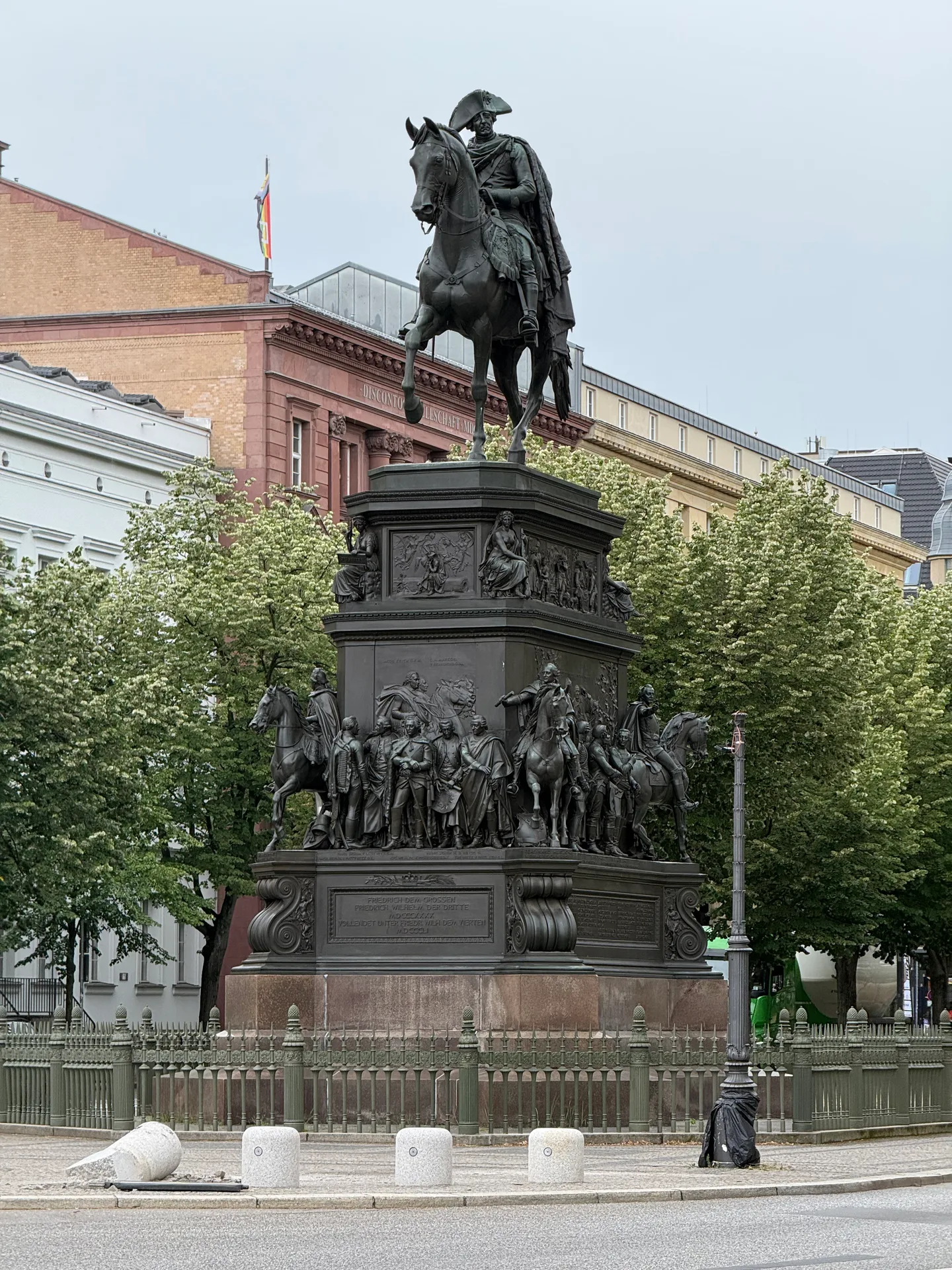
Unter den Linden led me west. The Neue Wache is small beside the city's grander monuments. Inside, a mother holds her dead son beneath an opening in the roof. The sculpture is exposed to changing light and weather. Nearby stood Humboldt University and the equestrian monument to Frederick the Great. A short stretch of pavement held learning, empire and grief.
07
Along the East Side Gallery
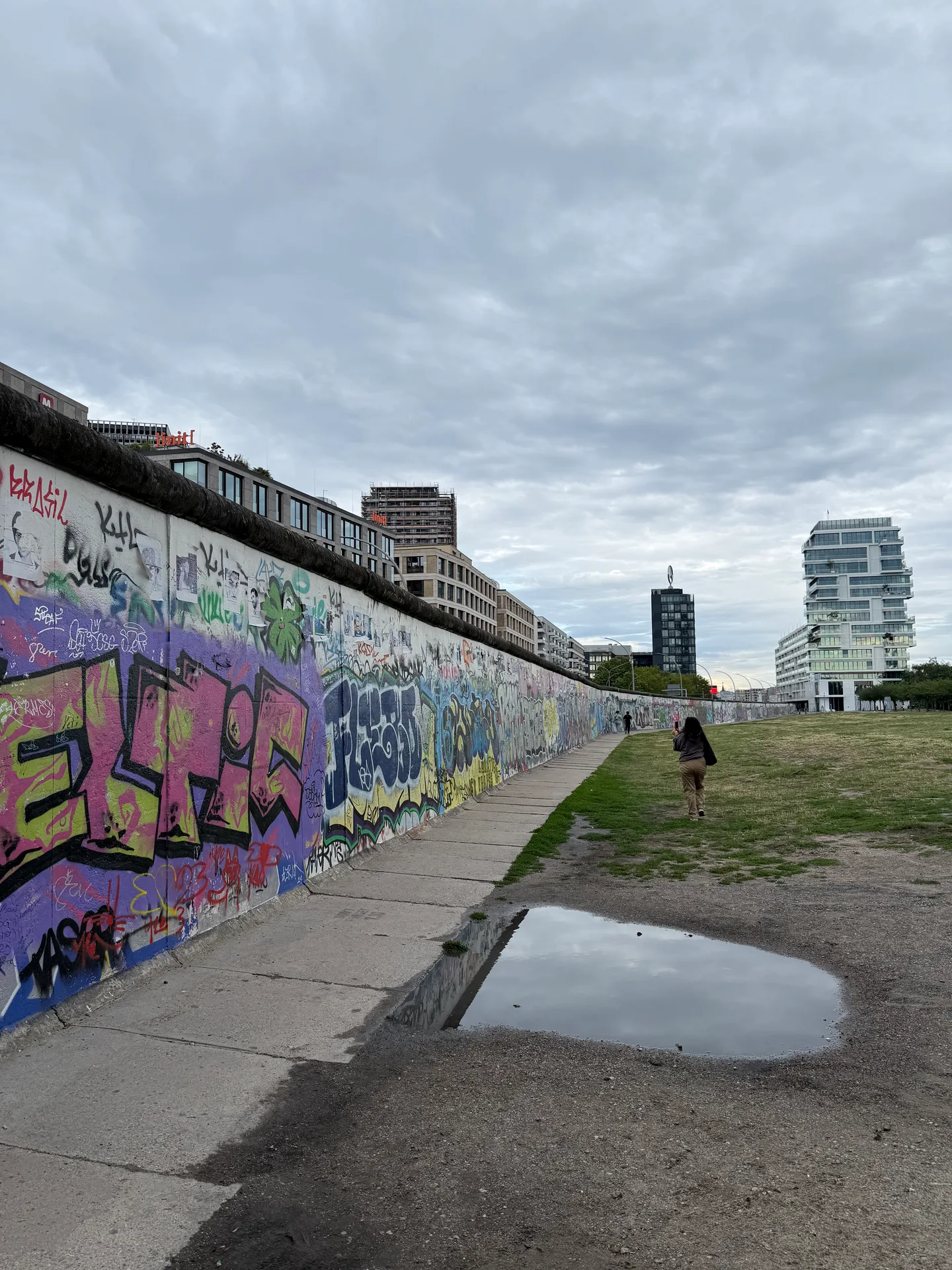
Towards evening I took the S-Bahn to the East Side Gallery. Murals cover the surviving stretch of Wall beside the Spree. They have weathered, been damaged and restored. Even a monument to change keeps changing.
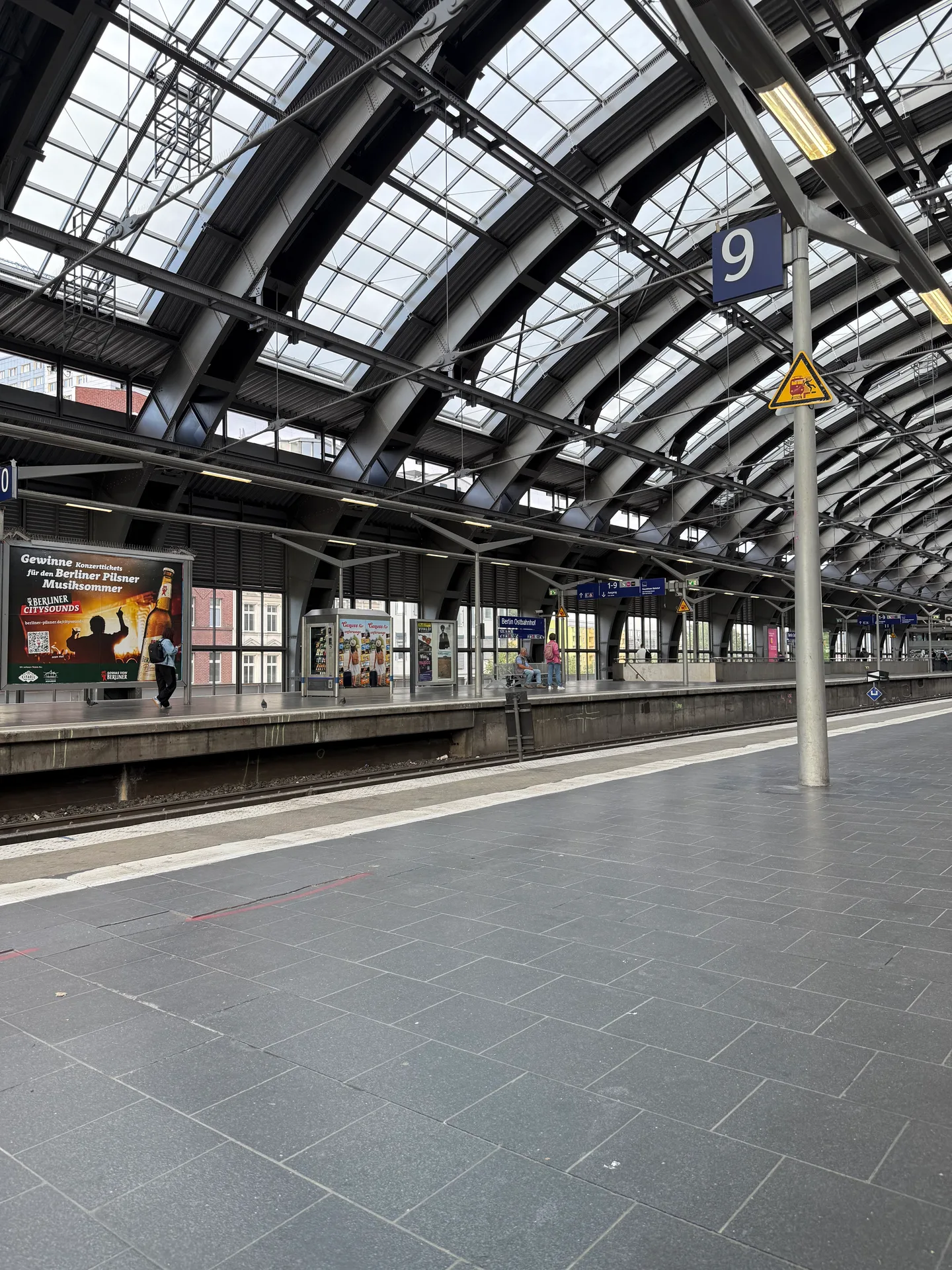
Later, the glass-roofed hall at Ostbahnhof was quiet. After two days of walking, what surprised me most was how much division remained visible in the city's texture. Street widths, apartment blocks and the atmosphere of whole neighbourhoods could still suggest east or west. The barrier had gone; the differences had not simply gone with it.